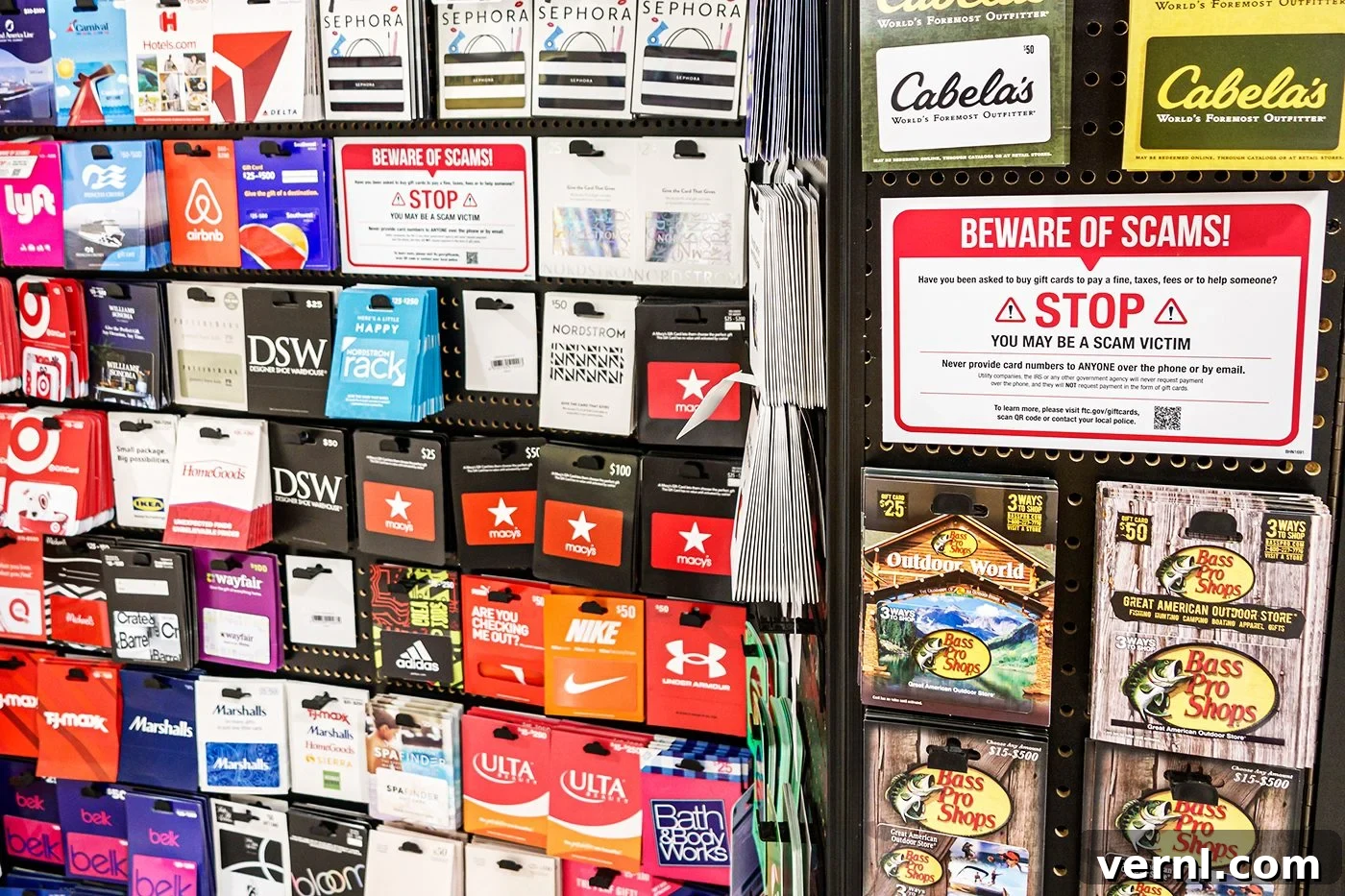
The most wonderful time of the year often brings joy, celebration, and the exchange of thoughtful gifts with loved ones. While some meticulously select personalized presents, others opt for the convenience of gift cards. For years, gift cards have served as a quick solution for last-minute shoppers, offering a practical (though sometimes impersonal) way to show appreciation. However, in recent times, these seemingly harmless plastic rectangles have taken on a sinister new role, evolving into a prime tool for sophisticated scammers. This shift has cast a shadow over what was once a simple gifting option, transforming it into a potential conduit for financial fraud.
The unfortunate reality is that gift card scams are on the rise, preying on unsuspecting individuals who believe they are either helping a loved one, resolving a pressing issue, or even paying a legitimate debt. These deceptive schemes often result in victims losing significant sums of money, with little to no recourse for recovery. Understanding how these scams operate and, more importantly, how to protect yourself is crucial in today’s increasingly digital and interconnected world. This comprehensive guide will delve into the mechanics of gift card fraud, highlight common tactics employed by con artists, and provide essential strategies to safeguard your finances this holiday season and beyond.
How Do Gift Card Scams Operate?
At their core, most gift card scams share a similar modus operandi: manipulation through deception. The initial contact typically occurs online or over the phone, where a scammer impersonates a trusted entity or individual to gain your confidence. These imposters are masters of psychological tactics, employing various phishing techniques to create a convincing façade. They might pose as close relatives facing an emergency, authoritative figures such as government officials, bank representatives, or even tech support specialists. In some particularly brazen cases, scammers might forgo the pretense of legitimacy altogether, instead opting for intimidation tactics, claiming to have already compromised your accounts and demanding immediate action to prevent further loss.
The goal is always to coerce you into performing specific actions that benefit them financially. This almost invariably involves withdrawing substantial amounts of money from your personal bank accounts and then converting it into gift cards. The scammer’s expertise lies in creating a sense of urgency and fear, pushing victims into making rash decisions without time to think or verify. They exploit natural human tendencies to help family, comply with authority, or protect one’s assets. Once you have purchased the gift cards, the scammer will instruct you to read the card numbers and PINs over the phone, effectively transferring the funds to their control. They often promise a reimbursement or resolution that, heartbreakingly, never materializes. Because gift cards are essentially untraceable cash, once the numbers are shared, the money is typically gone forever, making recovery incredibly difficult.
A Real-Life Account of Gift Card Fraud: Jan Hoops’ Story
The devastating impact of these scams is perhaps best illustrated through real-life experiences. Jan Hoops, a resident of Vista, California, recently became a victim of such a scheme, losing a staggering $24,000. Her story serves as a stark warning of how cunning and persistent these fraudsters can be.
“[The scammer] explained that they had hacked into my banking account and my CD account, and they had stolen the money,” Hoops recounted to her local CBS station. This initial claim of a security breach immediately instilled fear and urgency, compelling her to act without questioning the authenticity of the caller.
The scammer then expertly guided Hoops through a series of steps, isolating her from potential intervention. “I withdrew money from three different Mission Federal (Credit Unions), and then after that, he had me immediately go to a Lowes and buy gift cards to the tune of $1,000 on each gift card,” said Hoops. This sequence of events is a classic hallmark of gift card scams: rapid withdrawals of cash followed by immediate conversion into gift cards from major retailers. The scammer stayed on the phone with her throughout the entire process, including the bank withdrawals and gift card purchases, preventing her from consulting with bank employees or loved ones who might have recognized the red flags.
Even when bank employees attempted to offer assistance or raise concerns during her large withdrawals, the scammer had already pre-empted this by instructing Hoops not to trust anyone and to keep the situation confidential. This tactic ensures the victim remains under the scammer’s sole influence, cutting off any external advice or intervention. Jan Hoops’ poignant plea, “I want people to realize that this is what’s happening. It’s out there, and it’s real. And I never thought I was gullible, never,” underscores the universal vulnerability to these sophisticated deceptions, regardless of one’s perceived shrewdness.
Common Types of Gift Card Scams
Scammers constantly evolve their methods, but several recurring themes and tactics are prevalent:
Government or Authority Impersonation Scams
In these highly effective scams, fraudsters pretend to be from government agencies like the IRS, Social Security Administration, or even local law enforcement. They might claim you owe back taxes, have an outstanding warrant, or face imminent arrest. The common thread is a demand for immediate payment via gift cards to avoid severe penalties. Remember, legitimate government agencies will never demand payment through gift cards or threaten immediate arrest.
Tech Support Scams
You might receive a pop-up warning on your computer screen or a cold call claiming to be from a well-known tech company (like Microsoft or Apple). They will falsely claim your computer has a virus or other critical issue. After gaining remote access to your device (which you should never allow), they will demand payment for their “services” or a “software license” in the form of gift cards.
Utility Company Scams
Scammers pose as representatives from your utility company (electricity, gas, water) threatening to cut off your service if an overdue bill isn’t paid immediately. They often insist on payment via gift cards, exploiting the fear of losing essential services, especially during extreme weather.
Family or Friend in Distress Scams
You might receive an urgent call, email, or text message from someone claiming to be a family member or close friend in a desperate situation (e.g., arrested, stranded abroad, in a hospital) and needing money quickly. They will often ask for gift cards because they claim bank transfers are too slow or their bank accounts are inaccessible. Always verify such claims directly with the person in question or other family members before acting.
Romance Scams
These are long-con scams where fraudsters build emotional relationships with victims online, often through dating apps or social media. Over weeks or months, they develop trust and affection, only to eventually concoct a crisis and request financial assistance in the form of gift cards. The emotional investment makes these particularly devastating for victims.
Lottery or Prize Scams
You’re informed you’ve won a large sum of money or a fantastic prize, but to claim it, you must first pay “taxes” or “processing fees” using gift cards. Legitimate lotteries or sweepstakes never ask for payment to release winnings.
Why Gift Cards Are a Scammer’s Favorite Tool
Scammers target gift cards for several compelling reasons, primarily because they are incredibly difficult to trace and offer minimal consumer protection:
- Untraceable Transactions: Unlike bank transfers or credit card payments, gift card transactions are virtually impossible to track once the numbers are redeemed. There’s no banking institution to reverse the charge or hold the funds.
- Lack of Protection: Gift cards do not come with the same fraud protection or regulatory oversight as credit cards or bank accounts. Once the value is loaded onto the card and the numbers are shared, the money is gone.
- Speed and Irreversibility: Gift card funds can be redeemed almost instantly. Once a scammer has the numbers, they can quickly use them to purchase goods, services, or even convert them back into cash, making recovery nearly impossible for the victim.
- Perceived Legitimacy: Many people view gift cards as a normal form of payment, especially for online purchases. Scammers exploit this familiarity to make their fraudulent requests seem more plausible.
- Anonymity: Gift cards offer a degree of anonymity for the scammer. They don’t have to provide bank details or personal identification, making it harder for law enforcement to track them.
How To Effectively Avoid Gift Card Scams
Protecting yourself from gift card scams requires vigilance, skepticism, and adherence to some fundamental safety rules. Here are several crucial ways to avoid becoming a victim, especially during the busy holiday season when scams tend to surge:
- Never Pay with Gift Cards for Debts or Services: This is the golden rule. No legitimate government agency (like the IRS or Social Security), utility company, or reputable business will ever demand payment via gift cards for taxes, bills, fines, or any other service. If someone asks for payment in gift cards, it is a scam. Hang up immediately or delete the message.
- Verify Identity Independently: If you receive a call, email, or text from someone claiming to be from your bank, a government agency, or a company, do not trust the caller ID or information they provide. Instead, hang up and call the organization directly using a publicly listed phone number (e.g., from their official website or a statement). Never use a number provided by the suspicious caller.
- Be Wary of Urgency and Threats: Scammers thrive on creating a sense of panic and urgency. They will threaten immediate consequences (arrest, service disconnection, account closure) to pressure you into acting without thinking. Legitimate organizations provide ample time and official channels for resolution.
- Protect Your Personal Information: Be extremely cautious about sharing any personal or financial information (bank account numbers, Social Security numbers, passwords) over the phone or email, especially in response to unsolicited contact.
- Inspect Gift Cards Before Purchase: When buying physical gift cards, carefully examine the packaging. Look for any signs of tampering, scratched-off PINs, or altered barcodes. Scammers can sometimes replace legitimate cards with fake ones or record the details before purchase. Always buy from reputable retailers and preferably directly from the store’s customer service desk or a well-monitored display.
- Only Purchase from Reputable Businesses: Avoid buying gift cards from online auctions, classifieds, or unfamiliar websites, as these can often be fraudulent or compromised.
- Educate Yourself and Others: Stay informed about the latest scam tactics. Share information about gift card scams with friends and family, especially elderly relatives who may be more vulnerable. Awareness is a powerful defense.
- Trust Your Instincts: If an offer seems too good to be true, or if a request feels off or suspicious, it most likely is. Always err on the side of caution.
What to Do If You Believe You’ve Been Scammed
If, despite your best efforts, you suspect you have fallen victim to a gift card scam, immediate action is crucial, even though recovering funds can be challenging:
- Contact Your Bank or Credit Union Immediately: Inform them of the situation. If the scam involved withdrawals from your account, they can advise you on potential steps, though once money is converted to gift cards, their ability to help is limited.
- Contact the Gift Card Retailer: Reach out to the customer service department of the retailer from which the gift cards were purchased (e.g., Lowe’s, Amazon, Target). Provide them with the card numbers, purchase details, and any relevant information. While they may not be able to recover the funds, they can sometimes deactivate cards that haven’t yet been fully redeemed.
- File a Report with the Federal Trade Commission (FTC): The FTC collects scam reports and uses this data to investigate and prosecute fraudsters. Reporting helps law enforcement understand scam trends and protect others. Visit reportfraud.ftc.gov to submit your report.
- Report to Local Law Enforcement: File a police report with your local authorities. While police might not be able to recover your money, a report creates an official record of the crime and can be useful for other legal or financial purposes.
- Keep Detailed Records: Document everything. Save all communication (emails, texts), phone numbers, transaction receipts, and any other relevant information related to the scam. This documentation will be vital for any investigations.
- Monitor Your Accounts: Closely monitor your bank and credit card statements for any unauthorized activity for several months after the incident.
Gift cards remain a convenient and popular gifting option, but it’s essential to be aware of their vulnerabilities. By understanding the tactics employed by scammers and adopting robust protective measures, you can safeguard your finances and ensure your holiday season remains truly wonderful, free from the shadow of fraud. Stay informed, stay vigilant, and never let fear or urgency dictate your financial decisions.
Source
CBS8: “Vista woman loses $24,000 in Lowes gift card scam” (2024)