
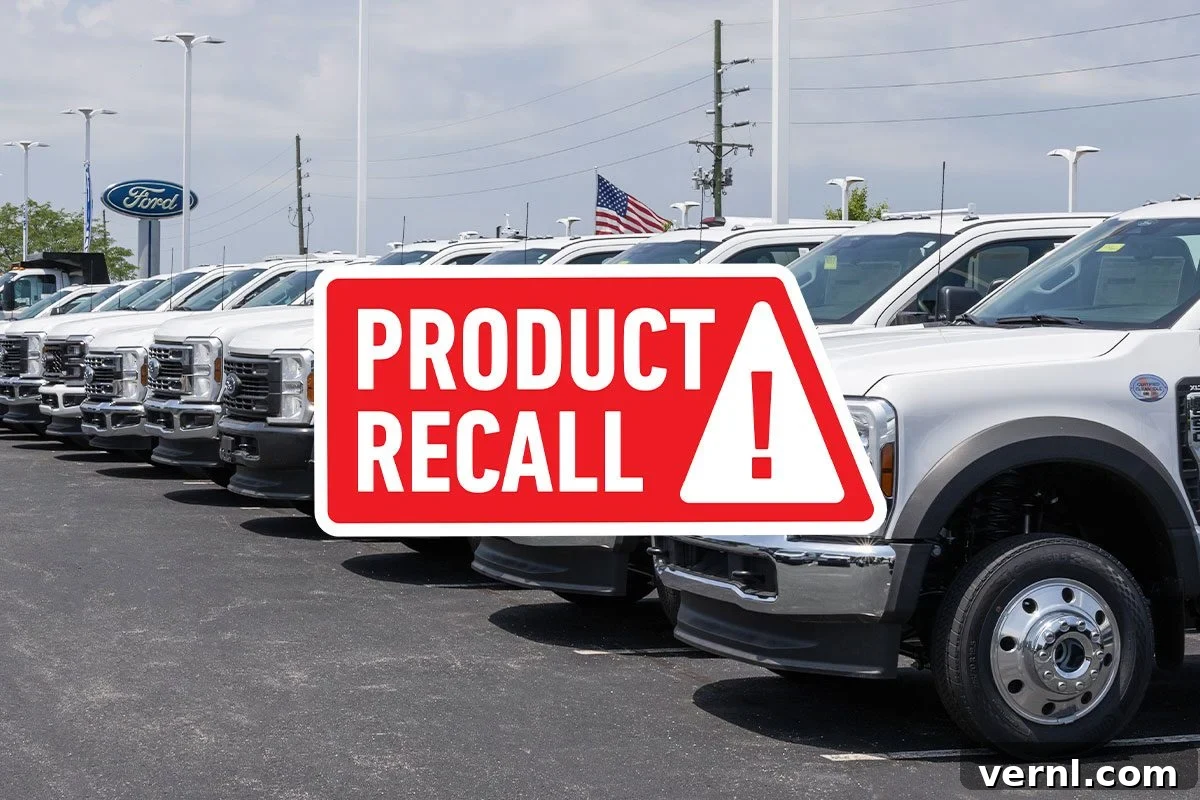
While some vehicle recalls focus on relatively minor defects that can be addressed at the owner’s convenience, there are critical safety recalls that demand immediate attention. These are the “Do Not Drive” orders, issued when a defect poses an exceptionally high risk of serious injury or death. The latest Ford recall falls squarely into this urgent category, impacting thousands of vehicles with a severe and potentially catastrophic brake issue. Ignoring this warning could have dire consequences for drivers, passengers, and other motorists on the road.
The National Highway Traffic Safety Administration (NHTSA) has released a crucial brief detailing the specifics of this “Do Not Drive” order. This article will thoroughly explain the nature of the problem, identify the specific Ford vehicles affected, and outline the steps owners must take to remedy this critical safety concern. Your understanding and prompt action are vital to ensuring safety for everyone.
Understanding the Gravity of a “Do Not Drive” Order: The Ford Brake Recall Explained
A “Do Not Drive” order is perhaps the most serious instruction a vehicle manufacturer or safety authority can issue to consumers. It signifies that a vehicle has a defect so severe that operating it, even for a short distance, presents an immediate and unacceptable risk of an accident. In the case of this particular Ford recall, the danger stems from a fundamental failure within the braking system.
According to the NHTSA brief, thousands of Ford vehicles are subject to this severe warning due to a critical flaw involving the brake booster pushrod retaining spring. Specifically, this essential spring may not have been properly installed during manufacturing. The absence or improper installation of this spring can allow the pushrod to disconnect from the brake pedal entirely. The direct consequence of such a disconnection is a sudden, complete loss of brake function, leaving the driver without the ability to slow down or stop the vehicle.
Such a defect renders these vehicles inherently dangerous and in direct violation of fundamental safety regulations. They fail to comply with the stringent requirements of Federal Motor Vehicle Safety Standard (FMVSS) numbers 135, ‘Light Vehicle Brake Systems,’ and 105, ‘Hydraulic and electric brake systems.’ These standards are put in place to ensure that all vehicles sold in the United States meet a minimum threshold of braking performance and reliability. A sudden loss of brake function isn’t just an inconvenience; it dramatically increases the risk of a catastrophic crash, endangering everyone on the road. For heavy-duty vehicles, like those affected in this recall, the potential for severe damage and injury in such an event is amplified due to their size and weight.
Unpacking the Critical Defect: A Deep Dive into Ford’s Brake Booster Issue
To fully grasp the seriousness of this recall, it’s important to understand the role of the brake booster and its pushrod. The brake booster is a component that amplifies the force applied by the driver’s foot on the brake pedal, making it easier to stop the vehicle. The pushrod is the mechanical link that transmits the force from the brake pedal through the booster to the master cylinder, which then sends hydraulic pressure to the wheel brakes. This entire chain relies on secure connections to function properly.
The specific issue identified by Ford and NHTSA is the potential absence of a small but critical retaining spring for the brake booster pushrod. This spring is designed to keep the pushrod firmly attached to the brake pedal. If this spring is missing, the pushrod can become dislodged from the pedal assembly. Imagine pressing your brake pedal only to find it goes slack, offering no resistance, and the vehicle continues to move without slowing. This is the frightening scenario that could occur if the pushrod disconnects.
The implications of this defect are profound. A driver experiencing a sudden loss of brakes would be plunged into a high-stakes emergency, with mere seconds to react. On highways, in heavy traffic, or when approaching an intersection, the inability to brake can lead to high-speed rear-end collisions, multi-vehicle pile-ups, or uncontrolled departures from the roadway. For the large, heavy-duty trucks involved in this recall, such a failure could be particularly devastating, given their stopping distances and kinetic energy. This isn’t a problem that can be nursed home or managed with careful driving; it’s a fundamental failure of a primary safety system, necessitating immediate attention and adherence to the “Do Not Drive” mandate.
Identifying the Affected Vehicles: Is Your Ford Part of This Urgent Recall?
Ford’s “Do Not Drive” order specifically targets a limited but significant number of heavy-duty truck models from the 2025 model year. This targeted recall affects over 2,300 vehicles, underscoring the severity of the issue and Ford’s commitment to prioritizing customer safety. The specific models included in this critical recall are:
- 2025 F-550 SD
- 2025 F-450 SD
- 2025 F-350 SD
- 2025 F-250 SD
It is crucial for owners of these particular models and model year to be aware of this recall. Ford initiated the mailing of owner notification letters towards the end of June 2025. Therefore, if you own one of the aforementioned vehicles, it is imperative to keep a close watch on your mailbox for official correspondence from Ford. These letters will contain detailed instructions specific to your vehicle and the recall process.
However, simply awaiting a letter is not enough. The NHTSA explicitly advises all owners of these affected vehicles “not to drive their vehicles until they have been repaired.” This is not a suggestion; it is a critical safety directive. Even if you haven’t received your letter yet but suspect your vehicle might be one of the models listed, it is strongly recommended that you take immediate action to verify its recall status. You can do this by using your Vehicle Identification Number (VIN) on the NHTSA website’s recall lookup tool or by contacting Ford Customer Service directly. The risks associated with ignoring this warning are too high to take lightly, potentially leading to catastrophic accidents. Safety should always be your top priority.
The Repair Process: How Ford is Addressing This Critical Safety Concern
Ford is committed to resolving this severe safety defect promptly and efficiently, ensuring the safety of its customers. The company has outlined a clear and decisive plan for addressing the brake booster pushrod issue. Ford will perform a thorough inspection of the brake pedal assembly on all affected vehicles. If a defect is identified—specifically, the missing brake booster pushrod retaining spring—the necessary repairs or replacements will be conducted immediately.
Crucially, Ford will carry out this essential inspection and any subsequent repairs completely free of charge to the vehicle owner. This commitment underscores the seriousness with which Ford and regulatory bodies like the NHTSA view this safety flaw. Owners should not face any financial burden for a manufacturing defect that compromises their safety.
It is paramount that owners do not delay in scheduling this vital repair. A faulty brake system, especially one leading to a potential sudden loss of function, is an alarmingly dangerous condition. The official “Do Not Drive” order serves as the automotive equivalent of a flashing red light and a blaring siren, unequivocally screaming “danger!” Therefore, take this order with the utmost seriousness. Do not get behind the wheel of an affected vehicle until it has undergone the necessary inspection and certified repair by a Ford dealership.
To facilitate a smooth and timely resolution, it is advisable for owners to contact their nearest authorized Ford dealership as soon as possible. When scheduling your appointment, reference the recall numbers provided by Ford and NHTSA. Ford’s internal number for this recall is 25C26, and the National Highway Traffic Safety Administration’s recall number is 25V401000. Providing these numbers can help expedite the process and ensure the service department has all the necessary information to address your vehicle’s specific issue efficiently.
Beyond the Recall Notice: Proactive Steps for Vehicle Owners
Receiving a recall notice, especially one as severe as a “Do Not Drive” order, can be unsettling. However, proactive engagement is your best defense against potential hazards. If you own one of the affected 2025 F-Series Super Duty trucks, even if you haven’t yet received an official letter from Ford, it’s vital to confirm your vehicle’s status immediately. The simplest and most reliable way to do this is by utilizing the NHTSA’s online VIN lookup tool. By entering your 17-character Vehicle Identification Number, you can quickly ascertain if your specific truck is included in the recall and if any repairs are outstanding.
Beyond this immediate recall, it’s always good practice for vehicle owners to remain vigilant about their vehicle’s health. While the brake booster issue is sudden, being aware of general brake warning signs like squealing, grinding, a soft or spongy pedal, or a pulling sensation can help detect other potential problems. Regular vehicle maintenance, as recommended by the manufacturer, plays a crucial role in overall safety and can sometimes catch nascent issues before they become critical. Additionally, make it a habit to periodically check the NHTSA website for any new recalls affecting your vehicle, as notifications might sometimes be delayed or misplaced.
Remember, the responsibility for addressing a recall ultimately rests with the vehicle owner. While manufacturers are obligated to fix defects, it’s up to you to respond to the notification and take your vehicle in for service. Prioritizing these actions protects not only your life and the lives of your passengers but also the lives of countless others on the road.
The Vital Role of NHTSA in Ensuring Vehicle Safety
The National Highway Traffic Safety Administration (NHTSA) serves as a critical guardian of public safety on America’s roads. Established to reduce deaths, injuries, and economic losses resulting from motor vehicle crashes, NHTSA achieves its mission through various initiatives, including setting and enforcing safety standards for vehicles and vehicle equipment. The agency’s rigorous testing and analysis are pivotal in identifying potential defects and compelling manufacturers to issue recalls when necessary.
In the context of the Ford brake recall, NHTSA’s role is indispensable. They not only oversee the recall process but also ensure that manufacturers comply with federal safety standards such as FMVSS 105 and 135. When a defect like the missing brake booster pushrod retaining spring comes to light, NHTSA works closely with the manufacturer to investigate the scope of the problem, assess the risk to the public, and mandate appropriate corrective actions. Their “Do Not Drive” directive is a testament to their commitment to immediate hazard mitigation. Furthermore, NHTSA provides a public database where consumers can report potential safety defects and look up current recall information using their vehicle’s VIN, empowering vehicle owners to take an active role in their own safety and contribute to broader safety improvements.
Your Safety is Paramount: A Final Call to Action
This Ford recall represents a serious and undeniable safety risk. A “Do Not Drive” order is not to be taken lightly; it is a direct warning about a defect that could lead to life-threatening consequences. The potential for a sudden and complete loss of brake function in these heavy-duty vehicles is a scenario no driver should ever face, yet it is a real possibility for those affected by this recall.
We urge all owners of 2025 Ford F-250 SD, F-350 SD, F-450 SD, and F-550 SD trucks to act without delay. Verify your vehicle’s recall status using your VIN on the NHTSA website or by contacting Ford Customer Service. Once confirmed, immediately schedule your free inspection and repair at an authorized Ford dealership. Your promptness in addressing this issue is not merely a matter of compliance, but a critical step in safeguarding your life, the lives of your loved ones, and the lives of others sharing the road. Do not postpone this essential repair. Your safety is, and always should be, the absolute priority.
For further questions or assistance, you can reach Ford Customer Service directly at 1-866-436-7332. Remember to reference Ford’s recall number 25C26 or NHTSA’s recall number 25V401000 when you call or visit your dealership.
Source
Sudden Loss of Brake Function, National Highway Traffic Safety Administration, 2025.
Related
- Do You Know What That Little Button on Your Seat Belt Is For?
- What Those Lines on Your Backup Camera Really Tell You
- Here’s What The Small Panel On Your Car’s Front Bumper Is For