
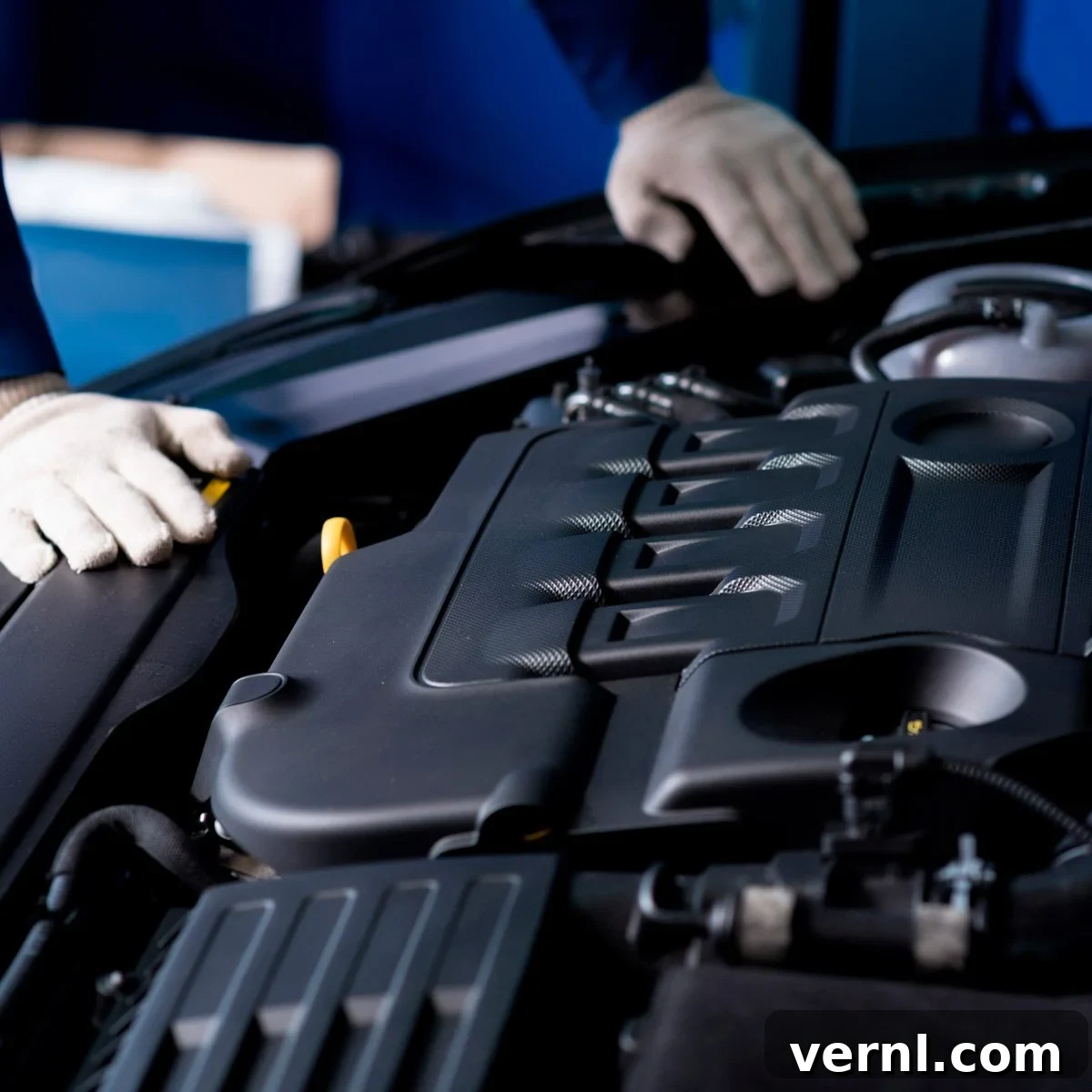
A catastrophic engine failure can be one of the most disheartening experiences for any vehicle owner. The sudden loss of power, accompanied by ominous noises or a complete standstill, often leaves you facing a critical dilemma: do you invest in an expensive engine replacement, or is it time to consider writing off your beloved vehicle and purchasing a new one? While there are certainly scenarios where the cost of a new engine might outweigh the benefits, a closer look often reveals that replacing an engine can be a far more cost-effective solution than diving into the complexities and expenses of buying a different car. The ultimate decision hinges on a careful evaluation of several key factors, including your vehicle’s current age, existing warranty coverage, your personal attachment and desire to keep the car, and any potential safety implications that might arise from its continued use or repair.
As auto mechanic Jorge Pinto, based in New Jersey, wisely advises, “You should weigh the cost of the repairs in relation to the value of the car. Consider its age, overall condition, and accumulated mileage. If the vehicle has a proven track record of reliability and you’ve invested in its maintenance, then investing in a new or rebuilt engine might genuinely be worth it to extend its dependable service life.” This perspective underscores the importance of a holistic assessment rather than a snap judgment driven by initial repair shock, guiding vehicle owners toward the most financially and practically sound choice.
Understanding the Investment: How Much Does It Cost to Replace an Engine?
Pinpointing an exact figure for engine replacement costs is challenging, as the price tag is influenced by a confluence of variables. These primarily include the specific size and inherent complexity of your vehicle’s engine, the hourly shop rate charged by your chosen repair facility, and critically, the type of replacement engine you opt for – whether it’s a used, rebuilt, or brand-new unit. Each option presents a unique balance of cost, reliability, and warranty protection, making it essential for owners to understand the distinctions thoroughly before making a decision.
New Engine Costs: The Premium for Peace of Mind
Opting for a brand-new engine represents the highest investment, but also offers the maximum assurance of quality and longevity. These engines are typically manufactured to original equipment specifications, ensuring perfect fit, optimal performance, and the latest technological advancements. For a standard 4-cylinder engine, you might expect prices to start around $4,000. Stepping up to a V6 engine can push the starting cost to approximately $5,500, while a robust V8 engine often begins at $7,000 or more. These figures are merely baselines; the final price can escalate significantly based on the engine’s complexity, the vehicle’s make and model, and whether it’s a high-performance or luxury-brand component. For instance, replacing a specialized performance engine in an imported luxury vehicle will invariably cost substantially more than installing a standard stock engine in a domestic economy car. The primary advantage of a new engine is the comprehensive manufacturer’s warranty, offering extensive coverage and unparalleled peace of mind for years to come.
Used Engine Costs: The Economical but Risky Path
A used engine offers the most budget-friendly entry point for engine replacement. Prices for used units can be considerably lower than new or rebuilt options, often starting at $1,000 or even less for a common 4-cylinder. The cost is predominantly influenced by the age of the donor vehicle, the mileage accumulated on the used engine itself, and any associated shipping costs from the engine’s location to your mechanic. It’s crucial to remember that freight charges are almost always separate from the engine’s purchase price and will be passed along to you by the repair shop, adding to the overall expense.
However, the allure of a lower price tag comes with inherent risks, primarily centered around your investment in labor. While a salvage yard or specialized used-parts supplier typically provides a limited, short-duration warranty on the engine’s mechanical integrity, this warranty rarely extends to cover the labor expenses incurred by the shop installing the motor. This means if the newly installed used engine develops an issue shortly after installation, you could find yourself responsible for the mechanic’s time spent on the initial swap, along with additional billable hours required for diagnosis and re-installation of a replacement used engine. This scenario effectively doubles your labor cost. Thorough vetting of the supplier, understanding the warranty terms, and inspecting the donor vehicle’s history are paramount when considering a used engine to mitigate potential future headaches.
Rebuilt and Remanufactured Engine Costs: The Balanced Choice
To mitigate the significant risks associated with used engines while still achieving substantial savings over a new unit, many vehicle owners opt for a rebuilt or remanufactured engine. The terms are often used interchangeably, but generally, a “rebuilt” engine has been disassembled, inspected, and had worn components replaced to return it to manufacturer operating tolerances. This includes new seals, gaskets, and any critical moving parts showing wear. A “remanufactured” engine typically adheres to even stricter guidelines, often involving extensive machining processes, updated components, and rigorous testing procedures that bring it closer to “new” specifications, sometimes even surpassing original factory standards for durability and performance.
Regardless of the specific terminology, the key benefit is confidence: you can be highly confident that the engine will run reliably when installed correctly, and its expected lifespan has been significantly extended. These engines almost always come with a stronger and more comprehensive warranty compared to what’s offered by used parts suppliers, often covering both parts and a portion of the labor for a specified period. While this confidence and extended warranty come at a higher price than a bare used engine – for example, a rebuilt 4-cylinder might cost in the $2,500 range – it still represents a substantial saving over a brand-new engine, offering an excellent balance of cost, reliability, and peace of mind for the informed consumer.
Dissecting Engine Replacement Labor Costs
The labor component is a significant portion of the overall engine replacement bill, reflecting the intricate and time-consuming nature of the task. Modern vehicles pack complex systems into tight spaces, making engine removal and installation a precise and demanding job. For a typical engine swap, repair shops commonly quote between 10 to 12 hours of labor. Simpler engine designs or highly skilled mechanics with specialized tools might complete the job in as little as 8 hours, while more complex or larger engines, particularly those in luxury or performance vehicles, could require up to 15 hours due to additional components or confined working spaces. The vast majority of engine replacements will fall comfortably within the 10-12 hour range.
To calculate your estimated labor costs, multiply the quoted number of hours by the shop’s hourly rate. This rate can fluctuate widely based on geographical location, the shop’s reputation, its specialization (e.g., independent garage vs. dealership), and the mechanic’s expertise. You might encounter rates as low as $90 per hour in some rural areas, while others, particularly those in metropolitan centers or factory dealerships, can exceed $150 per hour. Using a conservative estimate of $110 per hour for a lower-end shop and $150 per hour for a higher-end facility, the labor cost for a typical engine replacement could range from approximately $1,100 to $1,800. This figure highlights the importance of getting multiple quotes, understanding what is included in the labor estimate, and comparing shop reputations.
Beyond the Engine: Other Essential Replacement Costs
While the engine itself and the labor to install it form the bulk of the expense, several other critical costs contribute to the final bill. These “ancillary” expenses are often overlooked but are vital for ensuring the new engine operates correctly, efficiently, and reliably for years to come. Neglecting these smaller costs can lead to immediate complications or future breakdowns.
Shop Materials and Essential Fluids
Expect a charge for shop materials, typically not exceeding $100. This covers essential fluids like fresh engine oil, a new oil filter, coolant (antifreeze), and potentially Freon if your air conditioning system needs to be evacuated and recharged during the engine removal and installation process. These fluids are absolutely necessary to get your new engine running smoothly, prevent immediate damage, and ensure proper thermal management and lubrication. Additionally, miscellaneous shop supplies like rags, cleaners, and lubricants are often factored into this charge.
Ancillary Parts: The “While We’re In There” Opportunity
It’s crucial to understand that a new, used, or rebuilt engine typically arrives as a “long block” or “short block” – meaning it’s primarily the engine block, cylinder heads, and internal components. It does *not* include all the external parts that bolt onto an engine, such as the water pump, fuel pump, various rubber hoses and drive belts, intake and exhaust manifolds, tensioners, and pulleys. Replacing these components individually outside of an engine swap can be very labor-intensive and costly, sometimes with labor charges far exceeding the cost of the part itself due to difficult access.
However, during an engine replacement, these ancillary parts must be removed and reinstalled anyway. This presents a golden opportunity to replace aging or potentially failing components without incurring significant additional labor costs. For instance, the labor for replacing a new water pump drops to zero or becomes negligible because the mechanic is already performing the necessary work to access and reinstall it. Consult thoroughly with your mechanic about which ancillary parts they recommend replacing based on your vehicle’s mileage, condition, and the expected lifespan of these components. Investing in these relatively inexpensive parts now can prevent future breakdowns, save you considerable labor costs down the line, and maximize the long-term reliability of your newly installed engine.
Making the Decision: Is an Engine Replacement the Right Choice for You?
Given the multitude of variables and significant investment involved, the question “How much does it cost to replace an engine?” quickly transforms into a more profound query: “When is the investment required to replace an engine truly the right financial and practical choice for my specific situation?” The answer is deeply personal and depends on a careful evaluation of your financial capacity, the overall condition of your vehicle, and your long-term automotive needs and preferences.
The Financial Equation: Repair vs. Replace
Can you comfortably afford the immediate cash flow required for the engine repair? This is a primary concern. While replacing your current vehicle might seem more expensive in the long run due to factors like depreciation, sales tax, new registration fees, and potentially higher insurance, it often allows you to finance the purchase over several years, spreading out the cost into manageable monthly payments. However, buying a different car is no guarantee of reliability; you could inadvertently acquire someone else’s problems, leading to a new set of unexpected expenses. If you still owe money on your broken car, finding the least expensive viable path, such as a $2,500 rebuilt engine replacement, often becomes your most logical and financially prudent option, preventing you from being upside down on two vehicles simultaneously. Comparing the total cost of ownership (TCO) over the next 3-5 years for both options can provide valuable insight.
Assessing Your Vehicle’s Overall Health and Value
Beyond the engine, a critical evaluation of the entire vehicle is paramount. Consider its age and the total miles accumulated on the chassis. More importantly, objectively assess the condition of all non-motor systems. Is the interior still in good shape, or is it showing significant wear and tear that would be costly to address? How about the body – is it free of major rust, accident damage, or expensive cosmetic flaws? Have you recently invested in new tires (within the last year or two)? What’s the condition of the brakes, the air conditioning system, and the suspension components? As cars age, other expensive components, like the catalytic converter, are prone to failure; have you already replaced it, or is that looming on the horizon? A car with a solid, well-maintained chassis, good interior, and recently updated wear-and-tear parts is a much stronger candidate for engine replacement than one that’s falling apart around the failing engine, as the latter would likely present an endless stream of future repairs.
To gain an objective perspective on your car’s market value, utilize reputable online resources like Edmunds or Kelley Blue Book. Knowing your car’s current worth, combined with what you’ve already invested in it (and how recently those investments were made), along with an honest assessment of pending maintenance or repairs, provides a comprehensive snapshot. This detailed analysis is crucial for determining whether investing in an engine replacement makes financial sense, essentially calculating if the “new” effective lifespan of the vehicle justifies the repair cost and if the total investment will exceed the car’s potential market value.
Personal Attachment and Future Driving Needs
Sometimes, the decision isn’t purely financial. Do you have a strong personal attachment to your current vehicle? Perhaps it holds sentimental value, or it perfectly fits your lifestyle, offering unique features, specific seating capacity, or robust towing capabilities that would be difficult or expensive to replicate in a new car. If your vehicle has served you well and you genuinely love driving it, the investment in a new engine can be seen as purchasing several more years of a known, comfortable, and reliable driving experience, rather than navigating the uncertainties of a new-to-you used car market or the substantial depreciation associated with a brand-new vehicle. Your long-term driving needs and comfort can be as important as the numbers.
Understanding Warranties and Long-Term Reliability
A significant factor in the decision-making process should be the warranty that accompanies your chosen engine replacement option. A new engine typically comes with the most comprehensive warranty, often mirroring a new car warranty for several years or tens of thousands of miles. Rebuilt and remanufactured engines also offer robust warranties, often covering parts and labor for a specified period (e.g., 1-3 years or 12,000-36,000 miles), providing significant peace of mind. Used engines, while cheapest, usually have very limited warranties, sometimes only 30-90 days and often explicitly excluding labor costs. Understanding these differences can heavily influence your long-term peace of mind and the perceived value of your investment against potential future repair costs.
Ultimately, risks are inherent no matter which path you choose. Purchasing a different vehicle, especially a used one, can often lead to inheriting someone else’s neglected problems, turning a “new” car into a continuous source of unexpected repairs. Conversely, replacing the engine in your current vehicle, assuming the rest of the car is in good condition, can transform it back into a steady, reliable performer, providing many more years of service and potentially saving you money in the long run compared to continuous car payments. The bottom line comes down to which set of risks you are most comfortable taking, and whether your personal budget can comfortably absorb a substantial repair bill, typically ranging from $2,000 for a basic used engine swap to upwards of $7,500 or more for a complex new engine installation in a premium vehicle.
About the Expert
Jorge Pinto is a highly experienced and respected auto mechanic based in New Jersey, known for his practical advice and deep understanding of vehicle diagnostics and repair. His insights are invaluable for car owners facing complex automotive decisions.