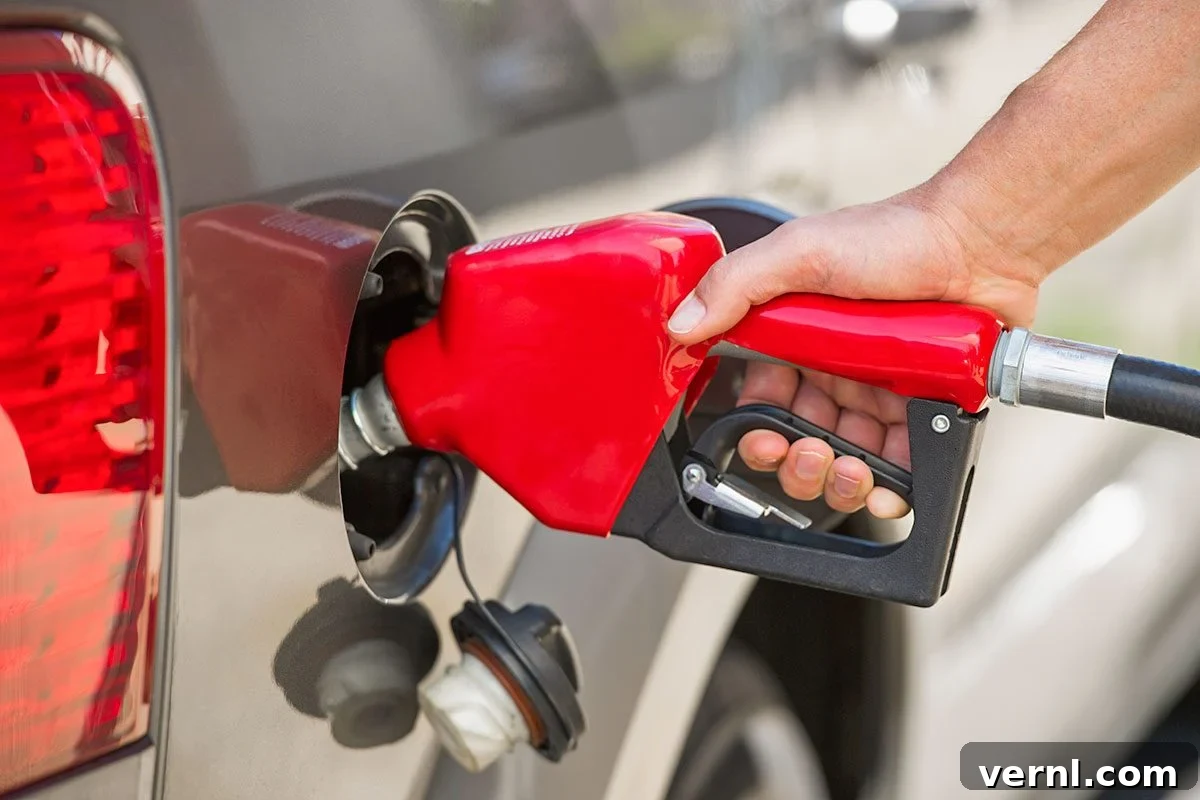
New Jersey stands alone as the sole U.S. state where you cannot pump your own gasoline. For visitors and even some residents, this unique mandate often sparks the question: “Why can’t I pump my own gas in New Jersey?” While nearly every other state embraces self-service fueling, New Jersey maintains a decades-old law requiring full-service at all gas stations. This distinctive approach, deeply embedded in the state’s legal framework and cultural fabric, sets New Jersey apart, offering a glimpse into its priorities regarding safety, employment, and consumer protection. Understanding the rationale behind this long-standing regulation provides valuable insight into the Garden State’s commitment to public welfare and its unique consumer experience. This comprehensive guide will explore the origins of this law, its stated objectives, implications for gas prices, tipping etiquette, and how New Jersey’s stance compares to historical precedents in other states.
Here, we will meticulously detail the objectives of this specific law and what it means for every driver pulling up to a New Jersey gas station, whether you’re fueling a car, motorcycle, truck, or any other vehicle. We’ll also provide expert insights from a representative of the New Jersey Gasoline, C-Store, Automotive Association, addressing common queries about the cost of gas in New Jersey and the customary practices for tipping your dedicated gas attendants.
Why Is It Against the Law to Pump Your Own Gas in New Jersey?
The prohibition against self-service fueling in New Jersey is enshrined in the Retail Gasoline Dispensing Safety Act (and Regulations), a law that has been in effect since 1949. This landmark legislation was enacted with a clear focus on public safety and control, establishing a system where trained professionals manage the delicate process of dispensing fuel. According to NJ.gov, the state legislature explicitly “finds and declares that because of the fire hazards directly associated with dispensing fuel, it is in the public interest that gasoline station operators have the control needed over that activity to ensure compliance with appropriate safety procedures, including turning off vehicle engines and refraining from smoking while fuel is dispensed.” This statement underscores the primary concern: mitigating the inherent risks associated with handling highly flammable substances.
Beyond the immediate fire hazards, several other compelling reasons are consistently cited by NJ.gov for maintaining the full-service mandate. These include:
- Reduced Risk of Injury: Dispensing gasoline can lead to various injuries, from slips and falls on spilled fuel to direct contact with hazardous chemicals. Professional attendants are trained to minimize these risks, protecting both themselves and the public.
- Enforced Safety and Compliance Measures: At self-serve stations, the onus is on the individual driver to follow safety protocols. In New Jersey, attendants are responsible for ensuring that all safety regulations are strictly adhered to, such as requiring customers to turn off their engines and prohibiting smoking near the pumps. This enforced compliance significantly reduces the potential for accidents.
- Prevention of Inhaling Gasoline Fumes: Regular exposure to gasoline fumes can pose health risks. Attendants are typically positioned to minimize their exposure and are trained to handle fuel efficiently, limiting the release of vapors. This protects customers who might otherwise linger at the pump, inhaling harmful fumes.
- Vehicle Maintenance Checks: A less commonly cited but equally important benefit is the opportunity for attendants to conduct quick, informal checks on vehicles. Attendants often notice issues like low tire pressure, worn-out windshield wipers, or even fluid leaks. While not mandatory, these observations can alert drivers to potential maintenance problems they might otherwise overlook. If self-service were available, customers, potentially motivated by speed or cost savings, might forgo these brief interactions, leading to delayed maintenance and ultimately higher repair costs down the line.
Therefore, while the concept of not being able to pump your own gas might initially feel inconvenient or outdated, the law is rooted in a comprehensive approach to public safety and consumer welfare. It aims to prevent dangerous incidents, reduce health risks, and even indirectly contribute to better vehicle upkeep. For those moments of frustration, remembering these core objectives can provide a deeper appreciation for New Jersey’s unique stance on fuel dispensing.
Should I Tip Whoever Pumped My Gas in New Jersey?
The decision to tip your gas attendant in New Jersey is entirely at your discretion, as it is not a widely established custom. Unlike in many service industries where tipping is expected, gas attendants typically earn an hourly wage, and their income is not primarily reliant on gratuities. However, a tip is always a welcome gesture of appreciation, particularly if the attendant provides service that goes above and beyond the standard fuel dispensing. “It’s not customary to tip an attendant unless they provide an extra service, such as cleaning the windshield, checking your oil, or quickly inspecting your tires,” explains Eric Blomgren, executive director of the New Jersey Gasoline, C-Store, Automotive Association. “However, tips would certainly be welcome, as one of the hardest parts of the business for station owners is finding enough dedicated people who want to work as gas attendants.”
This insight from Blomgren highlights a significant operational challenge for gas station owners in New Jersey. The labor market for gas attendants can be competitive, and the job itself involves exposure to various weather conditions and continuous customer interaction. Therefore, a tip, even a small one, can serve as a meaningful acknowledgment of their hard work and dedication. Consider offering a tip if an attendant is exceptionally friendly, provides prompt service during peak hours, or assists you with anything beyond the basic refueling, such as offering directions or helping with a difficult gas cap. While not an obligation, a thoughtful tip can brighten an attendant’s day and contribute to a positive service experience for both parties.
Is Gas More Expensive in New Jersey Due to Full Service?
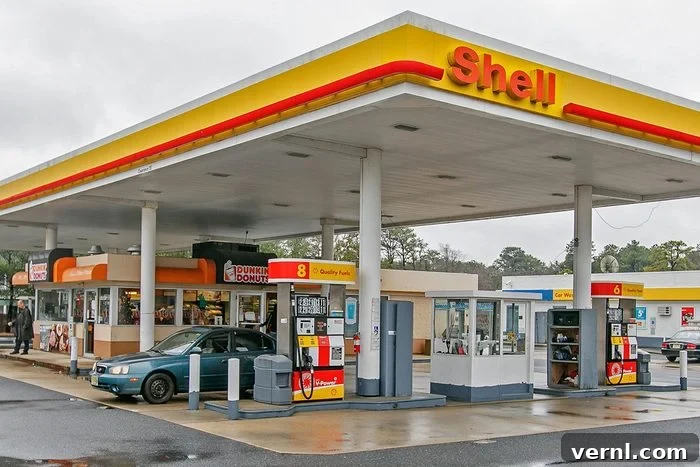
The question of whether gas is more expensive in New Jersey due to its full-service mandate is nuanced and depends heavily on the specific comparisons being made. Fuel prices are influenced by a multitude of factors, including crude oil costs, refinery capacity, transportation expenses, local competition, and state and federal taxes. When comparing New Jersey’s gas prices to those of its immediate neighbors, you might find surprising results.
At the time of publication, AAA.org reported the average price of regular gas in New Jersey at $3.037. Comparing this to surrounding states reveals that New Jersey often holds a competitive edge: New York ($3.169), Connecticut ($3.116), Pennsylvania ($3.210), and Delaware ($3.071). In this regional context, gas in New Jersey is frequently cheaper, dispelling the immediate assumption that full service automatically translates to higher prices. This is often attributed to New Jersey’s typically lower state gas tax compared to some of its higher-taxed neighbors, which can offset the labor costs associated with full service.
However, when expanding the comparison to other regions of the United States, particularly some Midwestern states, New Jersey’s prices can indeed appear higher. For instance, the same AAA.org data indicates that states like Iowa ($2.981), Missouri ($2.861), and Mississippi ($2.715) enjoyed lower average prices for regular gas. This difference can be attributed to lower transportation costs from major oil-producing regions, lower state gas taxes, and generally lower operating costs in those areas.
Despite these broader comparisons, Eric Blomgren from the New Jersey Gasoline, C-Store, Automotive Association confirms that the cost of employing gas attendants is undeniably factored into the price consumers pay at the pump. “Because fuel retailers have to compensate their gas attendants, this cost is indeed factored into the gas prices consumers pay,” Blomgren states. “The exact amount of added expense depends on the specific business, its location, and wage structures, but generally, it’s estimated to be around 12¢ a gallon.” This additional operational cost, while significant for retailers, is often mitigated by other market forces, such as state gas tax rates and competitive pricing strategies among stations, which strive to keep prices appealing to consumers. Therefore, while full service adds a measurable cost component, it doesn’t unilaterally make New Jersey the most expensive state for gas, especially within its immediate geographical context.
What Are The States Where You Can’t Pump Your Own Gas?
As of 2025, New Jersey holds the distinction of being the only state in the United States where pumping your own gas is entirely prohibited by law. This singular status makes New Jersey an anomaly in the American landscape, where self-service fueling is the norm. While this is currently true, New Jersey was not always alone in this prohibition. For many years, Oregon also maintained a statewide ban on self-service gas, creating a unique duo of full-service-only states.
However, Oregon’s long-standing policy underwent a significant transformation in 2023 with the passage of House Bill 2426. This new legislation dramatically altered the fuel dispensing landscape across the state. According to Oregon.gov, the bill permitted self-servicing of gas in 20 predominantly rural counties. These counties include Baker, Clatsop, Crook, Curry, Gilliam, Grant, Harney, Hood River, Jefferson, Klamath, Lake, Malheur, Morrow, Sherman, Tillamook, Umatilla, Union, Wallowa, Wasco, and Wheeler. This change was largely driven by a desire to improve convenience and access to fuel in areas with sparse populations and fewer gas stations, where maintaining full-service staffing proved challenging.
Furthermore, the Oregon law introduces a hybrid model for the more populous counties. Oregon.gov also clarifies that in counties with a higher population density, such as Benton, Clackamas, Columbia, Coos, Deschutes, Douglas, Jackson, Josephine, Lane, Lincoln, Linn, Marion, Multnomah, Polk, Washington, and Yamhill, gas stations are now permitted to offer a blend of self-serve and full-service options. Specifically, stations in these counties can have up to 50% self-serve pumps and are required to maintain at least 50% full or attended-service pumps during business hours. This compromise aims to balance consumer choice with the continued availability of full-service options, recognizing the historical preference for assisted fueling among some Oregon residents. While gas attendants are still prevalent at many gas retailer stations in Oregon, their role can now differ significantly depending on the specific county and how self-serve gas has been implemented at a given location. This evolution in Oregon’s law highlights a growing trend towards offering flexibility in fuel dispensing, a trend that New Jersey, for now, continues to resist in favor of its long-standing, unwavering commitment to full-service only.
About the Experts
- Eric Blomgren is the executive director of the New Jersey Gasoline, C-Store, Automotive Association, a leading voice for fuel retailers and convenience store operators in the state.
Sources
- Gasprices.aaa.com: “State Gas Price Averages”
- Oregon.gov: “Self-Serve Fueling in Oregon”
- NJ.gov: “Retail Gasoline Dispensing Safety Act and Regulations”
Related Articles
- Do You Know What That Little Button on Your Seat Belt Is For?
- What Those Lines on Your Backup Camera Really Tell You
- Here’s What The Small Panel On Your Car’s Front Bumper Is For