
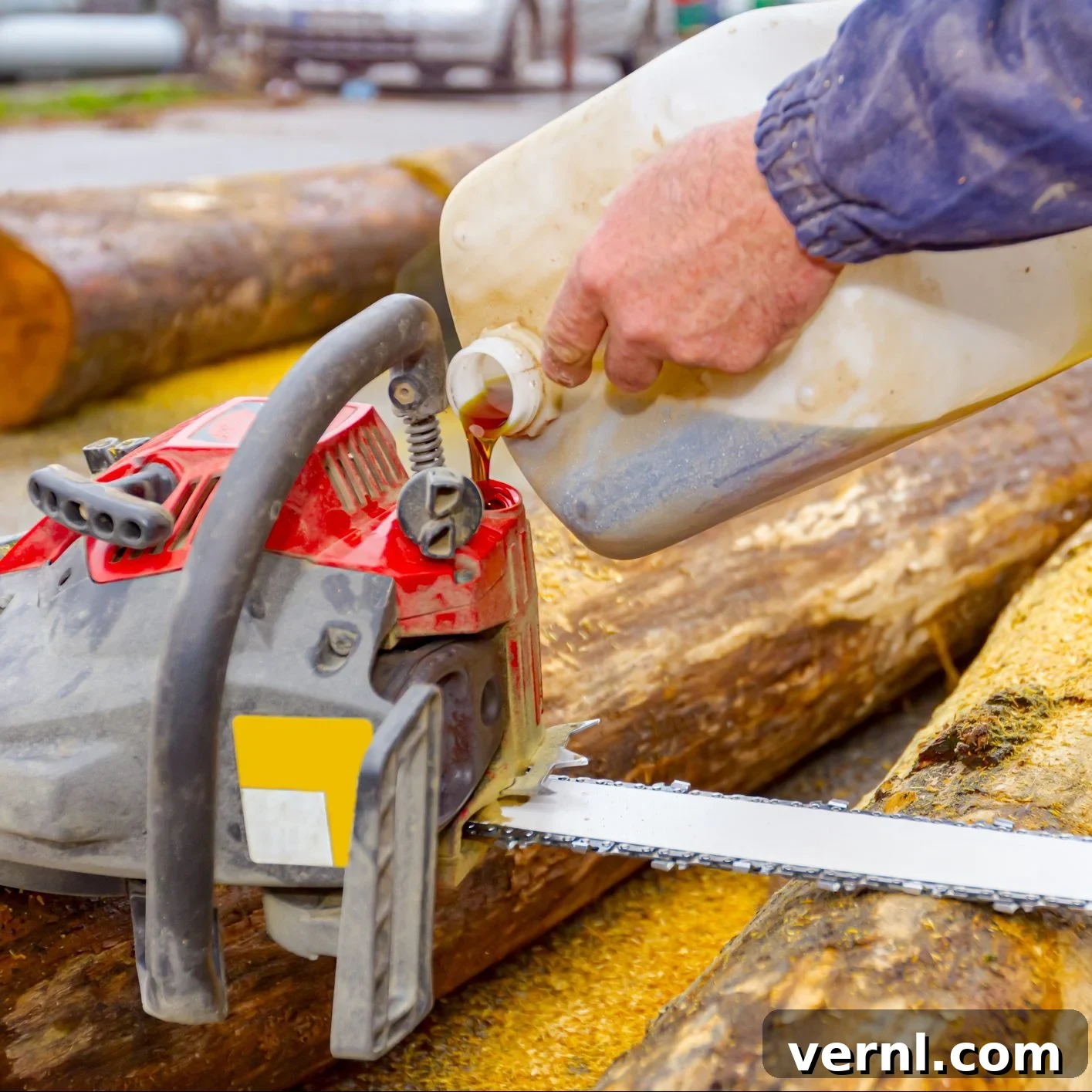
The Essential Guide to Chainsaw Oil: Keeping Your Saw Running Smoothly
Just like the lifeblood of your car’s engine, oil plays a critical role in the peak performance and longevity of your gas-powered chainsaw. Overlooking the importance of proper lubrication, using the wrong type of oil, or neglecting the correct fuel-to-oil ratio can lead to severe engine damage and costly repairs. Understanding the nuances of chainsaw oils is not just good practice; it’s essential for anyone who relies on this powerful tool.
This comprehensive guide will demystify chainsaw oil, exploring the various types available, guiding you through the selection process, and detailing the crucial fuel/oil ratios. By arming yourself with this knowledge, you can ensure your chainsaw operates efficiently, reliably, and safely for years to come.
Why Chainsaw Oil is Indispensable for Engine Health
The engine of a gas-powered chainsaw is a complex marvel of engineering, featuring rapidly moving parts that generate significant heat and friction. Without adequate lubrication, this friction can quickly lead to catastrophic failure. Nancy Egelhoff, a seasoned lawnmower service expert, emphasizes this point unequivocally: “If you don’t have oil, you could destroy the engine. If there’s no oil in the cylinder and piston of the engine, it will heat up so badly that it will score the cylinder and piston, and you will ruin the saw.”
This damage isn’t always immediate. Egelhoff recounts instances where customers experienced engine failure as long as six months after mistakenly forgetting to add oil. This delayed onset of problems highlights the insidious nature of improper lubrication; gradual wear and tear accumulate until the engine can no longer function, often leaving the user unaware of the initial oversight.
Beyond preventing catastrophic failure, oil serves several other vital functions:
- Reduces Friction: A thin film of oil between moving parts minimizes metal-on-metal contact, reducing wear and tear.
- Dissipates Heat: Oil helps to carry heat away from critical engine components, preventing overheating.
- Cleans Engine Components: As oil circulates, it picks up combustion byproducts and microscopic debris, keeping the engine clean.
- Seals Gaps: Oil helps to seal the piston rings against the cylinder walls, ensuring proper compression for efficient combustion.
- Prevents Corrosion: Oil contains additives that protect metal surfaces from rust and corrosion, especially during storage.
The Dangers of Using Bad or Expired Chainsaw Oil
It’s not enough to simply use oil; the quality and freshness of that oil are equally critical. Chainsaw engine oil, particularly two-cycle oil, has a finite shelf life. When sealed in its original container, two-cycle oil typically remains viable for up to five years, with many manufacturers explicitly listing this shelf life. However, once a container is opened, exposure to air and contaminants significantly reduces its lifespan to approximately two years.
A smart practice is to record the opening date directly on the oil container. This simple step ensures you can discard any oil that has exceeded its two-year open shelf life, preventing potential engine damage. Moreover, storing oil in environments with drastic temperature fluctuations or high moisture levels can accelerate its degradation, compromising its protective properties.
The consequences of using old, contaminated, or bad oil in your chainsaw can be severe and manifest in various ways:
- Component Deterioration: Critical engine parts, including the carburetor, gaskets, and fuel lines, can degrade due to the breakdown of oil additives or the presence of contaminants.
- Overheating and Stalling: Diminished lubrication quality leads to increased friction and heat, causing the engine to overheat, stall unexpectedly, or shut down entirely.
- Performance Issues: You might experience a noticeable loss of power, persistent vapor lock, difficulty restarting the saw, and overall erratic operation.
- Increased Wear: Even if immediate failure doesn’t occur, bad oil accelerates the wear of internal components, significantly shortening the engine’s overall lifespan.
- Formation of Deposits: Degraded oil can leave behind harmful deposits that clog fuel lines, foul spark plugs, and impede engine function.
Selecting the Right Chainsaw Engine Oil
Choosing the correct engine oil for your chainsaw is paramount. While some might assume all engine oils are interchangeable, subtle differences can have profound impacts on engine performance and longevity. When browsing for chainsaw engine oil, you might notice varying price points. While basic formulations can be similar, investing in a reputable brand is often a wise decision.
Nancy Egelhoff advises caution against overly cheap, off-brand oils. “If it’s an off-brand, you don’t know where it’s made, and the manufacturer might not back their product,” she warns. Lower-quality oils may lack the necessary additives or consistent base oil quality to adequately protect your engine, potentially leading to costly repairs down the line. Always prioritize quality and reliability over minimal cost savings.
The primary factor in choosing chainsaw engine oil is determining whether your saw has a two-cycle (two-stroke) or four-cycle (four-stroke) engine.
Four-Cycle Engines: Separate Fuel and Oil Systems
Chainsaws with four-cycle engines operate much like car engines, utilizing separate reservoirs for fuel and oil. Four-stroke oil, specifically formulated for these engines, contains specialized additives and base oils designed to support the four distinct stages of the combustion cycle: intake, compression, power, and exhaust. These engines typically run cleaner and often require less frequent oil changes than their two-cycle counterparts, but checking the oil level regularly is still essential.
Two-Cycle Engines: The Critical Gas-to-Oil Ratio
The vast majority of consumer and professional chainsaws feature two-cycle engines. Unlike four-cycle engines, two-cycle engines require that gas and oil be mixed together in a precise ratio before being added to the fuel tank. This mixture is crucial because the oil lubricates the engine’s internal components as the fuel burns. Without oil, or with an incorrect ratio, lubrication is compromised.
The specific gas-to-oil ratio varies depending on the chainsaw’s age and manufacturer’s specifications:
- Older Chainsaws (Pre-2003): Many older models typically require a 32:1 ratio (32 parts gasoline to 1 part oil).
- Newer Chainsaws (Post-2002): Most modern chainsaws are designed for leaner mixtures, commonly requiring a 40:1 or 50:1 ratio.
It is imperative to consult your chainsaw’s owner’s manual or check the engine housing for the appropriate ratio. Guessing can lead to severe engine damage.
Understanding the Consequences of an Incorrect Gas-to-Oil Ratio:
- Not Enough Oil: This is arguably the most dangerous scenario. Insufficient oil in the gas mixture leads to inadequate lubrication, causing excessive friction and heat. The engine will not run properly, will experience accelerated wear, and will almost certainly sustain permanent damage, potentially seizing up entirely.
- Too Much Oil: While less immediately catastrophic than too little oil, an overly rich oil mixture can still cause significant problems. Common symptoms include excessive smoky exhaust, oil leaking from the muffler, fouled spark plugs, and a noticeable loss of power. This can lead to the chainsaw struggling to run efficiently or even shutting down prematurely.
- Emergency Protocol: If you find yourself in an emergency situation where you cannot ascertain the precise gas-to-oil ratio, it is generally safer to err on the side of adding slightly too much oil rather than not enough. A slightly rich mixture might cause performance issues, but a lean mixture (insufficient oil) will almost certainly destroy the engine. This is a temporary measure, and you should always find the correct ratio for future use.
Simplifying the Mixing Process with Premixed Fuels
For those who wish to avoid the complexities and potential pitfalls of mixing fuel and oil, premixed fuel/oil products like Stihl MotoMix offer an excellent solution. Nancy Egelhoff highly recommends this option to her customers for several compelling reasons:
- Ethanol-Free: Many modern fuels contain ethanol, which can be highly detrimental to small engines. Ethanol can corrode fuel lines, attract moisture, and separate from gasoline, leading to water and gasoline entering the engine separately. Premixed fuels are typically ethanol-free, protecting your engine from these issues.
- Long Shelf Life: Unlike standard mixed fuels which degrade quickly, quality premixed fuels like Stihl MotoMix boast a significantly longer shelf life, often up to two years. This is ideal for occasional users or for storing fuel over the winter.
- Consistent Quality: These products ensure a perfectly blended, high-quality fuel and oil mixture every time, eliminating human error and ensuring optimal engine performance and protection.
How to Check Chainsaw Engine Oil Levels
Regularly checking your chainsaw’s oil levels is a fundamental aspect of proper maintenance, ensuring continuous lubrication and preventing unexpected engine failure. The method for checking oil varies depending on your engine type.
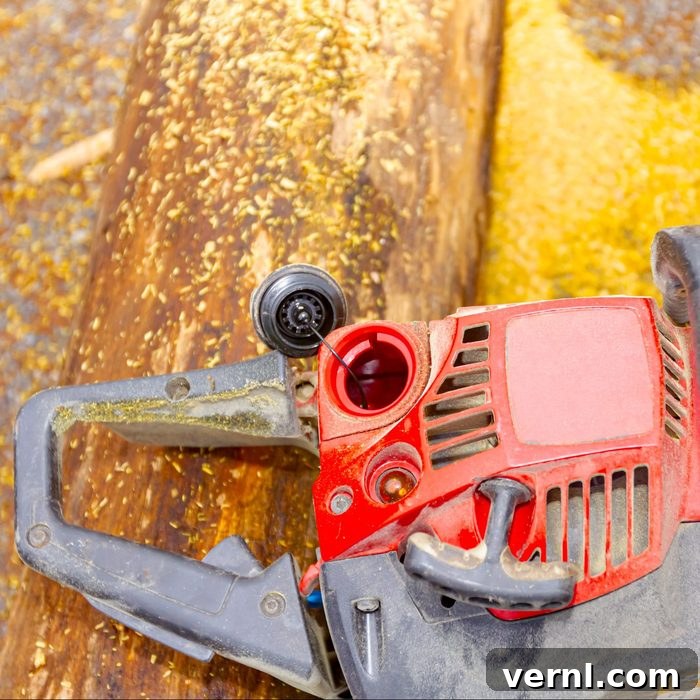
For Two-Cycle Engines
If your chainsaw features a two-cycle engine and you have correctly prepared your gas and oil mixture, checking the oil level is straightforward: it’s tied directly to your fuel level. Vince Christofora, a hardware store proprietor, explains, “Some chainsaws have a translucent tank so you can easily see the level of the gas mixture in the fuel tank. For those that do not, add some fuel and then check the fuel level by looking in the tank opening.”
Ensure you have an adequate supply of the mixed fuel in the tank for your task. For small jobs, a half-tank might suffice, but for extensive work or a full day’s use, filling the tank to the top is advisable.
For Four-Cycle Engines
Chainsaws with four-cycle engines require a different procedure, similar to checking the oil in a car. You will use a dipstick:
- Position the Chainsaw: Place your chainsaw on a flat, level surface to ensure an accurate reading.
- Remove and Clean Dipstick: Carefully remove the engine oil dipstick. Wipe it completely clean with a cloth to remove any residual oil.
- Reinsert Dipstick: Fully reinsert the dipstick into its designated port, ensuring it is seated correctly.
- Check Oil Level: Pull the dipstick out again and observe where the oil completely covers it. Most dipsticks have markings (e.g., “Full” and “Add” or a range of dots) indicating the acceptable oil level. Ensure the oil level falls within this recommended range. If it’s low, add the appropriate four-stroke engine oil, being careful not to overfill.
How Often Should Chainsaw Oil Be Checked?
The frequency of oil checks depends on the engine type and the specific oil reservoir:
- Two-Cycle Engine (Fuel/Oil Mix): Simply ensure you mix the correct amount of oil with gas every time you refuel. The “oil check” is integrated into the refueling process.
- Four-Cycle Engine (Crankcase Oil): For these engines, you should check the dipstick every time you intend to use the saw. This proactive approach helps catch low oil levels before they can cause damage.
- Bar-and-Chain Oil: This is a separate lubrication system. The bar-and-chain oil reservoir should be checked every time you start up the saw, and refilled as necessary. It’s often recommended to refill the bar-and-chain oil reservoir every time you refill the fuel tank, as they tend to deplete at a similar rate.
How to Change Chainsaw Engine Oil
The process of changing chainsaw engine oil (or draining fuel/oil mixture) is a crucial maintenance step. While specific details may vary by model, the following outlines the general procedure.
Draining and Refilling Two-Cycle Fuel/Oil Mixture
For two-cycle engines, you typically drain and refill the entire fuel/oil mixture:
- Drain Fuel Tank for Storage: If the chainsaw will not be used for more than 30 days, it is best practice to drain the fuel tank completely. Pour the old fuel/oil mixture into an approved gas can. Remember, this is a flammable mixture and must be stored in a container designed for gasoline.
- Run Engine Dry: After draining, tighten the gas cap and start the chainsaw. Let it run until it completely stops from lack of fuel. This ensures all fuel and oil is purged from the carburetor and fuel lines, preventing gumming during storage.
- Prepare Fresh Mixture: The next time you plan to use the chainsaw, prepare a fresh gas/oil mixture according to your chainsaw’s specifications (e.g., 40:1, 50:1).
- Refill and Secure: Add the fresh mixture to the fuel tank and securely tighten the fuel cap.
- Disposal: Dispose of old or expired fuel/oil mixtures responsibly. Most local hazardous waste centers accept these materials. Do not pour them down drains or onto the ground.
Changing Oil in a Four-Cycle Engine
For chainsaws equipped with a four-cycle engine, changing the oil involves a dedicated oil tank and is separate from the fuel process:
- Prepare for Drainage: Place a suitable container, such as an oil pan or an old plastic storage container, directly underneath the engine’s oil drain plug or fill cap (depending on the design, some drain through the fill port).
- Drain Old Oil: Open the oil tank cap (and drain plug if present) and allow all the old oil to drain completely into your container. It’s often beneficial to do this when the engine is slightly warm, as the oil will flow more easily.
- Refill with Fresh Oil: Once fully drained, replace the drain plug (if applicable) and refill the oil tank with fresh, appropriate four-stroke engine oil. Use the dipstick to ensure you fill to the recommended level without overfilling.
- Clean Up: Wipe up any spilled oil immediately to prevent fire hazards and maintain a clean workspace.
- Disposal: Dispose of the used engine oil responsibly at a local automotive service center or hazardous waste facility.
Always consult your chainsaw’s owner’s manual for precise instructions, recommended oil types, and torque specifications for drain plugs, as these can vary significantly between models.
Bar-and-Chain Oil Basics: The Other Critical Lubricant
Beyond the engine’s internal lubrication, chainsaws have another vital oil system: the bar-and-chain oil. This specialized oil is continuously dispensed onto the guide bar and cutting chain, serving several critical functions for safe and efficient operation.
Bar-and-chain oil ensures the chain glides smoothly around the guide bar, drastically reducing friction and heat buildup. Without it, the chain and bar would quickly wear out, generate excessive heat, and potentially seize, making cutting difficult and dangerous. Proper lubrication here prolongs the life of both the chain and guide bar, improves cutting performance, and enhances user safety.
Understanding Bar-and-Chain Oil Types
Bar-and-chain oil comes in different formulations, primarily categorized by viscosity for varying temperature conditions:
- Summer Oil: This type is generally thicker and heavier. It’s formulated to maintain its viscosity and lubricating properties in hot ambient temperatures, preventing it from thinning out too much and ensuring it adheres well to the chain.
- Winter Oil: Conversely, winter oil is thinner, designed to flow smoothly even in cold conditions. This prevents the oil from becoming too viscous and impeding the oil pump’s ability to deliver it effectively to the bar and chain. Using summer oil in winter can lead to insufficient lubrication in cold weather.
Using the correct viscosity for the prevailing weather conditions is important for consistent lubrication.
How to Check and Refill Bar-and-Chain Oil
A chainsaw needs a constant supply of bar-and-chain oil to function safely and effectively. A good rule of thumb is to refill the bar-and-chain oil reservoir every time you refill the fuel tank. This ensures that you don’t run out of chain oil mid-task, which can quickly damage your equipment.
Many chainsaws feature a translucent bar-and-chain oil reservoir or a level gauge, allowing you to easily monitor the oil level. If your saw lacks this feature, visually inspect the reservoir opening before each use. Always ensure the reservoir is adequately filled to prevent premature wear of the guide bar and chain.
Environmentally Friendly Bar-and-Chain Oil Options
In recent years, biodegradable, bio-based chainsaw oils (both for engines and bar-and-chain lubrication) have gained popularity. These eco-friendly alternatives offer comparable performance to petroleum-based products while significantly reducing environmental impact. If environmental concerns are a priority, consider opting for these more earth-friendly products when purchasing oil for your chainsaw.
Proper Storage of Chainsaw Oils
While gasoline degrades relatively quickly, chainsaw engine oil and bar-and-chain oil have much longer shelf lives, especially when stored correctly.
- Original Container: Always store leftover oil in its original container. These containers are designed to protect the oil from light, moisture, and air exposure.
- Tight Seal: Ensure the cap is tightly sealed after each use. This prevents contamination and oxidation, which can degrade the oil’s quality over time.
- Stable Environment: Store oil in a cool, dry place with stable temperatures. Avoid extreme heat or cold, and keep it away from direct sunlight. A garage or shed is typically suitable, provided it doesn’t experience drastic temperature swings.
- Keep Away from Ignition Sources: Although less flammable than gasoline, oil can still be combustible. Store it away from open flames, heaters, and other ignition sources.
- Separate from Other Chemicals: Store chainsaw oil separately from other chemicals, especially those that could cause contamination if spilled.
Unlike gasoline, which can “go bad” and lose its volatility quickly, sealed chainsaw oil remains viable for several years, often up to five years for two-cycle oil and indefinitely for four-cycle oils if stored properly. Once opened, however, its shelf life decreases, so be sure to note the opening date.
Conclusion: Investing in Longevity
The proper selection, mixing, and maintenance of chainsaw oil are not merely optional steps; they are fundamental to extending the life of your chainsaw, ensuring its reliable performance, and protecting your investment. From understanding the distinct needs of two-cycle and four-cycle engines to mastering the critical gas-to-oil ratios and recognizing the importance of bar-and-chain lubrication, every detail contributes to the seamless operation of your tool.
By following the expert advice and practical guidelines outlined in this guide, you can confidently maintain your chainsaw, prevent common issues, and ensure it’s always ready to tackle your toughest cutting tasks. Remember, a well-oiled machine is a reliable machine, and nowhere is this truer than with your powerful chainsaw.
About Our Experts
- Nancy Egelhoff contributes her extensive knowledge from Egelhoff Lawnmower Service, Inc. in Thiensville, Wisconsin, where she has years of experience with small engine maintenance.
- Vince Christofora, the esteemed owner of Woodstock Hardware in Woodstock, New York, provides practical, hands-on advice from the retail and service perspective.