
As the crisp autumn leaves give way to the gentle (or sometimes relentless) descent of snowflakes, homeowners across colder climates face an annual dilemma: how to effectively and affordably clear the accumulating snow. For many, the decision often boils down to a fundamental question of budget and convenience: should you tackle the task yourself with a reliable snow blower, or is it more prudent to invest in professional snow removal services?
While various factors contribute to this choice, the cost of snow removal frequently emerges as the most pressing consideration. Understanding the financial implications helps homeowners make an informed decision that balances their needs, physical capabilities, and wallet. Professional services offer invaluable peace of mind and save significant time and effort, but they come with a price tag that varies widely based on several key elements.
“About four years back, we recognized the growing demand for snow clearing services and integrated them into our platform, GreenPal. Since then, we’ve facilitated thousands of snow removal jobs, connecting homeowners with reliable local professionals,” says Bryan Clayton, CEO and Co-Founder at GreenPal. He notes that the scope of services can extend beyond basic plowing, with some contractors offering specialized tasks like roof snow removal or applying ice melt products to safeguard walkways and driveways.
According to Clayton, the ultimate cost of snow removal is influenced by a range of variables, including the total area requiring service, the volume of snowfall, and the specific type of service chosen (e.g., manual hand clearing versus automated plowing). Because every property and snow event is unique, these factors empower snow removal services to provide fair and transparent pricing tailored to individual job requirements. Let’s delve deeper into these and other critical factors that shape snow removal expenses.
Snow Removal vs. Snow Plowing: Understanding the Distinction
For many homeowners, the terms “snow plowing” and “snow removal” might seem interchangeable. However, within the professional landscaping and winter services industry, these terms denote distinct approaches with different cost implications.
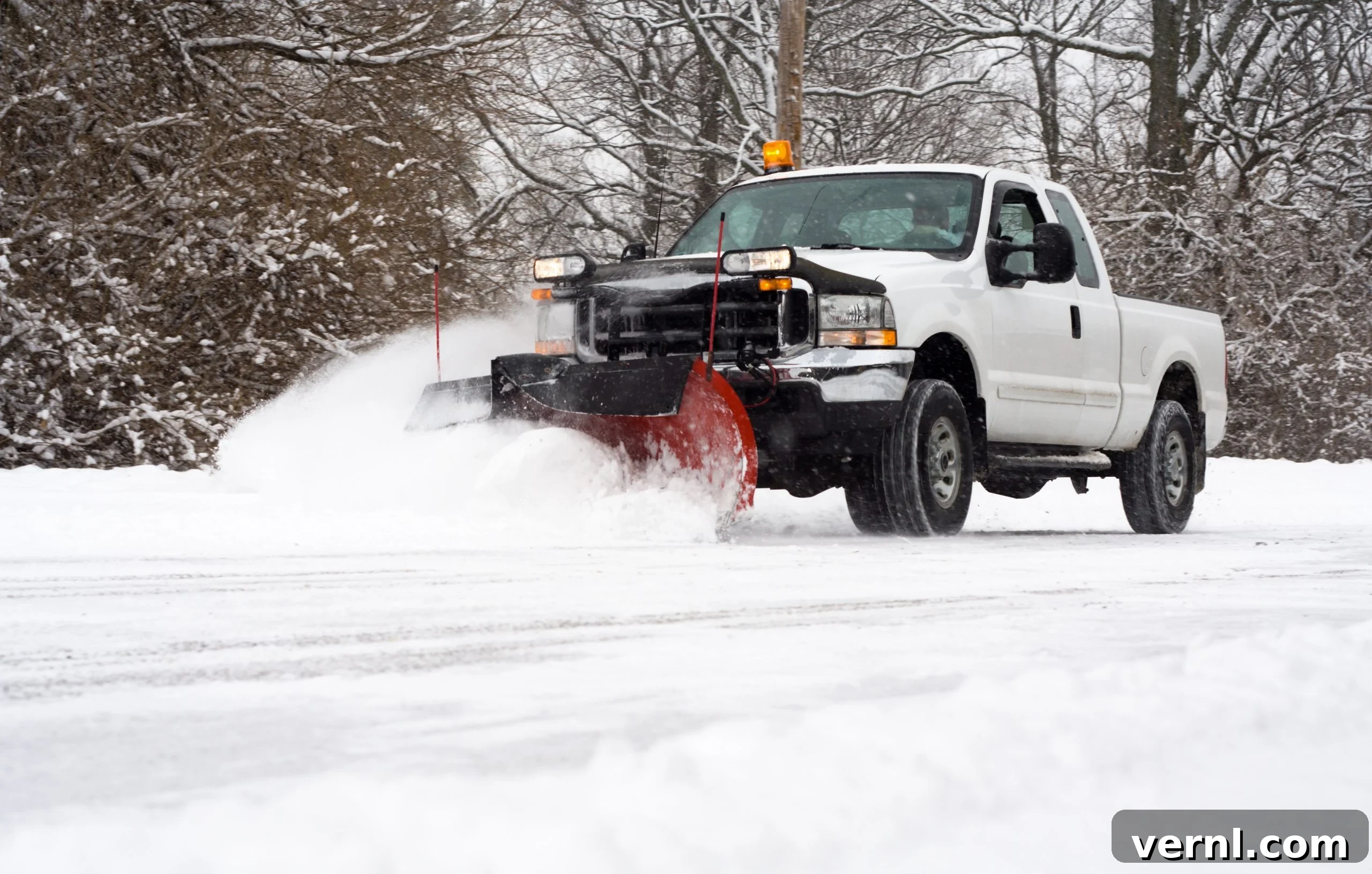
- Snow Plowing: This typically refers to the process of pushing snow from a driveway, parking lot, or sidewalk to the side. The snow is relocated to designated areas on the property, often forming large banks. It’s an efficient method for clearing large surfaces quickly.
- Snow Removal (or Hauling): This service involves not just plowing the snow, but physically loading it onto trucks and transporting it off your property entirely. This is particularly popular and often essential in regions experiencing heavy, prolonged winters where accumulating snowbanks can become excessively large, obstructing sightlines, blocking access, or even causing structural damage to property.
While both services aim to clear snow, true “snow removal” (hauling it away) requires more specialized equipment, additional labor for loading and transport, and often disposal fees, making it significantly more expensive than standard plowing. For the purpose of this comprehensive guide, we’ll generally use “snow removal” in its more common, broader sense: the act of clearing snow from driveways and walkways, whether through plowing, shoveling, or using snow blowers.
When to Engage a Professional Snow Removal Company
The cardinal rule for securing reliable snow removal services is simple: plan ahead. Waiting until the first major snowfall hits is a common mistake that often leads to frustration and limited options. Professional snow removal companies almost invariably prioritize their pre-contracted customers, leaving those who call last-minute with either no service or significantly higher “emergency” rates.
To ensure your driveway and walkways are cleared promptly and efficiently throughout the winter season, it is highly recommended to sign a contract with a reputable service provider well before the snow starts flying. Ideally, this means securing your service in late summer or early autumn. Early booking offers several advantages:
- Guaranteed Service: You secure your spot on a contractor’s route, ensuring consistent service.
- Better Pricing: Early bird discounts or more favorable contract terms might be available.
- Peace of Mind: Eliminate the stress of scrambling for help during a snowstorm.
- Choice of Contractor: You have the luxury to research and choose a contractor that best fits your needs and budget, rather than settling for whoever is available.
How Snow Removal Costs Are Calculated
The methodology for calculating snow removal costs can vary significantly among contractors and regions. Factors such as local snowfall accumulation patterns, the size and complexity of your property, and the specific services requested all play a crucial role. While contractors often establish standard charges for typical residential properties to streamline bookkeeping, expect variations for exceptionally large areas or properties with unique access challenges.
Bryan Clayton of GreenPal offers valuable advice for homeowners seeking snow removal services:
- Understand the Service Scope: Before committing, ensure you have a clear understanding of what your chosen service package includes. Is it merely snow plowing for your driveway, or does it encompass sidewalks, pathways, and the application of ice melt? Different contractors offer varying tiers of service, from basic clearing to comprehensive winter property management. Clarifying this upfront prevents misunderstandings and unexpected charges.
- Set Clear Expectations: Communicate precisely which areas of your property need clearing. Walk through your property with the contractor, if possible, to highlight specific zones, obstacles, or delicate landscaping features they should be aware of. This mutual understanding ensures the job is done to your satisfaction and protects your property.
- Prioritize Safety and Insurance: Snow removal can be a physically demanding and potentially hazardous job. Always confirm that your contractor is fully insured with both liability and workers’ compensation coverage. This critical step protects you from financial responsibility should an accident occur on your property involving the contractor or their crew. Reputable professionals will readily provide proof of insurance.
Finally, always read the contract carefully before signing. Pay close attention to clauses regarding limits on service trips, definitions of what constitutes a “snow event,” and any potential surcharges for excessive snowfall or specific conditions. Transparency in the contract is key to avoiding hidden costs.
Per Inch Pricing Model
Some snow removal contractors base their charges on the amount of snowfall received. This model typically includes a minimum charge for a certain accumulation (e.g., “X inches or less”), with additional fees for every extra inch beyond that threshold. The specific “X inches” and the incremental charge for additional snow vary significantly by market and contractor.
Typical Range: Expect to pay $50 to $150 for the minimum snowfall, with an additional $20 to $40 for each incremental accumulation.
Pros for Homeowners: You only pay for the snow that falls.
Cons for Homeowners: Can be unpredictable; multiple smaller snowfalls adding up could become costly.
Per Event Pricing Model
Under this model, you pay a single, flat charge for each snowstorm, regardless of the number of trips or hours required to clear your property. This simplifies billing and offers predictability for individual events.
Typical Range: Prices generally range from $50 to $200 per event.
Pros for Homeowners: Predictable cost per storm; no surprise charges if a storm requires multiple passes.
Cons for Homeowners: You pay the same whether it’s a light dusting or a heavy blizzard within that “event” definition.
Per Season Pricing Model
A seasonal contract involves paying a flat fee that covers all snow removal services for the entire winter season. This is a popular choice for homeowners seeking consistent service and budget predictability, especially in areas with consistently heavy snowfall.
Typical Range: Prices often range from $300 to $600 for the season.
Pros for Homeowners: Complete budget predictability; continuous service regardless of snowfall frequency. Can offer significant savings in heavy snow years.
Cons for Homeowners: If the winter experiences unusually light snowfall, you might end up paying full price for minimal work.
Per Trip (or Per Push) Pricing Model
In this arrangement, the contractor charges for each time they visit your property to clear snow, often referred to as a “push.” A trip is usually triggered by a minimum amount of snow accumulation (e.g., 2-4 inches). This model can be attractive in areas with variable snowfall.
Typical Range: Prices typically range from $45 to $100 per trip.
Pros for Homeowners: You only pay when service is rendered, which can save money in years with less snowfall.
Cons for Homeowners: During particularly intense or prolonged storms, the contractor might make multiple trips, rapidly increasing your overall bill.
Per Hour Pricing Model
While less common for standard plowing, some snow removal services, particularly those focusing on hand-shoveling or intricate snow blower work, charge by the hour. This model is often applied to more labor-intensive tasks or smaller, non-plowable areas.
Typical Range: Hourly rates usually fall between $25 and $65, depending on the region and the complexity of the work.
Pros for Homeowners: Fair for small, specific jobs or unpredictable tasks.
Cons for Homeowners: Cost can quickly escalate if the job takes longer than anticipated due to heavy snow or difficult conditions.
Key Factors Affecting Snow Removal Cost
Beyond the chosen pricing model, several specific elements directly influence the final price you’ll pay for professional snow removal:
- True “Removal” (Hauling) Service: As discussed, physically loading and hauling snow off your property requires more specialized equipment (e.g., skid steers, dump trucks) and additional labor, leading to significantly higher costs compared to simply plowing snow to the side. This service is essential in urban areas or properties with limited space for snow storage.
- Priority Service: Some contractors offer premium “priority” service, guaranteeing your property will be among the first cleared after a snowfall. This expedited service is invaluable for businesses needing immediate access or for residential clients with specific time constraints, but it comes at an increased price.
- Walkways and Pathways: While plows efficiently clear driveways, clearing sidewalks, intricate pathways, and steps often requires workers to disembark and use shovels or snow blowers. This manual labor adds to the overall cost, as it’s more time-consuming and physically demanding.
- Roof Snow Clearing: Not all snow removal contractors offer roof snow clearing due to the inherent risks and specialized equipment involved. Those who do typically charge separately for this service, which protects roofs from excessive weight and prevents ice dams.
- De-icing Services: Many professionals offer to apply de-icing agents (like rock salt, calcium chloride, or pet-friendly alternatives) to driveways, walkways, and steps after clearing. This prevents refreezing and improves safety, but it’s an additional charge.
- Driveway Size, Shape, and Surface: While contractors often have standard rates for typical residential driveways, exceptionally large, unusually long, or intricately shaped driveways will naturally incur higher costs. The surface material also matters; gravel or brick driveways require more careful plowing than smooth concrete or blacktop to avoid damage or displacing material. Steep inclines also add complexity and cost.
- Geographic Region: “Some contractors charge based on the inch of snow accumulation. It’s not as common, but it does happen, especially in areas with variable snowfall,” says Clayton. The region where you reside significantly impacts costs due to variations in average snowfall, local labor rates, fuel prices, and the density of service providers. Areas accustomed to heavy, frequent snow often have more competitive pricing due to higher demand and a greater supply of services.
Understanding Regional Snow Removal Cost Differences
“GreenPal operates across several regions in the U.S., giving us a pretty good view of how things change from one area to another,” explains Clayton. He highlights a stark contrast in pricing based on a region’s typical winter climate and local economy.
“In parts of the country where snow is more frequent and a consistent part of the winter season, such as Buffalo, New York, you can often expect a 20-30% discount on services compared to the national average,” he notes. This is largely due to a higher volume of work, established contractor routes, and competitive market conditions.
Conversely, Clayton points out, “In Southern Markets like Nashville or Atlanta, where significant snowfall might occur only once per year, you can expect to pay 40-50% more.” In these areas, contractors face the challenge of investing in expensive snow removal equipment that sits idle for much of the year, leading to higher per-event charges to offset those fixed costs. Additionally, the limited number of specialized service providers in these regions can drive prices up due to lower supply and higher demand during a rare snow event.
Regarding specific service types, Clayton provides further insight: “Typically, contractors charge around $100 per hour for hand-clearing sidewalks and intricate paths. This is a common approach for residential areas where large plows simply can’t reach or would damage landscaping.” For more extensive jobs involving driveways and larger open areas, “the going rate for plowing is about $275 per hour with a one-hour minimum. This makes economic sense for bigger tasks where a plow can complete the work much faster and more efficiently.”
Smart Strategies for Snow Removal Cost Savings
While professional snow removal offers undeniable convenience, there are several practical ways homeowners can reduce their winter clearing expenses:
- Consider DIY for Light Snow: If you are physically able and have the necessary tools like a good shovel or a quality snow blower, tackling lighter snowfalls yourself is a fantastic way to cut costs. You might also consider hiring an enterprising neighborhood teenager for a fraction of the cost of a professional service. Remember to prioritize safety and proper technique to avoid injury.
- Evaluate “Per Trip” Rates Carefully: While per-trip contracts can seem appealing in mild winters, they can become surprisingly expensive during heavy or prolonged snowstorms that require multiple clearing visits. If your region is prone to frequent, moderate to heavy snowfalls, a seasonal or per-event contract might offer better value and predictability.
- Bundle Services with Lawn Care: Many landscaping and lawn care companies offer snow removal services during the winter months. By bundling your summer lawn mowing, fall leaf collection, and winter snow removal into a single annual package, you can often negotiate a significant discount and simplify your home maintenance scheduling with a single provider. This also helps build a long-term relationship with a trusted professional.
- Seek Multiple Quotes: Don’t settle for the first quote you receive. Contact several local snow removal contractors to compare pricing, service offerings, and contract terms. This competitive bidding process can help you find the best value for your specific needs.
- Negotiate and Be Prepared: Some contractors may be open to negotiation, especially if you have a larger property or are committing to a seasonal contract. Also, ensure your driveway is free of obstacles (like toys, garden hoses, or fallen branches) before the plows arrive. A clear path makes the job quicker for the contractor, potentially saving you time (and therefore money, if charged hourly).
Why You Should Trust This Information
This article has been compiled with insights from industry experts and practical experience to provide homeowners with reliable and actionable advice. As an Ohio-based freelance writer and author with a background as a residential remodeler, commercial site supervisor, and maintenance manager, I’ve personally encountered nearly all aspects of building and DIY, including project planning, plumbing, basic electrical work, drywall, carpentry, tiling, and painting. This hands-on experience provides a practical foundation for understanding home maintenance needs.
Emily Way, an Associate Shopping Editor for Family Handyman, further researched and updated this piece, leveraging her expertise in product research and consumer recommendations. Crucially, Way consulted Bryan Clayton, CEO and Co-founder at GreenPal, an established platform for outdoor home services. Clayton’s extensive experience and access to real-world pricing data from thousands of snow removal jobs across various U.S. regions provide invaluable, authoritative insights into the costs and dynamics of the snow removal industry.