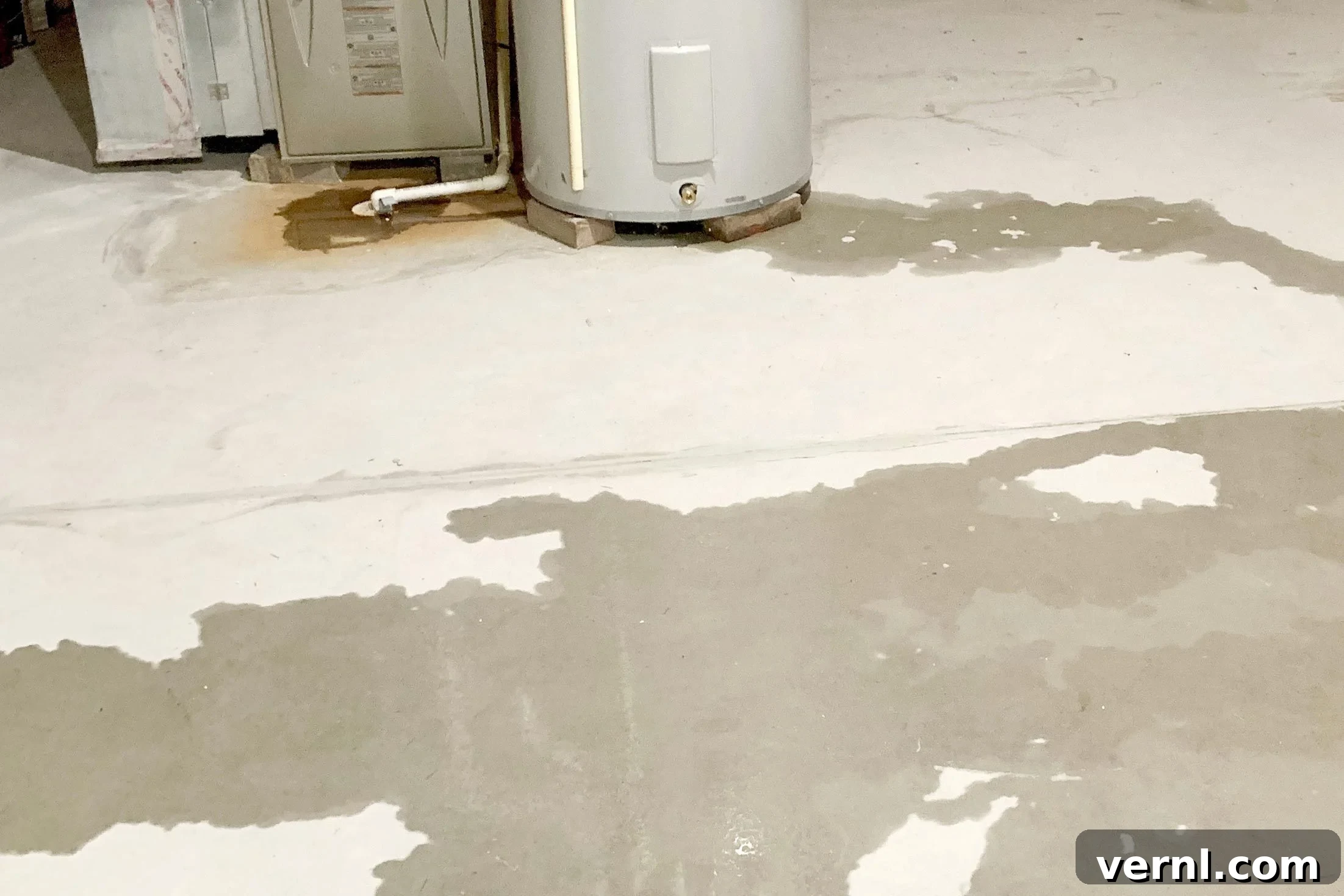
Discovering a puddle of water around your furnace can be an unsettling sight, often raising immediate concerns about your home’s heating system. This common issue, though sometimes minor, always warrants prompt investigation and action. Alexander Siv of Amherst Plumbing and Heating, a seasoned professional in the field, frequently encounters such situations. “If your furnace is leaking water, you should have a technician come out,” he advises. “It might be no big deal, but you’ll want to make sure it’s not masking a more significant problem.” Neglecting a furnace leak can lead to costly repairs, structural damage to your home, and even pose health risks. Understanding the potential causes and knowing when to call a professional is crucial for maintaining a safe and efficient home environment.
In this comprehensive guide, drawing on insights from industry experts Alexander Siv and Joshua Smith from Berkshire Heating and Air Conditioning, we’ll delve into the various reasons why your furnace might be leaking water. We’ll explore whether such a leak constitutes an emergency, discuss the potential health implications, and provide clear guidance on when to tackle the issue yourself and when to enlist the expertise of a qualified HVAC technician. By the end, you’ll be equipped with the knowledge to react effectively and protect your home from potential water damage and system failures.
Why Does a Furnace Leak Water? Unraveling the Mystery
The presence of water near your furnace almost always indicates an operational fault within the system, but the specific cause can vary depending on the type of furnace you own and its typical usage. Often, issues stem from problems with condensation removal, especially in modern, high-efficiency units. However, other mechanical or maintenance-related problems can also lead to unwanted puddles. Understanding the primary culprits can help homeowners narrow down the potential source of the leak and inform their next steps.
Condensation Removal Problems in High-Efficiency Furnaces
One of the most frequent reasons for water leaks in newer furnaces is related to their inherent design. This problem is almost exclusively found in condensing forced-air furnaces, which boast efficiency ratings of 90% or higher. These cutting-edge systems are engineered to extract more heat from exhaust gases before they exit your home through the flue pipe. This process involves cooling the combustion gases to a point where the water vapor within them condenses into liquid water—a byproduct known in the HVAC industry as condensate.
High-efficiency furnaces are designed with a condensate collection system that gathers this liquid. The condensate then typically drains into a floor drain or is pumped away by a specialized condensate pump into a utility sink or an external drain. Any disruption to this delicate system can lead to significant water accumulation. For instance, a blockage in the condensate trap, a cracked drain pan, a disconnected drain line, or a malfunctioning condensate pump can all result in water overflowing onto your basement floor. Regular inspection of these components, particularly during routine maintenance, is vital to prevent such issues and ensure the proper functioning of your energy-efficient heating system.
Common Mechanical and Maintenance-Related Causes
Beyond condensation issues, several other common problems can cause your furnace to leak water, impacting both high-efficiency and less efficient models:
- Broken Condensate Pump: As Joshua Smith explains, “If it stops pumping water, it will overflow and spill onto the floor.” The condensate pump is a critical component for high-efficiency furnaces, actively moving collected condensate to a drain. If this pump’s motor burns out, its float switch fails, or it simply ceases to operate effectively, the collected water will have nowhere to go but out onto your floor. This typically manifests as a steady, growing puddle.
- Unplugged Condensate Pump: Sometimes, the solution is surprisingly simple. “I’ve had customers who were doing their laundry or moving stuff around in the basement and unplugged the pump by accident,” Smith recounts. The condensate pump requires continuous power to function. If it’s accidentally disconnected from its power source, it cannot operate, leading to an overflow. Always ensure the pump is securely plugged into a working electrical outlet.
- Drain Hose Problem: The hose responsible for carrying the condensate from the pump or the furnace’s drain pan to the main drain can be a source of leaks. This hose can become clogged with debris, mold, or algae over time, obstructing water flow. Smith notes, “If someone’s washing a paintbrush in the basement utility sink, they might knock the drain tube out of position. The water starts draining onto the floor instead of into the drain.” A simple jostle can dislodge the hose, causing water to spill. Furthermore, improper slope or kinking of the hose can prevent proper drainage. Drain hoses can also clog internally, creating back pressure and overflow.
- Humidifier Issues: Many furnaces, regardless of their efficiency rating, are equipped with humidifiers to add moisture to dry indoor air during the heating season. These humidifiers themselves have components that handle water. Smith clarifies, “If your humidifier pad gets plugged up or dirty or your humidifier drain gets plugged up, you’ll have water on your floor.” The humidifier pad collects mineral deposits, and if it becomes excessively saturated or its drainage system fails, water can escape the unit and pool around the furnace. Regular cleaning and replacement of humidifier pads are essential to prevent this type of leak.
- Improperly Sloped Flue Pipe: While less common, an improperly installed or sloped flue pipe in a high-efficiency furnace can also cause issues. If the flue pipe is not correctly angled downwards towards the furnace, condensate meant to drain back into the system can instead accumulate in the pipe and potentially drip out at connection points or low spots.
Is Furnace Leaking Water an Emergency? Assessing the Urgency
The severity of a furnace leak can range from a minor inconvenience to an urgent situation, depending on several factors. While any leak should be addressed promptly, understanding the immediate risks can help you determine the appropriate course of action.
A small, isolated puddle on a bare concrete basement floor might not constitute an immediate emergency in terms of widespread damage, but it should never be ignored. As Smith advises, “If you see water, it’s best to get it looked at.” Furnaces are complex appliances containing sensitive electronic components, including circuit boards, control boards, and electric motors. Even a small amount of water, if it reaches these parts, could cause a short circuit, leading to electrical failure, system shutdown, or even a fire hazard. Prompt attention can prevent a minor leak from escalating into a much more expensive and dangerous electrical issue.
The situation becomes significantly more urgent in a finished basement or living space. Siv emphasizes this point: “It’s a more urgent matter in a finished basement.” In such environments, water can quickly cause extensive damage to carpeting, drywall, wood flooring, insulation, and furniture. Seeping water provides a fertile breeding ground for mold and mildew, which can develop rapidly and spread throughout the affected area, leading to costly remediation and potential health problems. In these scenarios, immediate action—such as shutting down the furnace, cleaning up the water, and calling a professional—is paramount to mitigate damage and protect your property investment.
Furthermore, if the leak is substantial and ongoing, or if you notice any unusual smells (like burning electrical components) or sounds coming from the furnace, it elevates the situation to a potential emergency. In such cases, prioritize safety by immediately turning off the furnace’s power supply at the breaker and, if comfortable, the gas supply, before contacting an HVAC professional.
Can a Leaky Furnace Make You Sick? Understanding the Health Risks
While the water leaking directly from your furnace isn’t inherently dangerous or contaminated with bacteria, its long-term presence can create significant secondary problems that pose serious health risks to your household. The primary concern with any prolonged water leak in an indoor environment is the growth of mold and mildew.
As Alexander Siv explains, “If it leaks and soaks into your carpet or gets into the drywall, over time it can produce mold.” Basements, often damp and poorly ventilated, provide an ideal environment for mold and mildew to thrive, especially when introduced to a consistent moisture source from a furnace leak. Mold spores, microscopic fungi, can rapidly colonize moist surfaces. Once established, mold releases more spores into the air, significantly compromising indoor air quality.
Exposure to mold and mildew can trigger a range of health issues, particularly for individuals with allergies, asthma, or compromised immune systems. Symptoms can include respiratory problems such as coughing, wheezing, and shortness of breath; nasal congestion; throat irritation; skin rashes; and eye irritation. In more severe or prolonged cases, mold exposure can lead to chronic health conditions. Children and the elderly are often more susceptible to these adverse health effects.
If left unresolved, mold and mildew can spread extensively, leading to costly professional remediation. Beyond the health implications, mold can also cause structural damage to your home, weakening wood, plaster, and other building materials over time. Therefore, promptly addressing a furnace leak is not just about protecting your heating system and property; it’s also about safeguarding the health and well-being of everyone living in your home.
Can a Dirty Filter Cause a Furnace to Leak Water? The AC Connection
It might seem counterintuitive for a dirty air filter to cause a water leak from your furnace, especially when discussing heating systems. However, this scenario is entirely plausible, though it typically occurs when your furnace unit is being used for cooling, not heating. Many modern HVAC systems integrate the air conditioning evaporator coil directly above or adjacent to the furnace, utilizing the same blower fan and ductwork for both heating and cooling functions.
A dirty or clogged air filter severely restricts the amount of air circulating through your HVAC system. During the cooling cycle, the air conditioning evaporator coil (which sits above your furnace) relies on a continuous, unobstructed flow of warm indoor air to absorb heat efficiently. When this airflow is significantly limited by a dirty filter, the coil cannot absorb enough heat from the surrounding air. Consequently, the refrigerant inside the evaporator coil gets excessively cold, causing moisture in the air to condense and then freeze solid onto the coil’s surface, much like ice accumulating in an old freezer.
As Joshua Smith aptly describes, the air conditioning condenser (or rather, the evaporator coil within the furnace enclosure) freezes up like a block of ice. When the AC system eventually cycles off, or if the ice accumulation becomes too great, this massive block of ice will thaw. The melting ice produces a large volume of water that the normal condensate drain pan and line are not designed to handle. “When the condenser thaws, that water will end up on your floor in a puddle,” Smith confirms. This overflow can quickly create a significant water leak around the base of your furnace, potentially causing damage and necessitating cleanup. Regular replacement of your furnace’s air filter is one of the simplest and most effective preventative maintenance tasks you can perform to avoid this specific type of leak and ensure optimal airflow for both heating and cooling.
How Do You Fix a Furnace Leaking Water? Initial Steps and Professional Guidance
Discovering a furnace leak can be alarming, but there are several homeowner-friendly steps you can take to diagnose the issue or prepare for a professional repair. Before attempting any fixes, always prioritize your safety by understanding the situation and, if necessary, shutting down the unit.
Immediate Actions for Homeowners:
- Check the Condensate Removal Pump and Drain Line: This is often the first and simplest step, especially for high-efficiency furnaces. “Find the pump and make sure it’s plugged in,” advises Alexander Siv. The condensate pump is usually a small, rounded plastic box, typically located on the floor near the furnace or attached to its side. It will have a power cord plugged into an electrical receptacle on the furnace itself or a nearby wall outlet. Ensure it’s firmly plugged in. Next, inspect the clear plastic or PVC tube that extends from the pump. This is the drain tube. Verify that it’s securely connected to the pump and directed properly into a utility sink, floor drain, or dedicated drain pipe. Look for any visible clogs, kinks, or disconnections along its path. Sometimes, simply repositioning a dislodged tube or clearing a minor clog can resolve the leak.
- Inspect the Condensate Pan and Trap: For high-efficiency furnaces, locate the condensate drain pan (often metal or plastic) which collects water directly from the heat exchanger. Ensure it’s not cracked or corroded. Also, locate the condensate trap (usually a U-shaped or S-shaped PVC pipe similar to a sink trap). These traps can become clogged with sludge, mold, or mineral deposits, preventing proper drainage. A minor clog might be cleared with a wet/dry vac or a specialized brush, but be cautious not to damage any components.
- Consider the Humidifier (If Applicable): If your furnace has an attached humidifier, inspect its components. Ensure the humidifier pad is clean and not excessively saturated or covered in mineral deposits. Check the humidifier’s drain line for clogs or disconnections.
- Check the Air Filter (If Using AC): If the leak occurs during the cooling season, inspect your furnace’s air filter. If it’s dirty or clogged, replace it. This might resolve issues related to a frozen evaporator coil.
Preparing for Professional Assistance:
If the pump or drain tube isn’t the obvious source of the water, or if you’re uncomfortable attempting any DIY fixes, it’s time to call an HVAC professional. To help your technician diagnose the problem more efficiently and potentially save on repair costs, Siv recommends a proactive approach: “I would video it on my phone to show where and how it’s leaking,” he says. “We can often diagnose the problem just from a texted video a customer sends in.” A short video clearly showing the location and nature of the leak can provide invaluable information to your HVAC pro before they even arrive, potentially streamlining the diagnostic process.
Before the technician arrives, and if temperatures aren’t dangerously cold (which could lead to frozen pipes or other issues), it’s generally advisable to turn off your furnace. Every furnace has an easily identifiable on/off switch, often located directly on the unit or on a nearby wall. This prevents further damage from water contacting electrical components and ensures the unit is safe for the technician to work on. If you’re concerned about potential electrical hazards, also switch off the furnace’s circuit breaker at your home’s electrical panel.
Should You Call a Pro To Fix a Furnace Leaking Water? When Expertise is Essential
While basic troubleshooting steps can sometimes resolve simple issues like an unplugged condensate pump or a dislodged drain tube, the vast majority of furnace leaks require the expertise of a qualified HVAC specialist. If your initial checks do not identify and immediately resolve the problem—for instance, if the pump drain tube is not the clear culprit, or if the pump itself appears broken—it is strongly recommended to call a professional.
Furnace systems, especially high-efficiency models, are intricate and contain numerous components that interact in complex ways. Diagnosing a leak can involve more than just a visual inspection; it often requires specialized tools, knowledge of refrigerant cycles (if the AC coil is involved), and an understanding of electrical systems. A professional HVAC technician can accurately pinpoint the source of the leak, whether it’s a failing condensate pump motor, a compromised heat exchanger, a clogged condensate trap, or an issue with the humidifier. They possess the necessary skills and certifications to safely repair or replace damaged components, ensuring the system operates efficiently and safely according to manufacturer specifications and local codes.
Attempting complex repairs yourself without proper training can not only exacerbate the problem but also void your furnace’s warranty, create new hazards (like gas leaks or electrical shocks), or lead to further costly damage. An HVAC specialist will also be able to assess any collateral damage caused by the leak, such as mold growth or electrical issues, and advise on appropriate remediation. Trusting a professional ensures that the root cause of the leak is addressed comprehensively, providing you with peace of mind and preventing recurrent problems.
Maintaining Your Furnace: Preventing Leaks and Ensuring Efficiency
Proactive maintenance is the best defense against furnace leaks and other common heating system issues. Regular care not only prevents unexpected breakdowns but also extends the lifespan of your unit, improves energy efficiency, and ensures a healthier indoor environment. While some tasks can be managed by homeowners, an annual professional tune-up is indispensable.
Essential Furnace Maintenance Tips:
- Regular Filter Replacement: This is arguably the simplest yet most impactful maintenance task. Check your furnace filter monthly and replace it every 1-3 months, or more frequently if you have pets, allergies, or heavy furnace usage. A clean filter ensures optimal airflow, preventing issues like frozen evaporator coils (leading to leaks) and reducing strain on your blower motor.
- Annual Professional Tune-Up: Schedule a professional HVAC technician to inspect and service your furnace once a year, ideally before the heating season begins. During a tune-up, the technician will clean components, check electrical connections, inspect the heat exchanger, lubricate moving parts, and assess the condensate drainage system for any potential blockages or issues that could lead to future leaks.
- Keep Condensate Drain Lines Clear: For high-efficiency furnaces, regularly inspect the condensate drain line for visible clogs or buildup of algae and sludge. You can flush the line with a mixture of diluted bleach and water periodically to prevent blockages, ensuring water flows freely.
- Maintain Humidifier (If Applicable): If your furnace has an attached humidifier, follow the manufacturer’s recommendations for cleaning and replacing the humidifier pad, typically once per heating season. Clean the humidifier’s water reservoir and drain components to prevent mineral buildup and clogs.
- Clear Area Around Furnace: Ensure the area around your furnace is free from obstructions, debris, and flammable materials. Good airflow around the unit is essential for safe and efficient operation.
Recognizing Signs of Trouble:
Beyond preventative measures, being aware of common warning signs can help you catch potential issues before they escalate:
- Signs Your Furnace Needs Repair: Pay attention to unusual noises, strange smells, or inconsistent heating.
- Simple Fixes If Your Furnace Is Not Working: Sometimes, a tripped breaker or a pilot light issue can be an easy fix.
- What Is a Furnace Tune-Up?: Understand what a professional service entails and its benefits.
- How DIY Furnace Maintenance Can Save a Repair Bill: Learn which tasks you can safely perform yourself.
- Common Furnace Smells and What to Do About Them: Identify odors that indicate problems.
- Why Is My Furnace Blowing Cold Air?: Understand why your furnace might not be heating.
- Boost Your Furnace Output With This Simple Trick: Simple tips for better performance.
- Why Is the Furnace Drain Trap Full of Water?: Specifics on condensate drain issues.
- Why Did My Furnace Pilot Light Go Out and How Do I Relight It?: Guidance for older furnace models.
- How to Clean a Furnace Ignitor: A detailed DIY cleaning guide.
About the Experts
- Alexander Siv owns Amherst Heating and Plumbing in Amherst, Massachusetts. He has a master plumber’s license in Massachusetts and more than 10 years of plumbing experience, providing him with extensive knowledge of residential heating systems and their common issues.
- Joshua Smith is operations manager at Berkshire Heating and Air Conditioning in West Springfield, Massachusetts. With over 20 years of HVAC experience and holding a Massachusetts oil burner and refrigeration license, Joshua brings deep expertise in furnace operation, diagnosis, and repair.