
Eggshell vs. Satin Paint: Selecting the Ideal Sheen for Your Home
When embarking on a painting project, selecting the right paint color is often the first and most exciting decision. However, an equally crucial factor that significantly impacts a room’s aesthetic, durability, and overall feel is the paint finish, also known as sheen. The sheen refers to the level of shininess or reflectivity a paint exhibits once dry, and it plays a vital role in how light interacts with your walls, how easily they can be cleaned, and their resistance to wear and tear.
Paint sheens exist on a broad spectrum, ranging from highly reflective gloss to completely non-reflective flat. This spectrum includes gloss, semi-gloss, satin, eggshell, matte, and flat. As Bill Carroll of Indiana University aptly describes, “Think of sheen as a spectrum that goes from glossy to flat. Imagine the difference between a mirror and sandpaper. That’s the difference between glossy and flat paint finishes.” This guide will delve deep into two of the most popular and often-debated interior paint sheens: eggshell and satin. Understanding their distinct characteristics will empower you to make an informed decision for your next painting endeavor.
We’ve gathered insights from industry experts to help you navigate this choice. Bill Carroll, Doug Curving from Sherwin-Williams, and Zachariah Vaughan from Grace Paint and Tile share their invaluable knowledge to ensure your walls not only look stunning but also perform effectively for years to come.
Understanding the Paint Sheen Spectrum
Before we dive into eggshell and satin, it’s helpful to briefly understand where they sit within the broader range of paint finishes. The shinier a paint finish, the more durable and washable it generally is. Conversely, duller finishes tend to conceal imperfections better but are less resistant to scrubbing.
- Flat/Matte: The least reflective finish, excellent for hiding surface flaws, but least durable and washable. Best for low-traffic areas like ceilings or formal dining rooms.
- Eggshell: A step up from flat, offering a subtle, soft sheen.
- Satin: Noticeably more lustrous than eggshell, with a smooth, velvety appearance.
- Semi-Gloss: Highly reflective and very durable, ideal for trim, doors, and areas needing frequent cleaning.
- Gloss: The shiniest and most durable finish, often used for furniture, cabinets, or high-impact architectural features.
Our focus today will be on the middle ground, where eggshell and satin often compete for homeowners’ attention, providing a balance of aesthetics and practicality.
What Is Eggshell Paint?
Eggshell is an interior paint product celebrated for its delicate balance between a matte finish and a subtle sheen. As its name suggests, it mimics the soft, slightly textured appearance of an actual eggshell, offering a subdued luster that is less reflective than satin but more so than flat paint. This unique finish creates a velvety, slightly reflective look that adds depth and warmth to wall surfaces without being overly shiny. It’s a favorite for those seeking an elegant, understated aesthetic that also offers a degree of practicality.
What is Eggshell Paint Best Suited For?
Eggshell paint excels in areas where a sophisticated look is desired alongside moderate durability and washability. According to Zachariah Vaughan, “Eggshell is primarily the sheen of choice for bedroom, living room, hallway and entryway walls.” Its gentle sheen helps to create a cozy and inviting atmosphere, making it ideal for spaces where comfort and relaxation are priorities.
If your preference leans towards a finish that cleans up reasonably well but doesn’t reflect excessive light, eggshell is an excellent selection. It provides enough sheen to allow for wiping away minor marks and dust, yet it remains subtle enough to minimize glare from natural or artificial light sources. This characteristic makes it forgiving on walls that might have slight imperfections, as its lower reflectivity tends to camouflage them rather than highlight them.
Where Should You Avoid Using Eggshell Paint?
Despite its many advantages, eggshell paint isn’t a universal solution. It’s generally not recommended for high-humidity environments such as bathrooms and kitchens, where moisture exposure is constant. While it offers some washability, it doesn’t possess the robust moisture resistance or scrubbing durability of glossier paints like satin or semi-gloss. Over time, in very wet conditions, eggshell can be more prone to showing watermarks or suffering from mildew growth.
Furthermore, due to its somewhat softer finish, eggshell paint is not the ideal choice for trim and woodwork that experiences frequent handling or potential impacts. Areas like baseboards, door frames, or window sills benefit from the superior hardness and washability offered by semi-gloss or gloss finishes.
Does Eggshell Paint Require Two Coats?
For optimal results, applying two coats of eggshell paint is almost always recommended. As Vaughan advises, “Ideally all painted surfaces should receive two coats unless expressly directed by the manufacturer.” While one coat might seem sufficient, especially when repainting walls the same color, a second coat ensures uniform coverage, deeper color saturation, and the best possible durability and finish quality. Skipping the second coat can result in a patchy appearance, particularly with darker colors or when painting over a contrasting shade.
Best Application Methods for Eggshell Paint
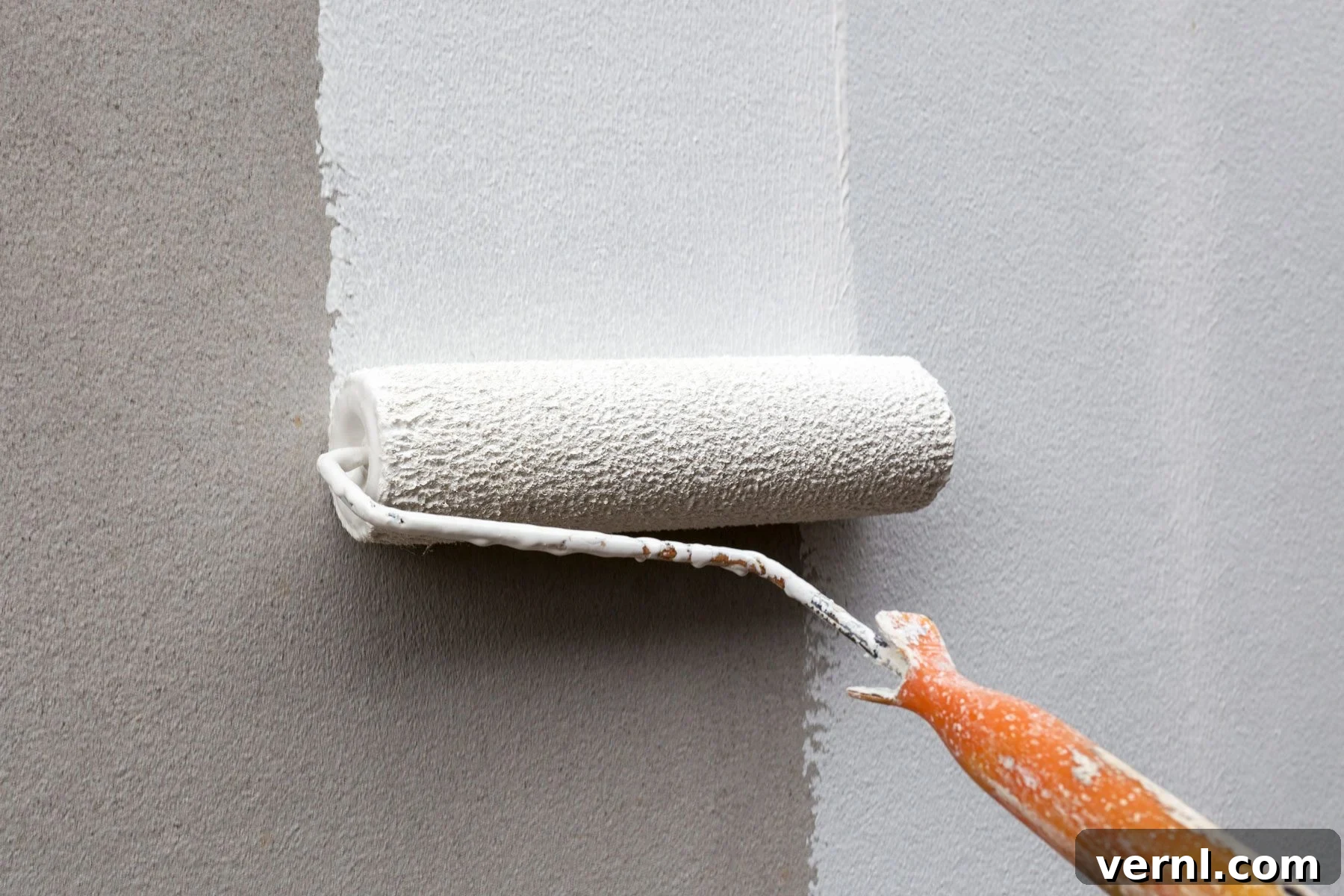
Applying eggshell paint is straightforward, whether you choose a roller or a brush. For expansive, open wall surfaces, a high-quality roller is typically the most efficient tool, ensuring even coverage and a smooth finish. For detailed work, such as around wall edges, corners, and tight spaces, a good quality synthetic bristle brush will provide the precision needed. When using a roller, opt for a medium-nap roller cover (around 3/8-inch) to achieve the signature subtle texture of an eggshell finish without excessive stippling or “orange peel” effect.
Pros and Cons of Eggshell Paint
Pros:
- Aesthetic Appeal: Delivers a beautiful, smooth, and velvety finish that adds a touch of sophistication to any room.
- Hides Imperfections: Its low to moderate sheen helps to disguise minor wall blemishes, dents, and surface irregularities better than shinier finishes.
- Washability: Offers better washability than flat or matte paints, allowing for light cleaning and wiping away of marks.
- Reduced Glare: Minimizes light reflection, creating a softer ambiance and making it ideal for naturally bright rooms or those with many windows.
- Versatility: Suitable for a wide range of interior spaces, particularly living rooms, bedrooms, and dining areas.
Cons:
- Durability: While washable, it does not hold up to vigorous scrubbing as well as satin or semi-gloss paints.
- Moisture Resistance: Not recommended for high-humidity areas like bathrooms and kitchens, where it can be more susceptible to moisture damage and mildew.
- Stain Resistance: May absorb stains more readily than glossier finishes, making tougher marks harder to remove completely.
- Touch-ups: While possible, touch-ups can sometimes show more noticeably due to its subtle sheen compared to completely flat paints.
What Is Satin Paint?
Satin paint is a highly versatile finish that strikes an excellent balance between aesthetic appeal and practical durability. It occupies a position on the sheen spectrum that is notably higher than eggshell but less reflective than semi-gloss. When dry, satin paint genuinely lives up to its name, resembling actual satin fabric with its distinct luminous and subtle glow. This elegant sheen is smooth to the touch and offers a sophisticated, polished look. Unlike eggshell, satin is often specified as an interior or exterior paint product, highlighting its enhanced resilience.
What is Satin Paint Best Suited For?
Satin paint’s robust characteristics make it particularly well-suited for high-traffic and moisture-prone areas of the home. Doug Curving points out, “Satin tends to be used more on kitchen and bathroom walls.” Its smooth finish acts as a barrier, preventing moisture from saturating into the paint pigment, a common issue with flatter paints like eggshell or matte. “Sheen matters, especially in a moist environment like a bathroom,” he emphasizes, underscoring satin’s superior performance in such conditions. This makes it an excellent choice for preventing mildew and simplifying cleanup in humid spaces.
Beyond moisture resistance, satin paint is renowned for its washability. As Carroll notes, “Use glossy paints, including satin, in areas that are going to require a lot of cleaning.” This makes it perfect for mudrooms, laundry rooms, or children’s bedrooms, where spills and scuffs are an everyday occurrence. The smooth surface of satin paint allows for easy wiping and even gentle scrubbing without damaging the finish or color.
Furthermore, satin paint is a fantastic option for accentuating architectural details. It looks superb on front doors, decorative trim, or crown molding. Vaughan highlights this contrast, stating, “Satin paint on the trim really stands out, especially against an eggshell wall.” The slight sheen of satin provides a subtle contrast that defines these features, adding depth and a touch of elegance to your interior design.
When Should You Use Satin Paint?
The versatility of satin paint means it can be effectively used in various applications throughout the home. It performs exceptionally well on kitchen and bathroom walls, providing a durable and moisture-resistant surface that can withstand daily use and cleaning. Its hard-wearing nature also makes it an excellent choice for woodwork like trim, baseboards, and cabinets, areas that endure constant contact and potential wear. For high-traffic zones that are prone to getting dirty, such as mudrooms, hallways, or kids’ bedrooms, satin paint is a practical solution. “I use it on walls where I need good washability,” Vaughan confirms, emphasizing its real-world benefit for busy households.
What’s the Best Way to Apply Satin Paint?
Satin paint can be applied effectively with both brushes and rollers, depending on the surface. For large wall areas, a roller is the most efficient tool for achieving a uniform finish. When rolling, Curving recommends using a short nap roller cover, specifically 1/4- or 3/8-inch. This choice of nap size is crucial for reducing the “orange peel” or dimpled texture that can be caused by thicker naps. “This will reduce the orange peel or dimpled look caused by the roller,” he explains, ensuring a smoother, more refined finish. For precision work, such as cutting in along edges, corners, and painting intricate trim, a high-quality synthetic bristle brush will provide superior control and a clean line. Surface preparation is particularly important for satin paint, as its reflectivity can highlight imperfections; ensure walls are clean, smooth, and primed before application.
Pros and Cons of Satin Paint
Pros:
- Exceptional Washability: Its smooth, somewhat glossy surface makes it incredibly easy to clean, resisting dirt, grime, and stains.
- High Durability: Stands up well to scrubbing and general wear and tear, making it ideal for high-traffic areas and active households.
- Moisture Tolerance: Excellent resistance to moisture, preventing absorption and making it perfect for bathrooms and kitchens.
- Versatile Application: Suitable for both walls and woodwork (trim, doors, cabinets), offering a cohesive look throughout.
- Aesthetic Appeal: Provides a rich, luminous glow that adds a touch of elegance and depth to any room.
- Enhances Features: Its sheen can effectively highlight architectural details and trim.
Cons:
- Highlights Imperfections: “Satin will highlight any uneven or rough aspects of a wall,” Vaughan warns. Its increased reflectivity means that dents, bumps, or poorly prepped surfaces will be more noticeable. It’s best used on new construction or meticulously smooth walls to achieve the desired flawless look.
- More Pronounced Roller Marks: If applied incorrectly or with the wrong roller nap, satin paint can show roller marks or an “orange peel” texture more readily than flatter finishes.
- Touch-ups Can Be Tricky: Achieving seamless touch-ups can be challenging with satin paint due to its sheen, as new paint might dry with a slightly different luster than the aged surface.
Eggshell vs. Satin: Making the Better Paint Finish Choice for Interior Walls
The choice between eggshell and satin paint ultimately depends on your specific needs, the room’s function, and your aesthetic preferences. There isn’t a universally “better” finish, but rather an ideal one for each particular scenario.
- Choose Eggshell if: You have walls with minor imperfections that you want to camouflage. You prefer a softer, velvety look with less light reflection. Your room is a low-to-medium traffic area like a bedroom, living room, or dining room. You need a finish with moderate washability that doesn’t require aggressive scrubbing. You are aiming for a cozy, subdued ambiance.
- Choose Satin if: Your walls are perfectly smooth or you are painting new construction. You need maximum durability and frequent washing, such as in a child’s bedroom, mudroom, or busy hallway. Your room is a high-humidity environment like a kitchen or bathroom. You want to highlight trim, doors, or architectural features with a subtle sheen. You appreciate a slightly more luminous and polished appearance.
Consider the daily demands of each space in your home. For serene and less-abused areas, eggshell offers an elegant solution. For hardworking and splash-prone zones, satin delivers the resilience and ease of maintenance you’ll appreciate.
Which Paint Sheen Hides Imperfections Better?
When it comes to concealing minor wall imperfections, eggshell paint holds a distinct advantage over satin. As Doug Curving explains, “Eggshell is the slightly less shiny of the two, so it’s going to not highlight imperfections as much.” The lower reflectivity of eggshell causes light to diffuse more gently across the surface, effectively camouflaging small dents, patches, or uneven textures. Satin paint, with its higher sheen, tends to reflect light more sharply, drawing attention to any surface irregularities. Therefore, for walls that aren’t perfectly smooth, eggshell is the more forgiving option.
Is Eggshell or Satin Easier to Clean?
Without a doubt, satin paint is considerably easier to clean than eggshell. This superior washability is a direct result of its shinier, smoother surface. Curving clarifies, “The shinier the finish, the less likely dirt, humidity and moisture can get embedded into the surface of the paint, which improves its washability.” The tighter, less porous surface of satin paint means that dirt, grime, and even moisture sit on top of the finish rather than soaking in. This allows for easier wiping with a damp cloth and tolerates more rigorous scrubbing without damage, making satin the clear winner for spaces that demand frequent cleaning.
Tips for Testing Paint Sheens
To truly understand how eggshell and satin will look in your home, it’s highly recommended to test them. Purchase small sample pots of both finishes in your chosen color. Paint swatches on a few different walls in the room, especially those that receive varying amounts of natural and artificial light. Observe these swatches at different times of day and under different lighting conditions. Pay attention to how the light reflects, how the color appears, and how each sheen complements your decor. This hands-on approach will provide the most accurate representation and help solidify your decision before committing to the entire room.
Conclusion: The Right Sheen for Your Vision
Choosing between eggshell and satin paint is a decision that balances aesthetic preference with practical requirements. Both finishes offer unique benefits, and understanding these distinctions is key to a successful painting project. Eggshell provides a sophisticated, low-sheen elegance ideal for calm, low-traffic areas and forgiving on slightly imperfect walls. Satin delivers robust durability, superior washability, and a luminous glow perfect for high-traffic, moisture-prone environments, and for highlighting architectural details on smooth surfaces. By considering the function of your room, the desired level of maintenance, and the condition of your walls, you can confidently select the finish that will bring your vision to life and ensure lasting beauty in your home.
About the Experts
Bill Carroll, Ph.D., is an adjunct professor of chemistry at Indiana University. The former vice president of industry issues for Occidental Chemical Corporation, he’s currently principal of Carroll Applied Science in Dallas, Texas. His scientific background provides invaluable insight into the chemical properties of paint finishes.
Doug Curving is a sales service representative for Sherwin-Williams with Lowe’s business unit. With more than 20 years in the paint industry, Doug brings extensive practical knowledge of paint products and their applications.
Zachariah Vaughan, owner of Grace Paint and Tile in Florence, Massachusetts, has 30 years of experience in the paint and tile industry. His long career provides a wealth of hands-on expertise in various painting scenarios.