Unlocking Your Iron’s Hidden Potential: More Than Just a Hot Plate
Most of us view our iron as a straightforward tool: plug it in, heat it up, and smooth out wrinkles. But have you ever paused to consider the intricate design and clever features packed into this everyday appliance? From its pointed tip to the tiny holes on its soleplate, every element serves a precise purpose, making your life easier and your clothes look their best. This article will delve into the often-overlooked design marvels of your iron, transforming how you approach your laundry routine.
The Ingenious Button Groove: A Tailor’s Best Friend
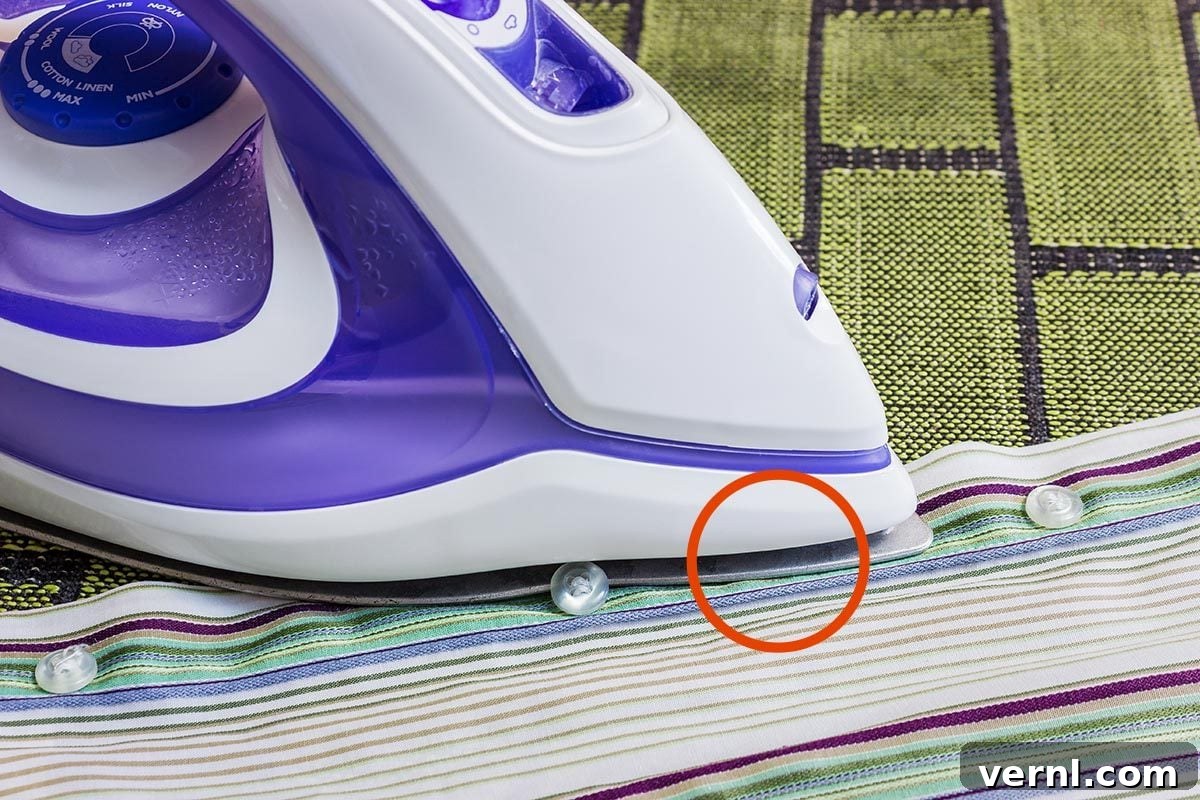
Perhaps one of the most subtly brilliant features on your iron is that slender groove or indentation running along the outer edge of its soleplate. If you’ve ever wondered about its function, you’re not alone. Many assume it’s purely an aesthetic choice or a random manufacturing detail. However, this unassuming channel is a testament to thoughtful design, specifically engineered to tackle one of ironing’s most common frustrations: navigating around buttons, snaps, zippers, and other embellishments.
Precision Ironing for Delicate Details
Imagine trying to iron a crisp button-down shirt without this groove. You’d find yourself awkwardly maneuvering the iron, either trying to press around each button individually – a tedious and time-consuming task – or worse, risking direct contact with the buttons. Ironing directly over plastic buttons can lead to disastrous results, from melting and warping the buttons themselves to potentially damaging the fabric or even scratching your iron’s soleplate. Metal snaps and zippers present a similar challenge, as they can conduct heat unevenly or snag the iron, leaving unsightly marks.
This is where the button groove shines. It provides a safe haven for buttons and other fasteners, allowing them to ‘sit’ within the channel while the hot soleplate presses the surrounding fabric flawlessly. This means you can glide your iron smoothly and confidently over garments adorned with numerous buttons, such as shirts, blouses, children’s clothing, or delicate decorative items. The groove ensures even heat distribution right up to the edge of the button, eliminating those annoying small wrinkles that often linger around fasteners. It’s a small detail that dramatically enhances efficiency, protects your garments, and significantly improves the overall quality of your ironing.
Beyond the Groove: A Deeper Look at Your Iron’s Smart Design
While the button groove is a stellar example of clever engineering, it’s far from the only hidden feature designed to optimize your ironing experience. The entire structure and shape of your iron are meticulously crafted to provide comfort, efficiency, and superior results.
The Pointed Tip: Master of Precision
Take, for instance, the universally recognized pointed tip of the iron’s soleplate. This isn’t just for aesthetics; it’s a critical design element for achieving meticulous results. The sharp, tapered end acts like a precision tool, allowing you to effortlessly access and smooth out wrinkles in the most challenging areas of your garments. Think about the tight spaces between pleats on skirts or trousers, the intricate folds of collars and cuffs, or the narrow seams of tailored clothing. Without a pointed tip, reaching these areas would be incredibly difficult, often requiring repetitive adjustments of the garment or resulting in missed spots.
The pointed tip allows for smooth navigation into corners and along edges, ensuring every inch of fabric receives consistent heat and pressure. This precision saves you time and effort, as you won’t need to re-iron sections multiple times, ultimately contributing to a more professional finish for your clothes.
The Power of Steam: Deep Penetration for Stubborn Wrinkles
Another fundamental feature often taken for granted is the array of steam holes strategically scattered across the soleplate. These aren’t randomly placed; their configuration is carefully planned to maximize steam distribution and effectiveness. When activated, these holes release a fine mist of hot steam that deeply penetrates the fibers of your fabric. This isn’t just about wetting the material; the heat and moisture work synergistically to relax the molecular bonds within the fabric, allowing wrinkles to be smoothed out with remarkable ease. Whether you’re dealing with stubborn creases in linen or delicate wrinkles in silk, the controlled release of steam makes a significant difference.
Modern irons often come equipped with various steam functions to cater to different needs:
- Variable Steam Control: This allows you to adjust the amount of steam produced, perfect for tailoring the moisture level to specific fabric types. Delicate silks might require a gentle mist, while thick cotton or denim can benefit from a more robust steam output.
- Steam Burst (Shot of Steam): A powerful blast of steam can be delivered on demand, ideal for tackling particularly deep-set wrinkles or for vertical steaming garments that are still on a hanger.
- Vertical Steaming: Many irons now offer the capability to steam clothes vertically, allowing you to freshen up drapes, suits, or delicate garments without needing an ironing board.
- Anti-Drip System: This clever feature prevents water from leaking out of the soleplate at low temperatures, safeguarding your clothes from unsightly water spots.
Understanding and utilizing these steam features can transform your ironing from a chore into an efficient and effective process, ensuring your clothes are impeccably smooth and fresh.
Small Settings, Big Impact: Optimizing Your Iron for Garment Care
Beyond the physical design, the operational settings of your iron play a crucial role in protecting your clothes and extending their lifespan. These “small” adjustments often make the biggest difference.
The Crucial Temperature Dial: Protecting Your Fabrics
The temperature dial, seemingly a basic component, is in fact one of the most vital controls on your iron. Setting the correct temperature according to the fabric type is paramount to preventing damage. Different textiles react differently to heat:
- High Heat (Cotton, Linen): These natural fibers are robust and can withstand high temperatures, which are necessary to effectively remove deep wrinkles.
- Medium Heat (Wool, Rayon): These require moderate heat. Too much heat can scorch wool or cause rayon to shine or even melt.
- Low Heat (Silk, Synthetics like Polyester, Nylon, Acrylic): Delicate fabrics and synthetics are highly susceptible to heat damage. High temperatures can melt synthetic fibers, leaving permanent marks, or scorch and weaken natural delicate fibers like silk.
Ignoring fabric care labels and ironing at an incorrect temperature can lead to irreversible damage: scorching, melting, discoloration, or a shiny sheen that ruins the garment’s appearance. Taking a moment to check the garment’s care label and adjust the temperature accordingly is a simple step that significantly prolongs the life and beauty of your clothing.
Maintenance Made Easy: The Self-Cleaning Mode and Anti-Calc Systems
Over time, minerals present in regular tap water can accumulate inside your iron’s steam vents and water tank. This mineral buildup, often seen as white flakes or a cloudy residue, can clog the steam holes, reduce steam efficiency, and even spit dirty water onto your clean clothes, leaving stains. Many modern irons combat this issue with a convenient self-cleaning mode.
Typically activated by a dedicated button, this function flushes out mineral deposits and impurities from the iron’s internal steam chambers. Regular use of the self-cleaning mode (usually once a month, depending on water hardness and usage) is essential for maintaining your iron’s performance and longevity. Some irons also feature built-in anti-calc or anti-limescale systems, which either filter out minerals or prevent them from accumulating, further extending the life of your appliance and ensuring consistent steam output.
Advanced Features for a Superior Ironing Experience
Beyond the core functionalities, manufacturers continue to innovate, integrating advanced features that enhance safety, convenience, and efficiency:
- Automatic Shut-Off: A critical safety feature, most modern irons will automatically turn off if left unattended for a certain period (e.g., face down for 30 seconds, upright for 8-15 minutes). This provides peace of mind and prevents accidents.
- Ergonomic Design: Irons are designed with comfortable handles and balanced weight distribution to reduce strain during extended ironing sessions.
- Water Tank Capacity: Larger water tanks mean fewer refills, which is especially convenient when ironing large loads of laundry. Transparent tanks allow you to easily monitor water levels.
- Cord Length and Swivel: A longer cord offers more flexibility, while a 360-degree swivel cord prevents tangling and makes maneuvering the iron smoother.
- Soleplate Materials: Different soleplate materials offer varying benefits. Stainless steel is durable and glides well, ceramic soleplates distribute heat evenly and are non-stick, while aluminum is lightweight and heats up quickly. Some high-end irons feature advanced coatings for superior glide and scratch resistance.
- Smart Irons: The latest innovations include smart irons with advanced sensors that can automatically detect fabric type and adjust temperature and steam settings accordingly, taking the guesswork out of ironing.
Mastering Your Iron: Best Practices for Impeccable Results
Understanding your iron’s features is the first step; applying best practices will elevate your ironing game:
- Sort by Fabric Type: Iron clothes requiring lower temperatures first, then gradually increase the heat. This prevents waiting for the iron to cool down and protects delicate items.
- Use an Ironing Board: A sturdy ironing board with a good padded cover provides a firm, heat-reflective surface, crucial for effective wrinkle removal.
- Pre-Moisten if Needed: For very dry or heavily wrinkled garments (especially cotton and linen), a light spray of water can help the iron glide better and relax fibers more effectively.
- Iron in Sections: Work methodically, tackling one section of a garment at a time (e.g., collar, then cuffs, then sleeves, then body).
- Store Properly: Once ironed, hang clothes immediately to prevent new wrinkles from forming.
- Clean Your Iron: Beyond self-cleaning, regularly wipe the soleplate with a damp cloth (when cool) to remove any starch or residue that can build up and potentially stain clothes.
Conclusion: Appreciate the Engineering in Your Everyday Iron
It’s easy to take everyday appliances for granted, but a closer look at your iron reveals a remarkable feat of engineering and design. From the seemingly small button groove that saves your fasteners, to the precision tip, the powerful steam system, and critical temperature controls, every aspect of your iron is thoughtfully crafted to make the often-dreaded task of ironing more efficient, effective, and even enjoyable. By understanding and utilizing these clever features, you can achieve professional-looking results, protect your garments, and appreciate your iron as the sophisticated tool it truly is.
RELATED:
- The Real Reason Aluminum Foil Has a Shiny Side and a Dull Side
- Think Adirondack Chairs Are Uncomfortable? You’re Using Them Wrong
- Why You Shouldn’t Crush Aluminum Cans Before Recycling