Transform Your Space: The Ultimate Guide to Perfectly Hung Curtains
Window treatments are far more than mere functional elements designed to maintain privacy; they are pivotal accessories that can dramatically enhance your room’s aesthetic, tying together your entire interior design scheme. Despite their significant impact, many homeowners often overlook the strategic importance of where and how their curtains are hung. The common misconception is that curtains simply go over the window, and their precise placement holds little consequence. However, if your goal is to truly elevate your living space, allowing your windows to become stunning focal points, then the strategic placement of your draperies – whether they are everyday drapes, effective blackout curtains, or insulated curtains for winter – is paramount.
This comprehensive guide delves into expert curtain-hanging hacks and timeless design principles, empowering you to create the illusion of larger rooms and taller windows. By mastering these techniques, you’ll unlock the full potential of your window treatments, transforming your home with style and sophistication.
The Transformative Power of Proper Curtain Placement
The way you hang your curtains can profoundly influence the perceived size, proportion, and overall ambiance of a room. It’s a subtle design trick that interior designers have employed for decades to manipulate visual perception. By understanding the psychology behind curtain placement, you can effectively enhance natural light, create a sense of grandeur, and add a polished finish to any space. This guide will demystify these techniques, providing actionable advice for every homeowner.
How High Should You Hang Your Curtains for Maximum Impact?
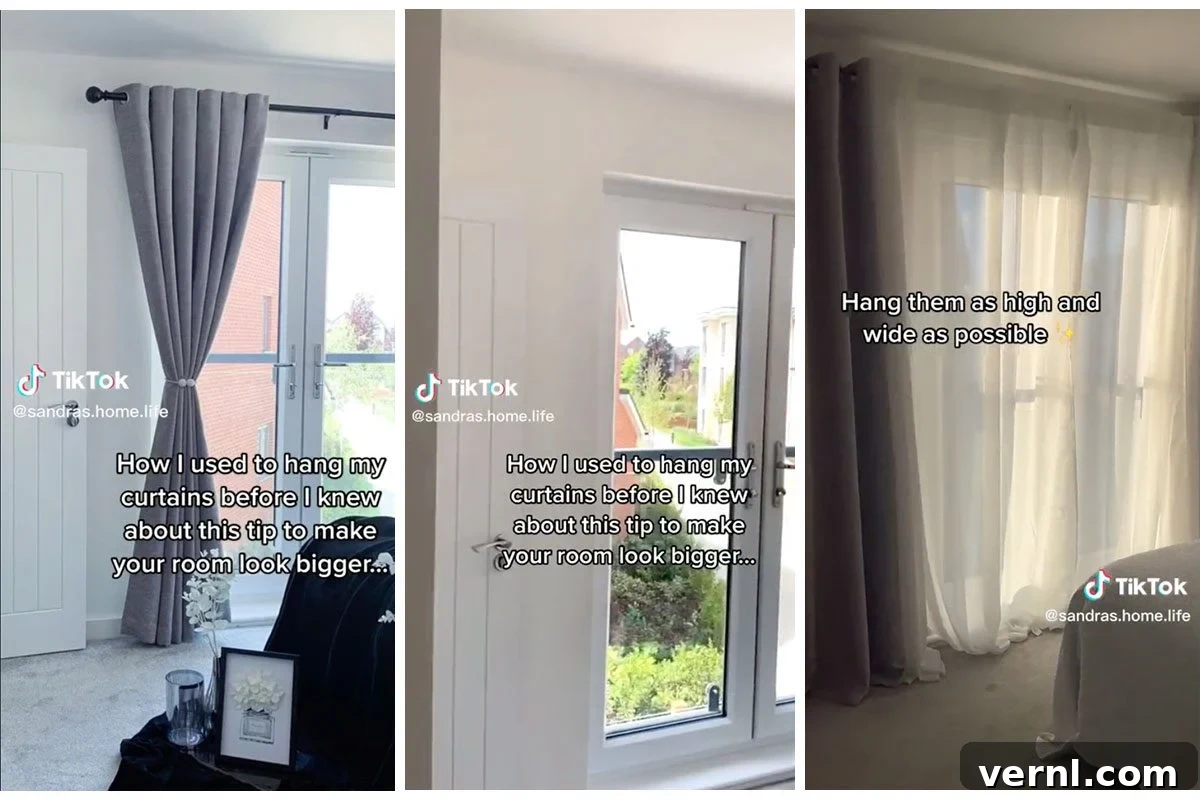
The height at which you install your curtain rod is arguably the most crucial factor in achieving a professional and visually appealing look. While many instinctively hang their rod just a few inches above the window frame, adopting a higher placement can yield astonishing results. The general consensus among design experts, often echoed in popular home decor trends and “hacks” (like those popularized on platforms such as TikTok), is to hang your curtains significantly higher than the window itself. This simple adjustment creates an illusion of greater ceiling height, making the entire room feel more spacious and expansive.
To implement this “high and wide” philosophy, aim to install your curtain rod as close to the ceiling as aesthetically pleasing, or at least four to six inches above the top of your window frame. For rooms with standard ceiling heights, hanging the rod roughly two-thirds of the way between the top of the window and the ceiling is an excellent rule of thumb. However, the ultimate goal is to draw the eye upwards, extending the vertical line of the window and making the room feel grander. Experiment with different measurements based on your specific wall height and window dimensions to find what works best. This technique is particularly effective for enhancing the perceived height of stylish dining room curtain ideas or elegant living room curtain ideas, ensuring they contribute to an open and airy feel rather than confining the space.
Remember, the length of your curtains is directly correlated with the height of your rod. For a polished, designer-approved look, your curtains should ideally “kiss” the floor or puddle slightly, meaning they should be long enough to gracefully touch the floor or gather slightly at the bottom. This means purchasing longer curtain panels than you might initially anticipate, especially if you’re opting for a high rod placement. Always measure from the installed rod down to the floor to determine the precise length needed, ensuring your chosen curtains achieve the desired aesthetic without falling short.
Selecting the Right Curtain Length: A Detailed Guide
- Kissing the Floor: This is the most common and elegant choice. Curtains lightly brush the floor, creating a tailored, clean line. Measure from the top of the curtain rod to the floor, then subtract about half an inch to one inch.
- Puddling: For a more romantic, luxurious, or traditional look, allow curtains to gather on the floor by an extra 2 to 6 inches. This requires more fabric but adds a lavish touch.
- Floating/Sill Length: Typically reserved for cafe curtains or windows where furniture sits directly beneath. These curtains end just above the windowsill. This style is less common for full-length draperies if the goal is to make the room appear larger.
How Wide Should Your Curtains Be Hung? Expanding Your Visual Horizon
Just as critical as height, the width at which you hang your curtains plays an equally significant role in transforming your space. The conventional approach often involves hanging curtains barely wider than the window frame itself, perhaps extending only one to three inches on either side. However, this method can inadvertently diminish natural light and make your windows appear smaller. Counterintuitively, extending your curtain rod significantly beyond the window frame can dramatically enhance the perceived width of your windows and the spaciousness of your room.
The objective is to allow the curtains to stack back fully on the wall when open, rather than covering any portion of the window glass. This maximizes the amount of natural light entering the room and creates an uninterrupted view. To achieve this, a good rule of thumb is to choose a curtain rod that is eight to twelve inches wider than your window frame on each side, meaning the total rod length should be 16 to 24 inches wider than the window. When the curtains are drawn open, they should entirely clear the window, resting on the wall space beside it. This expanse of fabric on either side of the window, even when open, tricks the eye into believing the window itself is much wider, thereby making the entire wall and room feel more expansive.
This strategy not only enhances natural light but also contributes to the illusion of more generous dimensions, a design principle recognized by experts as the proper height and width to hang curtains for an optimized visual effect. By embracing both elevated height and extended width, you create a powerful visual statement that opens up your living areas and allows your windows to truly shine.
Calculating Optimal Curtain Width:
- Rod Length: Measure your window’s width, then add 16 to 24 inches (8-12 inches per side).
- Fabric Fullness: For a lush, elegant look, your curtain panels should have a combined width that is 1.5 to 3 times the width of your curtain rod. This allows for beautiful pleats and gathers when the curtains are closed, preventing them from looking stretched or skimpy. For example, if your rod is 80 inches wide, you’ll need curtain panels that total between 120 and 240 inches in width.
Essential Curtain Hanging Tips for a Flawless Finish
Beyond the critical considerations of height and width, several other factors contribute to the perfect curtain installation. Before you begin drilling, consider these additional expert recommendations:
Choose the Right Fabric and Style
- Sheer Draperies: Opt for sheer curtains to infuse your room with a light, airy, and inviting ambiance. These are perfect for filtering harsh sunlight while maintaining privacy during the day. For versatility, you can layer sheers underneath opaque curtains, allowing you to control light levels throughout the day and ensure complete darkness when it’s time for bed.
- Fabric Weight and Material: The choice of fabric significantly impacts the drape and overall feel. Lightweight linens offer a casual, breezy look, while velvet or silk adds a touch of luxury. Consider the room’s function and your desired aesthetic. For specific needs, explore options like thermal drapes for insulation or soundproof curtains to reduce noise, especially disruptive sounds like excessive outside noise or a chilly breeze.
- Patterns and Colors: Bold patterns can make a statement, while solid colors offer versatility. Lighter colors tend to make rooms feel larger and brighter, while darker hues add drama and coziness.
Precision is Key: Measure, Measure, Measure!
This cannot be stressed enough: measure everything meticulously before making any purchases or installations. The last thing you want is to discover during the installation process that your measurements are off, leading to ill-fitting curtains or an incorrect rod length. Measure window width, desired rod length, window height, and desired curtain panel length multiple times to ensure accuracy. This will save you time, money, and frustration.
Selecting the Perfect Curtain Rods and Hardware
- Decorative Rods: Curtain rods don’t have to be purely functional. There’s a vast array of decorative options available, from sleek modern metal rods to ornate wooden designs with unique finials (the decorative ends). Choose a style that complements your room’s aesthetic and enhances the overall design.
- Heavy-Duty Rods: If you’re planning to hang heavier curtains, such as blackout curtains, thermal drapes, or multiple layers, it’s crucial to select a heavy-duty curtain rod. Lightweight rods may sag or even break under the weight, compromising the look and safety of your installation. Always check the weight capacity of your chosen rod.
- Concealing the Rod: If you prefer a seamless look and wish to conceal the curtain rod for a cleaner finish, consider learning how to build a window cornice. A cornice is a decorative valance box that sits above the window, elegantly hiding the hardware and adding an architectural element to your room.
- Hardware Accessories: Don’t forget curtain rings, clips, and tie-backs. These small details can add significant style and functionality, making it easier to open and close your curtains while contributing to the overall design.
Additional Considerations for an Elevated Look
- Steaming or Ironing: Always steam or iron your curtains before hanging them. Wrinkled curtains look unprofessional and detract from even the most perfectly measured installation.
- Multiple Panels: For wider windows, you’ll likely need multiple curtain panels. Ensure they are evenly spaced and have enough fullness to create a luxurious look when closed.
- The Ultimate Buyer’s Guide: If you’re still exploring options, consult an ultimate buyer’s guide for curtains to help you decide on the best type, material, and style to meet your specific needs and design vision.
Conclusion: Elevate Your Home with Strategic Curtain Hanging
By moving beyond the basic assumption of “curtains go over the window” and embracing the strategic principles of high and wide curtain hanging, you can dramatically transform any room in your home. These simple yet powerful design techniques create an illusion of greater space, maximize natural light, and add an undeniable touch of elegance and sophistication. Remember to measure meticulously, choose your hardware wisely, and consider the overall aesthetic you wish to achieve. With these expert tips, your windows will not only provide essential privacy but will also stand out as beautifully styled focal points, elevating your entire interior design.