Transforming Your Lawn: Sustainable Groundcover Alternatives to Traditional Turf Grass
Since the 1950s, the plush, meticulously manicured green lawn has stood as an iconic symbol of the American dream, deeply rooted in the suburban landscape. As communities expanded beyond city limits, the allure of a sprawling, verdant turf grass lawn became aspirational. Today, this aesthetic remains the norm, with turf grass lawns blanketing an estimated 62,500 square miles across the United States – an area roughly equivalent to the entire state of Florida.
While turf grass is often lauded for its resilience to foot traffic and its uniform appearance, this conventional landscaping choice comes with a surprisingly high price tag, both financially and environmentally.
The Hidden Costs of the American Dream Lawn
The financial commitment to maintaining a traditional lawn is substantial. Americans collectively spend an estimated $30 billion annually, along with countless hours, diligently caring for their turf grass. This expenditure covers everything from sophisticated irrigation systems and costly fertilizers to an array of mowers and other power equipment. Beyond the financial burden, the environmental footprint of these conventional lawns is equally concerning.
Traditional turf grass varieties demand immense amounts of water, especially in drier climates, contributing significantly to water scarcity issues. Furthermore, their low wildlife value means they offer little to no habitat or food sources for native insects, birds, and other crucial ecosystem components. The reliance on synthetic fertilizers, herbicides, and pesticides introduces harmful chemicals into the environment, posing significant pollution risks to local waterways and creating potential public health concerns for humans and pets. The frequent use of gas-powered lawn equipment further exacerbates air pollution through exhaust emissions and contributes to noise pollution in neighborhoods.
“The standard regimen of synthetic fertilizers, supplemental watering, and constant cutting, trimming, and blowing with gas-powered equipment is often not aligned with sustainable ecological practices,” explains Trista Imrich, a landscape designer and horticulturist at Wild Works of Whimsy. This misalignment is prompting a growing number of homeowners to reconsider their landscaping choices.
Given these mounting environmental and financial concerns, a movement is emerging among homeowners to replace their traditional turf grass with more sustainable groundcovers. These alternatives promise not only to be better for the environment but also to significantly reduce maintenance requirements, offering a win-win solution for both nature and the homeowner.
Embracing Sustainability: What Defines an Eco-Friendly Groundcover?
Choosing the most sustainable groundcover involves a careful consideration of various factors unique to your specific location and needs. Key elements such as climate, soil composition, water availability, desired biodiversity, and the intended function of the space all play a crucial role. However, a truly sustainable groundcover typically exhibits a core set of characteristics designed to minimize environmental impact and reduce maintenance:
- **Reduced Water Needs:** Sustainable options thrive on natural rainfall and require minimal, if any, supplemental irrigation, conserving precious water resources.
- **Low Maintenance:** They necessitate little to no mowing, weeding, or specialized care, freeing up your time and reducing reliance on fuel-powered equipment.
- **Minimal Chemical Dependency:** These groundcovers are naturally resilient and require few or no synthetic fertilizers, herbicides, or pesticides, promoting a healthier ecosystem.
- **Biodiversity Promotion:** Many sustainable groundcovers are chosen for their ability to attract pollinators like bees and butterflies, providing essential habitat and food sources, thereby fostering a richer, more diverse local ecosystem.
- **Ecological Harmony:** They are well-suited to the local climate, soil type, and indigenous wildlife, integrating seamlessly into the natural environment.
- **Improved Soil Health:** Sustainable groundcovers often enhance soil quality, prevent erosion, and contribute to the overall ecological balance and vitality of the landscape.
By prioritizing these attributes, homeowners can cultivate a yard that is not only beautiful but also functions as a thriving, self-sustaining part of the local environment.
Explore Your Options: A Guide to Sustainable Groundcover Types
The prospect of transitioning from a conventional turf lawn to a more sustainable landscape can seem daunting given the array of groundcover choices available. To simplify this decision, here’s a comprehensive guide to various groundcover options, presented roughly in order from the most ecologically beneficial to the least sustainable, providing insights into their unique advantages and considerations.
1. Native Perennial Beds: The Pinnacle of Ecological Harmony
Without a doubt, the most sustainable and ecologically impactful alternative to turf grass is the establishment of a no-mow native perennial bed. This approach involves cultivating a diverse mix of plants indigenous to your specific region. As perennials, these plants live for more than two years, naturally returning season after season, eliminating the need for annual replanting. Popular examples include various species of mondo grass, white clover, native mosses, lamb’s ear (Stachys byzantina), and vibrant wildflowers like black-eyed Susan (Rudbeckia hirta), among countless others suited to different regions.
Zac Gnadinger, founder of the Kentucky Native Plants Project, highlights the profound benefits: “Native plants are inherently adapted to local climate and soil conditions, making them an incredibly low-maintenance option that won’t require excessive watering, fertilization, or pest control. Beyond their ease of care, they play an absolutely essential role in supporting local ecosystems by providing vital habitat and food sources for native pollinators, birds, and other wildlife.”
Beyond their direct support for biodiversity, native perennial beds offer numerous other ecological advantages. They significantly improve soil quality by adding organic matter and enhancing soil structure, naturally prevent erosion, effectively suppress weeds by outcompeting them, and reduce the prevalence of pests and diseases due to their natural resilience. This comprehensive approach creates a robust, self-regulating ecosystem that thrives with minimal human intervention.
If you find yourself uncertain about which native plants are best suited for your property, a great starting point is to consult your USDA Plant Hardiness Zone map. Further guidance can be obtained from a local native plant expert, community gardening clubs, or specialized garden centers that focus on indigenous flora. These resources can help you select species that will flourish in your specific microclimate.
2. Cultivating Biodiversity with Wildflower Meadows
Another highly sustainable and aesthetically pleasing option is to create a low-growing wildflower meadow, typically less than three feet in height. This approach transforms a traditional lawn into a vibrant tapestry of blooming plants, fostering a dynamic ecosystem.
“Meadowscaping is the art of creating an environment in your yard that mimics the natural growth and intricate life cycles of a true meadow,” explains Christen Costa, CEO of GR Lawn & Garden. “The beauty of meadowscaping lies in its primarily unmaintained nature. It not only supports your native environment but also plays a crucial role in attracting and sustaining bees, butterflies, and other essential pollinators.”
When embarking on a meadowscaping project, it is paramount to exclusively choose plants native to your specific local environment. This ensures that the plants are well-adapted to the soil, climate, and rainfall patterns, allowing them to thrive with minimal intervention and creating a resilient, self-sustaining landscape.
Scientific research further underscores the environmental benefits of wildflower meadows. According to a recent study conducted at the University of Cambridge, transforming a perfectly manicured lawn into a wildflower meadow represents a significantly greener alternative, primarily because these biodiverse gardens have the remarkable ability to sequester and store carbon over extended periods. Researchers estimate that meadows can potentially save approximately 1.36 tons of carbon emissions per hectare annually, largely by eliminating the need for carbon-intensive mowing and fertilizing practices. Previous studies have also demonstrated that even small, “mini-meadows” can have a remarkably positive impact on local wildlife populations and overall ecological health.
3. The Versatility and Benefits of Mulch
Mulch, typically composed of organic materials like wood chips, shredded bark, straw, or compost, offers a highly effective and relatively sustainable solution for groundcover. When applied correctly, mulch creates a protective layer over the soil that delivers a multitude of benefits. It is exceptional at preventing the germination and growth of weeds, conserving soil moisture by reducing evaporation, and significantly curbing soil erosion. Furthermore, mulch acts as a barrier, minimizing fertilizer and herbicide runoff, which helps protect nearby waterways from chemical contamination. As organic mulch gradually decomposes, it enriches the soil, improving its structure, fertility, and microbial activity.
“Mulch is remarkably easy to install and maintain, as it eliminates the need for watering, mowing, or fertilizing once established,” notes Rhys Charles, a landscaper and CEO/founder of Lawn and Tractors. Its simplicity makes it an attractive option for those seeking a low-effort landscape.
However, there are a few considerations to keep in mind. Organic mulch requires periodic replenishment, as it fades, washes away, or breaks down over time. This ongoing cost can accumulate, making it potentially more expensive than some other low-maintenance options in the long run. Additionally, if not properly managed or treated, certain types of mulch can attract undesirable pests such as termites, rodents, or fungi. To maintain mulch effectively, it is advisable to use a landscape fabric barrier underneath to prevent weeds from growing through, periodically turn over the top layer to refresh its appearance and aeration, and promptly pull any weeds that manage to sprout.
4. Strategic Use of Gravel and Stone
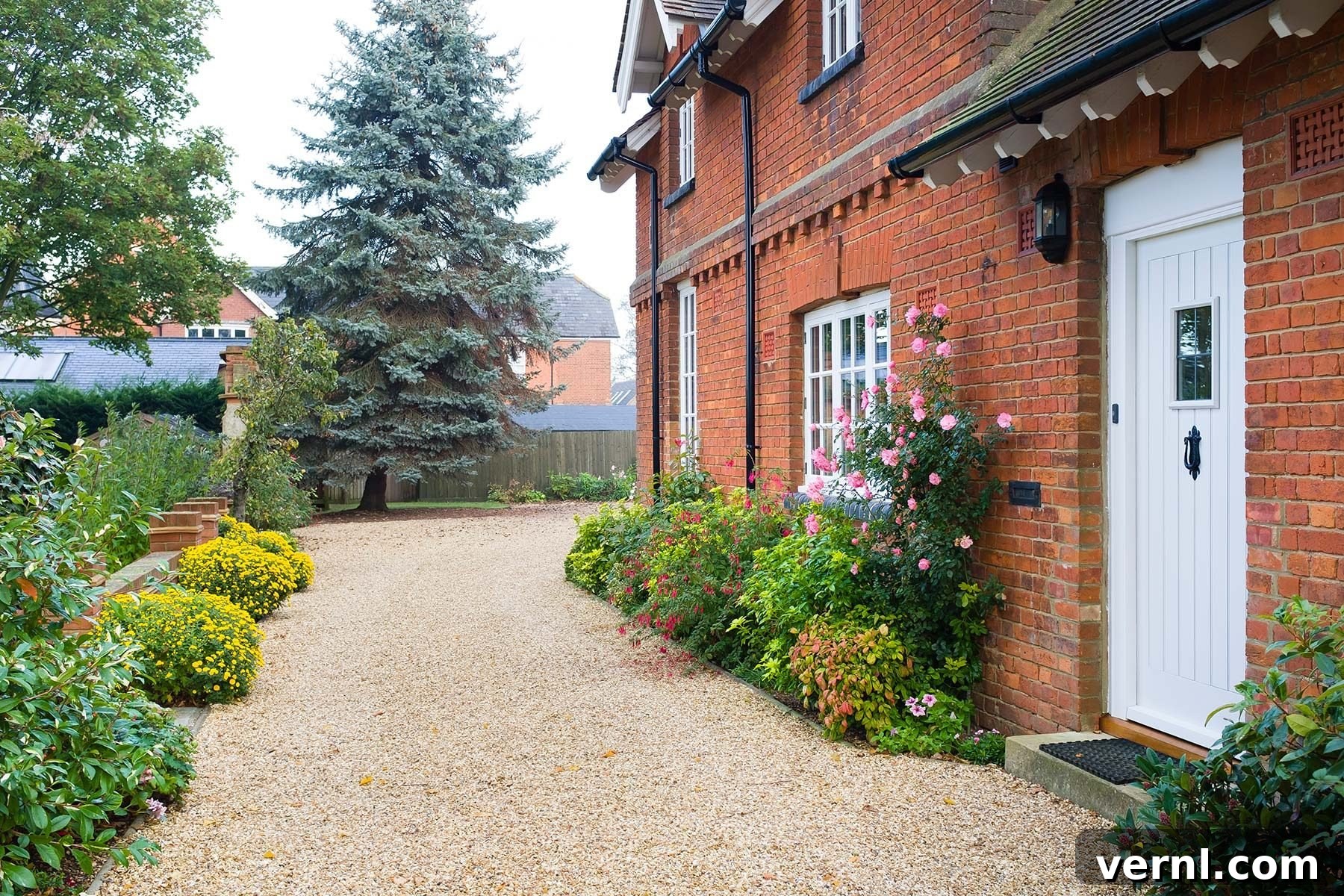
Gravel or decorative stone offers another durable and low-maintenance alternative to traditional turf grass. While the initial installation can be more expensive than other groundcover options, its longevity and minimal upkeep requirements often make it a cost-effective choice over time. Gravel and stone are particularly effective in high-traffic areas where plants struggle to grow or in creating distinct landscape features. The primary challenge with gravel and stone is the eventual emergence of weeds that manage to root themselves between the rocks, necessitating occasional manual removal or spot treatment.
“Beyond the weed challenge, gravel can unfortunately create excess heat in the summer months as it absorbs and reflects solar radiation,” warns Imrich. This ‘heat island effect’ can significantly warm surrounding areas and negatively impact nearby plant life. “It can also reduce the infiltration of water into the soil below, as the weight of the gravel compacts the ground over time. This compaction can increase stormwater runoff, which in turn can carry pollutants and sediments into waterways, diminishing water quality.”
Given these drawbacks, gravel and stone should be used judiciously and strategically, rather than as a blanket solution for an entire lawn. They are best suited for creating defined walkways, patios, or as decorative accents between planting beds. When sourcing materials, always inquire with your local supplier about the origin of the gravel or stone to understand its environmental impact. Prioritize materials sourced from nearby quarries, which typically have a lower carbon footprint, and actively try to avoid gravel mined from sensitive riverbeds, which can disrupt natural ecosystems.
5. Artificial Turf: A Costly Illusion of Low Maintenance
Despite its appearance and claims of zero maintenance, artificial turf stands as the least sustainable groundcover option available. While it undeniably eliminates the need for watering, mowing, fertilizing, or pesticides, its synthetic nature presents a host of severe environmental disadvantages. Primarily composed of non-biodegradable synthetic materials such as nylon, polyethylene, or polypropylene, artificial turf offers absolutely no ecological value; it neither attracts nor supports wildlife, effectively creating a biological desert.
Kathy Jentz, author of the seminal work Groundcover Revolution and host of the popular GardenDC Podcast, is a vocal critic of artificial turf. “It is, fundamentally, plastic derived from the oil industry,” she states emphatically. “It effectively kills everything in the soil beneath it, sterilizing the ground. Furthermore, in intense heat and direct sunlight, there is concerning off-gassing of chemicals, which can impact air quality.”
Jentz also points out that while marketed as maintenance-free, artificial turf still requires cleaning, often involving vacuuming or hosing down, which can consume water and energy. More critically, over time, artificial turf inevitably decays and breaks down, releasing insidious microplastics into the air, soil, and waterways. These microplastics persist in the environment for centuries, entering food chains and posing long-term ecological and health threats that far outweigh any perceived short-term convenience. Its inability to support life, contribute to soil health, or biodegrade makes it a profoundly unsustainable choice for any environmentally conscious homeowner.
Making the Switch: Practical Steps to a Sustainable Yard
Transitioning from a traditional turf lawn to a sustainable groundcover is a rewarding journey that can be approached in stages or as a comprehensive overhaul. Here are some practical steps to guide you:
- **Assess Your Needs and Site:** Before breaking ground, carefully evaluate your yard. Consider sun exposure, soil type (a soil test can be very helpful), drainage, and how you use different areas of your yard. Do you need pathways? A play area? A quiet natural retreat?
- **Research Local Native Plants:** Identify plants native to your specific region and USDA hardiness zone. Local nurseries, botanical gardens, university extension offices, and native plant societies are excellent resources for this. Prioritize drought-tolerant, disease-resistant species.
- **Start Small or Go Big:** You don’t have to tackle your entire lawn at once. Begin with a small section, perhaps a problematic area where grass struggles, or a prominent bed near your entrance. This allows you to learn and gain confidence.
- **Prepare the Area:** To remove existing turf, you can use methods like solarization (covering with clear plastic in summer), sheet mulching (layering cardboard and organic material), or manual removal (digging). Avoid herbicides if possible.
- **Improve Soil Health:** Once the turf is removed, amend the soil with compost to improve its structure, fertility, and microbial life. This provides a healthy foundation for your new groundcover.
- **Plant Thoughtfully:** Space plants according to their mature size to prevent overcrowding. For meadows, scatter seeds evenly according to package instructions. For mulch, apply an even layer, ensuring it’s not piled against plant stems or tree trunks.
- **Initial Care and Long-Term Enjoyment:** New plantings will require some initial watering and attention until they are established. Once mature, sustainable groundcovers will largely take care of themselves, requiring minimal intervention. Enjoy the new biodiversity and reduced workload!
Conclusion: Reimagining Your Landscape for a Greener Future
The traditional turf grass lawn, once a cornerstone of the American suburban ideal, is increasingly being recognized for its significant environmental and financial drawbacks. From excessive water consumption and chemical pollution to the displacement of vital wildlife, the costs far outweigh the aesthetic benefits in a world increasingly focused on sustainability.
Fortunately, a diverse and compelling array of sustainable groundcover alternatives offers homeowners the opportunity to reimagine their landscapes. From the rich biodiversity of native perennial beds and the ecological resilience of wildflower meadows to the practical benefits of organic mulch and the strategic utility of gravel, there are options to suit every preference and property. While artificial turf may appear to offer convenience, its synthetic composition and profound ecological harms firmly place it outside the realm of truly sustainable choices.
By embracing these eco-friendly alternatives, homeowners can actively contribute to water conservation, support local ecosystems, reduce their carbon footprint, and free themselves from the relentless cycle of lawn maintenance. The shift towards sustainable groundcovers is more than just a landscaping trend; it’s a vital step towards creating healthier, more resilient, and more beautiful environments for ourselves and for future generations. It’s time to cultivate a yard that truly thrives, in harmony with nature.