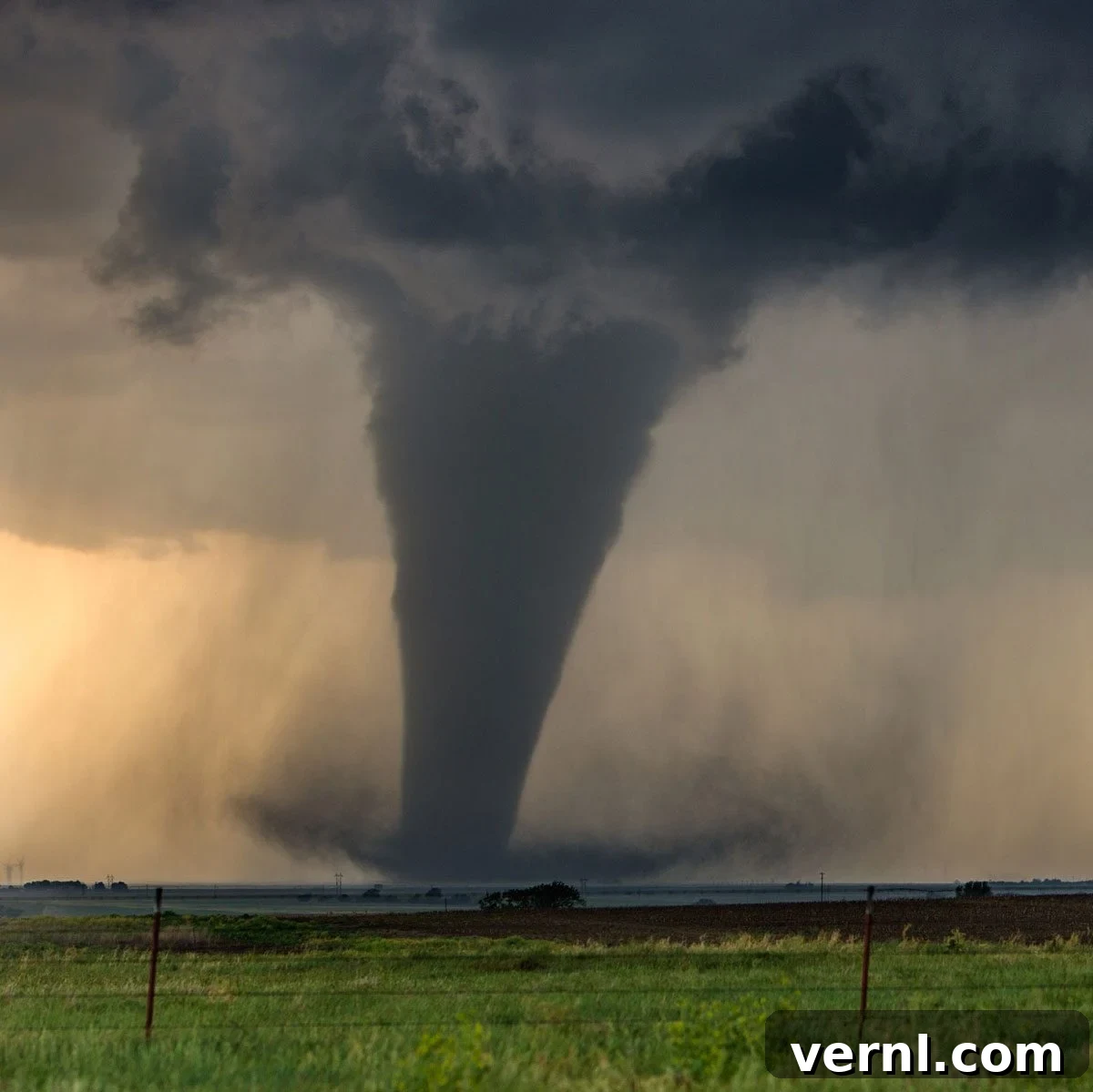
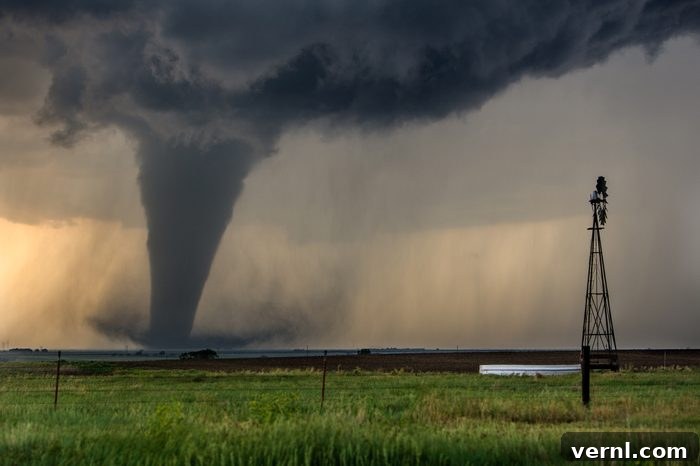
Tornadoes represent some of nature’s most destructive forces, unleashing winds that can exceed 300 miles per hour. These powerful storms possess the terrifying capability to level homes, obliterate entire neighborhoods, and devastate towns in their path. Their rapid formation and unpredictable nature make them particularly dangerous, often striking with little warning and leaving a trail of catastrophic damage.
Tornadoes develop with alarming speed, and accurately predicting their precise path and exact location remains a significant challenge for meteorologists. Achieving 100 percent certainty in tornado forecasting is virtually impossible due to the complex atmospheric conditions that spawn these rotating columns of air. This inherent unpredictability underscores the critical importance of robust warning systems, as highlighted by experts like Bill Bunting, deputy director of the National Oceanic and Atmospheric Administration (NOAA) and the National Weather Service (NWS) Storm Prediction Center (SPC).
Understanding the distinction between tornado watches and tornado warnings is paramount for public safety. While tornadoes are inherently unpredictable in their exact moment and location of touchdown, Bunting emphasizes that “identifying an area at risk a day or more in advance is often possible.” This crucial lead time is what allows communities to prepare effectively and potentially save lives.
Aaron Treadway, the NWS severe weather program coordinator, stresses that the earlier the public is informed about a potential tornado-producing storm, the better. “Once someone is aware that tornadoes will be possible in the coming days, there are several steps they can take to better prepare,” Treadway advises. These preparatory actions can significantly mitigate risk and enhance survival chances.
The core tenets of tornado preparedness revolve around proactive communication with family members, establishing alternate plans, and identifying secure shelter locations long before any severe weather threat emerges. In this comprehensive guide, Bill Bunting and Aaron Treadway offer their invaluable expertise, explaining precisely what actions to take when you receive a tornado watch or warning, ensuring you and your loved ones are as safe as possible.
About the Experts
Bill Bunting is the esteemed deputy director of the NOAA/NWS Storm Prediction Center, located in Norman, Oklahoma. With a distinguished career in meteorology, Bunting’s early experiences include participating in the original Toto (Totable Tornado Observatory) project, a groundbreaking initiative later immortalized in the iconic film Twister. His deep understanding of severe weather systems is instrumental in national storm prediction efforts.
Aaron Treadway serves as the NWS severe weather program coordinator at the NOAA/NWS headquarters, also situated in Norman, Oklahoma. Treadway brings a wealth of practical experience to his role, having spent 10 years as an operational forecaster at the NWS office in New Braunfels, Texas, where he gained invaluable firsthand knowledge observing and tracking tornadoes in real-time. His expertise is vital in developing and coordinating national severe weather safety programs.
What Is a Tornado Watch?
A tornado watch is an alert issued when conditions are favorable for tornadoes to develop in and near the watch area. It’s crucial to understand that a watch does not mean tornadoes have formed, nor does it imply that one is imminent. Instead, it signifies that atmospheric conditions are ripe for severe thunderstorms capable of producing tornadoes, often accompanied by other dangerous weather phenomena such as strong straight-line winds, large hail, or even flash flooding.
Bill Bunting explains that tornado watches typically cover expansive geographical areas, often encompassing multiple counties, entire states, or even several states simultaneously. These large-scale alerts are issued by the Storm Prediction Center (SPC), the national authority responsible for forecasting and issuing severe weather watches across the contiguous United States. The SPC’s role is to assess broad atmospheric patterns and identify regions where the ingredients for severe thunderstorms, including tornadoes, are likely to converge.
The primary purpose of a tornado watch, as Aaron Treadway emphasizes, is to provide the public with ample time to prepare. Consequently, watches are generally issued several hours before the anticipated threat is expected to arrive. They typically remain in effect for a duration of four to seven hours, according to Bunting. During a tornado watch, individuals should adopt a heightened state of awareness: “monitor weather information more frequently, as severe storms begin to develop or move into the watch area,” he advises. This increased vigilance allows for timely response should the threat escalate to a tornado warning.
How to Respond to a Tornado Watch: Proactive Preparation
While only a small percentage of all thunderstorms actually produce tornadoes, the issuance of a tornado watch is a serious signal demanding immediate preparatory action. Bill Bunting stresses the importance of not dismissing these alerts. When a tornado watch is issued, it’s essential to follow these critical steps:
- Tune to Local Weather Broadcasts: Staying informed through reliable, local sources is paramount. “TV continues to be one of the best ways to get additional weather information during active weather,” Treadway states. Despite the rise of digital media, local television stations and their dedicated meteorologists often provide unparalleled, wall-to-wall coverage during severe weather events, offering real-time updates, radar analysis, and critical safety instructions. For those who have “cut the cord,” Treadway notes, “Most local news stations now stream live on their website during active weather.” Always prioritize these trusted local outlets for the most accurate and immediate information.
- Have Multiple Information Channels: Relying on a single source of information is risky during a rapidly evolving tornado threat. “On the day of the tornado threat, the biggest thing is to have multiple ways to get any potential tornado warnings,” Treadway advises. Beyond local TV and streaming, it’s wise to download reputable weather apps on your smartphone, set up social media alerts from official weather accounts (like the NWS), and seriously consider investing in a NOAA Weather Radio. These specialized radios broadcast continuous weather information directly from the NWS on a dedicated “weather band” frequency, providing alerts even if power or internet services are disrupted. They are readily available at home improvement centers, outdoor supply stores, and online retailers. While Treadway cannot endorse specific commercial apps, he points out that “the vast majority of radar apps are simply using the NWS network of radars” and raw data, making their core information reliable. He specifically recommends the Federal Emergency Management Agency (FEMA) app, which offers comprehensive weather information, alerts, and essential disaster preparedness resources. Additionally, ensure your family’s phones are configured to receive Wireless Emergency Alerts (WEA), which function similarly to Amber Alerts and provide crucial, location-specific emergency information, including severe weather warnings.
- Discuss and Implement Emergency Plans: A tornado watch is the time to finalize and review your family’s emergency plan. Know precisely how you will quickly get to safety. This includes identifying your designated safe room or shelter, rehearsing the fastest route to get there, and ensuring all family members, including children, understand the plan. Charge all mobile phones and other essential electronic devices. Make sure everyone knows where to go if a tornado warning is issued and how to communicate if separated. Assemble a basic emergency kit containing water, non-perishable food, a first-aid kit, flashlights with extra batteries, a whistle, and any necessary medications.
One Important Note for Mobile Home Residents: If you reside in a mobile home, immediate and decisive action is critical upon the issuance of a tornado watch, Treadway strongly advises. Mobile homes, by their very nature, offer minimal protection against tornado-force winds. Even a weak tornado can cause significant or total damage to these structures, putting occupants at extreme risk. Do not wait for a tornado warning. “For folks who live in a mobile home, even a weak tornado can do significant damage,” Treadway warns. Seek refuge immediately in a designated community tornado shelter or a more sturdy building, such as a friend’s permanent home, a nearby business, or a designated public shelter. The NWS provides more specific tips for mobile home safety during a tornado threat.
What Is a Tornado Warning?
In contrast to a watch, a tornado warning is issued when a tornado is happening right now, or there is an imminent and verifiable threat of a tornado. This alert signifies an immediate danger to life and property and demands prompt action.
Tornado warnings are issued “when a tornado has either been spotted and reported to the NWS, or our weather radars give an indication that a tornado is either developing or ongoing,” Treadway explains. This could be based on visual confirmation from trained storm spotters, law enforcement, or emergency personnel, or it could be derived from Doppler radar data showing a “hook echo” signature, which indicates rotation within a storm, or a “debris ball,” signifying that a tornado is actively lofting debris. Unlike watches, which are nationally coordinated, tornado warnings are issued locally by the 122 NWS forecast offices across the country. This localized approach allows meteorologists to focus on specific, smaller geographical areas, often covering only portions of a county, parish, or independent city, making the warnings highly precise.
Local NWS meteorologists utilize advanced tools like Doppler radar, a sophisticated system based on the Doppler effect, to track severe storms and identify rotation patterns indicative of tornado development, Bunting elaborates. They also rely heavily on real-time reports from trained storm spotters on the ground. Warnings are typically in effect for a shorter duration, usually 30 to 60 minutes, reflecting the immediate and fast-moving nature of the threat. This targeted approach ensures that alerts are issued only where and when they are absolutely necessary, prompting urgent protective actions.
How to Respond to a Tornado Warning: Immediate Action is Key
When a tornado warning is issued, hesitation can be deadly. Tornadoes are incredibly unpredictable and pose an immediate, life-threatening danger. “When a warning is issued, the time to prepare is over,” Treadway firmly states. “Warnings mean to take action — get to shelter!” Your primary objective is to seek the safest possible refuge without delay.
Here’s what you must do:
- Seek Shelter Immediately: Move to the interior of a well-constructed building. The safest options are “a basement or storm shelter,” Treadway advises, as these provide the most robust protection from high winds and flying debris. If these are not available, head to an interior room on the lowest floor of your home, such as a closet, bathroom, or hallway, as far away from windows as possible. The goal is to place as many walls and structural elements between you and the potential flying debris outside. Get under something sturdy, like a heavy table, for added protection.
- Stay Away from Windows: Do not approach windows to look outside or attempt to see where the tornado is. The danger from flying glass and debris is immense. Furthermore, a long-debunked myth suggests that opening windows helps “equalize” pressure during a tornado; this is false and only increases the risk of debris entering your home. Once you are in your designated shelter, remain there until the warning has expired or until you receive confirmation that the immediate threat has passed.
- Get Low and Cover Your Head: Protect your head and neck from falling and flying debris, which is the leading cause of injury and death during a tornado. Use anything available—helmets (bicycle or sports), pillows, blankets, thick towels, or even a mattress—to shield these vulnerable areas. It is also highly recommended to wear sturdy shoes, even in your shelter, to protect your feet from broken glass, nails, and other sharp objects that may be present after the storm.
- Listen for Weather Updates: Even while sheltering, it’s crucial to stay informed. Keep your NOAA Weather Radio tuned to the appropriate channel, or monitor your smartphone for new Wireless Emergency Alerts (WEA) or other vital weather information. Be aware that power outages are common during severe weather, so having a battery-powered or hand-crank radio is invaluable.
Specific Scenarios:
- If You’re Outside or In Your Car: “The instructions are still the same — get off the road and get inside,” Treadway asserts. A vehicle offers virtually no protection from a tornado and can easily be tossed around or crushed. Similarly, taking shelter under an overpass is a critically dangerous misconception; overpasses can act as wind tunnels, concentrating debris and offering minimal protection. Abandon your vehicle and seek a sturdy building.
- If No Adequate Shelter is Nearby (Outdoors): If you are in imminent danger and cannot reach a sturdy building, lie face down in a ditch or other low-lying depression. Cover your head and neck with your arms and hands. Stay as far away from trees, cars, and other potential flying debris as possible. This offers minimal protection but is better than standing exposed.
- Mobile Homes During a Warning: As with a watch, if you are in a mobile home and a tornado warning is issued, you must abandon it immediately and seek a more substantial structure or a designated storm shelter. Do not attempt to ride out the storm in a mobile home.
What is a Tornado Emergency?
In rare and exceptionally dangerous circumstances, Treadway explains that a tornado emergency will be issued. This is an elevated type of tornado warning reserved for situations where there is a confirmed, large, and violent tornado in progress that is threatening human life and/or could cause catastrophic damages to densely populated areas. A tornado emergency is essentially a tornado warning, but with “enhanced and urgent wording” specifically designed to emphasize the extreme severity and immediate threat. The criteria often include confirmed visual sightings of a large, destructive tornado, significant radar data indicating extreme intensity (e.g., a “debris ball” on radar in a populated area), and a clear threat to a large number of people or critical infrastructure. When a tornado emergency is issued, you must take the same immediate and decisive actions you would for a standard tornado warning, but with an even greater sense of urgency and awareness of the heightened danger.