Say Goodbye to Stubborn Stains: The Ultimate Guide to Restoring Your Tupperware
For anyone committed to sustainable living and practical kitchen management, food storage containers like Tupperware are indispensable. They help us minimize food waste, manage meal prep efficiently, and keep our refrigerators organized. However, the joy of a well-packed meal often comes with a common frustration: the unsightly, stubborn stains left behind by tomato sauces, curries, and oily residues. These marks, while often harmless, can make our beloved containers look less than pristine, sometimes even raising questions about their cleanliness.
We’ve all been there – scrubbing tirelessly, soaking overnight, only to find that persistent orange or red hue clinging stubbornly to the plastic. It’s a universal kitchen dilemma that many seek quick, effective solutions for. Fortunately, the digital age brings us a plethora of tips and tricks, some of which go viral for their surprising simplicity and effectiveness. One such method, popularized on platforms like TikTok, promises to revolutionize how we tackle these pervasive plastic stains.
The Persistent Problem: Why Plastic Stains So Easily
Before diving into solutions, understanding why plastic containers stain so readily can shed light on the challenge. Most food storage containers are made from various types of plastic, which, at a microscopic level, are porous. This means they have tiny spaces where pigments and oils from highly colored or greasy foods can seep in and embed themselves. Tomato-based sauces, with their vibrant lycopene, and curry dishes, rich in turmeric and other potent spices, are notorious culprits. Over time, these pigments become deeply ingrained in the plastic, making them incredibly difficult to dislodge with standard washing methods.
Beyond the aesthetic issue, stained containers can evoke a sense of unease. Is the reddish tint just pigment, or is there residual oil that could go rancid? While most stains don’t pose a direct health risk once the container is properly washed, they certainly detract from the joy of using a fresh, clean dish. Furthermore, in an era where we strive to reduce waste, extending the life of our containers by keeping them stain-free is a small but significant step towards a more sustainable kitchen.
Unveiling the Viral Tupperware Cleaning Hack: The “Shake” Method
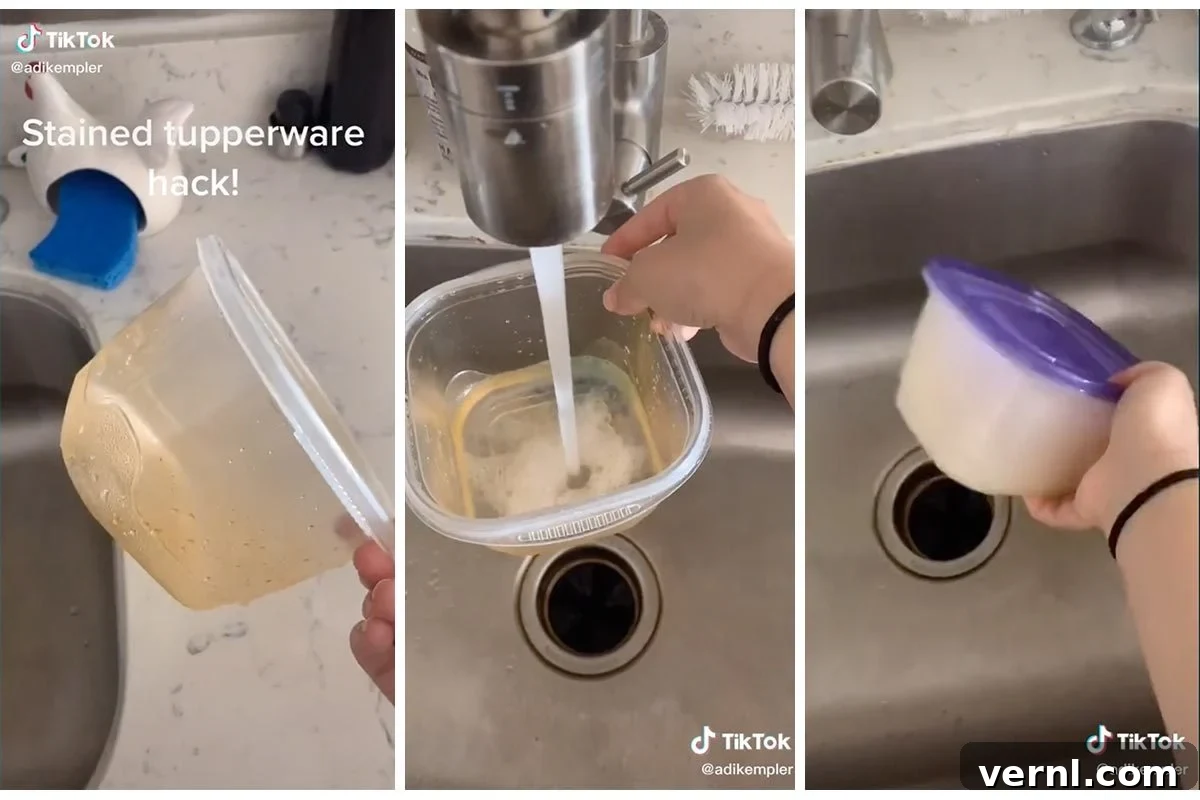
A recent sensation, demonstrated by TikTok user FacesbyAdi, offers a surprisingly simple and swift method to combat these tenacious stains. Forget lengthy soaking sessions; this hack promises a sparkling clean container in under a minute. The process is straightforward, requiring only three common household items:
- Water: Warm or hot water is recommended to help loosen the stains.
- Dish Soap: Your regular liquid dish soap works perfectly.
- Paper Towel: This is the unexpected star of the show, acting as a secret weapon.
To execute the hack, begin by placing a small amount of warm water in the stained plastic container, just enough to cover the bottom. Add a few drops of dish soap, then crumple up a small piece of paper towel and drop it into the soapy water. Secure the lid tightly onto the container. The crucial next step is to shake the container vigorously for approximately 40 to 60 seconds. After shaking, remove the lid and pour out the soapy mixture along with the paper towel. According to the viral demonstration, the container emerges looking as good as new, with the stains visibly vanished.
The Science Behind the Shake: Deconstructing the Effectiveness
While the hack might seem almost too simple to be true, there’s a compelling scientific basis that explains its potential effectiveness:
1. The Power of Heat
Using warm or hot water is not accidental. Heat plays a vital role in dislodging stains. When plastic is exposed to heat, its molecular structure can slightly expand, making it easier for trapped stain particles to be released. Additionally, heat helps to increase the solubility of fats and oils, which are often key components of stubborn food stains, allowing them to mix more readily with the soap.
2. The Chemistry of Soap
Dish soap is a highly effective cleaning agent due to its unique molecular structure. Soap molecules are amphiphilic, meaning they have both a hydrophilic (water-loving) head and a hydrophobic (water-fearing, oil-loving) tail. When soap is introduced to water and oily stains, the hydrophobic tails attach themselves to the oil and pigment particles, while the hydrophilic heads remain exposed to the water. This action emulsifies the oil, breaking it down into tiny droplets (micelles) that can then be easily rinsed away with water.
3. The Mechanical Agitation
The vigorous shaking provides essential mechanical action. This agitation creates friction, ensuring that the soapy water makes contact with every square inch of the container’s surface, including corners and crevices where stains tend to accumulate. The rapid movement helps to build up a rich lather of soap bubbles, which further aids in lifting and suspending the stain particles. It effectively mimics scrubbing, but with the added benefit of reaching areas your sponge might miss.
4. The Mysterious Role of the Paper Towel
The paper towel is perhaps the most debated element of this hack. While not explicitly explained in the original video, several theories exist:
- Gentle Abrasive: During the vigorous shaking, the crumpled paper towel acts as a soft, non-scratch abrasive. It gently scrubs against the interior surfaces of the container, helping to physically dislodge the stained particles without damaging the plastic.
- Absorbent Agent: Some speculate that the paper towel acts as an absorbent. As the soap and agitation work to lift the oil and pigment, the paper towel may absorb these loosened particles, preventing them from redepositing onto the plastic.
- Increased Surface Area: The paper towel adds significant surface area within the container, providing more points of contact for the soapy water to interact with and trap stain molecules.
Regardless of its exact mechanism, the combination of heat, soap chemistry, and mechanical action, potentially enhanced by the paper towel, creates a powerful cleaning synergy designed to strip away even the most persistent food stains.
Testing the Theory: Does the Hack Actually Deliver?
The internet, as always, is divided on the efficacy of this viral cleaning hack. Many users have reported astounding success, sharing before-and-after photos of their sparkling clean containers. They praise its speed and simplicity, claiming it works wonders on old, set-in stains that traditional washing methods couldn’t touch.
However, skepticism also abounds. Some users report minimal improvement, suggesting the hack might not be a universal solution for all types of stains or plastic containers. There’s also been discussion about whether the dramatic results shown in the original video might involve subtle trickery, such as a container swap. Furthermore, the mysterious role of the paper towel has left many questioning its true necessity, with some finding success without it.
Ultimately, the “jury is out” in the court of public opinion. While the scientific principles suggest it should work, individual results may vary based on the type of plastic, the age and severity of the stain, and even the type of dish soap used. Given its minimal effort and common ingredients, this hack is certainly worth trying for yourself to see if it becomes your new favorite cleaning trick.
Beyond the Shake: Other Proven Methods for Plastic Stain Removal
Even if the shake hack doesn’t entirely solve your staining woes, or if you prefer alternative methods, there are several other tried-and-true techniques that can help restore your plastic containers. Combining approaches or using these as standalone solutions can yield excellent results:
1. The Power of Sunlight
One of the oldest and most effective natural bleaching agents is sunlight. UV rays are excellent at breaking down pigments. After washing your stained container, leave it outside in direct sunlight for several hours, or even a full day. You’ll often find that the stains have significantly faded or disappeared entirely. This method is particularly effective for tomato-based stains, but requires patience and sunny weather.
2. Baking Soda Paste
Baking soda is a miracle worker in the kitchen, known for its mild abrasive and deodorizing properties. Mix baking soda with a small amount of water to create a thick paste. Spread the paste generously over the stained areas of the container and let it sit for a few hours, or even overnight. Then, scrub the paste with a sponge or brush before rinsing thoroughly. The gentle abrasive action helps lift the stain, while the baking soda also neutralizes odors.
3. Lemon Juice and Salt Scrub
For a natural and refreshing approach, combine the acidic power of lemon juice with the abrasive nature of salt. Squeeze fresh lemon juice onto the stain, then sprinkle a generous amount of salt on top. Use a half-cut lemon or a brush to scrub the mixture onto the stain. Let it sit for a while before rinsing. The acidity of the lemon helps break down stains, while the salt provides scrubbing action.
4. Diluted Bleach Solution (Use with Caution)
For extremely stubborn stains, a diluted bleach solution can be effective, but must be used with extreme caution. Mix one tablespoon of bleach with one cup of water. Pour the solution into the stained container and let it sit for no more than 30 minutes. Always wear gloves and ensure good ventilation. After soaking, rinse the container multiple times with hot water to ensure all bleach residue is removed. This method is generally a last resort.
5. Denture Tablets
Surprisingly, denture cleaning tablets can also work wonders on plastic stains. Fill the stained container with warm water and drop in one or two denture tablets. Allow them to fizz and dissolve, letting the solution sit for several hours or overnight. The effervescent action and cleaning agents in the tablets can help break down and lift stains. Rinse thoroughly afterward.
Preventative Measures: Keeping Stains Away
The best way to deal with stains is to prevent them from happening in the first place. Here are a few proactive tips:
- Rinse Immediately: As soon as you’ve emptied a container, rinse it with cold water. Don’t let highly pigmented foods sit for long periods.
- Use Cooking Spray: Before adding tomato sauce or curry, lightly spray the inside of your plastic container with cooking oil. This creates a barrier that can prevent pigments from adhering to the plastic.
- Dedicated Containers: Consider dedicating specific, older containers for highly staining foods. This way, you won’t worry as much if they get discolored.
- Invest in Quality: Some higher-quality plastic containers and certainly glass containers are less prone to staining.
Maintaining Your Tupperware for Long-Term Use
Beyond stain removal, proper care extends the overall lifespan of your food storage containers:
- Dishwasher vs. Hand Wash: While many plastic containers are dishwasher-safe, hand washing can be gentler and help preserve their clarity and seal over time, especially for lids.
- Avoid Abrasive Scrubbers: Harsh scrubbers can scratch the plastic surface, creating more microscopic pores where stains can hide.
- Proper Storage: Store containers and lids separately or loosely stacked to allow air circulation and prevent odors from getting trapped.
- Know When to Retire: If a container is cracked, warped, or retains persistent odors even after cleaning, it might be time to replace it.
Conclusion: Embrace a Stain-Free Kitchen
Stubborn stains on your Tupperware and plastic food containers are a common frustration, but they don’t have to be a permanent fixture in your kitchen. From the viral TikTok “shake” hack offering a quick fix to time-tested methods involving sunlight, baking soda, and lemon, there’s a solution for almost every type of stain.
By understanding why plastic stains and equipping yourself with a range of effective cleaning strategies, you can restore your containers to their original clarity, ensuring they look clean, feel hygienic, and continue to serve their purpose in your kitchen for years to come. So, the next time you find a bright orange reminder of last night’s pasta sauce, don’t despair – grab your soap, water, and maybe a paper towel, and get ready to shake those stains away!