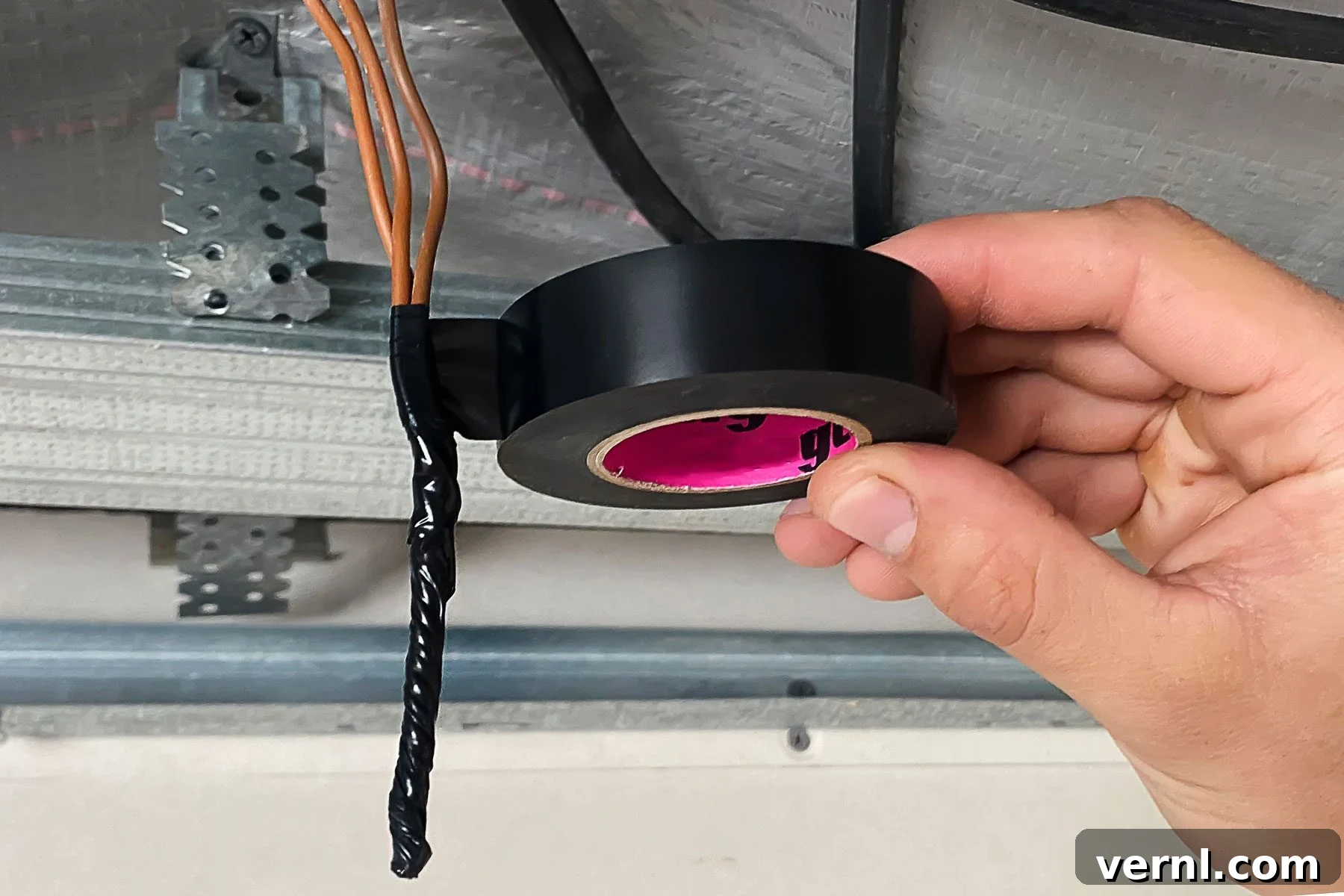
My journey into the world of electricity began as an electrical apprentice, and one of my very first tasks involved pulling wire. This wasn’t the familiar 12-gauge or 14-gauge non-metallic sheathed cable (NM-B, commonly known as Romex) you might find in a typical home. Instead, I was dealing with massive, inch-thick power cables destined for the U.S. Bank Stadium. Wires of this magnitude aren’t color-coded like the smaller gauges you pick up at the hardware store; they arrive on enormous reels, uniformly black, signifying raw power waiting to be harnessed.
This is precisely where electrical tape made its grand entrance. I was handed a stack of brown, orange, yellow, and gray tapes and told to get to work. (It’s worth noting that for 277-volt services, the specific color-coding conventions differ significantly from the 120-volt systems common in residential settings, demanding precise identification). There was just one small hitch: mastering the art of taping, especially for durable electrical applications, requires a specific technique – one I definitely hadn’t acquired yet. My foreman, observing my fumbling attempts, promptly stepped in to provide a much-needed, hands-on lesson.
I know what you might be thinking: “Who doesn’t know how to use tape?” However, electrical tape is a specialized tool, fundamentally distinct from common adhesives like Scotch tape, the gentle painter’s tape, or even the robust, multi-purpose duct tape. Its unique properties – from its impressive insulating capabilities and elastic conformability to its robust adhesion and resistance to various environmental factors – make it an indispensable asset for countless electrical applications. Below, I’ll guide you through essential tips and tricks, exploring its diverse uses and the correct, professional methods for application. You might be genuinely surprised by the versatility and critical role electrical tape plays in ensuring both safety and efficiency in electrical work, whether you’re a professional electrician or a diligent DIY enthusiast tackling home projects.
Essential Uses for Electrical Tape in Modern Wiring Projects
Electrical tape is far more than just a sticky strip; it’s a versatile and fundamental tool for electrical safety, organization, and repair. While some applications are standard practice for licensed electricians, others are practical hacks for the informed DIY enthusiast. Here are the most common official uses and a few ingenious non-official applications that highlight its adaptability:
-
Wire Identification and Phasing for Electrical Safety
Electrical tape excels at wrapping around wires to identify them by color, a critical practice known as “phasing.” This is especially crucial in complex electrical systems, such as commercial or industrial environments featuring multi-phase wiring (e.g., 277V/480V systems). Using specific colors – like brown, orange, and yellow for different phases, and gray for neutral in higher voltage systems, or red and blue for additional phases in 120V/208V configurations – helps electricians quickly and safely identify circuits. This reduces the risk of errors during installation, maintenance, and troubleshooting, significantly enhancing safety protocols. Beyond basic phasing, you can also create “flags” by folding tape and writing on them with a permanent marker for more detailed labeling, such as circuit numbers, destination points, or specific functions. This method is invaluable for clearly labeling your circuit breakers in a panel or marking electrical boxes for specific purposes, ensuring clear organization, simplified future work, and compliance with stringent safety standards.
-
Streamlining Wire Pulling and Cable Management
When running multiple wires through challenging pathways like conduit or behind walls, efficient organization is paramount. Electrical tape is exceptionally effective for wrapping around bundles of wire, keeping them tidy, preventing tangles, and minimizing snags that can complicate a pull. Moreover, it’s expertly used to create a streamlined, tapered “head” for your wire bundle, securely taping it to a fish tape or pull string. This smooth, aerodynamic connection allows the wires to slide effortlessly (or at least with significantly reduced resistance!) through tight spaces, around corners, and across long runs of conduit. By reducing friction and preventing abrasion, this technique protects the wire insulation from damage during demanding pulls, ultimately saving considerable time and effort on demanding electrical projects, from residential upgrades to large-scale commercial installations.
-
Protecting Terminal Screws: An Added Layer of Precaution
This particular application, while occasionally sparking debate within the electrical community, is a common and widely practiced technique taught to many electricians, including myself. It involves carefully wrapping a layer of high-quality electrical tape around the exposed terminal screws of receptacles and switches before these devices are meticulously pushed into their electrical boxes. The primary rationale behind this practice is to provide an additional layer of insulation and protection. This helps prevent accidental contact with energized terminals should the device be inadvertently handled while live, and crucially, it acts as a barrier against stray wire strands or other conductive materials from touching the metal box or adjacent terminals, which could otherwise lead to a dangerous short circuit. While it’s not explicitly mandated by the National Electrical Code (NEC) or device manufacturers (and ironically, strict adherence to manufacturer labeling is an NEC requirement, hence the occasional controversy), many seasoned professionals consider it a practical and prudent safety measure that adds an extra margin of protection against potential shocks or electrical faults, particularly in crowded or complex electrical boxes.
-
Professional Splice Insulation and Environmental Sealing
Electrical tape isn’t solely for minor fixes; it’s a critical component in professional-grade splice insulation for medium- and high-voltage connections, such as those found in utility transmission lines, power distribution systems, or complex industrial settings. Specialized electrical tapes, often crafted from robust rubber or mastic compounds, come with specific insulation ratings and material properties designed to withstand extreme conditions, including high voltage, severe temperatures, and harsh chemicals. This usage demands extensive training, specialized tools, and profound expertise to ensure the splice is not only impeccably secure and electrically isolated but also hermetically sealed against moisture, corrosion, and environmental degradation over many years. It is absolutely paramount to understand that for general home wiring and most low-voltage applications, standard electrical tape should never be used as a primary substitute for proper wire nuts, crimp connectors, heat shrink tubing, or other code-compliant methods for securing and insulating live electrical splices. Its advanced use in this capacity is strictly reserved for highly specific situations and rigorously trained professionals in the power industry.
-
Robust Protection for Motor Lead Connections in Harsh Environments
Motors are the unwavering workhorses of countless industrial, commercial, and agricultural operations. They often run continuously in exceedingly dirty, greasy, and chemically harsh environments, enduring constant vibration and significant temperature fluctuations. The electrical connections where motor leads meet their power feeders are particularly vulnerable to these stressors, making them critical points of potential failure. Electrical tape provides essential, durable protection for these connections against a wide range of environmental threats. It creates a robust barrier against corrosive chemicals, prevents rust and short circuits from moisture and high humidity, and offers a crucial degree of protection against vibration-induced wear and extreme temperature variations. While dedicated, pre-engineered splice kits are now widely available for this purpose, the time-honored skill of properly taping motor lead connections remains a trusted technique that many experienced electricians learn and rely upon to ensure the long-term longevity, reliability, and safe operation of these vital components in demanding industrial settings.
-
Minor or Temporary Wire Insulation Repairs: Knowing the Limits
It’s a common practice to use electrical tape for addressing small scrapes, superficial nicks, or minor abrasions in the outer insulation jacket of a wire. For purely cosmetic or extremely minor damage that has not compromised the primary insulation directly surrounding the metallic conductor, a few layers of high-quality electrical tape can provide a temporary or minor repair, restoring some protective integrity to the outer sheath. However, it is absolutely critical to understand the severe limitations of this application: if you can see the actual metallic conductor (the wire itself), if the primary insulation is breached, or if the damage is extensive, electrical tape is definitively insufficient and dangerously unsafe for a permanent fix. In such critical cases, the wire should always be properly repaired using a suitable, code-compliant connector, heat shrink tubing, or by replacing the damaged section of the wire entirely. Electrical tape, in these scenarios, is a temporary band-aid at best, never a long-term or safe solution for exposed live wires.
-
Non-Standard Use: Protecting Surfaces from Scuffs and Damage
This is one of my favorite non-standard, yet incredibly useful, applications that saves considerable time and frustration. When using a metal torpedo level or other metal tools directly on a freshly painted wall – for instance, when carefully leveling an electrical device, installing a decorative faceplate, or marking measurements – it almost invariably leaves unsightly gray or black scuff marks. These marks, often caused by the metal rubbing against the paint, are notoriously difficult, if not impossible, to remove without resorting to time-consuming touch-ups or complete repainting. The simple, elegant solution? Wrap the edges or contact points of your level or other metal tools with a layer or two of electrical tape. The tape acts as a protective, non-abrasive buffer, preventing the metal from directly contacting and marring the painted surface, thereby keeping your walls pristine and scuff-free. It’s a small, ingenious trick that saves a lot of hassle, preserves aesthetic integrity, and makes your home improvement projects smoother.
Mastering the Art: How to Correctly Use Electrical Tape for Optimal Results
Using electrical tape effectively is significantly more nuanced than simply wrapping it haphazardly around an object. Proper technique ensures optimal adhesion, consistent insulation, and long-term durability, which are all critical for electrical safety and performance. Whether you’re securing a cable, bundling multiple wires, or protecting a pipe or a fish tape, following these steps will guide you to achieve a professional, reliable finish:
Step 1: Essential Preparation and Initial Grip for Taping
Before you begin, ensure the surface you’re taping is impeccably clean, dry, and free of any dust, grease, sharp edges, or burrs that could tear the tape or compromise its adhesion. Hold the roll of electrical tape loosely yet securely in your dominant hand, with your thumb positioned firmly on top of the tape roll, near the edge, ready to control its release. Unstick a small flap of tape, approximately 2 to 3 inches long. Position the object you intend to wrap in your opposite hand, or ensure it is securely held or clamped if it’s stationary, allowing you to focus on the tape application.
Step 2: Anchoring the Tape and Initiating the First Wrap
Stick the initial flap of tape firmly onto the object, creating a secure anchor point. Hold this starting point down with your thumb or index finger on your non-dominant hand to prevent it from lifting. Now, meticulously begin your first wrap. The absolute key here is to apply consistent, moderate tension from the very beginning. As you pull the tape toward you and around the object, gently yet firmly stretch it. Avoid the common mistake of pulling off too much tape at once, as this can cause the roll to flop around uncontrollably, twist, or lose its vital tension, making a neat, effective wrap exceedingly difficult. You want just enough free tape to comfortably encircle the object once, consistently maintaining that tautness. Apply the tape at a slight, consistent angle relative to the length of the object, ensuring a smooth, air-bubble-free, and even start to your insulation.
Step 3: Maintaining Consistent Tension and Overlapping Layers for Durability
As you continue wrapping, it is paramount to maintain that consistent, moderate tension. Grip the tape firmly yet comfortably between your index finger and thumb, continuously stretching it slightly as you meticulously guide it around the object. A common and highly effective technique involves wrapping away from you, then smoothly bringing the roll back towards you, precisely overlapping each preceding layer by approximately half the width of the tape. This “half-lap” method is crucial for ensuring excellent, uniform coverage, providing multiple layers of insulation for enhanced dielectric strength, and creating a robust, durable, and weather-resistant seal. When you need to navigate underneath and to the backside of the object, a useful maneuver is to smoothly “flip” the roll over the top with your fingers. Regrab it, pull it taut again, and continue your wrap, moving steadily and consistently down the length of the object. While consistency in tension and overlap is paramount, feel free to experiment with your technique – some individuals find it easier to always wrap away from themselves, while others prefer the flip method. Find what works best for you, always prioritizing uniformity and proper tension.
Step 4: Ensuring a Secure, Professional, and Accessible Finish
As you approach the end of your desired taping length, or when the connection is fully insulated and securely sealed, it’s time to finish the wrap cleanly and professionally. To do this, grip the tape firmly with your thumb and finger right next to the object, ensuring it’s still under slight tension. With a quick, decisive jerk, rip the tape roll cleanly away. This technique, when executed correctly, will leave a clean break and a short, neat flap of tape against the wrapped object. This small flap can then be purposefully folded over or twisted into what many electricians affectionately call a “buddy flag” or “tail.” This seemingly small detail is incredibly practical and demonstrates professionalism: it makes it remarkably easy for the next person (or yourself, in the future) to quickly locate the end of the tape and unwrap it if needed, without fumbling, scratching the insulation, or needing a knife. This thoughtful finishing touch signifies a commitment to quality and accessibility in your electrical work.
Beyond the Basics: Understanding Different Types and Properties of Electrical Tape
While often generalized under the single term “electrical tape,” this category encompasses a range of specialized tapes, each meticulously designed for specific applications and environmental conditions. Understanding these crucial variations is paramount for selecting the right tape for the job, thereby ensuring both the safety and long-term longevity of your electrical installations.
-
Vinyl Electrical Tape: The Versatile All-Rounder for General Use
The most common and widely recognized type, typically made from high-quality PVC (polyvinyl chloride). Vinyl tape is characterized by its exceptional flexibility, stretchability, and excellent insulation properties, making it highly conformable to irregular shapes. It is inherently flame-retardant, resistant to abrasion, moisture, and many common chemicals. Available in a wide array of vibrant colors, it is the ideal choice for wire identification (phasing), minor insulation repairs on outer jackets, and general bundling of wires. Its impressive dielectric strength (the ability to withstand electric fields without breaking down) makes it perfectly suitable for the vast majority of low-voltage household and commercial applications. Different grades of vinyl tape exist, offering varying levels of temperature and voltage resistance, so always select one appropriate for your specific needs.
-
Rubber Splicing Tape: For Robust Insulation and Hermetic Sealing
Often referred to as “self-fusing” or “vulcanizing” tape, rubber splicing tape is engineered for heavy-duty insulation, moisture sealing, and environmental protection. When stretched and meticulously wrapped, layers of this unique tape chemically fuse together into a solid, homogeneous, void-free, and incredibly insulating barrier. It offers superior moisture resistance, exceptional dielectric strength, and excellent thermal stability, making it ideal for insulating and sealing critical splices in outdoor or consistently wet environments, or for building up primary insulation on higher-voltage connections. It’s typically used as a primary insulator, often followed by a protective outer layer of vinyl tape for enhanced mechanical protection and UV resistance, creating a highly durable and long-lasting seal.
-
Mastic Tape: Powerful Sealing, Padding, and Vibration Dampening
Mastic tapes ingeniously combine a thick, pliable, rubber-based mastic adhesive with a flexible, conformable backing. They are specifically designed to create an unparalleled moisture-proof seal and to provide robust padding or cushioning. Mastic tape excels at sealing out moisture in outdoor connections, preventing corrosion in underground or exposed wiring, and providing a protective, vibration-dampening barrier over sharp edges or uneven surfaces. It’s often used in conjunction with other electrical tapes, particularly in demanding utility and industrial applications where harsh environmental conditions and mechanical stresses are common. Its exceptional conformability allows it to create a tight, lasting seal around even the most irregular and complex shapes.
-
Friction Tape: Mechanical Protection (A Historical and Niche Application)
Though less common in modern electrical work compared to the insulating prowess of vinyl or rubber tapes, friction tape is a traditional electrical tape consisting of a strong cotton cloth tape generously impregnated with a sticky, rubber-based adhesive. It offers strong mechanical protection and excellent abrasion resistance but possesses significantly lower dielectric strength compared to its vinyl or rubber counterparts. Historically, it was widely used for outer wraps where mechanical protection was paramount, but advancements in insulating and sealing tapes have largely replaced its direct electrical contact applications. It can still be found in some niche applications where high friction, robust mechanical durability, and a non-slippery grip are desired, without requiring significant electrical insulation capabilities.
-
Specialty Tapes: Engineered for Extreme Conditions
Beyond these common types, the market offers a diverse range of specialty electrical tapes meticulously designed for extreme and highly specific conditions. These include high-temperature tapes (e.g., silicone rubber tapes capable of withstanding extreme heat), chemical-resistant tapes formulated to resist corrosive agents, and tapes specifically engineered for unique environmental challenges such as UV exposure or extreme cold. When embarking on critical or unconventional applications, always consult the manufacturer’s precise specifications for voltage rating, temperature range, material compatibility, and application guidelines. These details are absolutely critical for ensuring the chosen tape performs as expected and safely under the intended operating conditions.
Safety First: Critical Considerations When Using Electrical Tape
While electrical tape is an invaluable tool for a wide array of electrical tasks, it’s absolutely crucial to understand its limitations and adhere strictly to fundamental safety best practices. Never, under any circumstances, compromise safety for convenience or expediency when working with electricity.
- Always De-energize Circuits: This is the golden rule of electrical work. Always, without exception, turn off the power at the circuit breaker or fuse box before beginning any work on electrical wires, devices, or components. Crucially, verify that the circuit is indeed dead using a reliable non-contact voltage tester or a multimeter before touching any conductors.
- Electrical Tape is Often a Secondary Insulator: For most DIY and residential applications, electrical tape should primarily be considered a secondary insulating layer, a protective outer wrap, or for identification purposes. It is generally not a suitable primary insulator for directly exposed, live conductors without proper, code-compliant connectors (like wire nuts, crimp connectors, or heat-shrink tubing) or other approved and certified methods.
- Do Not Over-Rely on Tape for Damaged Wires: As previously emphasized, electrical tape can be used to cover small, superficial nicks or abrasions in the outer insulation jacket of a wire. However, if the actual metallic conductor itself is exposed, visibly damaged, or if the primary insulation layer is compromised, tape is unequivocally a temporary, insufficient, and potentially unsafe fix. The correct and safe solution is almost always to properly repair the wire using an appropriate splice kit, replace the damaged section of the wire, or replace the entire wire run.
- Match the Tape to the Specific Application: Always use the correct type and grade of electrical tape for the job at hand. Using standard vinyl tape for a high-voltage splice, an outdoor connection requiring robust moisture sealing, or an area exposed to extreme temperatures is inappropriate and can lead to insulation failure, electrical hazards, or system malfunctions. Consult product specifications.
- Thoroughly Read Manufacturer Specifications: Pay meticulous attention to the voltage rating, temperature rating, and environmental resistance specifications provided by the tape manufacturer. These critical details are essential for ensuring that the tape performs exactly as expected and safely under the intended operating conditions. Using a tape outside its specified parameters is a serious safety risk.
- When in Doubt, Consult a Professional: If you are ever unsure about the safety, suitability, or correct application of electrical tape for a particular electrical repair, installation, or modification, always consult a qualified, licensed, and experienced electrician. Electrical work carries inherent and serious risks, and professional expertise is invaluable for ensuring safety and compliance with local electrical codes.
From the colossal power cables feeding a modern stadium to the intricate wiring within your own home, electrical tape proves itself an absolutely indispensable and versatile component in the toolkit of every electrician and serious DIYer. Mastering its proper application and thoroughly understanding its diverse capabilities not only significantly enhances the quality and longevity of your electrical work but also critically contributes to overall safety and efficiency in every project. Whether you’re an apprentice just starting out, a seasoned professional tackling complex industrial systems, or a dedicated homeowner undertaking essential repairs, a thorough understanding of electrical tape’s myriad uses and precise application techniques is a fundamental skill that underpins reliable, secure, and safe electrical installations. Embrace this remarkably versatile tool, respect its limitations, and you’ll be well on your way to executing safer, more effective, and more professional electrical projects, ensuring peace of mind for years to come.