
In over five decades immersed in the dynamic world of auto repair, I’ve heard countless stories – some good, some bad. Yet, when it comes to wheel bearings, my memories are almost uniformly grim. Rarely do these crucial components feature in a triumphant tale; instead, they are often at the heart of vehicular dramas. These include harrowing incidents like complete brake system failures, tires violently exploding, or even terrifying fires ignited by a red-hot, seized bearing igniting axle grease. The message is clear: a failing wheel bearing is not merely an inconvenience; it’s a severe safety hazard that demands immediate attention and should never be overlooked.
Throughout my extensive career, I’ve personally replaced hundreds, if not thousands, of wheel bearings across a vast array of vehicle makes and models. This hands-on experience has taught me an invaluable lesson: a failing wheel bearing invariably provides discernible warning signs before it completely gives out. Recognizing these early indicators can be the difference between a simple repair and a catastrophic roadside emergency. Pay close attention to these tell-tale symptoms:
- Unusual noises coming from the wheels, such as grinding, humming, roaring, or clicking sounds that change with speed or cornering;
- Poor handling or pulling to one side while driving straight, during cornering, or under braking, indicating a potential compromise in suspension integrity;
- A shaking steering wheel or a general vibrating sensation throughout the vehicle, particularly noticeable at certain speeds;
- Uneven tire wear patterns, which can signify a misaligned wheel due to a compromised bearing;
- The anti-lock braking (ABS) dash light illuminating on your dashboard, often linked to sensor issues caused by a failing wheel bearing.
Understanding the Core: What Exactly Is a Wheel Bearing?
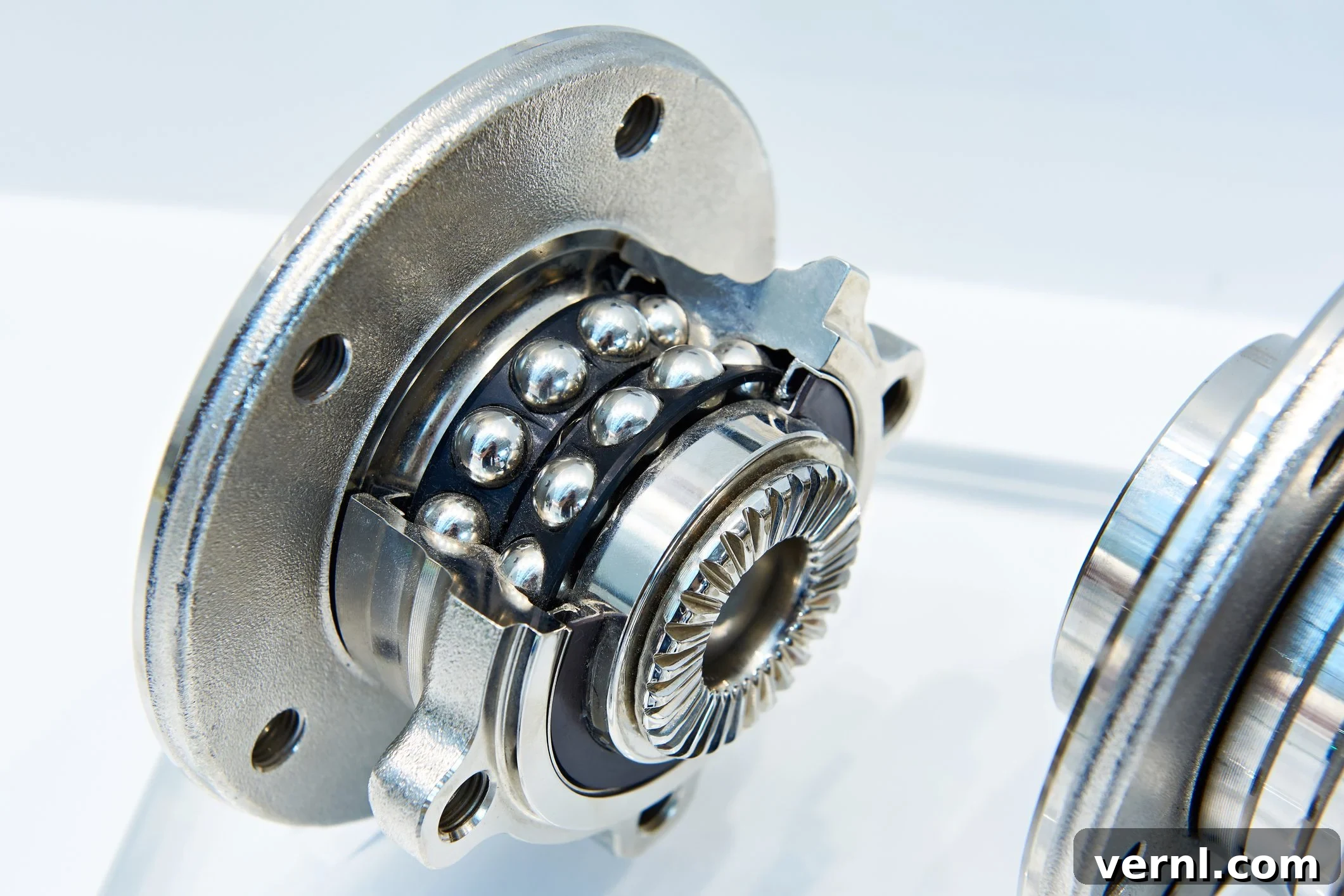
To truly grasp the importance of these components, it’s essential to understand what a wheel bearing is and its fundamental role in your vehicle’s operation. On the vast majority of modern front-wheel-drive and four-wheel-drive cars, wheel bearings are sophisticated, precisely machined steel assemblies. These aren’t just simple rollers; they typically consist of a set of ball or straight roller bearings that are permanently sealed. The individual balls or rollers are meticulously encased within a “cage” – a retainer designed to support and space them evenly, allowing them to rotate freely with minimal friction.
This cage and its captive rollers are meticulously held together inside a robust, hardened metal ring, aptly named a “race.” The entire assembly is then sealed, typically with a durable rubber or synthetic seal. This seal performs a dual, critical function: it effectively keeps the specialized grease inside the bearing, ensuring continuous lubrication, while simultaneously acting as an impenetrable barrier against damaging external elements such such as water, road salts, grit, and other debris that could compromise its integrity. Wheel bearings are integral components of the vehicle’s suspension system. They are installed within, and securely fastened to, the suspension knuckle or hub, either through a high-pressure press-fit, a series of robust bolts, or a secure snap-ring. Once correctly mounted, the wheel bearing allows the wheel and tire assembly to spin effortlessly and smoothly around the stationary axle shaft, translating engine power into forward motion with incredible efficiency.
Fundamentally, wheel bearings are unsung heroes of automotive engineering. They enable cars and trucks to operate with remarkable smoothness and efficiency by dramatically reducing friction between the rotating wheel and the stationary axle. More critically, they bear the entire weight of the vehicle at each wheel, ensuring stability, precise handling, and ultimately, the safety of its occupants. Older rear-wheel-drive cars, particularly trucks and trailers, often utilize a different configuration: a set of two tapered roller bearings that face each other. Unlike modern sealed units, these older designs are not maintenance-free. They require routine servicing, including cleaning and repacking with fresh grease, typically every 20,000 miles or at least once a year, to ensure their longevity and proper function.
The Root Causes: Why Do Wheel Bearings Fail Prematurely?
Under ideal driving conditions and with proper maintenance, a modern wheel bearing is designed to be remarkably durable, often lasting anywhere from 85,000 to 100,000 miles, or even more. However, “ideal” conditions are rarely the norm. Several factors can significantly shorten the lifespan of these critical components, leading to premature failure:
- Low tire pressure: This might seem indirect, but under-inflated tires generate excessive heat due to increased friction and flexing. This heat can transfer to the wheel hub and subsequently to the wheel bearing, prematurely degrading its internal lubricants and components, thereby significantly shortening its operational life.
- Challenging Road conditions: Our roads are not always smooth. Striking a severe pothole, driving over rough terrain consistently, or even accidentally bouncing off a curb can impart sudden, extreme shock loads to the wheel bearing. These impacts can damage the internal components, deform the races, or compromise the seals.
- Involvement in an accident: Any vehicular collision, even a seemingly minor one, that impacts the wheel, suspension, or axle assembly can place undue and unnatural stress on the wheel bearing. The forces involved can cause internal damage that may not be immediately apparent but will lead to failure down the line.
- Driving on unbalanced tires or an out of alignment suspension system: Both of these issues create constant, irregular vibrations and uneven loads on the wheel bearings. Unbalanced tires create centrifugal forces that shake the wheel, while a misaligned suspension forces the bearing to operate at non-optimal angles. These conditions significantly increase stress and friction, accelerating wear and leading to premature bearing failure.
- Extreme Weather Conditions: Wheel bearing lubricants are engineered to perform across a wide temperature range, but extremes can still be detrimental. Sub-freezing temperatures can cause lubricants to thicken, increasing drag and wear, while extended periods of extremely hot and dry summers can cause certain greases to thin out or even evaporate, reducing their effectiveness and leading to accelerated wear.
- Failed seals: This is a common and critical point of failure. Once a wheel bearing seal loses its integrity, it can no longer protect the internal components. Road salts, abrasive grit, dirt, dust, and especially water can infiltrate the bearing. These contaminants not only displace the vital lubricant but also act as abrasive agents, quickly corroding and grinding down the precision-machined internal surfaces, at which point failure is only a matter of time.
- Oversized wheels and tires: While aesthetically pleasing, installing wheels and tires that are significantly larger or wider than the factory specifications can drastically increase the strain and weight exerted on the wheel bearings. The increased leverage and rotational mass put additional stress on the bearing assembly, accelerating wear.
- Improper torquing: The axle hub nut, which secures the wheel bearing, requires a very specific torque setting. Under-tightening can lead to excessive play and movement, causing the bearing to wear rapidly. Conversely, over-tightening can pre-load the bearing excessively, crushing its internal components and leading to immediate or rapid failure. Both scenarios are detrimental.
Understanding Failure Patterns: Do Wheel Bearings Fail One at a Time or All Four Simultaneously?
From my extensive experience in the field, it is exceptionally rare for all four wheel bearings on a vehicle to fail at precisely the same time. The only plausible scenario where such widespread, simultaneous failure might occur would be if the vehicle were subjected to an extreme event, such as prolonged submersion in a flood, which could compromise all bearings at once. Typically, wheel bearings fail individually, one at a time, due to localized stress, impact, or specific wear patterns. The causes outlined above usually affect one or two wheels more severely than others, leading to a staggered failure rate.
Can a Failing Wheel Bearing Be Repaired or Serviced?
This is a crucial point for vehicle owners to understand: modern, permanently sealed wheel bearings are strictly non-serviceable components. Unlike the tapered bearings of yesteryear that could be disassembled, cleaned, inspected, and repacked with grease, today’s sealed units are designed as a single, integrated assembly. Once a sealed wheel bearing begins to show any signs of wear, noise, looseness, or damage, it cannot be effectively repaired, rebuilt, or restored to safe operating condition. Attempts to do so are futile and highly dangerous.
It is imperative that you never, under any circumstances, reuse any wheel bearing – whether a sealed unit or an older tapered style – that exhibits looseness, excessive wear, emits unusual noises, or shows any other signs of degradation. Trying to “fix” a loose or damaged wheel bearing is not only a temporary measure but a direct path to a serious accident and severe personal injury. Even if a less reputable professional suggests attempting to repair a faulty bearing to save costs, firmly decline their recommendation. The risks associated with a catastrophic wheel bearing failure while driving far outweigh any potential short-term savings from a misguided repair.
The Replacement Dilemma: Do I Need to Replace Bearings on Both Axles at the Same Time?
The question of whether to replace wheel bearings on both sides of an axle simultaneously, even if only one has explicitly failed, is a common point of discussion among automotive professionals. There isn’t a universally agreed-upon answer, as various factors influence the decision.
My professional opinion, shaped by decades of observing vehicle wear and tear, leans towards a proactive approach in certain situations. If your vehicle has accumulated significant mileage, typically exceeding 50,000 miles, or if it has been consistently driven under harsh conditions (such as frequent exposure to rough roads, extreme weather, heavy loads, or off-road use), then it is generally a logical and safer practice to consider replacing the wheel bearings on both sides of the affected axle. The reasoning is simple: if one bearing on an axle has failed under these conditions, it’s highly probable that the companion bearing has experienced similar stresses and is nearing the end of its service life, even if it hasn’t started showing obvious symptoms yet. Replacing both prevents a return trip to the mechanic (and associated labor costs) when the other side inevitably fails soon after.
However, the scenario changes for a relatively low-mileage vehicle where the other bearing on the same axle is rigorously inspected and confirmed to be in excellent condition, with no signs of wear, play, or noise. In such cases, replacing only the damaged bearing should not present a problem. A thorough inspection by a qualified technician is paramount to making an informed decision, balancing immediate repair needs with long-term reliability and cost-effectiveness.
Understanding the Investment: How Much Does Wheel Bearing Replacement Cost?
The cost associated with replacing a wheel bearing can vary significantly, impacting your wallet depending on several key factors. It’s crucial to understand these variables to avoid sticker shock and make informed decisions.
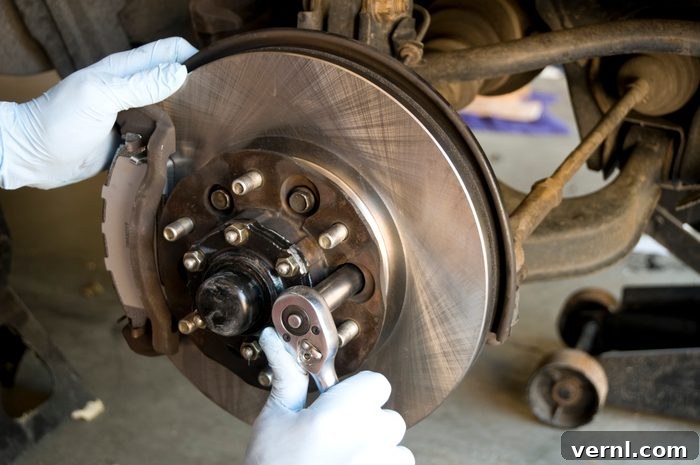
On average, the cost to replace a single sealed wheel hub bearing typically hovers around $350 per wheel. However, this is merely an average, and the final price can fluctuate widely. Critical factors influencing the total cost include the specific make, model, and year of your vehicle (some vehicles have more complex assemblies or require specialized tools), the prevailing shop labor rate in your area (which can range from $47 to $215 per hour, according to AAA), and any additional damage discovered during the diagnostic process. For instance, if a severely seized bearing has damaged the steering knuckle or axle shaft, or if brake components also need attention, the overall cost could easily push beyond $1,000 per wheel. Conversely, for certain less complex vehicles or those with more accessible designs, the cost could be less than $100 per wheel for parts, making the overall repair more budget-friendly.
One significant area where you can potentially save hundreds of dollars is by undertaking the repair yourself, provided you have the mechanical aptitude, the necessary safety precautions, and the right tools. Many auto parts stores offer a valuable service where they will lend you specialty tools and equipment required for wheel bearing replacement, often for a refundable deposit. This can drastically reduce the labor component of the repair cost. However, always be honest about your skill level; an incorrectly installed bearing can lead to serious safety issues.
NOTE: Regardless of whether you choose the DIY route or have a professional mechanic replace the bearing, one critical step that must never be overlooked is always to install a brand-new axle hub nut. Most hub nuts are designed as prevailing torque fasteners. This means they are engineered to maintain a specific tension and resist loosening through friction within their threads. They are single-use components, crucial for securing critical components like axle shafts to hub bearings. Reusing an old hub nut compromises this designed security, and a loose nut in this application could lead to disastrous consequences, including wheel separation or loss of vehicle control. Always prioritize safety and use new, manufacturer-specified hardware.
Proactive Maintenance and Longevity for Your Wheel Bearings
While wheel bearings are built to last, a little proactive attention can go a long way in ensuring they reach their maximum lifespan and continue to provide safe, reliable operation. Regularly checking and maintaining correct tire pressure, as mentioned, helps prevent excessive heat buildup. Avoiding aggressive driving over potholes, speed bumps, and curbs can significantly reduce the impact stress on your bearings. Furthermore, ensuring your tires are balanced and your vehicle’s suspension alignment is checked periodically (especially after significant impacts or every few years) will prevent the constant, uneven loading that accelerates bearing wear. Paying attention to your vehicle’s overall condition, responding promptly to dashboard warning lights, and addressing any unusual noises can prevent minor issues from escalating into expensive and dangerous failures.
In conclusion, wheel bearings are far more than just small parts; they are fundamental to your vehicle’s performance, efficiency, and most importantly, your safety. Recognizing the early symptoms of failure, understanding why they fail, and committing to timely, professional replacement are crucial responsibilities for any vehicle owner. Never underestimate the potential dangers of a failing wheel bearing – proactive attention ensures peace of mind and keeps you safe on the road.
[cf]skyword_tracking_tag[/cf]