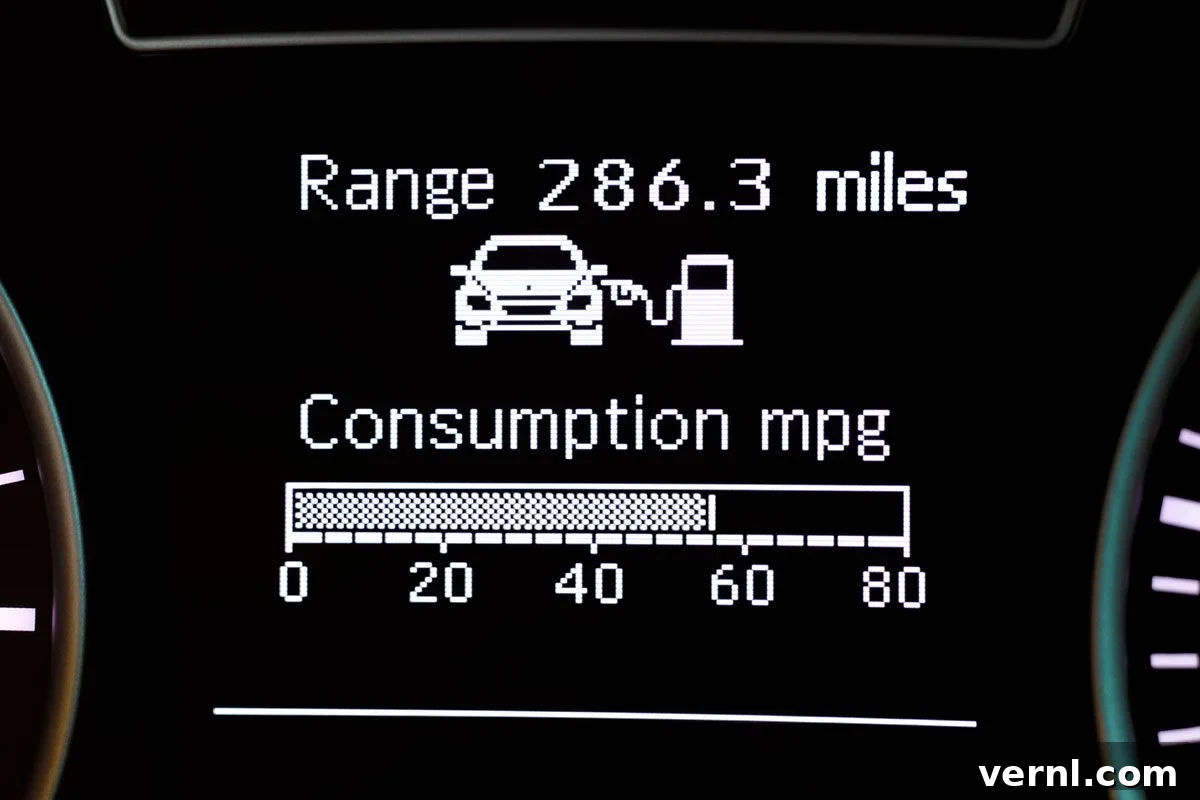
Understanding Your Car’s Fuel Range Estimator: A Comprehensive Guide
Gone are the days when knowing how far you could drive on an “empty” tank was purely a matter of trial, error, and a little bit of nerve. Historically, drivers relied on personal experience, perhaps knowing their car had just enough reserve to cover seven miles once the fuel light illuminated. Today’s vehicles, however, offer a sophisticated feature that takes much of the guesswork out of the equation: the in-dash fuel range estimator, often referred to as the “miles-to-empty” (MTE) display.
This digital readout provides a data-driven approximation of how many miles your vehicle can potentially travel before running out of fuel. While incredibly helpful, these estimates are not absolute guarantees. They are dynamic, constantly adjusting based on a complex interplay of real-time driving conditions and historical data. To truly understand and effectively utilize this modern convenience, we’ve enlisted the expertise of an automotive specialist and a mathematician to demystify what you need to know about your car’s fuel range estimator.
What Exactly Is a Fuel Range Estimate?
The fuel range estimate is a sophisticated calculation displayed on your car’s dashboard that projects the approximate distance your vehicle can travel before its fuel tank is completely depleted. It’s designed to be a practical guide, offering drivers valuable information for planning their journeys and anticipating fuel stops. However, it’s crucial to understand that these estimates are precisely that—estimates. They are rarely 100 percent accurate and are under constant revision by your car’s onboard computer, adapting to various factors including your driving style and environmental conditions.
As Gary Hindenes, owner of Gary’s Automotive Repair, emphasizes, “The factory estimate you have is accurate based on the data the car has. When you buy a car, you buy a car that says you get a certain amount of miles per gallon; however, your driving habits, maintenance, and geography will dictate how accurate your gas estimate is.” This highlights the inherent variability: while manufacturers provide baseline figures, real-world conditions significantly influence the actual mileage you achieve and, consequently, the accuracy of your MTE display.
The Science Behind the Miles-to-Empty Calculation
Far from a simple calculation, your car’s fuel range estimate is determined by a complex interplay of live data streams and an analysis of your past driving patterns. Modern vehicles employ advanced algorithms to continuously monitor and measure a variety of parameters to provide the most current and relevant remaining fuel range projection. Here are the key data points and values that contribute to this intricate calculation:
- Precise Fuel Level Measurement: At the heart of the estimation is the fuel level sensor, typically a float sensor located within the fuel tank. This sensor accurately measures the amount of fuel currently remaining. However, factors like fuel sloshing during movement or the irregular shape of some fuel tanks can introduce minor fluctuations in these readings, which the car’s system works to smooth out.
- Historical Fuel Consumption Data: Your car’s computer constantly records and analyzes historical fuel usage. This includes data from various driving conditions—city driving, highway cruising, stop-and-go traffic—allowing the system to build a profile of your vehicle’s average fuel economy under different scenarios. This long-term average forms a crucial baseline for future predictions.
- Real-time Driving Habits and Behaviors: The way you drive has an immediate and significant impact on fuel consumption. The system actively monitors factors such as your current speed, the frequency and intensity of your braking, the force of your acceleration, and even periods of idling at red lights or stop signs. Aggressive driving, with rapid acceleration and hard braking, will quickly reduce the estimated range, while smoother, more conservative driving will tend to extend it.
- Dynamic Driving and Environmental Conditions: External factors play a substantial role in fuel efficiency. The car’s sensors detect ambient temperatures, as extreme cold or heat can affect engine performance and require more energy for climate control (AC or heating). Inclination sensors measure whether you’re driving uphill or downhill, significantly impacting the engine’s load. Furthermore, navigating stop-and-go traffic versus open highway driving demands vastly different fuel rates, all of which are factored into the real-time estimate.
- Advanced Proprietary Algorithms: Automotive manufacturers develop sophisticated, proprietary algorithms that act as the brain of the fuel range estimator. These algorithms are designed to synthesize data from multiple sensors, evaluate engine performance metrics, and integrate historical driving patterns to generate a precise estimate of how far you can drive before refueling becomes critical.
- Machine Learning for Enhanced Accuracy: As math and science teacher Greg Feliz explains, “Machine learning algorithms help improve accuracy by tracking thousands of readings over several days to predict real-time conditions.” This advanced technology allows the system to “learn” your individual driving style over time, refining its predictions and making them more personalized and accurate. It can even anticipate changes based on recurring routes or typical driving scenarios, offering a more dynamic and intelligent range projection.
Understanding the Accuracy of Your Fuel Range Estimator
While the in-dash fuel range estimator is an impressive piece of technology, it’s important to approach its readings with a degree of caution. According to research by AAA, drivers should not place absolute trust in the exact number displayed. AAA’s study found a “relatively low error of 2.3% compared to the fuel economy measured by in-lab testing” on average. However, this average masks significant variability. Individual vehicles, and more importantly, individual driving behaviors, reacted differently to changes in driving conditions, leading to varying levels of accuracy.
Gary Hindenes further elaborates on this point: “If you’ve been driving conservatively on the highway, it’ll estimate a high number. But if at any moment you encounter traffic or begin driving aggressively, it’ll quickly plummet. Useful to a certain extent, but don’t rely on it to the exact mile — always leave some margin.” This expert advice underscores the dynamic nature of the estimate. A sudden change in driving conditions—like hitting unexpected heavy traffic after a long stretch of highway driving, or transitioning from flat roads to steep hills—can cause the miles-to-empty display to drop significantly faster than anticipated. Therefore, while it’s a valuable guide, it should always be used with a margin of safety, encouraging drivers to seek out a fuel station well before the estimate reaches critical levels.
Factors That Influence Your Car’s Fuel Range
Several internal and external factors can significantly impact your car’s actual fuel range, often causing it to deviate from the estimated miles-to-empty. Understanding these influences can help you drive more efficiently and make more informed decisions about refueling:
- Driving Style: Aggressive driving, characterized by rapid acceleration, hard braking, and high speeds, consumes significantly more fuel than smooth, moderate driving. Frequent lane changes and sudden speed fluctuations also contribute to reduced fuel efficiency.
- Vehicle Maintenance: A well-maintained vehicle is a fuel-efficient vehicle. Underinflated tires, dirty air filters, worn spark plugs, and overdue oil changes can all diminish your car’s fuel economy. Regular maintenance ensures your engine runs optimally and consumes fuel efficiently.
- External Conditions:
- Weather: Cold weather increases fuel consumption as engines take longer to warm up and require more energy for heating. Hot weather, conversely, increases the load on the engine due to air conditioning use.
- Terrain: Driving uphill demands more power and thus more fuel. Hilly or mountainous regions will naturally yield lower fuel economy compared to flat terrain.
- Wind Resistance: Strong headwinds can significantly increase aerodynamic drag, forcing your engine to work harder and use more fuel.
- Vehicle Load: The heavier your vehicle, the more fuel it needs to move. Carrying unnecessary cargo or extra passengers consistently will reduce your overall fuel range.
- Tire Type and Condition: Beyond just pressure, the type of tires (e.g., all-weather vs. performance), their size, and tread wear can all affect rolling resistance and, consequently, your car’s fuel efficiency.
Maximizing Your Fuel Range and Estimator Reliability
While the fuel range estimator offers a useful approximation, you can actively influence both its accuracy and your actual driving range through smart driving practices and diligent vehicle care:
- Adopt Smooth Driving Habits: Accelerate gently and maintain a steady speed whenever possible. Anticipate traffic and avoid sudden braking or rapid acceleration.
- Maintain Proper Tire Pressure: Correctly inflated tires reduce rolling resistance, improving fuel economy and tire longevity. Check your tire pressure regularly.
- Perform Regular Vehicle Maintenance: Adhere to your car’s service schedule. A well-tuned engine, clean air filter, and fresh oil all contribute to optimal fuel efficiency.
- Minimize Idling: If you’re going to be stopped for more than 30 seconds (excluding traffic lights), consider turning off your engine to save fuel.
- Reduce Vehicle Weight: Remove any unnecessary items from your trunk or cabin that add extra weight.
- Plan Your Routes: Use navigation apps to find the most efficient routes, avoiding heavy traffic and unnecessary detours.
- Understand the Estimator’s Learning Curve: The MTE display learns from your recent driving. If you’ve been driving aggressively, switching to a more conservative style will take some time for the estimator to reflect the improvement. Conversely, a long highway trip will temporarily inflate the estimate, which will drop once you return to city driving.
- Full Tank Reset: The most common “reset” for the fuel range estimator is simply filling your tank. The system will then recalculate the estimated range based on a full tank and your recent driving averages.
Beyond the Fuel Gauge: Odometers and Mileage Tracking
While the fuel range estimator predicts future mileage, the odometer tracks past mileage—a crucial piece of information for vehicle owners. Modern cars predominantly use digital odometers, which rely on sophisticated sensor technology. These systems typically utilize wheel speed sensors (or a Vehicle Speed Sensor, VSS) that track and count wheel rotations. This data is then transmitted to the car’s onboard computer (ECU), which processes it to calculate the total distance traveled, storing this information digitally.
In contrast, some older vehicles, and even newer ones employing certain navigation systems, might use GPS data for certain mileage calculations. However, it’s important to differentiate: GPS primarily calculates straight-line travel between points, while odometers provide a comprehensive measure of total distance traveled, meticulously accounting for every turn, stop, and deviation.
The accuracy of your odometer is vital for several reasons: it impacts maintenance schedules (e.g., oil changes, tire rotations), warranty claims, and significantly influences the vehicle’s resale value. In many jurisdictions, odometer readings are legally binding, making their accuracy paramount.
Verifying Your Odometer’s Accuracy
Concerns about odometer accuracy are rare with modern digital systems, but if you ever need to verify its calibration, you can perform a “measured mile” test. This simple procedure, while useful, must be executed with utmost caution and only under safe, controlled conditions:
- Choose the Right Environment: Select a clear, flat section of highway where mile markers are clearly visible and regularly spaced. Ensure there are no other vehicles in your immediate vicinity to minimize distractions and hazards. Safety is paramount.
- Identify a Starting Point: Note a specific mile marker as your starting reference point.
- Maintain Consistent Speed: Drive precisely at 60 MPH (miles per hour). Use your cruise control if available to ensure a constant speed.
- Measure Time: At a constant 60 MPH, it should take exactly one minute to travel from one mile marker to the next. Use a stopwatch or reliable timer for accuracy.
Remember, several factors can subtly influence the outcome of this test: the type of tires installed on your vehicle, the exact tire size and pressure (an improperly sized or inflated tire will alter the actual distance covered per wheel rotation), and even engine performance variations. If you detect a significant discrepancy or have persistent concerns about your odometer’s accuracy, it is always best to consult with professional automotive technicians for a thorough inspection and potential recalibration.
Frequently Asked Questions About Fuel Range and Mileage
Here are some common questions drivers have regarding their car’s fuel range estimator and overall mileage tracking:
What happens if the fuel range estimate hits zero?
When your fuel range estimate reaches zero, it typically means your car has entered its reserve fuel capacity. While you might still have a few miles left, it’s a critical warning that you’re running on fumes. Continuing to drive can damage your fuel pump, potentially leave you stranded, and draw sediment from the bottom of the tank into your fuel system.
Does using my car’s AC or heating affect the estimate?
Absolutely. Both air conditioning and heating systems place an additional load on the engine, especially the AC compressor. This extra energy demand increases fuel consumption, and the fuel range estimator will typically adjust downwards to reflect this increased usage, particularly in stop-and-go traffic or during long periods of use.
Can the fuel range estimate be “wrong”?
Yes, in a practical sense. While the underlying calculation is mathematically sound, it relies on assumptions about your driving behavior and conditions. A sudden shift from conservative highway driving to aggressive city driving will cause the actual fuel consumption to be higher than the estimate initially predicted, making the estimate appear “wrong” as it rapidly decreases.
Is it bad for my car to frequently run on low fuel?
Yes, it is generally advised against. Running your car regularly with very little fuel in the tank can put strain on the fuel pump, which relies on being submerged in fuel for cooling and lubrication. Additionally, it increases the likelihood of drawing sediment and debris from the bottom of the tank into your fuel lines and filter, potentially causing damage.
Expert Insights: Our Contributors
This comprehensive guide benefits from the valuable insights of seasoned professionals in the automotive and scientific fields:
- Gary Hindenes, owner of Gary’s Automotive Repair, an esteemed auto repair shop located in Chandler, Arizona. With over 30 years of hands-on experience working on a wide range of vehicles, Gary provides practical, real-world knowledge on car mechanics and maintenance.
- Greg Feliz, M.S., brings a dual perspective to the topic. With over 15 years in systems engineering within various industries, combined with an additional 20 years in education as a Pennsylvania Department of Education certified K-12 chemistry, science, and mathematics teacher, he offers profound insights into the algorithms and scientific principles behind vehicle technology. He currently shares his knowledge at Lansdale Catholic High School in Lansdale, PA.
Further Reading and Resources
For those interested in delving deeper into the specifics of fuel economy displays and related automotive research, the following resources provide additional valuable information:
- AAA Newsroom: “Accuracy of In-Dash Fuel Economy Displays Full Research Report” (July 2021)
- AAA Newsroom: “”Miles-to-Empty” Warning Fuels When Drivers Decide to Fill Up” (July 2021)
- Forbes: “Are In-Dash Fuel Economy Displays Accurate?” (July 2021)
- The National Center for Sustainable Transportation (NCST): “Vehicle Miles Traveled (VMT) Measurement Methods and Pilot Test for Collecting Odometer Readings” (March 2025)
- U.S. Department of Energy: “Find and Compare Cars Fuel Information” (May 13, 2025)