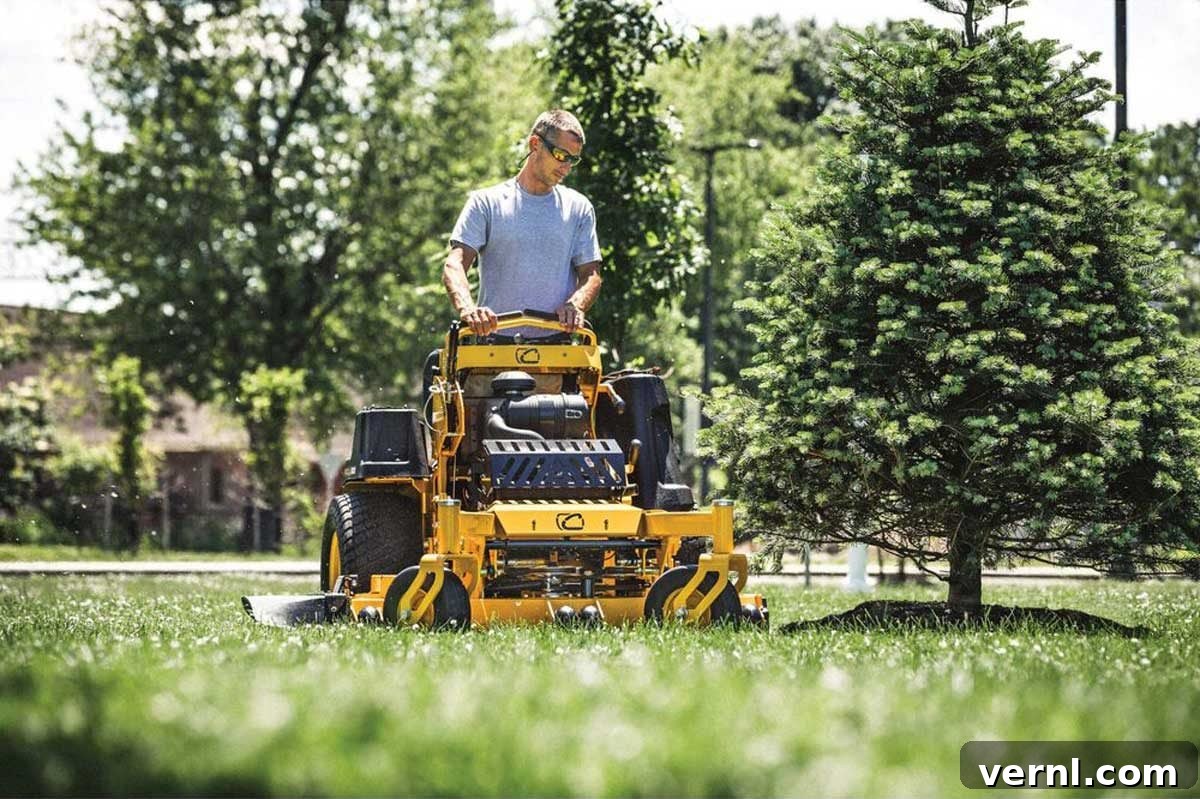
Discover the Power and Precision: Your Comprehensive Guide to Stand-On Mowers
When most people envision lawn care, their minds often conjure images of two primary machine types: the classic walk-behind mower and the robust riding mower. Walk-behind models, whether push-powered or self-propelled, typically cater to smaller lawns, offering simplicity and affordability. Riding mowers, larger and more powerful, are the go-to for expansive yards, providing a seated comfort during long hours of operation.
However, the traditional choices present certain limitations. For individuals with vast stretches of grass, the prospect of spending hours seated on a noisy, vibrating machine isn’t always appealing. While sitting offers comfort, prolonged periods can contribute to discomfort, notably increasing the risk of lower back pain – a common complaint among avid landscapers and homeowners alike. This is where the best stand-on mowers emerge as a revolutionary alternative. These innovative machines expertly blend speed, control, and ergonomic design, making them an increasingly popular choice. Stand-on mowers are particularly advantageous for those who demand frequent mowing or are engaged in professional landscaping operations, offering a dynamic and efficient approach to lawn maintenance.
To gain deeper insights into what makes a stand-on mower an exceptional investment, we’ve consulted with industry expert Matthew Jagodowski from Taplin Yard Pump and Power Equipment. Jagodowski offers valuable advice that challenges common misconceptions about mower power and efficiency.
“Everybody thinks a tractor without 19 hp won’t work. Going from a smaller to bigger engine saved me 15 minutes. On lawn tractors, they’re using the same engine and they’re using a lot of extra engine,” says Jagodowski, highlighting that raw horsepower isn’t the sole determinant of efficiency; intelligent design and optimized power delivery play crucial roles in stand-on models.
What Exactly is a Stand-On Mower?
A stand-on mower represents a significant evolution in lawn care machinery. While sharing similar power levels and cutting deck sizes with many riding mowers, its defining characteristic is the absence of a traditional seat. Instead, operators stand on a compact, integrated foot platform located at the rear of the machine. This design fundamentally alters the mowing experience, allowing you to maintain your lawn without the postural strains associated with prolonged sitting, such as shortened hip flexors and lower back compression.
The vast majority of stand-on mowers are zero-turn models, a feature that provides unparalleled maneuverability. This means they can pivot 180 degrees in their own footprint, eliminating the need for wide turns and significantly reducing the time spent cutting. With easily accessible and intuitive steering controls, stand-on machines boast several distinct advantages over their riding counterparts. However, it’s important to note that this advanced design often comes at a premium. Currently, most stand-on mowers are priced at least twice as much as an equally large and powerful riding zero-turn machine. While this price differential may eventually narrow as technology advances and production scales, for now, stand-on mowers are predominantly favored and utilized by landscaping professionals who prioritize efficiency, durability, and ergonomic benefits in their daily operations.
The Unparalleled Advantages of Stand-On Mowers
The rise of stand-on mowers is not merely a trend; it’s a response to the growing demand for more efficient, comfortable, and productive lawn care solutions. Here are eight compelling reasons why a stand-on mower could be the ideal choice for your landscaping needs:
- Superior Ergonomics and Reduced Back Pain: One of the most significant benefits is the drastic reduction in the chance of lower back pain and shortened hip flexors, conditions often exacerbated by extensive sitting on traditional riding mowers. The standing position promotes better posture and engagement of core muscles.
- Minimized Vibration Impact: The vibrations generated by the running engine are absorbed differently when standing. They do not radiate into the lower back nearly as much compared to a seated position, further contributing to operator comfort and reducing fatigue over long periods.
- Faster Mounting and Dismounting: Without a seat and armrests to navigate, operators can quickly mount and dismount a stand-on mower. This efficiency is invaluable for professionals who frequently need to get off the machine to move obstacles, pick up debris, or attend to gate openings.
- Enhanced Stability on Uneven Terrain: Stand-on mowers offer superior stability and control on challenging or uneven terrain. The operator’s ability to shift their body weight from side to side as needed acts as a natural suspension system, allowing for better balance and a smoother ride across varied landscapes.
- Exceptional Power and Speed: Compared to walk-behind mowers, stand-on models deliver substantially greater power and cutting speed. As Matthew Jagodowski wisely puts it, “Every lawnmower will do the same job; it’s how fast you want to cut the grass. Stand-ons will give you that speed.” This translates directly into increased productivity and reduced mowing times.
- Wider Cutting Decks: Stand-on mowers typically feature significantly wider mower decks than almost all walk-behind models. This broader cutting path means fewer passes are required to cover a given area, further boosting efficiency, especially on large properties.
- Improved Operator Visibility: The higher vantage point afforded by the standing position provides the operator with a much better and clearer view of their surroundings. This enhanced visibility allows for greater precision, safer navigation around obstacles, and a better understanding of the overall cutting area.
- Unrivaled Maneuverability: Stand-on mowers are remarkably agile and highly maneuverable. Jagodowski emphasizes this point: “They fit everywhere because they’re shorter, so they’re great for getting around obstacles.” Their compact design and zero-turn capability make them adept at navigating tight spaces, intricate landscaping features, and numerous obstacles with ease.
Choosing the Right Stand-On Mower: Key Considerations
Deciding on the best mower for your needs involves careful consideration of several factors unique to your property and preferences. Let’s delve into the aspects that will guide your choice, ensuring you make an informed decision about whether a stand-on mower is truly for you.
Your Property’s Landscape and Size
The size and complexity of your yard are paramount in mower selection. If you manage a large property with expansive open spaces and relatively few tightly spaced obstacles, a stand-on model equipped with a mower deck of 54 inches or wider will dramatically reduce your mowing time, making quick work of even the most extensive yards. These machines are built for productivity across large areas.
Conversely, if the allure of a stand-on mower appeals to you, but your property doesn’t span acres, consider a more compact machine, perhaps with a 36-inch mower deck. These smaller stand-on models can still offer many of the benefits, particularly maneuverability, in medium-sized yards. For most small to medium-sized residential yards without significant obstacles, a traditional riding mower or even a robust push mower might still be the most practical and cost-effective choice.
Maneuverability Requirements
If your large lawn is punctuated by numerous trees, intricate garden beds, or other obstacles that demand precise navigation, a zero-turn mower—whether riding or stand-on—is undeniably your best bet. These machines excel at cutting intricate patterns and dramatically reducing non-cutting time. However, if your landscape features an abundance of *tightly spaced* obstacles, a stand-on model will often provide a slight edge in maneuverability over a riding zero-turn machine. This critical difference stems from their length. It’s beneficial to understand the nuances between a zero-turn versus a riding mower.
Riding mowers, by virtue of accommodating a seat, are inherently longer. This extended frame can make them less agile when operating in extremely confined spaces or navigating through narrow passages. While lightweight push and self-propelled walk-behind mowers can undoubtedly access the tightest corners, achieving this often requires considerable effort and ‘wrangling’ by the operator, making them less efficient for large-scale operations.
Operator Preference: Standing vs. Sitting
Manufacturers of stand-on mowers sometimes market their products with claims of being “life-changing,” particularly regarding comfort. While it’s true that your lower back will likely experience greater relief with a stand-on model, courtesy of the standing posture that alleviates spinal compression, the other perceived advantages over a sitting model may be more subtle for some operators. The claim regarding low back health isn’t universally applicable either; many individuals, including myself, have comfortably used zero-turn riding mowers for years without experiencing mowing-related lower back pain.
Bottom line: There’s no need to overthink this decision. The ultimate choice between standing and sitting largely boils down to personal preference, ergonomic comfort, and budget. If you genuinely prefer to stand while working, find it more engaging, or frequently need to dismount, and you have the financial means, investing in a stand-on mower is an excellent decision. However, if you’re comfortable with a seated position and find the traditional riding experience perfectly adequate for your needs, then a conventional riding machine remains a perfectly viable and often more economical option.
Commercial vs. Residential Stand-On Mowers: Understanding the Differences
The distinction between commercial and residential lawn mowers, especially in the stand-on category, is fundamental and impacts everything from construction to cost. Commercial lawn mowers are engineered for grueling operational demands, often expected to perform 12 hours a day, meticulously cutting a dozen or more lawns daily. Residential mowers, in contrast, are designed for the comparatively lighter duty of cutting grass once or twice per week.
This difference in expected workload translates directly into significant disparities in their components. Commercial mowers feature larger, more robust, and significantly more durable parts, including their engines, frames, transmissions, and cutting decks. It’s also common to find faster blade speeds on commercial mowers, a design choice that not only accelerates the cutting process but also produces a finer cut, effectively preventing unsightly grass clumping and promoting a healthier lawn appearance.
Naturally, this enhanced durability and performance come at a higher price point. Commercial mowers are typically more expensive as an initial investment. However, for homeowners who approach their lawn care with serious dedication and “want that pristine cut will only get it with a commercial mower,” notes Jagodowski. He elaborates, “They cut a lot of grass quickly without leaving clumps, and you can get the stripes on your lawn too. There are residential mower accessories that will give you the stripes, but they won’t cut as fast as a commercial mower.” This highlights that while residential accessories can achieve aesthetic results like striping, they cannot match the speed, cutting quality, and sheer endurance of a commercial-grade machine.
Beyond the basics, commercial stand-on mowers often boast features like heavy-duty hydrostatic transmissions, larger fuel tanks for extended operation, advanced suspension systems for operator comfort over long shifts, and more robust deck lift systems. Their frames are typically welded, not bolted, offering superior strength and longevity. While the initial cost is higher, for serious property owners or those with particularly demanding landscapes, the investment in a commercial stand-on mower can yield significant long-term benefits in terms of performance, durability, and reduced maintenance over time.
Key Features to Look For When Buying a Stand-On Mower
When you’re ready to invest in a stand-on mower, evaluating its features is crucial to ensure it meets your specific needs. Beyond brand recognition, consider these essential components:
- Engine Horsepower and Type: While Jagodowski noted that raw HP isn’t everything, a robust engine is still vital. Look for commercial-grade engines from reputable manufacturers like Kawasaki, Kohler, or Vanguard. Consider engine displacement (cc) for a better indicator of power and torque.
- Deck Size and Construction: Deck size should match your lawn size and obstacles. For construction, differentiate between stamped decks (typically residential, lighter duty) and fabricated decks (commercial-grade, welded steel, much more durable and resistant to impact). Also, examine the deck height adjustment mechanism for ease of use and precision.
- Transmission System: A high-quality hydrostatic transmission is key to smooth operation and responsive control. Commercial models feature heavier-duty, serviceable transmissions designed for continuous use.
- Operator Platform and Suspension: This is critical for comfort. Look for platforms with good anti-vibration features, such as coil springs, rubber isolators, or even hydraulic dampeners. A comfortable platform significantly reduces operator fatigue over long periods.
- Fuel Capacity: Larger fuel tanks mean fewer stops for refueling, a significant advantage for commercial operators or those with very large properties.
- Tire Type: Pneumatic tires are standard, but the tread pattern can vary. Turf-friendly treads minimize damage to the lawn, while more aggressive treads offer better traction on slopes or uneven terrain.
- Ease of Maintenance: Consider how accessible filters, belts, and grease points are. Easy access facilitates regular maintenance, which extends the life of the machine.
- Warranty and Dealer Support: A strong warranty is a testament to the manufacturer’s confidence in their product. A reliable local dealer network ensures quick access to parts and service when needed.
Best Stand-On Mower Brands
While stand-on mowers may not be as ubiquitous as traditional riding mowers, the market offers a growing selection from many of the larger, more recognizable lawn mower brands and manufacturers. These brands often leverage their extensive experience in producing zero-turn riding mowers to develop high-performance stand-on models. When considering a brand, look for those with a strong reputation for durability, innovation, and excellent customer support, including a robust dealer network for service and parts availability. Researching user reviews and professional landscaper forums can also provide valuable insights into real-world performance and reliability.
Safety First: Operating Your Stand-On Mower
Operating any heavy machinery, including a stand-on mower, requires adherence to strict safety protocols. Always read your operator’s manual thoroughly before use. Key safety considerations include:
- Slope Operation: Stand-on mowers generally offer better stability on slopes due to the operator’s ability to shift weight, but extreme slopes should always be avoided. Understand the maximum grade your specific model is rated for and always mow across slopes, not up and down, to minimize rollover risk.
- Awareness of Surroundings: The elevated vantage point helps, but always maintain vigilance for children, pets, and debris. Never operate with distractions.
- Debris Management: Clear the area of rocks, sticks, and other potential projectiles before mowing. The high blade speed of stand-on mowers can turn small objects into dangerous missiles.
- Blade Engagement: Always ensure the Power Take-Off (PTO) is disengaged when not actively mowing, especially when transporting the mower or dismounting.
- Personal Protective Equipment (PPE): Always wear appropriate safety gear, including sturdy footwear, eye protection, hearing protection, and long pants.
Maintaining Your Stand-On Mower for Longevity
Proper maintenance is crucial for extending the life and ensuring the optimal performance of your stand-on mower. Follow these essential tips:
- Regular Blade Sharpening and Replacement: Sharp blades provide a clean cut, which is healthier for your lawn and more efficient for your mower. Inspect blades regularly for dullness, nicks, or bends.
- Engine Maintenance: Adhere to the manufacturer’s schedule for oil changes, air filter cleaning/replacement, and spark plug checks. A well-maintained engine runs more efficiently and lasts longer.
- Deck Cleaning: After each use, clear grass clippings and debris from the underside of the mower deck. This prevents rust, maintains optimal airflow for cutting, and reduces the spread of disease.
- Greasing Pivot Points: Regularly lubricate all specified grease points on the chassis, deck lift, and wheel bearings to ensure smooth operation and prevent premature wear.
- Tire Pressure: Maintain correct tire pressure as recommended by the manufacturer. Incorrect pressure can affect cut quality, handling, and tire wear.
- Belt Inspection: Check belts for wear, cracks, or tension issues. Replace worn belts promptly to prevent operational failures.
FAQ
Are stand-on mowers hard to learn to use?
While there is a learning curve, particularly for operators transitioning from traditional walk-behind or riding mowers, stand-on mowers are generally not difficult to master. Their zero-turn capabilities require a different steering approach, often involving two independent control levers. New users typically need some practice in an open area to get accustomed to the precise turning and speed control. However, most operators find they become proficient quite quickly, often within a few hours of operation, thanks to their intuitive design and responsive controls.
What deck sizes are available?
Stand-on mower decks offer a wide range of sizes to suit various property types and operational needs, typically ranging from a compact 32 inches up to a formidable 72 inches. Smaller decks (32-48 inches) are excellent for residential properties with tight gates and numerous obstacles, offering maximum maneuverability. Mid-range decks (48-60 inches) are versatile for larger residential lots and light commercial use, balancing speed and agility. The largest decks (60-72 inches) are primarily designed for commercial operations and very expansive properties, maximizing coverage and efficiency.
How often should I service my stand-on mower?
The service interval for your stand-on mower largely depends on the model, engine type, and usage frequency. Generally, manufacturers recommend an initial service after the first 8-10 hours of operation (a break-in service for oil change and inspection). Subsequent routine maintenance, including oil and filter changes, blade inspection, and general lubrication, is typically advised every 50-100 hours of use or at least once per season, whichever comes first. Commercial operators or those with very demanding usage may require more frequent checks.
Are stand-on mowers good on hills?
Stand-on mowers often offer superior performance on hills compared to many riding mowers, largely due to the operator’s ability to shift their body weight. This allows for better traction and stability, providing a more secure feeling. However, no mower is suitable for extremely steep slopes. Always consult your mower’s manual for its maximum rated slope grade and exercise extreme caution. When mowing on hills, it’s generally recommended to mow across the slope (side-to-side) rather than up and down, to reduce the risk of tipping.
About the Expert
- Matthew Jagodowski is the vice president of Taplin Yard Pump and Power Equipment in Agawam, Massachusetts, bringing years of expertise in lawn care machinery and equipment to this guide.
Sources
- National Library of Medicine – Research on the impact of prolonged sitting on musculoskeletal health.