Trimming Hollow Core Doors: An Easy DIY Guide to a Perfect Finish
Hollow core doors are a popular choice for many homeowners due to their lightweight nature, affordability, and ease of installation. However, when it comes to custom fitting, especially after installing new flooring or dealing with an uneven door frame, the need to trim a hollow core door often arises. The common question among DIY enthusiasts is, “Can you trim a hollow core door?” The answer is a resounding yes! But the real challenge lies in effectively re-closing the bottom rail, which is crucial for the door’s structural integrity, appearance, and sound dampening properties.
Traditionally, homeowners might attempt to salvage the original wood block from the cut-off piece or insert a new one, a process that can be tedious and often yields imperfect results. This article introduces an innovative and much simpler solution using expanding foam, ensuring a clean, stable, and professional finish for your newly trimmed hollow core door. Get ready to learn a practical home improvement trick that will not only simplify your door modifications but also unlock a world of other brilliant uses for this versatile product.
The Smart Way to Shorten a Hollow Core Door
When you need to adjust the height of a hollow core door, the interior’s empty space can pose a problem. Cutting off the bottom removes the existing wood rail, leaving a vulnerable, open edge. This open space can compromise the door’s stability, make it susceptible to damage, and reduce its sound-insulating capabilities. Our innovative solution addresses these issues head-on, providing a durable and efficient way to seal the bottom of your door after trimming.
The next time you embark on a project that requires shortening a hollow-core door, bypass the hassle of trying to reuse or insert a wood block. Instead, opt for a modern and far more effective method: replacing the bottom rail with expanding foam sealant. This approach offers several advantages, including ease of application, excellent sealing properties, and added insulation. It’s a simple yet ingenious hack that will transform your door trimming experience.
Step-by-Step Guide: Fixing Your Hollow Core Door with Expanding Foam
Achieving a professional finish when trimming a hollow core door is straightforward with this method. Follow these steps carefully to ensure a successful outcome:
-
Cut the Door to the Right Length: Begin by accurately measuring and marking the desired cut line on your door. Using a straight edge and a fine-tooth saw (a circular saw with a guide or a handsaw designed for clean cuts on wood composites works best), carefully trim the bottom of the door. Ensure your cut is straight and even to facilitate a seamless repair. Precision here is key for the final appearance and fit.
-
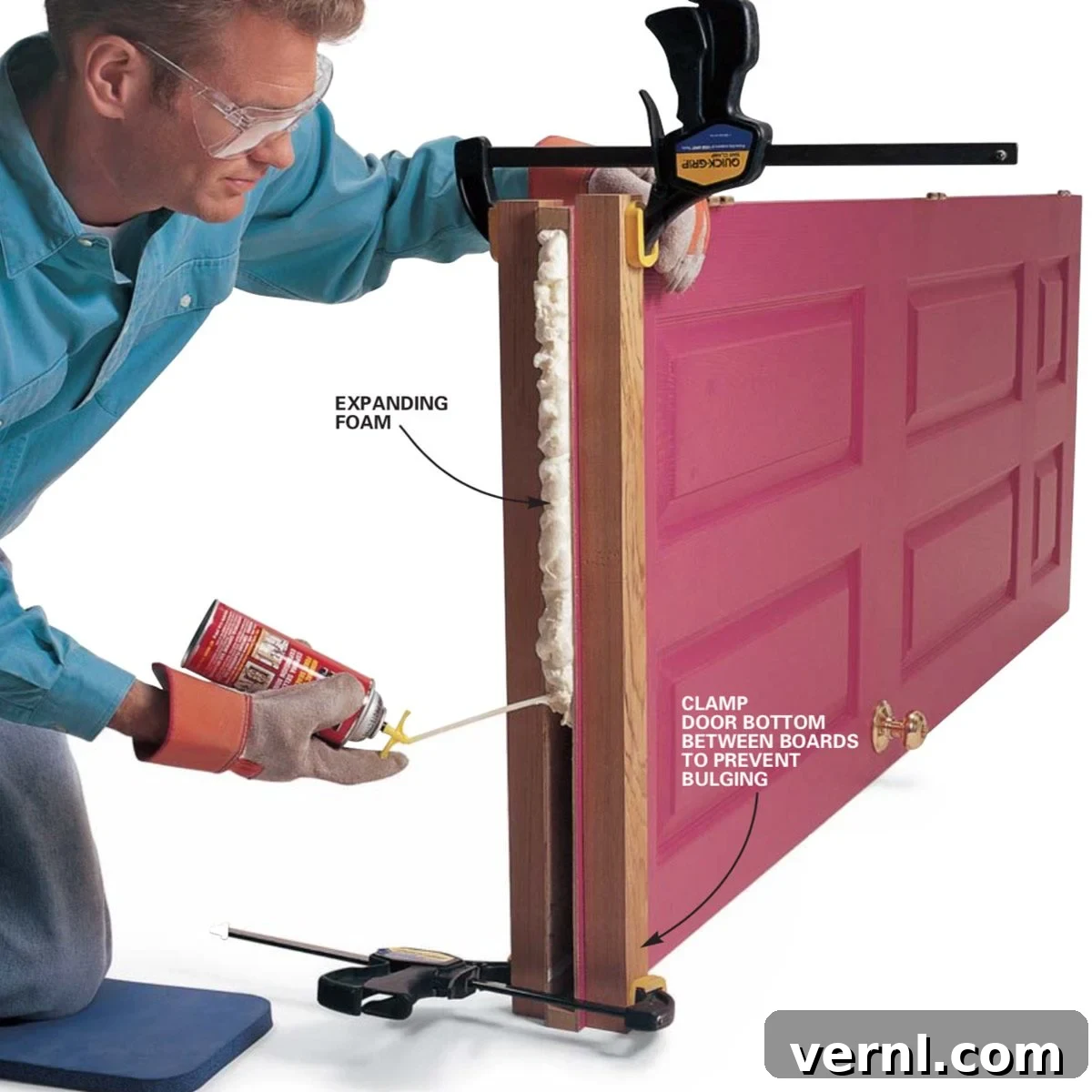
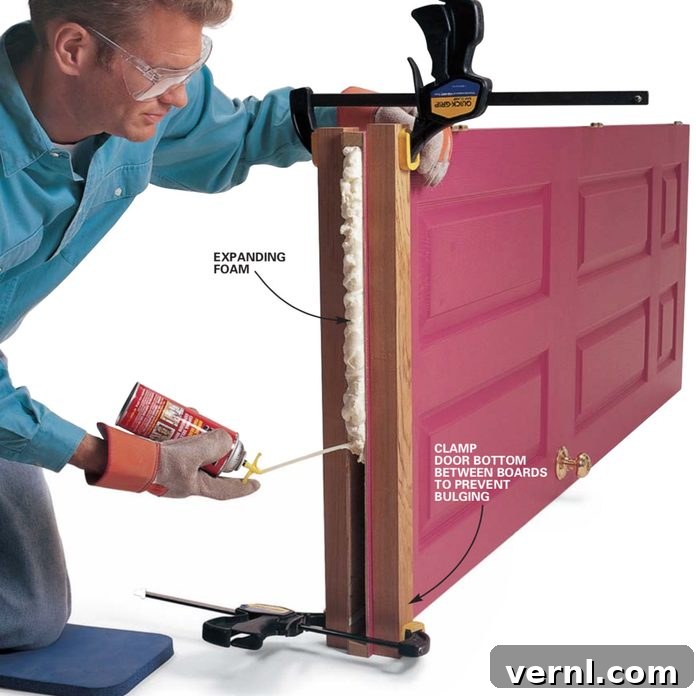
Clamp Stiff Boards to Both Sides of the Bottom: Once the door is cut, you’ll have an open, hollow bottom edge. To contain the expanding foam and help it cure into a neat, straight rail, you need to create a temporary mold. Take two stiff, straight boards (plywood scraps or 1x material work well) that are slightly longer than the width of the door. Clamp one board flush against each side of the door’s bottom edge. Make sure these boards are tightly secured and perfectly aligned to prevent foam leakage and ensure a straight, even new bottom rail.
-
Fill the Hollow Door Bottom with Expanding Foam Insulation: With your temporary mold in place, it’s time to apply the magic ingredient. Gently insert the nozzle of your expanding foam can into the hollow opening at the bottom of the door. Apply the foam steadily, filling the cavity approximately one-third to half full. Remember that expanding foam lives up to its name – it will expand significantly as it cures. Overfilling can cause the door panels to bow outwards, so err on the side of caution. If needed, you can add more foam after the initial application has partially expanded.
-
After the Foam Dries, Trim Off the Excess and Rehang the Door: Allow the expanding foam to fully cure according to the manufacturer’s instructions, which typically takes several hours. Once hardened, unclamp and remove the stiff boards. You’ll likely find some excess foam protruding from the bottom. Use a sharp utility knife or a fine-tooth saw to carefully trim away any excess, creating a smooth, flush surface that matches the original door profile. With the new, solid bottom rail in place, your door is now ready for sanding, painting, and reinstallation.
This method not only creates a solid bottom for your hollow core door but also adds a layer of insulation and sound dampening. It’s an effective and durable fix that maintains the door’s integrity and aesthetic appeal.
Ready to tackle your door project? Buy a can of spray foam on Amazon now.
For more home improvement tips, consider checking out resources on how to fix sagging or sticking doors, ensuring all your doors operate smoothly and efficiently.
Every product is independently selected by our editors. If you buy something through our links, we may earn an affiliate commission.
Beyond Doors: 15 Brilliant Uses for Spray Foam That Will Blow Your Mind
While fixing hollow core doors is a fantastic application, expanding spray foam is truly a versatile superstar in the world of home improvement and DIY projects. Its ability to expand, seal, insulate, and adhere makes it an indispensable tool for a myriad of tasks around the house and even for creative crafts. Let’s explore some incredible ways you can leverage the power of spray foam, transforming common household problems into simple fixes and sparking your creative ingenuity.
Quiet Noisy Pipes
Are rattling pipes a persistent nuisance in your home? Water supply lines can create an irritating racket as water flows through them, with vibrations often amplifying through your walls and floor framing. To effectively silence these noisy pipes, use expanding spray foam to isolate them from structural elements. If you have direct access to the problem area, simply spray foam between the wood framing and the pipes. For sealed areas, drill a small pilot hole and carefully squirt in the foam. Be cautious not to overdo it, as excessive foam can literally bow out your drywall. Once dry, patch the hole and touch up with paint for a quiet, peaceful home.
Secure Landscaping Rocks
If you’re dreaming of a backyard oasis, a custom waterfall and stream can add a serene touch. To ensure a beautiful and continuous flow of water, waterproof spray foam is an excellent tool for securing decorative rocks. It helps to stabilize them and fills any small gaps, preventing water from seeping into unwanted areas and directing it precisely where you want it to go. This not only enhances the aesthetic appeal but also improves the efficiency of your water feature, keeping the water flowing freely and beautifully.
Watch: More Brilliant Spray Foam Uses in Action
Sometimes, seeing is believing. This embedded video provides a visual demonstration of some of the most innovative ways to use spray foam around your home. From quick fixes to creative projects, watching these techniques in action can inspire your next DIY endeavor and provide valuable insights into the product’s versatility and application methods. Don’t miss out on seeing how spray foam can become your go-to problem solver.
Firm Up a Wobbly Showerhead
A loose or wobbly showerhead can be a daily annoyance, often caused by natural wear and tear or improper installation. Instead of a complex repair, a little expanding foam can provide a quick and lasting fix. Squirt a small amount of foam around the base of a loose shower arm. Allow it to set until stiff, then carefully carve off any excess with a utility knife. Slide the cover plate back into place, and your showerhead will feel solid as a rock. This ingenious trick also works wonders for firming up other loose or wobbly pipes and fixtures throughout your home, providing stability where you need it most.
Fill Gaps and Boost Insulation
Expanding foam truly shines as a multi-purpose solution for insulating and sealing. It’s a top choice for filling unsightly gaps in walls, hard-to-reach crevices, and around window and door frames. By sealing these openings, you not only improve your home’s energy efficiency by preventing drafts but also deter pests from entering. Its ability to expand and conform to irregular shapes makes it perfect for creating an airtight seal, leading to lower energy bills and a more comfortable living environment year-round. It’s an essential tool for any home sealing project.
Carve and Create with Spray Foam
The creative applications for spray foam are practically limitless, and carving it into various shapes is just one of many exciting possibilities. With a bit of patience and ingenuity, you can transform hardened foam into intricate props, unique costume accessories, or custom home decor pieces, much like the toy airplane pictured. Its lightweight nature and ease of shaping make it an ideal material for crafting projects with kids or for intricate model building. Unleash your inner artist and see what incredible creations you can sculpt with expanding foam.
Custom Packing Material
Whether you’re shipping a fragile item or moving valuable possessions, secure packing is paramount. Expanding spray foam offers a superior, custom-fit solution for protecting delicate items. To create custom cushioning, partially fill a spare shopping bag with spray insulation foam and place it at the bottom of a box. Gently press the item into the expanding foam as it hardens to create a perfect custom nest. Repeat the process for the top of the item. This DIY custom packaging can withstand the rigors of delivery or relocation, providing unparalleled protection for your most delicate belongings.
Frame It with Foam
While traditional picture frames are popular DIY projects, spray foam offers a unique, artistic alternative. For a one-of-a-kind craft, you only need some cardboard for the frame’s base, expanding spray foam, and your choice of spray paint. Create the desired shape with cardboard, then apply foam to give it texture and dimension. Once dry, paint it to match your decor. Use another piece of cardboard as a backing and secure your artwork with finishing nails for an instant, eye-catching art piece. This method allows for endless creativity in texture and design, offering a truly personalized touch to your home decor.
Shore Up a Flexible Bathtub
If you have a bathtub that flexes or feels unstable underfoot, expanding foam can provide much-needed support and stability. The key is to weigh the tub down first by filling it with water, then fill the hollow space underneath with spray foam. Many standalone tubs have accessible panels that allow you to reach these areas. If not, a small, strategically drilled hole in the facing drywall can do the trick, requiring only minimal patching afterward. This technique significantly reduces the flex, making your tub feel much more solid and enjoyable. It’s a simple solution for a common bathroom annoyance.
Effective Pest Control
Any tiny crack or crevice in your home’s exterior or foundation can serve as an open invitation for pests. Expanding foam, especially when combined with copper mesh, creates an impenetrable barrier. Start by filling larger cracks with copper mesh, using a screwdriver to push it in securely. Then, fill any remaining gaps and seal the mesh in place with expanding foam. This two-pronged approach effectively closes off potential entry points, keeping rodents, insects, and other unwanted critters out of your home. It’s also a surprisingly effective material for tasks like setting fence posts, providing a strong and durable anchor.
Prevent Mold in Exterior Wall Corners
Mold remediation can be a significant and costly undertaking, making prevention a priority for every homeowner. Due to certain framing practices, corners of exterior walls often contain uninsulated pockets, creating cooler air zones where condensation can accumulate. This moisture is a prime breeding ground for mold growth. By carefully filling these uninsulated spaces with expanding foam, you create a thermal barrier that prevents cold air pooling and subsequent condensation. This proactive measure can significantly reduce the risk of mold formation, contributing to a healthier and safer indoor environment.
Improve Your Sink’s Performance
Aluminum sinks, while practical, can often be noisy and transfer temperature easily. You can significantly improve both their sound dampening and insulating properties by spraying the underside with expanding foam. Pay particular attention to the gap between double sinks to maximize the effect. If you’re undertaking this while the sink is already installed, ensure you wear appropriate safety equipment, such as gloves and eye protection, and prepare the area beneath the sink to catch any potential drips. This simple application will make your sink quieter and help maintain water temperature, enhancing your kitchen experience.
Shore Up Concrete Problems with Specialized Foam
Spray foam isn’t just for household insulation; it’s also making waves in outdoor repairs, particularly for concrete and pavement issues. Companies like Demilec have pioneered specialized insulation foams, such as Geolift, designed to correct cracks and uneven concrete surfaces. This revolutionary foam can efficiently lift existing concrete surfaces, addressing problem areas around your house—from driveways and sidewalks to patios, garage floors, and even pool decks—with significantly less labor than traditional methods. Yes, it’s a foam, much like your beloved spray foam, but engineered for heavy-duty structural support, making concrete repair a remarkably easier task.
Insulate Your Entire Home for Superior Energy Efficiency
When it comes to home insulation, fiberglass has long been the standard, but spray foam insulation offers a compelling alternative with superior performance. Unlike fiberglass, spray foam expands after application, creating an exceptional air seal. This dense, expansive barrier not only deters moisture, which is a common cause of mold, but also prevents pests from infiltrating your walls. It acts as a protective lining for your entire house, dramatically improving its thermal envelope. This means significant assistance in regulating indoor temperatures, leading to substantial savings on heating and cooling costs during extreme weather conditions, and overall enhanced comfort within your home.
Shore Up Holiday Decor
Porch urns and large ceramic vases are fantastic for adding seasonal flair to your home’s exterior, especially during holidays. However, tall decorative items like twigs, birch stems, or even pumpkins can easily be toppled by wind, ruining your carefully arranged display and potentially breaking your valuable containers. To prevent this, simply place your items in the container and spray expanding foam around them. This creates a custom, snug nest that firmly holds everything in place, safeguarding your decor from gusts. Finish the look by covering the foam with a layer of moss, hay, or greenery for a polished aesthetic.
Get Crafty and Creative with Spray Foam
Expanding spray foam is a remarkable medium for creative projects, allowing you to construct surprisingly realistic landscapes, even miniature mountains. This makes it perfect for school projects, hobbies, and model-making enthusiasts. Imagine crafting a detailed model volcano for a science fair or creating intricate scenery for miniature train sets. Its lightweight, shapable nature encourages boundless imagination. With so many practical and artistic applications, keeping a few cans of spray foam in your DIY tool kit is a smart investment. You’ll be amazed at the problems it can solve and the creations it can inspire.
Shop for Spray Foam Now