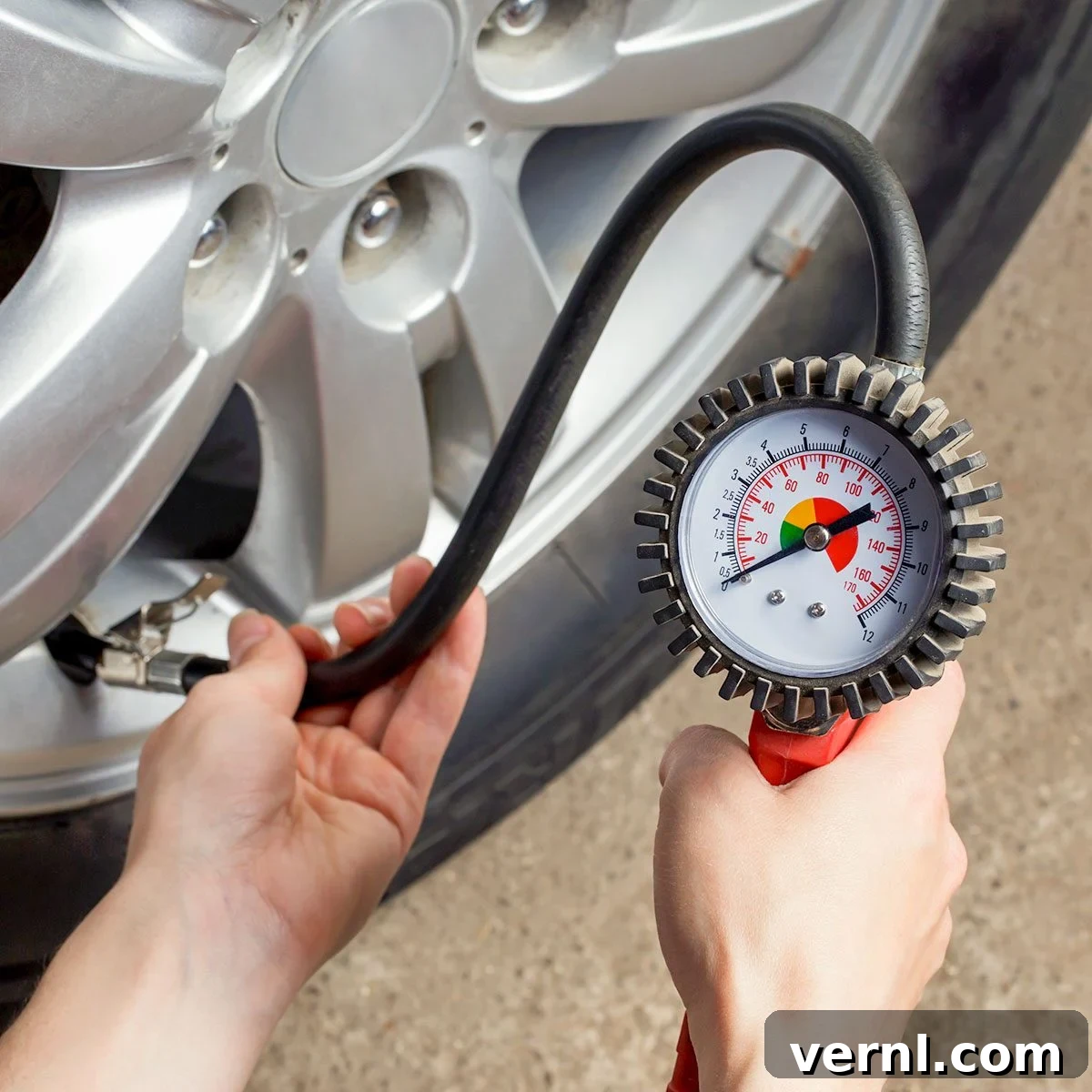
Understanding Tire Pressure Fluctuations: A Comprehensive Guide
As someone with extensive experience in the automotive industry, holding certifications as an ASE and General Motors Master Technician, and serving as a vocational instructor, I’ve spent nearly six decades immersed in the world of cars. One recurring topic of discussion revolves around tires. From handling and performance to tread design, noise levels, mileage expectations, braking capabilities, the presence of vibrations, instances of abnormal wear, potential damage, and even the intricacies of repairs, tires are a constant subject of interest. However, based on my observations, the most prevalent concern among drivers regarding tires is their maintenance, particularly the persistent question of why air pressure fluctuates.
The advent of modern Tire Pressure Monitoring Systems (TPMS) and the often-dreaded Tire Pressure Warning Light has amplified these concerns significantly. Before you start to panic, let’s delve into what experts have to say about the reasons behind tire air pressure changes and what to look for.
Normal Tire Pressure Fluctuations
Tire pressure fluctuation is a perfectly normal phenomenon. Changes in temperature are the most frequent cause of these fluctuations. Fang (Bob) Shusheng, Owner and CEO of Nilight, a manufacturer of high-performance and off-road automotive equipment, explains, “The air’s response to temperature causes it to expand and contract. Your tires can lose around one pound per square inch (PSI) for every 10-degree drop in temperature. This is why drivers often see a low tire pressure warning light during the colder months.”
Jim DeLeo of Hunter Engineering adds, “Air pressure increases as tires warm up while driving and as temperatures rise throughout the day. Conversely, when your tires sit overnight and cool down, air pressure can drop.”
Shusheng further clarifies, “Temperature fluctuations should affect all four tires equally, with pressures typically rising once the tires heat up.”
Common Causes of Ongoing Fluctuations
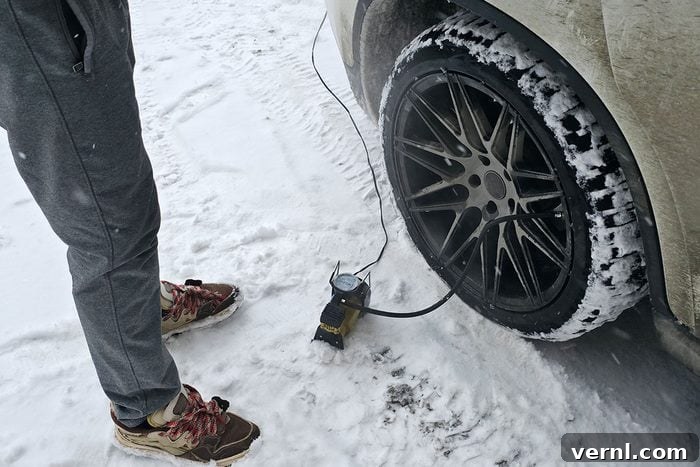
Significant temperature swings, particularly in colder climates, are a primary driver of tire pressure fluctuations. DeLeo notes, “Cold can cause a tire to contract slightly, reducing its internal volume and leading to lower tire pressure until the tires warm up again.”
When Fluctuations Are a Problem
While minor tire air pressure fluctuations are entirely normal and to be expected, there are certain scenarios that warrant closer attention:
- One tire consistently loses more air pressure than the others, and the pressure drops noticeably within days of being refilled.
- The TPMS light illuminates repeatedly for the same wheel.
- Air pressure declines even when temperatures remain relatively stable.
What to Do About It
DeLeo advises, “Always set your tire pressure first thing in the morning when the tires are cold.” Refer to the Tire and Load Information placard, which is typically located on the driver’s door jamb or in the owner’s manual, for the correct specifications. It’s important to use the recommended pressure, not the maximum air pressure found on the tire sidewall. “Check pressures at least once a month, and more frequently during the winter,” DeLeo emphasizes.
If one or more tires exhibit persistent air pressure loss, have them inspected for the following:
- Punctures caused by nails, road debris, or even small objects can lead to air leakage.
- Wheel bead corrosion resulting from moisture accumulation inside the tire can compromise the seal between the tire and the wheel. This is often linked to improperly installed wheel weights, a bent wheel, or tire damage.
- Wheel porosity, which involves microscopic fissures triggered by corrosion in an aluminum or composite wheel, can cause gradual air pressure loss. These fissures are often difficult to detect with the naked eye.
- Tire dry rot, caused by ultraviolet (UV) rays, can weaken and crack the rubber, resulting in slow air leakage through tiny fractures typically found on the sidewall or tread area.
- Valve stem leaks can be identified using a soapy water solution. Avoid overtightening the valve stem, particularly on TPMS valve stems, as this can damage them.
- Ensure that all wheels have valve stem caps installed to prevent dirt and debris from entering the valve.
- Consider replacing regular air with nitrogen in your tires. Nitrogen molecules are larger than air molecules, which may result in slower pressure loss.
Safety and Fuel Economy Impact
Tires, brakes, steering, and suspension systems are paramount for vehicle safety. Underinflated or overinflated tires reduce the contact area between the tire and the road. Remember, this contact patch, also known as the footprint, is relatively small.
Maintaining correct tire pressure is therefore crucial. Jon Stull, an ASE and Ford Master Technician, states, “Overinflating tires will not prevent air pressure loss due to temperature changes.”
Shusheng adds, “Low pressure can not only make tires look deflated but also affect how a vehicle drives. It can lead to sluggish steering, increased braking distance, and greater rolling resistance, which accelerates tire wear.”
Think of the extra effort required to pedal a bicycle with underinflated tires. Similarly, a car engine has to work harder with underinflated tires, consuming more fuel and reducing fuel economy. This also contributes to increased engine wear and tear. “Overinflation reduces traction, makes the tire stiff, and increases the risk of blowouts. The center tread area wears faster than the rest of the tire tread,” Shusheng points out.
Furthermore, both overinflated and underinflated tires negatively impact braking, handling, and cornering, especially on wet or icy roads.
FAQ
Can I drive with the tire pressure warning light on?
While technically you can, it’s not advisable. Shusheng warns, “A vehicle’s low air pressure warning light turning on is an important signal that the tires require immediate attention and should not be ignored.” This indicates that a tire is significantly underinflated, potentially leading to a flat tire or, worse, a blowout caused by overheated tires.
DeLeo explains, “On a particularly cold night, a considerable drop in PSI is not uncommon.” This change can be enough to trigger the TPMS light. However, as the tires warm up, the pressure can increase by two to six PSI after about 25 minutes of driving, which might be sufficient to turn the TPMS light off. Other reasons for the TPMS light illuminating include:
- A damaged, corroded, or defective TPMS sensor.
- A weak TPMS sensor battery.
- The need to recalibrate one or more sensors after a battery replacement.
- Rotating or installing new tires.
- Mismatched tires.
- Worn wheel bearings.
How often should I check my tire pressure?
Checking your tire pressure regularly is essential for safety and performance. Aim to check it at least once a month, and more frequently during colder months when temperature fluctuations are more pronounced.
Preventing tire problems starts with regular maintenance. This includes:
- Checking tire pressure every month, and more often in winter.
- Visually inspecting tires once a week for any signs of damage or wear.
- Rotating and balancing tires and wheels every 5,000 to 8,000 miles. Have a professional perform a wheel alignment annually.
About the Experts
Jon Stull has been an ASE Master Technician for 28 years.
Jim DeLeo has over 40 years of experience in the automotive repair industry, holding positions as an ASE master technician, shop foreman, and service manager. He is currently the Northeast Division Manager for Hunter Engineering Company.
Bob Shusheng started his business career selling products on eBay and Amazon, including Nilight automotive equipment and accessories. As sales of Nilight light bars grew, he expanded the Nilight car and truck accessory parts catalog and established his own factory to ensure part quality, features, and value.
Resources
AutoZone: “Why Does Tire Pressure Drop in Cold Weather?”
Bridgestone: “What is TPMS and How Does it Work?”
Consumer Reports: “Why Does Your Tire Pressure Drop in the Cold?”
Kelly Blue Book “What Does ‘TPMS’ Mean on a Car?”
RELATED ARTICLES:
- Do You Know What That Little Button on Your Seat Belt Is For?
- What Those Lines on Your Backup Camera Really Tell You
- Here’s What The Small Panel On Your Car’s Front Bumper Is For