
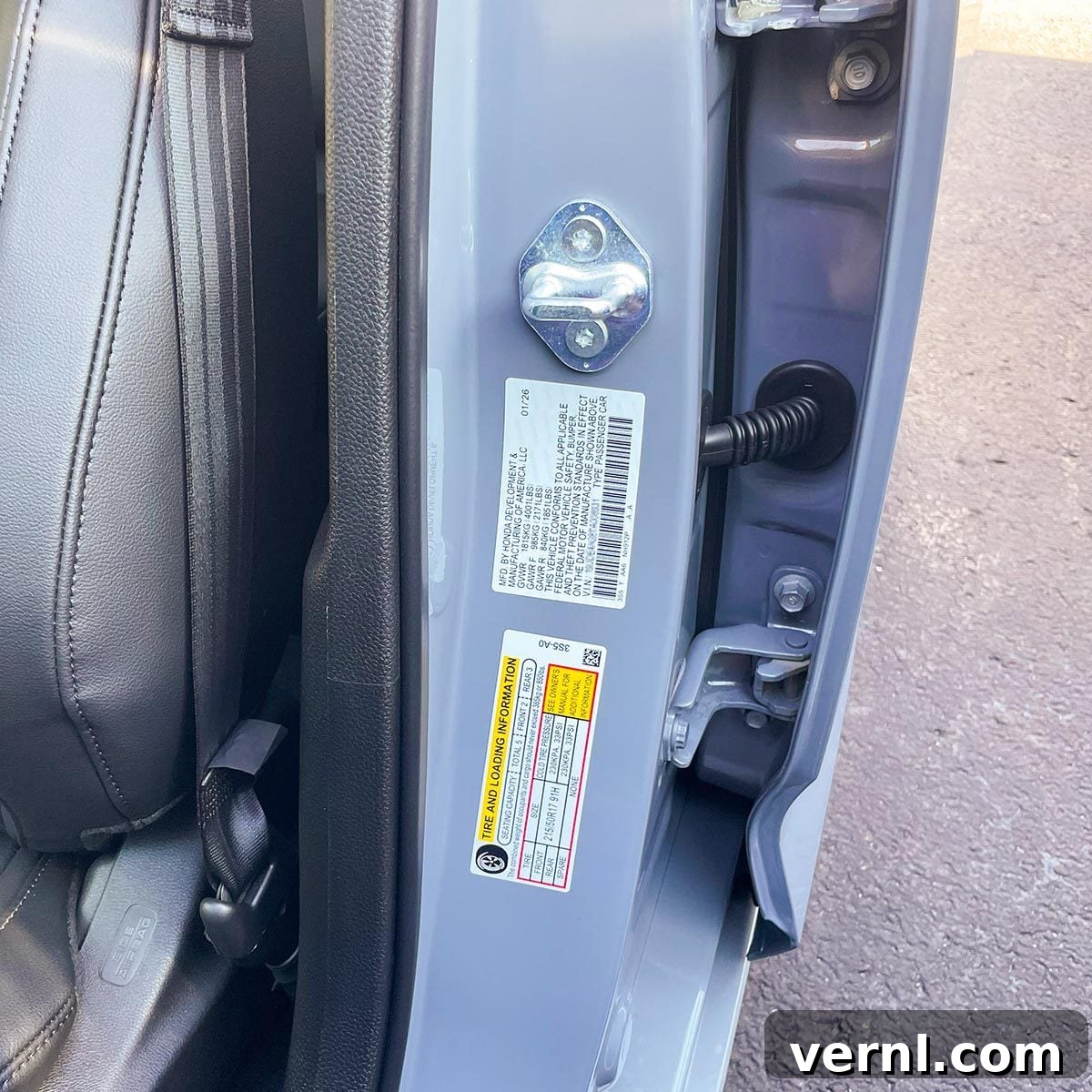
As you navigate the daily ritual of entering and exiting your vehicle, you might occasionally glimpse a small, seemingly insignificant label affixed to your door jamb. To the untrained eye, this sticker often appears to be a jumble of numbers and letters, an unintelligible code of automotive jargon. Yet, beneath its unassuming exterior lies a treasure trove of vital information, crucial for the safe and efficient operation of your car.
“It may seem like a minor detail, but ironically, this sticker encapsulates some of the most practical and essential data for everyday vehicle safety and performance,” explains Lucas Waldenback, co-founder of Zutobi driver education. “Its inclusion became a standard practice in modern vehicles, driven by stringent safety regulations that mandated manufacturers make critical weight limits and tire specifications readily accessible to drivers and technicians alike.”
This comprehensive guide aims to demystify the car door sticker, detailing the information it provides and empowering you to interpret its significance for your vehicle’s longevity and your peace of mind on the road.
What Information Is On the Side of Your Car Door?
Officially known as the Safety Compliance Certification Label, the door jamb sticker serves as an official declaration that your vehicle meets all necessary safety standards mandated by regulatory bodies. Beyond this certification, it functions as a quick-reference guide to your vehicle’s core operating limits and specifications. These labels are predominantly located on the driver’s side door pillar or within the latch post. In some less common instances, you might find them in the engine bay, though the door jamb is the most prevalent and accessible location.
Recommended Tire Pressure (cold PSI)
One of the most frequently consulted pieces of information on the sticker is the recommended cold tire inflation pressure, measured in PSI (pounds per square inch). This value is precisely determined by the vehicle’s manufacturer, taking into account the car’s curb weight, maximum load capacity, and optimal performance characteristics. It’s the ideal pressure to inflate your tires to when they are “cold,” meaning they haven’t been driven for at least three hours or less than a mile.
“A widespread misconception among drivers is that the number printed on the tire sidewall represents the correct operating pressure,” clarifies Waldenback. “In reality, that number indicates the maximum pressure the tire can safely withstand, not the recommended pressure for daily driving. Over-inflating to the sidewall maximum can lead to a harsher ride, reduced traction, uneven tire wear, and potentially dangerous handling characteristics. Conversely, under-inflation can severely impact fuel economy, accelerate tire wear, increase the risk of blowouts, and compromise steering and braking capabilities.” Regularly checking and adjusting your tire pressure according to the door jamb sticker is a simple yet profoundly effective way to enhance safety, improve fuel efficiency, and extend the life of your tires.
Vehicle Weight Ratings
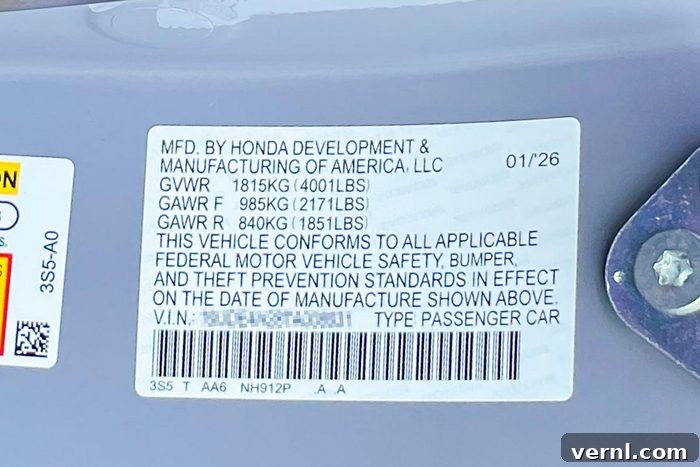
The door jamb sticker also specifies critical weight limits for your vehicle, primarily the Gross Vehicle Weight Rating (GVWR) and the Gross Axle Weight Rating (GAWR). These ratings are paramount for safe operation, indicating the maximum allowable weight your vehicle can safely carry, which includes the vehicle’s curb weight, all passengers, cargo, and even a full tank of fuel. The GAWR further breaks this down by specifying the maximum weight that can be safely supported by each axle (front and rear).
“This information becomes exceptionally vital for individuals who frequently tow trailers, transport heavy loads, or embark on long trips with a full complement of passengers and luggage,” states Waldenback. “Exceeding these meticulously calculated limits can have severe repercussions, including significantly increased braking distances, compromised steering stability, accelerated wear and tear on the suspension components, and even structural damage to the vehicle’s frame. Furthermore, operating an overloaded vehicle can lead to tire failure, violate local weight regulations, and potentially void your insurance coverage in the event of an accident.” Understanding and adhering to these weight ratings is not just a matter of vehicle longevity, but a fundamental aspect of road safety.
Tire Size Specifications
The sticker prominently displays the vehicle’s intended tire size, a crucial detail whenever you need to replace your tires. This specification is more than just a dimension; it’s a carefully chosen component of your vehicle’s overall design, impacting everything from speedometer accuracy to the functionality of advanced safety systems.
“Employing incorrect tire sizes can lead to a cascade of negative effects,” warns Waldenback. “It can throw off your speedometer and odometer readings, causing inaccuracies in speed perception and mileage tracking. More critically, it can adversely affect braking performance, compromise the efficacy of anti-lock braking systems (ABS), electronic stability control (ESC), and traction control systems. Furthermore, using non-standard tire sizes can alter the vehicle’s ride height, affect gear ratios, and potentially lead to premature wear of suspension components.” When replacing tires, always refer to the door jamb sticker to ensure you select the exact size and type specified by the manufacturer to maintain optimal safety and performance.
Manufacturing Information and VIN
Beyond operational specifics, the door jamb sticker also serves as a repository for key manufacturing data. It displays the vehicle’s precise date of manufacture and its Vehicle Identification Number (VIN). The VIN is a unique, 17-character alphanumeric code that acts as your vehicle’s fingerprint, providing a wealth of information that is indispensable for various purposes.
“Knowing how to interpret a VIN code empowers you with detailed knowledge about your vehicle,” explains Duane “Doc” Watson, a technical trainer at Bosch Mobility Aftermarket. “Each section of the VIN reveals specific attributes, such as the vehicle’s country of origin, manufacturer, make, model, engine size and type, body style, security code, model year, and the specific plant where it was assembled. This information is incredibly useful for ordering correct replacement parts, verifying vehicle specifications for insurance or registration, checking for recalls, or conducting thorough history checks when buying a used car.” The VIN is an invaluable tool for both owners and automotive professionals.
FAQ: Essential Questions About Your Car Door Sticker
How is the information on the car door decided?
The specifications emblazoned on your car door jamb sticker are not arbitrary; they are the result of an exhaustive and rigorous testing process conducted by vehicle manufacturers. Engineers spend countless hours analyzing every aspect of the vehicle’s performance under a myriad of conditions. This includes scrutinizing how the vehicle behaves concerning its curb weight, suspension dynamics, tire characteristics, various load configurations (from empty to maximum capacity), and diverse road conditions. These comprehensive tests are designed to ensure the vehicle meets stringent safety, performance, and durability standards.
“The recommended tire pressure, for instance, is not a simple guess,” Waldenback elaborates. “It is meticulously chosen to strike an optimal balance between critical factors such as overall safety, the comfort of the ride, the longevity and even wear of the tires, and the vehicle’s fuel efficiency. Every number on that sticker is a data-driven recommendation, backed by extensive research and development to ensure the safest and most efficient operation of your vehicle under normal circumstances.”
What happens if the sticker on my car door is missing or damaged?
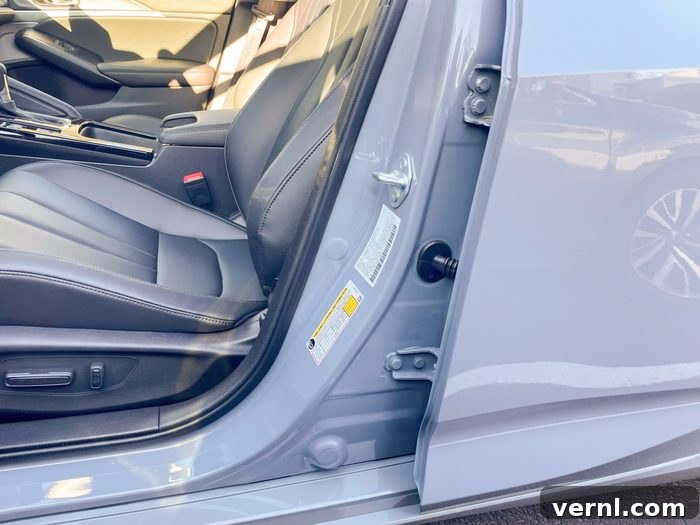
A missing or severely damaged door jamb sticker can pose several significant issues for vehicle owners. In many states and regions, this label is a mandatory component required for a vehicle to pass its annual safety or emissions inspection. Without it, your vehicle might fail inspection, preventing you from legally operating it until the issue is resolved. Beyond regulatory compliance, a missing sticker can raise serious red flags, signaling potential VIN tampering, vehicle identity fraud, or even indicating that the car may have been involved in a major accident and improperly repaired. This suspicion can make it considerably more challenging and less profitable to sell your vehicle in the future.
“If you are in the market for a used car, it is absolutely essential to thoroughly inspect the door jamb to ensure the sticker is present, intact, and legible,” advises Watson. “Its absence or damage should prompt immediate investigation, as it could be an indicator of underlying problems or a history that the seller is attempting to conceal. Always prioritize transparency and verify the integrity of this critical label.”
Can I get a replacement sticker if mine has faded or peeled off?
Yes, absolutely. It is a common occurrence for these stickers to degrade over time due to exposure to the elements, harsh cleaning chemicals, or simply everyday physical wear and tear. When your original sticker becomes faded, torn, or peels off, obtaining a replacement is typically straightforward. The most reliable method is to contact your vehicle’s dealership or, in some cases, directly through the manufacturer. They can order an authentic replacement sticker using your vehicle’s VIN, ensuring it perfectly matches the original specifications. Expect to pay around $60 or more for this service, though prices can vary.
There are also reputable third-party companies specializing in producing replica door jamb stickers. While these options might sometimes be slightly more expensive, ensure they are accurate reproductions of the original. Regardless of whether you choose a dealership or a third-party service, you will almost certainly be required to provide verifiable proof of ownership, such as your vehicle title or registration, to prevent fraudulent activity. “Because these stickers are constantly exposed to various elements and subjected to physical stress, many fade and peel over time,” notes Justin Dugan, brand ambassador at American Trucks. “Obtaining a replacement is a far more common necessity than most people might initially expect.”
Where Can I find the information that was on my car door sticker?
If your door jamb sticker is missing or illegible, you still have several reliable avenues to access the crucial information it contained. Your first and most comprehensive resource should always be your vehicle’s owner’s manual. This manual provides detailed specifications, including recommended tire pressures, weight ratings, and other vital data specific to your model. Additionally, most vehicle manufacturers maintain extensive websites where you can often find digital versions of owner’s manuals or use your VIN to look up specific vehicle information.
Dealership service departments are another excellent resource. With your VIN, they can access comprehensive databases that detail all original factory specifications for your vehicle. Finally, numerous online vehicle specification databases and VIN decoder websites can provide much of this information, though it’s always wise to cross-reference data from multiple reputable sources to ensure accuracy, especially when dealing with critical safety parameters.
What if I’ve modified my vehicle?
Vehicle modifications, particularly those popular among truck enthusiasts such as upgraded suspension systems, larger tires, or lift kits, can significantly alter the original factory specifications provided on your door jamb sticker. While the sticker represents the baseline for the safe operation of your vehicle as it left the factory, these modifications can directly impact optimal tire pressure, payload calculations, and overall vehicle dynamics.
“The sticker provides the fundamental baseline for the safe operation of the vehicle,” states Dugan. “One of the fastest ways to ensure that your modification does not inadvertently exceed the vehicle’s original limitations or compromise safety is to understand how those modifications alter the manufacturer’s recommendations.” For instance, larger tires might require different inflation pressures than stock, and a lift kit could alter the vehicle’s center of gravity and handling characteristics. It becomes the owner’s responsibility to re-evaluate these parameters with the guidance of reputable automotive specialists, such as tire shops or suspension experts, to ensure that the vehicle remains safe and roadworthy post-modification. Ignoring these changes can lead to unsafe driving conditions, accelerated component wear, and potentially invalidate warranties or insurance claims.
About the Experts
- Lucas Waldenback is co-founder of Zutobi, a leading driver education platform utilized by millions of learners worldwide to master road safety principles, vehicle operation, and driving regulations.
- Duane “Doc” Watson is a distinguished technical trainer at Bosch Mobility Aftermarket. He brings over 45 years of invaluable experience in the intricate field of automotive repair and diagnostics.
- Justin Dugan has served as a dedicated brand ambassador at American Trucks for more than 14 years, sharing his extensive knowledge and passion for truck customization and performance.