
How New Orleans Uses AI for 911 Calls — What’s True and What Isn’t
AI is everywhere. Open your phone or laptop and you’ll quickly encounter some form of artificial intelligence — from search suggestions to automated assistants. Some of these tools improve efficiency and convenience; others fall short. Because major companies are integrating AI across many services, public debate about whether technology will replace human roles is only growing.
That debate flared up recently when a report suggested New Orleans was using AI to answer 911 calls in place of human dispatchers. The claim spread widely and stirred public concern. After clarification from city officials, the situation proved far more limited than the initial headlines implied. Below we explain how New Orleans actually uses AI in its emergency call process, why the story created alarm, and what it may say about public attitudes toward automation.
Does New Orleans Use AI to Screen 911 Calls?
In late July, a local report led several outlets to suggest that New Orleans had replaced human 911 operators with AI. That framing was quickly corrected by city authorities, but not before the narrative had circulated widely. The clarification: standard 911 calls in New Orleans are still answered by human dispatchers in nearly all cases. AI involvement is extremely limited and only used under specific conditions.
How AI 911 Calls Really Work in New Orleans
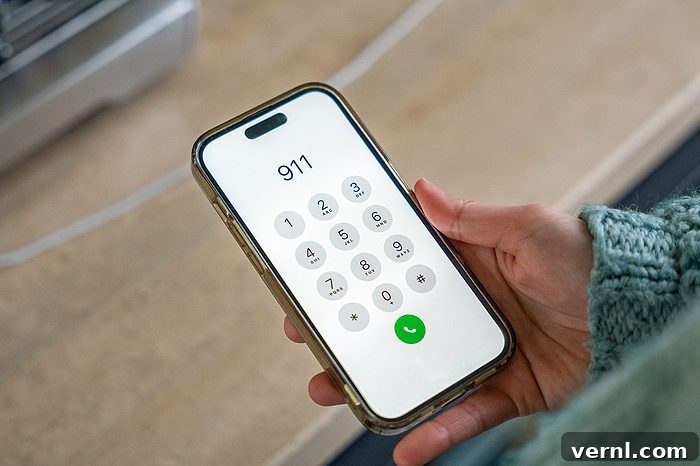
The city uses an automated system only in a narrow scenario. If an emergency involving a vehicle crash has already been reported and responders are aware of the collision, subsequent callers who are within about 200 feet of that site might be routed to an AI agent — and only when no human dispatchers are available to take additional calls.
When the automated system is engaged, the AI identifies itself as New Orleans 911 and asks the caller whether they are calling about the previously reported accident at a specific location. If the caller answers anything other than an affirmative “yes” (in any language), the system returns the caller to the regular 911 queue so a human operator can respond. If the caller confirms they are calling about that incident, the AI informs them that first responders are already aware and asks them to remain on the line only if they are involved in the crash or have additional information to share. Otherwise, the caller is told they may hang up.
This setup is designed to reduce redundant calls about a single incident and to keep human dispatchers available for new emergencies. It is not a substitute for human judgment when callers present new information, have multiple issues, or need nuanced assistance.
Why People Are Concerned
The public reaction to the initial story shows how sensitive people are to the idea of machines handling critical services. Emergency communication feels like a domain that should remain human-centered because it often involves rapidly changing details, emotional stress, and complex judgment calls. Even when AI can handle routine confirmations, many people worry about edge cases where nuance matters.
Those concerns are amplified by broader skepticism about AI reliability. When automated systems deliver incorrect search results, biased outcomes, or awkward responses, trust erodes. That general mistrust makes stories about AI replacing human roles — especially in lifesaving services — more alarming than an account of limited, targeted automation.
At the same time, advocates point out that limited automation for routine or repetitive tasks can free human dispatchers to focus on active, complex incidents. In this case, the city’s automated confirmation mechanism is intended as a triage aid, not as a replacement for trained emergency personnel.
Sources
- Axios New Orleans — No, AI isn’t answering all of New Orleans’ 911 calls (2026)
- Orleans Parish Communication District — No, New Orleans 911 is NOT replacing humans with AI (2026)
- Shreveport Times — New Orleans hoping limited AI use could speed response for emergencies (2026)
Related
- See a Green Dot on Your Android Phone? Here’s What It Means
- If You Get a USPS Scam Text, You Need To Do This Immediately
- This Is How Often You Should Restart Your Phone