Mastering Bathroom Disinfection: Your Guide to Cleaning with Bleach
For generations, bleach has been a trusted staple in households, renowned for its powerful ability to disinfect and whiten. While the array of modern cleaning products has expanded, chlorine bleach remains an incredibly effective and affordable solution for maintaining a truly hygienic home, especially in high-traffic, germ-prone areas like the bathroom. When used correctly and with proper precautions, bleach offers unparalleled sanitizing power, eliminating bacteria, viruses, and mold to create a truly clean environment.
This comprehensive guide will walk you through everything you need to know about safely and effectively cleaning your bathroom with bleach. From understanding proper dilution ratios to crucial safety measures and step-by-step cleaning instructions for various surfaces, we’ll ensure you can harness bleach’s power with confidence, achieving a sparkling, germ-free bathroom.
The Indispensable Role of Bleach in Bathroom Cleaning
Why choose bleach for your bathroom? Bathrooms are breeding grounds for germs due to moisture, organic matter, and frequent use. Surfaces like sinks, toilets, tubs, and showers are often non-porous, making them ideal candidates for bleach disinfection. Bleach doesn’t just clean; it actively destroys a wide spectrum of pathogens, including common cold and flu viruses, E. coli, and Salmonella, which can thrive in damp environments. Its oxidizing action also makes it highly effective against stubborn mold and mildew stains that frequently plague bathroom tiles and grout lines, restoring surfaces to their original brilliance.
Beyond its disinfectant properties, bleach is excellent for deodorizing. It eliminates odor-causing bacteria rather than just masking them, leaving your bathroom with a genuinely fresh scent. However, its strength necessitates careful handling. Before you begin, it’s vital to understand the safety protocols to protect yourself and your home.
For more general household cleaning product safety, remember to always be aware of cleaning products you should never mix.
Is Cleaning with Bleach Safe? Absolutely, with Proper Precautions!
Yes, cleaning with bleach is safe, provided it is always diluted correctly and never mixed with other cleaning agents. Chlorine bleach is so effective and safe when used as directed that it is approved by regulatory bodies like the U.S. Environmental Protection Agency (EPA) for use in preventing the spread of infections in a variety of settings, including homes, hospitals, schools, and day care facilities, and even for safe food production. Understanding and adhering to safety guidelines is paramount to harnessing its power without risk. When using bleach, keep these critical safety precautions in mind:
- Never Mix Bleach with Other Cleaners: This is the golden rule of bleach safety. Mixing bleach with ammonia, toilet bowl cleaners, rust removers, or acidic products (like vinegar) can create highly toxic gases, such as chloramine gas, which can cause severe respiratory problems, lung damage, or even be fatal. Always use bleach by itself, diluted only with water.
- Ensure Adequate Ventilation: Always open windows and turn on exhaust fans when cleaning with bleach. Good airflow helps to dissipate fumes and prevents their buildup, protecting your respiratory system. If ventilation is poor, take frequent breaks to step outside the room.
- Wear Protective Gear: Rubber or nitrile gloves are essential to protect your skin from irritation and dryness. Bleach can be harsh on skin, causing chemical burns or dermatitis. Consider wearing eye protection (safety goggles) to shield your eyes from accidental splashes.
- Keep Bleach Away from Children and Pets: Store bleach securely in its original container, out of reach and sight of children and pets. Ensure the cap is tightly sealed. Never transfer bleach to unmarked bottles, as this can lead to dangerous confusion.
- Avoid Breathing Fumes Directly: While ventilation helps, try to minimize direct inhalation of bleach fumes. Work efficiently and avoid leaning directly over areas where bleach has been applied.
- Test in an Inconspicuous Area: Before applying bleach to a large surface, especially on colored grout or older fixtures, test a small, hidden spot to ensure it doesn’t cause discoloration or damage.
- Use Cold or Room Temperature Water for Dilution: Hot water can cause bleach to degrade faster, reducing its effectiveness and increasing the release of fumes. Always use cold or room temperature water for diluting bleach.
Adhering to these simple yet vital safety measures will allow you to confidently and safely leverage bleach for a truly clean and disinfected bathroom. For laundry specific tips, you can also learn how to use bleach in laundry.
Understanding Bleach Dilution Ratios for Optimal Cleaning
Proper dilution is key to effective and safe cleaning with bleach. Using too much bleach is not only wasteful but can also increase fume exposure and potential damage to surfaces. Using too little, on the other hand, reduces its disinfectant power. Always use room temperature water for dilution, as hot water can break down the active ingredient in bleach faster.
General Purpose Bathroom Cleaning and Sanitizing
For most standard bathroom cleaning purposes, including sanitizing sinks, tubs, and showers, a common recommendation is:
- 1/2 cup of bleach per gallon of water.
This ratio, often suggested by manufacturers like Clorox, provides a dilution ratio of approximately 1:30, which is highly effective for killing most common household germs on hard, non-porous surfaces.
EPA-Recommended Stronger Disinfectant Mixture for Bathrooms
For areas requiring a stronger disinfection, particularly in environments susceptible to higher germ loads, the EPA recommends a slightly stronger mixture for bathrooms:
- 3/4 cup of bleach per gallon of water.
Either of these dilution methods will work effectively for bathroom cleaning and disinfection. The crucial point is to always prepare a fresh solution each time you clean. A bleach and water solution does not have a long shelf life; it rapidly breaks down into salt and water, losing its potency over time. Prepare only what you need for immediate use and discard any leftover solution safely by pouring it down the drain with running water.
Step-by-Step Guide: How To Clean Your Bathroom With Bleach
Bleach is an excellent product to use in the bathroom precisely because this space contains numerous non-porous surfaces like ceramic, porcelain, fiberglass, and sealed tile. Given the constant presence of germs, a reliable disinfectant is not just a luxury, but a necessity. Follow these detailed steps to clean and disinfect your sink, toilet, bathtub, shower, and tile floor. Remember to prepare your space first!
Preparation is Key:
- Ventilate the Area: Open windows and turn on the exhaust fan.
- Remove All Fabric Items: Take out towels, rugs, bath mats, and shower curtains to prevent accidental bleaching.
- Clear Clutter: Remove all toiletries, soaps, and decorative items from surfaces you plan to clean.
- Wear Protective Gear: Don rubber gloves and, if desired, eye protection.
- Pre-Clean Surfaces: Before applying bleach, wipe down surfaces with a wet sponge or cloth to remove loose dirt, dust, and grime. Bleach is a disinfectant, not a primary cleaner for heavy soil.
- Prepare Your Solution: Mix 1/2 to 3/4 cup of liquid chlorine bleach with 1 gallon of cold or room temperature water in a plastic bucket. Do not use metal containers as bleach can corrode them.
Cleaning Specific Bathroom Areas:
1. Cleaning and Disinfecting the Toilet:
- Flush and Clear: Flush the toilet, then if possible, remove as much water from the bowl as you can by plunging gently or using a cup to scoop it out.
- Apply Solution: Pour 1 cup of the diluted bleach solution directly into the toilet bowl and allow it to sit for at least 5-10 minutes.
- Scrub: Using a toilet brush, scrub the inside of the bowl thoroughly, reaching under the rim.
- Exterior Surfaces: Dip a clean sponge or cloth into the diluted bleach solution and wipe down the exterior of the toilet, including the seat (top and bottom), lid, tank, and base. Pay special attention to handles and hinges.
- Rinse and Dry: Flush the toilet several times to rinse the bowl. For exterior surfaces, wipe them down with a clean, water-dampened cloth to remove bleach residue, then air dry or wipe dry with a clean towel.
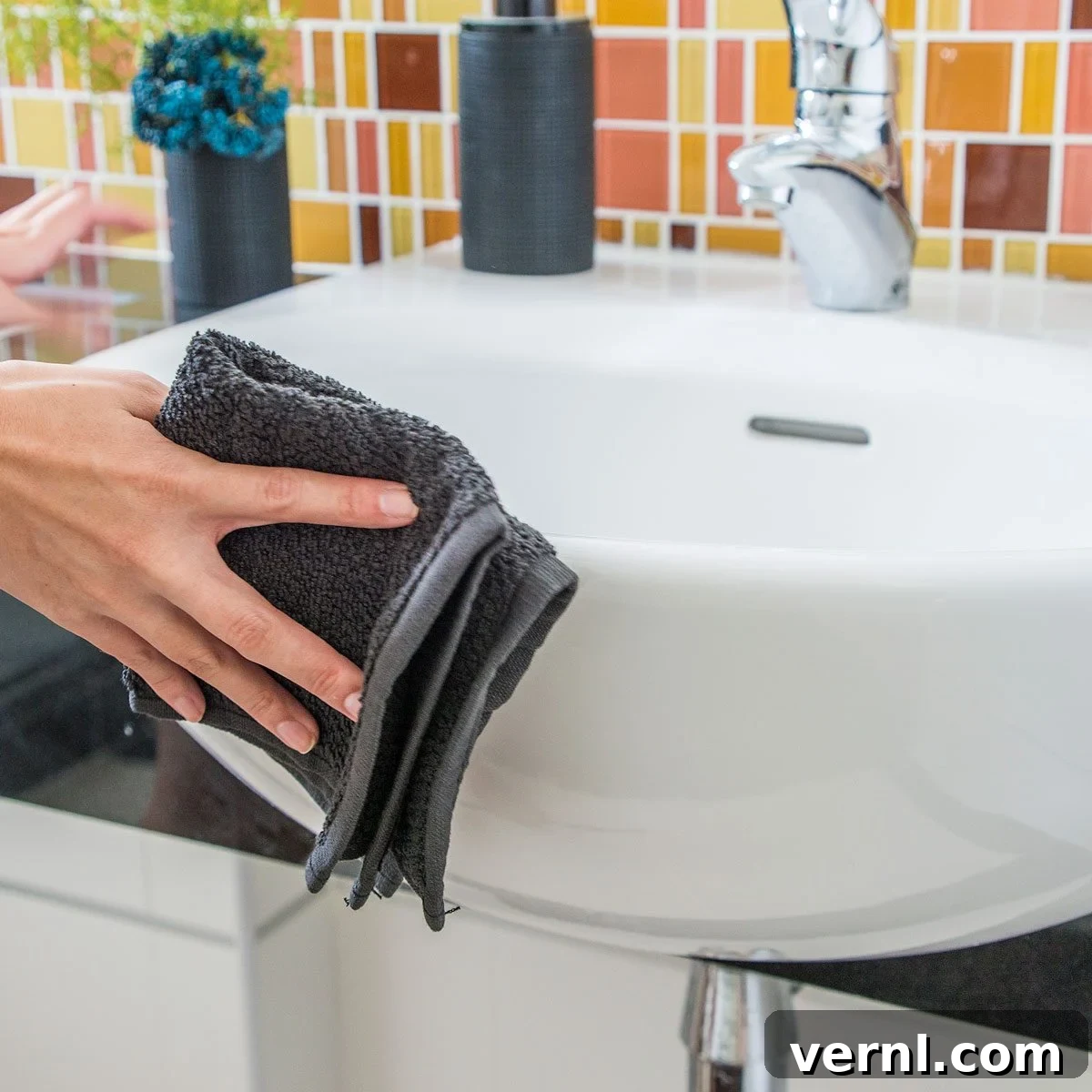
2. Cleaning and Disinfecting the Sink, Countertops, Bathtub, and Shower:
- Pre-Clean: Ensure surfaces are free of soap scum, hair, and general grime. You might need to use a non-bleach cleaner first for heavy soap scum, then rinse thoroughly before applying bleach.
- Apply Solution: Apply the diluted bleach solution to the surfaces using a clean sponge, cloth, or a spray bottle (ensure the spray bottle is clearly labeled and used only for bleach solution). Ensure all surfaces are thoroughly wetted.
- Let it Dwell: Allow the bleach solution to stand for at least five minutes. This “dwell time” is crucial for disinfection, allowing the bleach sufficient time to kill germs.
- Light Scrub (if needed): For minor stains or areas that need a little extra attention, gently scrub with a non-abrasive sponge or brush.
- Rinse Thoroughly: Rinse all treated surfaces with clean, running water. This removes bleach residue and prevents potential irritation or damage.
- Air Dry: Allow surfaces to air dry to prevent the growth of new mildew.
3. Cleaning Tile Floors and Grout:
- Vacuum or Sweep: Remove all loose dirt, dust, and hair from the floor.
- Apply Solution: Mop the floor with your diluted bleach solution. For stubborn grout lines, you can apply the solution directly to the grout and gently scrub with a stiff brush. (Though tile in the bathroom is really easy to clean, we’ll show you how to clean tile floors the best way.)
- Dwell Time: Let the solution sit for five minutes.
- Rinse: Mop the floor again with clean water to remove all bleach residue.
- Dry: Allow the floor to air dry completely or use a clean, dry mop.
By following these detailed steps, you can ensure your bathroom is not only visibly clean but also deeply disinfected, creating a healthier environment for you and your family.
Beyond Cleaning: Disinfection vs. Sanitization with Bleach
It’s important to understand the difference between cleaning, sanitizing, and disinfecting, and how bleach fits into these categories.
- Cleaning: Physically removes dirt, grime, and some germs from surfaces using soap and water. It doesn’t necessarily kill all germs.
- Sanitizing: Reduces the number of germs on a surface to a safe level, as judged by public health standards. This is typically a 99.9% reduction. Bleach, when diluted correctly and given proper dwell time, can sanitize.
- Disinfecting: Kills nearly all germs (bacteria, viruses, fungi) on surfaces. This usually requires a stronger solution or longer contact time than sanitizing. Bleach is a powerful disinfectant when used as recommended by the EPA.
For high-touch surfaces in the bathroom like faucet handles, toilet flushers, and doorknobs, always aim for disinfection rather than just sanitization. The dwell time is critical for achieving true disinfection.
Important Considerations and Tips
- Avoid on Certain Materials: Bleach can damage or discolor certain materials. Avoid using it on natural stone (marble, granite, travertine), unsealed grout, wood, carpet, or fabrics unless specifically designed for bleach. It can also corrode some metals, so rinse thoroughly if it comes into contact with chrome fixtures.
- Spot Cleaning Mildew: For persistent mildew spots in grout or caulk, you can apply a slightly stronger solution (e.g., 1 part bleach to 10 parts water) directly to the spot with a cotton swab or a small brush. Let it sit for a few minutes, then scrub and rinse well.
- Regular Maintenance: To keep your bathroom fresh between deep bleach cleans, regularly wipe down surfaces with a general cleaner, and ensure proper ventilation after showers to prevent mold and mildew growth.
- Empty Spray Bottles: If using a spray bottle for your diluted bleach solution, empty it completely after each use and rinse thoroughly. Do not store diluted bleach solutions.
Conclusion: A Sparkling, Sanitized Bathroom Awaits
Bleach, when used knowledgeably and responsibly, remains an invaluable tool for achieving a truly clean and disinfected bathroom. Its unparalleled ability to kill germs, eliminate odors, and tackle stubborn mold and mildew makes it a formidable ally in maintaining a hygienic home environment. By adhering to the crucial safety guidelines—especially never mixing it with other cleaners and ensuring proper ventilation—and by following the correct dilution ratios and application techniques, you can confidently harness its power.
Embrace the effectiveness of bleach to transform your bathroom into a sparkling, germ-free sanctuary, ensuring a healthier space for you and your loved ones. A little knowledge goes a long way in making this traditional cleaning agent a safe and highly effective part of your modern cleaning routine.