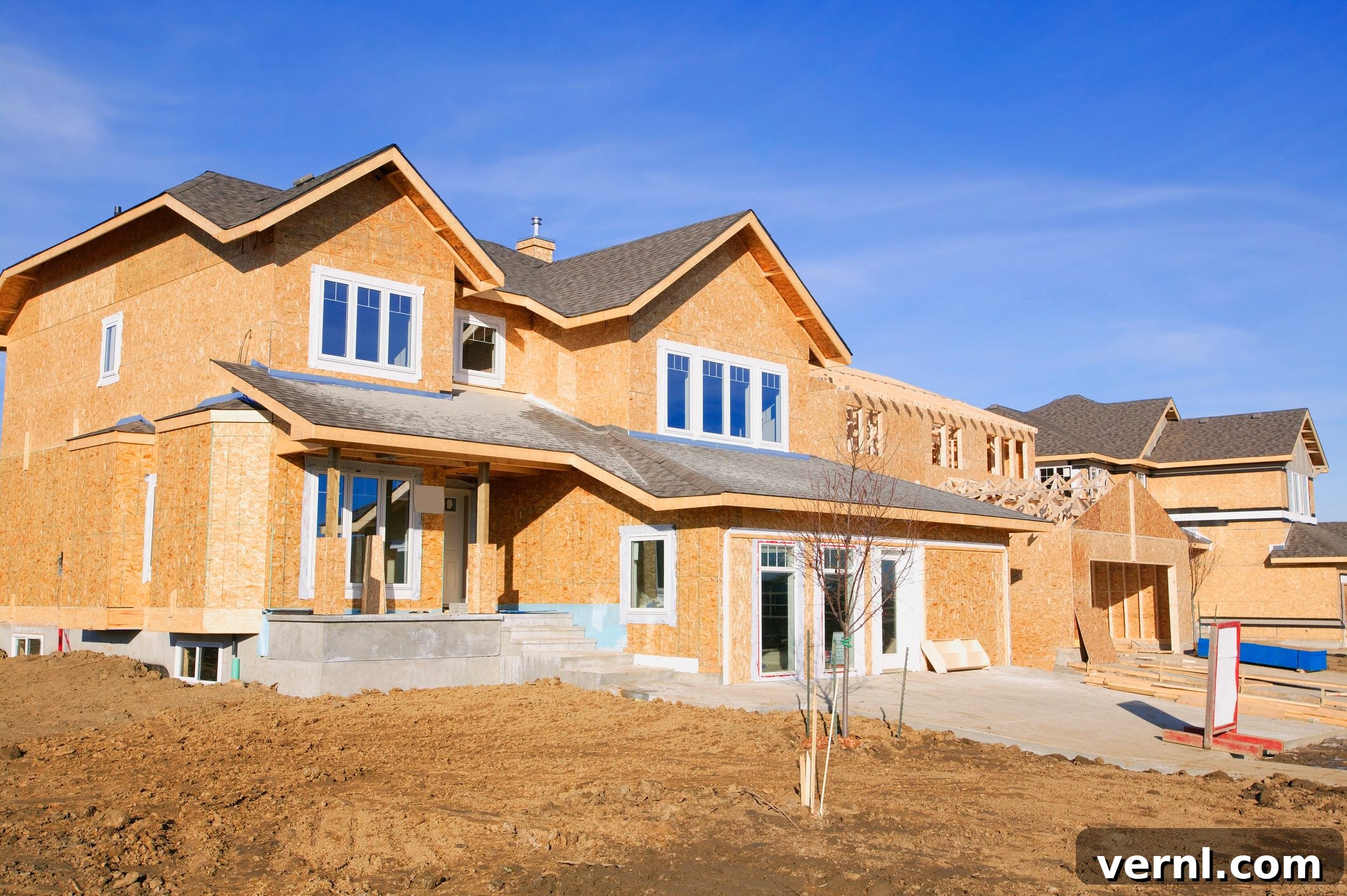
The journey to owning a new home is an exciting one, but for many prospective homeowners, the final price tag can seem like a daunting mystery. What exactly are you paying for when you invest in new construction? While a buyer typically sees only the total dollar figure, the reality on the business end is a meticulously calculated sum of various components, each contributing a specific percentage and value to the overall cost. Understanding this intricate breakdown is crucial for both consumers seeking transparency and builders aiming for accurate project estimation and sustainable profitability. This comprehensive guide will delve into every element that shapes the final price of a newly built home, shedding light on the complexities behind the construction process.
Unveiling the Data: Our Source for New Home Construction Costs
To provide you with reliable and representative insights into new home build costs, our analysis is grounded in data compiled by the National Association of Home Builders (NAHB). The NAHB, a leading advocate for housing and home builders, conducts periodic surveys to gather essential information on the financial aspects of residential construction across the nation. Their 2022 report offers invaluable data, drawing from direct input provided by builders regarding the cost breakdowns of their various construction projects.
This data provides a national average, offering a crucial benchmark for understanding the typical expenditures involved in building a single-family home. It’s important to note, however, that these surveys treat each builder’s data equally, without factoring in the volume of homes each builder constructs annually. While this means the data represents a broad average rather than a weighted average by production size, it still serves as an excellent starting point for a detailed discussion on new home pricing. It helps establish a baseline understanding, though individual project costs can always vary based on specific market conditions, geographic location, material choices, and builder efficiencies.
A Comprehensive Breakdown of New Home Pricing Components
For any successful and transparent home construction business, meticulous tracking of every financial aspect is paramount. Savvy contractors understand precisely how much each segment of a project costs, enabling them to accurately monitor profit margins, manage expenses, and provide more precise estimates for future builds. This granular approach ensures financial health and fosters trust with clients.
Based on the insightful NAHB survey, the total sales price of a new home can be categorized into several key components. These categories encompass the costs associated with the finished lot, the actual construction, financing, overhead and general business expenses, marketing efforts, sales commissions, and finally, the builder’s profit. Below, we’ll explore each of these critical cost components in detail, revealing their average share of the total home sales price.
1. Finished Lot Cost: The Foundation of Your Home’s Value
Before any physical construction can begin, the land itself must be acquired and meticulously prepared for building. The finished lot cost encompasses all expenses related to transforming a raw piece of land into a buildable site ready for foundation work. This vital phase includes several sub-components:
- Land Acquisition: The initial purchase price of the plot itself, which can vary dramatically based on location, size, zoning, and desirability.
- Site Preparation: This involves extensive work such as clearing the land of trees and debris, rough grading to establish the desired topography and proper drainage, and excavation for the foundation.
- Utility Connections: Bringing essential services to the property, including connecting to municipal water and sewer lines (or installing septic systems and wells), extending electrical grids, and establishing gas and internet access points. These can incur significant tap fees and extension costs.
- Driveways and Access: Initial costs for creating access routes, temporary construction drives, and the eventual installation of permanent driveways and walkways leading to the home.
- Permitting and Fees: Certain permits are required specifically for lot development and environmental assessments before construction can commence.
According to the NAHB survey, finished lot costs represent a significant portion of the total sales price, averaging around 17.8%. This translates to an average dollar figure of approximately $114,622 for a typical new single-family home. It’s a crucial expense that homeowners often underestimate, but it lays the groundwork for the entire project.
2. Construction Costs: Bringing the Dream Home to Life
Construction costs represent the largest percentage of a new home’s sales price, as they cover all the physical materials and labor involved in building the structure itself. This extensive category can be broken down into numerous phases, each critical to the home’s integrity, functionality, and aesthetic appeal. These components collectively average an astonishing $392,241, accounting for a dominant 60.8% of the total sales cost:
- Site Work & Permits (Initial Phase): Beyond the finished lot, this covers costs directly related to the construction process, such as building permits, water and sewer inspection fees, architectural and engineering design services, land surveys, and initial site erosion control measures.
- Foundation Work: This fundamental stage involves excavation for footings, pouring concrete slabs or building crawl space/basement foundations, installing drainage systems, and waterproofing. The choice of foundation type significantly impacts costs.
- Framing: The skeleton of the house, framing includes all lumber and engineered wood products used for walls, floors, and the roof structure. This phase also covers the installation of roof trusses or rafters and sheathing (plywood or OSB) for structural rigidity and preparation for exterior finishes.
- Exterior Finishes: These elements protect the home from the elements and define its curb appeal. Costs include exterior wall finishes (siding, brick, stone, stucco), roofing materials (shingles, metal, tile), windows (energy-efficient double or triple-pane, various styles), exterior doors, soffits, fascia, and exterior trim.
- Major Systems (Rough-Ins): These are the vital, often hidden, networks that make a home functional. They include comprehensive plumbing systems (supply lines, waste lines, vents, initial fixture hook-ups), electrical wiring (panels, outlets, switches, lighting circuits), and HVAC systems (furnace, air conditioning unit, ductwork, vents, thermostat).
- Interior Finishes: This is where the home truly takes shape and reflects personal style. This category covers insulation (fiberglass, spray foam), drywall installation and finishing, interior trim (baseboards, crown molding, window casings), interior doors, painting (primer and multiple coats), kitchen and bathroom cabinetry (materials, custom options), countertops (granite, quartz, laminate, solid surface), and all types of flooring (hardwood, tile, carpet, vinyl plank).
- Final Steps & Landscaping: The concluding phases involve connecting appliances, installing light fixtures, final plumbing fixtures, and hardware. Exterior completion includes landscaping (sod, plants, trees, irrigation systems), building decks, patios, and porches, installing final driveways and walkways, and a thorough final cleanup of the entire property before homeowner occupancy.
3. Financing Costs: The Price of Capital
Building a new home requires significant upfront capital, and most builders rely on construction loans to fund projects from groundbreaking to completion. These financing costs are an unavoidable part of the equation, covering the expense of borrowing money until the home is sold. While often less visible to the consumer, they are critical to the builder’s ability to operate and execute projects. These costs typically include:
- Interest Payments: The interest accrued on the construction loan over the duration of the build.
- Loan Origination Fees: Charges levied by the lender for processing a new loan application.
- Appraisal and Inspection Fees: Costs associated with property appraisals and periodic inspections required by lenders during the construction phases to release funds.
Based on our analysis of the NAHB data, financing costs typically account for approximately 1.95% of the total sales price, which translates to an average of around $12,580. These costs ensure that builders have the necessary funds to pay for materials, labor, and other expenses throughout the construction timeline.
4. Overhead and General Expenses: Running the Business
Beyond the direct costs of materials and labor for a specific home, builders incur numerous indirect expenses necessary to operate a legitimate and efficient business. These overhead and general expenses ensure the company’s functionality and are spread across all projects. They average around $32,979, representing 5.1% of the sale price, and can be categorized into:
- On-Site Indirect Costs: These are project-specific but not tied directly to a single material or labor item. Examples include site supervision salaries, temporary utility services (like power poles and construction water), safety equipment, temporary fencing, portable toilets, minor tool depreciation, and project-specific insurance (builder’s risk, general liability, worker’s compensation premiums).
- Off-Site Administrative Costs: These encompass the broader expenses of running the builder’s company. This includes office rent or mortgage, salaries for clerical and administrative staff (HR, accounting), office utilities and supplies, business insurance, legal and accounting fees, software subscription fees (for CAD, project management, accounting), corporate vehicle maintenance and fuel, general business licenses, and professional development.
These essential costs allow the home builder to maintain infrastructure, manage multiple projects, and provide customer support, even if they don’t directly manifest as a physical component of a single home.
5. Marketing Costs: Reaching the Right Buyers
Even the most beautifully built home won’t sell itself. Effective marketing is crucial for builders to reach potential buyers, showcase their properties, and generate sales. While a seemingly small percentage, these costs are vital for moving inventory and ensuring business continuity. Marketing expenses typically encompass:
- Advertising: Online listings (MLS, real estate portals), print advertisements, local publications, and digital ad campaigns (social media, search engine marketing).
- Promotional Materials: Developing brochures, flyers, virtual tours, professional photography, and videos.
- Model Homes & Open Houses: The costs associated with furnishing, maintaining, and staffing model homes, as well as conducting open house events.
- Website & Branding: Development and maintenance of the builder’s website, brand identity creation, and public relations efforts.
On average, marketing efforts account for approximately 0.7% of the sale price, equating to about $4,268. This budget ensures the builder can effectively connect their high-quality homes with eager buyers in a competitive market.
6. Sales Commissions: Facilitating the Transaction
Real estate transactions, especially for new homes, often involve real estate agents who facilitate the connection between buyers and sellers. While many home builders employ their own in-house sales teams (whose salaries and benefits would fall under overhead), they typically incur costs related to buyer’s agent commissions. This is a standard practice in the real estate industry to incentivize agents to bring clients to new construction developments.
The average commission fee for new single-family homes is approximately $23,080, representing 3.6% of the total sales price. This fee primarily covers the compensation for the buyer’s real estate agent, who assists their client through the home-buying process, from initial property search to closing.
7. Builder Profit: Sustaining the Enterprise and Innovation
Finally, after all expenses have been meticulously accounted for and paid, the remaining portion of the sales price is the builder’s profit. This is not merely “take-home” money but represents the financial return on investment for the builder’s expertise, risk-taking, and operational efficiency. It’s calculated by subtracting all direct and indirect costs from the total sales price.
Profit margins are essential for several reasons:
- Business Sustainability: Profits allow the builder to reinvest in their company, purchase new land for future projects, upgrade equipment, and attract skilled labor.
- Risk Mitigation: Construction projects often face unforeseen challenges, such as unexpected material price increases, adverse weather conditions, or labor shortages. Profit margins provide a buffer to absorb these risks.
- Innovation and Growth: Healthy profits enable builders to research new building technologies, implement sustainable practices, and expand their operations to meet market demand.
According to the NAHB’s survey, the average profit on a single-family construction project is approximately 10.1%, which translates to an average of about $65,369. While this figure is an average, actual profits can fluctuate significantly depending on market demand, project complexity, and the builder’s operational efficiency.
Beyond Wood and Nails: The True Cost of a New Home
The price of a new home is far more than just the sum of its raw materials and labor. It’s a complex mosaic of interconnected costs, each playing a vital role in bringing a dream home to fruition. From the initial acquisition and meticulous preparation of the land, through the myriad stages of construction, to the essential financial, operational, and marketing expenses, every element contributes to the final figure.
Understanding this comprehensive breakdown empowers both buyers and builders. For buyers, it offers clarity and confidence in their investment, revealing the immense value behind each dollar. For builders, it underscores the importance of transparent pricing, efficient management, and strategic planning. By demystifying the intricate layers of new home construction costs, we gain a deeper appreciation for the effort, expertise, and resources required to build the places we call home.