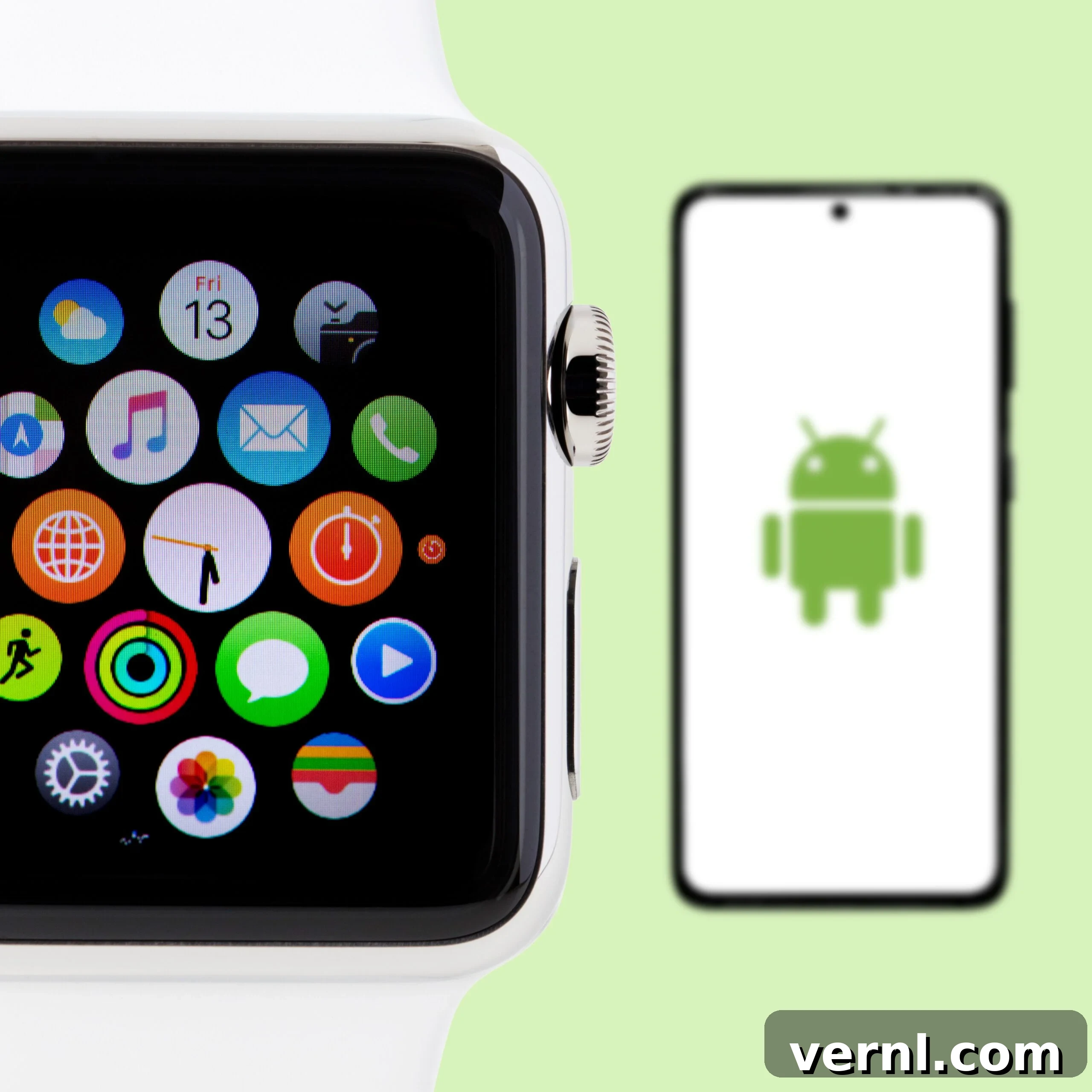
In the rapidly evolving world of technology, personal devices have become extensions of ourselves. From smartphones to smartwatches, consumers often find themselves navigating a landscape of diverse brands and ecosystems. While many users pledge allegiance to a single brand, others are keen to mix and match their devices, seeking out the best technology or most affordable options available. This often leads to a crucial question: is it possible to use an Apple Watch with an Android phone? Or are these two tech giants fundamentally incompatible? The answer, as many discover, is more nuanced than a simple yes or no.
For years, the debate surrounding cross-platform compatibility has stirred discussions among tech enthusiasts. On one side, there’s the allure of Apple’s sleek design and seamless integration within its own ecosystem. On the other, the open-source flexibility and vast customization options offered by Android devices. When it comes to wearables, particularly the highly coveted Apple Watch, the desire to bridge this gap is strong. Many Android users, drawn by the Apple Watch’s advanced health tracking, robust app library, and stylish aesthetics, wonder if they can incorporate it into their existing setup without switching phones. This article aims to definitively explore the official stance, delve into potential workarounds, and offer practical advice for anyone contemplating this cross-platform venture.
The Official Stance: Can You Pair an Apple Watch with an Android Phone?
When it comes to official support, the answer is unequivocally clear: Apple does not provide a direct method to pair an Apple Watch with an Android smartphone. The Cupertino giant has meticulously built a closed ecosystem, ensuring that its hardware and software work in perfect harmony, often exclusively with each other. This integration is a core part of the Apple experience, and it extends to the Apple Watch, which is designed to function as an extension of an iPhone.
The Apple Watch User Guide offers comprehensive instructions on how to set up and use the device. These guides consistently detail the pairing process with an iPhone, outlining steps like placing the Apple Watch near your iPhone, opening the Apple Watch app, and following on-screen prompts. There is no mention of Android or any non-Apple device in these official instructions, reinforcing the brand’s commitment to its proprietary ecosystem. This deliberate omission signals Apple’s intent to keep its smartwatch exclusively within its sphere.
While Apple does offer a “Family Setup” option, allowing an Apple Watch to be set up for a family member who doesn’t own an iPhone, it comes with significant caveats. In this scenario, the watch is still primarily paired to the iPhone used for the initial setup. This means that an iPhone is still required to manage the watch, install apps, receive updates, and access certain features. Furthermore, watches set up via Family Setup have very limited features available compared to a watch paired directly with its owner’s iPhone. Features like irregular rhythm notifications, ECG, Cycle Tracking, Sleep, Blood Oxygen, and more require the watch to be paired with the user’s own iPhone. Thus, even this seemingly flexible option doesn’t provide a true pathway for Android users to fully utilize an Apple Watch.
Discussions across various user forums and tech communities consistently echo this sentiment. The question of Apple Watch and Android compatibility has been raised countless times, and each instance yields the same overwhelming consensus: officially, it’s not possible. The underlying watchOS operating system and its deep integration with iOS prevent any straightforward cross-platform functionality. For Android users who desire the full Apple Watch experience, the prevailing advice is clear: you’re better off either acquiring an iPhone to pair with the Apple Watch or opting for a smartwatch specifically designed for Android, such as a Samsung Galaxy Watch or a Google Pixel Watch.
Understanding the Limitations: What You Lose Without an iPhone
Even if one were to attempt unofficial workarounds, it’s crucial to understand the extensive functionality lost when an Apple Watch isn’t paired with an iPhone. The Apple Watch is not merely a timepiece; it’s a sophisticated companion device designed to extend the capabilities of your smartphone. Without an iPhone, much of its core appeal and utility vanishes.
Firstly, the initial setup and activation of any Apple Watch model strictly demand an iPhone. There is no alternative setup process for Android. This means that even if you somehow acquire an Apple Watch, you cannot even begin to use it without an initial iPhone pairing. Once paired, the iPhone acts as the central hub for the watch, managing software updates, app installations, settings synchronization, and cellular plan activation (for cellular models).
Secondly, key communication features become severely hampered. Notifications from calls, texts, emails, and third-party apps are routed through the iPhone. Without this connection, your Apple Watch won’t receive these alerts. While cellular models can make calls or send messages independently, they still rely on an active cellular plan provisioned through an iPhone. Message replies, especially for iMessage, are seamlessly integrated with iOS, a connection that is completely absent when dealing with an Android device.
Health and fitness tracking, a major selling point of the Apple Watch, also suffers. While the watch can collect some basic activity data autonomously, the comprehensive health ecosystem, including detailed historical data, trends, and health insights, resides within the iPhone’s Health app. Syncing this data, receiving personalized coaching, or leveraging advanced features like ECG readings, blood oxygen saturation, and detailed sleep tracking, are all tied to the iPhone integration. Without it, you might get raw data on the watch itself, but the rich analytical experience is gone.
Finally, the app ecosystem becomes virtually inaccessible. The App Store for Apple Watch is managed through the Watch app on the iPhone. Without an iPhone, you cannot browse, download, or update third-party applications on your watch. Features like Apple Pay, Siri, and seamless integration with other Apple services (Calendar, Reminders, Maps, Music) are all deeply intertwined with the iPhone and the broader Apple ecosystem. In essence, trying to use an Apple Watch with an Android phone is akin to trying to use a car without its engine – some parts might look familiar, but it fundamentally fails to perform its intended function.
Exploring Unofficial Workarounds and Their Risks
Despite the official stance, the human desire for innovation and interoperability often leads to the exploration of unofficial solutions. User forums and tech communities frequently buzz with discussions about potential “backdoor workarounds” or creative methods to bypass Apple’s strict ecosystem. While the general consensus remains that a fully functional pairing is impossible, some users have experimented with various tactics, though with highly limited and often unsatisfactory results.
One such rumored option involves searching for and installing third-party applications from the Google Play Store that claim to facilitate some form of Apple Watch connectivity. These apps, often developed by independent programmers, purport to enable basic functionalities like receiving notifications or syncing rudimentary health data. However, the efficacy and reliability of these applications are highly questionable. They often suffer from inconsistent performance, frequent disconnections, and a severe lack of the full features available when the watch is paired with an iPhone. Furthermore, the security and privacy implications of installing unverified third-party apps that attempt to bridge proprietary ecosystems can be significant. Users risk exposing their data or introducing vulnerabilities to their devices.
Another theoretical approach sometimes discussed involves initially pairing the Apple Watch with an iPhone (perhaps a friend’s or an old device) to complete the setup, and then attempting to use it standalone with a cellular plan, or hoping for some residual functionality with an Android phone. While a cellular Apple Watch can indeed operate independently of its paired iPhone for calls, messages, and streaming music, it still requires that iPhone for software updates, app management, and settings adjustments. Moreover, the cellular plan on the Apple Watch must be activated through a compatible carrier using an iPhone. Even if you manage to activate a cellular plan, the watch will not sync with your Android phone’s contacts, calendars, or third-party apps, severely limiting its utility as a smart companion device. Essentially, it becomes a very expensive, standalone wrist device with severely curtailed smart features, acting more like a basic phone on your wrist than a fully integrated smartwatch.
It’s crucial for users considering these workarounds to approach them with extreme caution. The risks often outweigh the potential, highly limited benefits. These methods are not supported by Apple, meaning that any issues encountered will not be covered by warranty or technical support. Additionally, future watchOS updates can easily break any unofficial compatibility hacks, rendering the workarounds useless. Ultimately, while the idea of bridging the gap is appealing, the reality of unofficial workarounds for Apple Watch and Android pairing points to an experience that is riddled with compromises, frustrations, and potential security concerns.
The Best Alternatives: Smartwatches for Android Users
Given the official incompatibility and the limitations of unofficial workarounds, Android users who desire a feature-rich smartwatch experience are best advised to explore devices specifically designed for the Android ecosystem. The market for Android-compatible smartwatches is vibrant and diverse, offering a plethora of options that rival, and in some areas even surpass, the capabilities of the Apple Watch when paired with an Android phone.
1. Samsung Galaxy Watch Series: Samsung’s Galaxy Watch line is arguably the most direct competitor to the Apple Watch in the Android space. Running on Wear OS powered by Samsung, these watches offer seamless integration with Samsung Galaxy phones and excellent compatibility with other Android devices. Key features include advanced health tracking (ECG, blood pressure monitoring, body composition analysis on newer models), comprehensive fitness tracking, NFC for Samsung Pay/Google Pay, robust notification management, and a wide array of apps. The design is often sleek and customizable, with both classic and modern aesthetics. For Android users, a Galaxy Watch provides a truly integrated and fluid experience.
2. Google Pixel Watch: As Google’s flagship smartwatch, the Pixel Watch brings a pure Wear OS experience with deep integration with Google services. It boasts a sleek, minimalist design and leverages Fitbit’s renowned health and fitness tracking capabilities. With Google Assistant, Google Maps, Google Wallet, and a growing app ecosystem, the Pixel Watch offers a compelling package for Android users, particularly those with Pixel phones. It’s designed to be a seamless extension of your Android smartphone, delivering a cohesive user experience.
3. Other Wear OS Devices: Beyond Samsung and Google, various other manufacturers produce excellent smartwatches running Google’s Wear OS platform. Brands like Fossil, Mobvoi (TicWatch), and Skagen offer a range of devices with diverse designs, price points, and feature sets. These watches provide access to Google Assistant, Google Play Store for apps, Google Pay, and comprehensive notification support, ensuring a robust smartwatch experience tailored for Android users.
4. Garmin Smartwatches: For fitness enthusiasts and outdoor adventurers, Garmin offers a range of specialized smartwatches (e.g., Fenix, Forerunner, Venu series). While not always categorized as “smartwatches” in the traditional sense, they offer unparalleled GPS accuracy, extensive sport-specific metrics, incredible battery life, and smart features like notifications, music storage, and Garmin Pay. They are fully compatible with Android and excel in their niche, providing powerful tools for serious athletes.
5. Fitbit Devices: While some Fitbit devices are more focused on fitness tracking, models like the Fitbit Sense and Versa series blur the line into full-fledged smartwatches. They offer excellent health monitoring (stress management, skin temperature, ECG on Sense), comprehensive sleep tracking, a long battery life, and integration with the popular Fitbit app. They connect seamlessly with Android phones, providing a user-friendly and health-centric smartwatch experience.
Choosing an Android-compatible smartwatch ensures that you get the full functionality, seamless integration, and official support that a cross-platform setup with an Apple Watch simply cannot provide. These alternatives offer a diverse range of features, designs, and price points, guaranteeing that there’s an ideal smartwatch for every Android user’s needs and preferences.
Making an Informed Decision: iPhone, Android, or Both?
The journey to finding the perfect smartwatch often leads to a crossroads, especially for those considering an Apple Watch with an Android phone. As we’ve thoroughly explored, the official answer is a definitive no, and unofficial workarounds are fraught with limitations and risks. This brings us to a crucial decision-making point for Android users.
If your heart is set on the Apple Watch and its unique set of features and ecosystem, the most straightforward and fully functional path is to embrace the Apple ecosystem entirely. This means acquiring an iPhone to pair with your Apple Watch. While this represents a significant shift in your smartphone allegiance, it guarantees the complete and seamless experience that Apple meticulously designed. You’ll gain access to all watchOS features, robust app integration, reliable performance, and dedicated support. This choice is ideal for those who prioritize the Apple Watch experience above all else and are willing to switch their primary smartphone operating system.
Conversely, if you are firmly committed to your Android phone and have no desire to switch, the wisest decision is to opt for an Android-compatible smartwatch. As detailed in the previous section, the market offers exceptional alternatives such as the Samsung Galaxy Watch series, Google Pixel Watch, and various Wear OS devices. These smartwatches are engineered to work flawlessly with Android phones, providing full functionality, dedicated app ecosystems, and seamless synchronization. They offer robust health and fitness tracking, comprehensive notification management, mobile payment capabilities, and extensive customization options, often at competitive price points. Choosing an Android-specific smartwatch ensures a frustration-free experience where your devices work in harmony as intended.
Ultimately, the decision hinges on your priorities. Are you a brand loyalist willing to commit to an ecosystem for the ultimate device integration? Or do you prioritize your current smartphone choice and seek the best companion device within that framework? Understanding the technical realities and ecosystem limitations is key to avoiding disappointment and making an investment that truly enhances your daily life. While the dream of pairing an Apple Watch with an Android phone might persist for some, the practical reality dictates a clear choice: either fully commit to Apple for the Watch, or find an equally capable and fully compatible smartwatch within the Android universe.
Conclusion
The question of whether an Apple Watch can be paired with an Android phone is a recurring one in the tech world, reflecting a common desire for cross-platform flexibility. However, the unequivocal answer from Apple’s official stance is no. The Apple Watch is meticulously designed as an integral part of the Apple ecosystem, requiring an iPhone for initial setup, full functionality, and ongoing management. While “Family Setup” offers a limited workaround for non-iPhone users, it still relies on an iPhone for administration and severely restricts features. Similarly, unofficial third-party apps and other rumored hacks typically lead to partial functionality, unreliable performance, and potential security risks, ultimately failing to deliver a satisfactory user experience.
For Android users who aspire to integrate a smartwatch into their daily lives, the most practical and rewarding path lies in embracing the excellent range of smartwatches specifically designed for the Android platform. Devices like the Samsung Galaxy Watch, Google Pixel Watch, and various Wear OS wearables offer seamless compatibility, comprehensive features, and dedicated support, ensuring a truly integrated and fulfilling smartwatch experience. By choosing a device that aligns with your smartphone’s ecosystem, you unlock the full potential of both gadgets, avoiding the frustrations and compromises inherent in trying to force incompatible technologies together. In the realm of smartwatches, sometimes the best solution is to choose wisely within your existing digital world.
Use Apple Watch without its paired iPhone, Apple.
Is the Apple Watch compatible with Android OS, Apple Community, 2023.
Using Apple Watch without iPhone, Apple Community, 2022.
Set up Apple Watch For Your Kids, Apple.