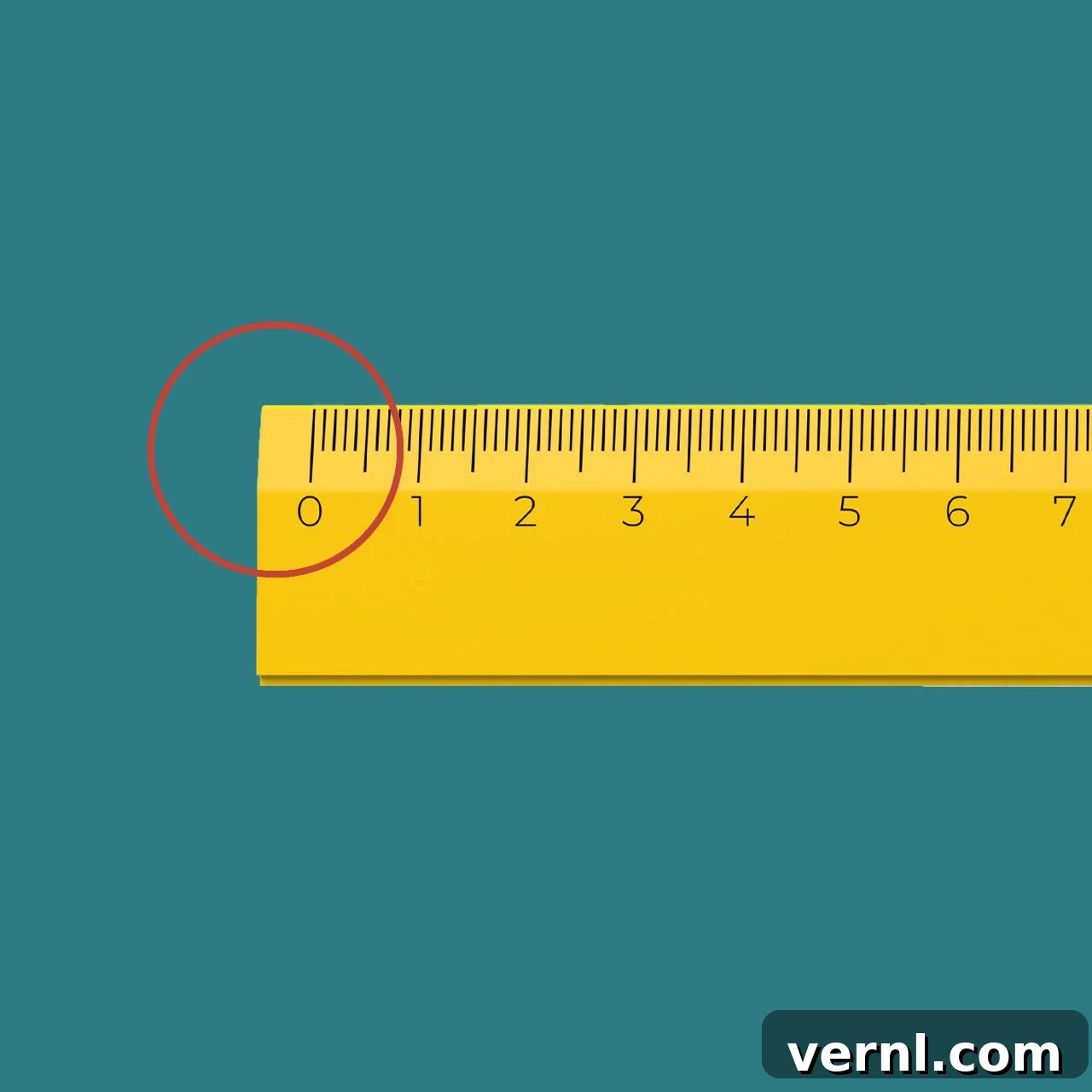
Turns out, rulers aren’t always as simple as they look. Although measuring sticks have been used for thousands of years, modern rulers come in a variety of designs and with subtle features that affect how you use them. One of the most common questions people notice is why the zero mark sometimes doesn’t line up with the physical edge of the ruler. Instead of beginning exactly at the end, there can be a small unmarked gap before the first graduation. That gap isn’t a defect—there are practical reasons for it.
This article explains why some rulers include that space before zero, how it protects measurement accuracy, when you can expect to see edge-to-edge scales, and the proper technique for measuring when zero doesn’t start at the physical edge. Understanding these points will help you choose the right ruler for the job and get consistently accurate results when measuring materials, parts, or craft projects.
Why Some Rulers Have a Gap Before Zero
The unmarked space at the end of some rulers serves as a protective buffer between the ruler’s physical edge and the calibrated scale. There are several sensible reasons manufacturers include that gap:
- Durability and accuracy: The extreme edge of a ruler, especially wooden or plastic versions, is prone to chipping, wearing, or rounding from repeated use. By starting the printed scale slightly inward, the critical measurement marks are less likely to be damaged. That preserves the ruler’s accuracy over time.
- Manufacturing tolerance: Cutting, molding, or finishing a ruler’s edge can introduce small, unavoidable variations. Keeping the scale set back from the edge avoids making those tiny differences part of the calibrated measurement, which helps ensure consistent spacing between marks across many units.
- Clear reference point: The visible gap creates an obvious starting point for measurements. For beginners and children learning how measurement works, that separation helps reinforce the concept that measurements are read from the zero mark, not from the physical end of the tool.
Because of these benefits, many general-purpose rulers and school rulers include a short unmarked section before zero. The design choice balances usability with long-term precision, giving you a dependable measuring surface even after extended use.
Why doesn’t every ruler have a gap?
Not all rulers use the recessed zero. Edge-to-edge scales exist and are commonly found on precision metal rules, machinist scales, and other tools where designers expect users to measure directly from an edge or align the rule against a part. In those cases, manufacturing processes and material choices are controlled so the edge is reliably straight and durable enough to serve as a reference.
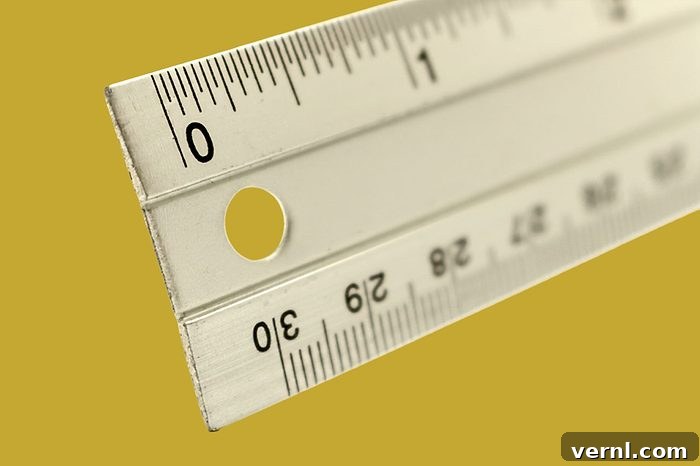
Some rulers also include specialized features such as a keyhole for hanging, dual-scale markings, or zero-centered scales that show measurements on both sides of a midpoint. These variations reflect different intended uses: woodworking, metalworking, drafting, or classroom measurement. When shopping for a ruler, you may see several options; choose the style that best suits the tasks you perform most often.
How to Measure With a Ruler That Starts After the Edge
Measuring with a ruler that doesn’t start at the edge is straightforward once you know the correct technique. Because the calibrated scale begins at the printed zero rather than the ruler’s physical end, you must align the object directly with the zero mark to get an accurate reading. Here’s a simple method:
- Place the ruler so the zero mark is aligned with one end of the object you want to measure. Make sure the ruler is straight and flush alongside the object, not angled.
- Hold the ruler steady at the zero point with your finger or clamp if needed to prevent slipping.
- Read the measurement at the point where the opposite end of the object meets the scale. That number is the length between the two aligned points, regardless of where the ruler’s physical edge sits.
If you prefer to measure from a physical edge rather than aligning to zero, you can note the gap distance once and factor it in mentally or by marking the ruler. However, for consistent accuracy it’s best to start from the printed zero. For very precise work, use a precision rule designed to measure from the edge or a caliper that eliminates ambiguity altogether.
Sources
- Stanford DREME Teaching Resources, “The Mathematics of Measurement”
- Empire Level, “Rulers”
- L.S. Starrett Company, “Precision Rules, Straight Edges & Parallels”