Understanding Proper Trap Connections to Vertical Drains: A Comprehensive Guide
A well-functioning plumbing system is the silent guardian of your home’s hygiene and comfort. Among its many intricate components, the humble plumbing trap plays an extraordinarily critical role. It’s not just about guiding wastewater away; it’s fundamentally about preventing noxious and potentially dangerous sewer gases from entering your living spaces. However, the effectiveness of this vital component hinges entirely on its connection to the vertical drain. This comprehensive guide will delve into the nuances of making this crucial connection, distinguishing between common pitfalls and best practices, ensuring your home remains safe, odor-free, and compliant with plumbing standards.
The Critical Role of Your Plumbing Trap
Before we explore the mechanics of connections, let’s briefly reiterate the indispensable purpose of a plumbing trap. Commonly known as a P-trap, this U-shaped section of pipe found under every sink, shower, and floor drain, is designed to hold a small amount of water. This water creates a barrier, a “water seal,” that physically blocks sewer gases—a cocktail of methane, hydrogen sulfide, ammonia, and other gases—from rising up the drainpipe and infiltrating your home. Without this water seal, these gases, which range from merely unpleasant to genuinely hazardous, would freely flow into your indoor environment, posing health risks and creating persistent, foul odors. Ensuring this water seal remains intact and functional is paramount, making the method of connection to the main drain line a non-negotiable aspect of sound plumbing.
The Common Misstep: Wye Fitting and 45-Degree Elbow on a Vertical Drain
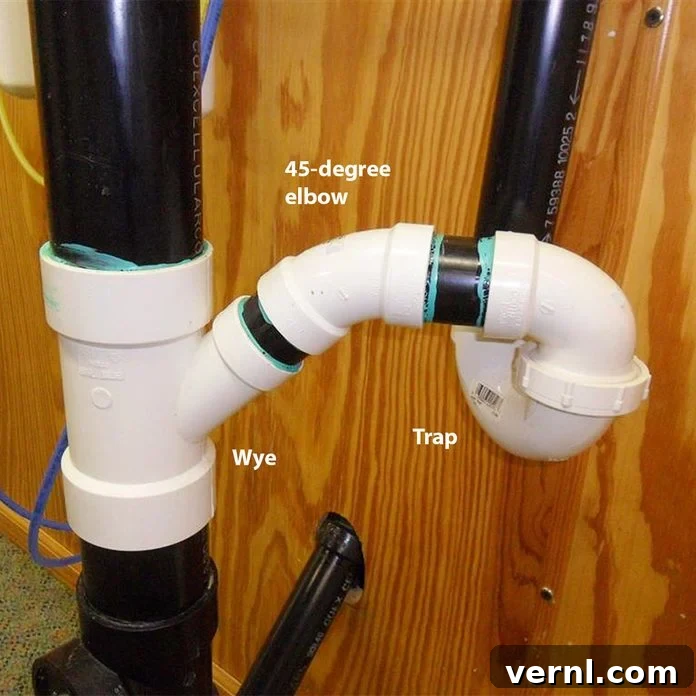
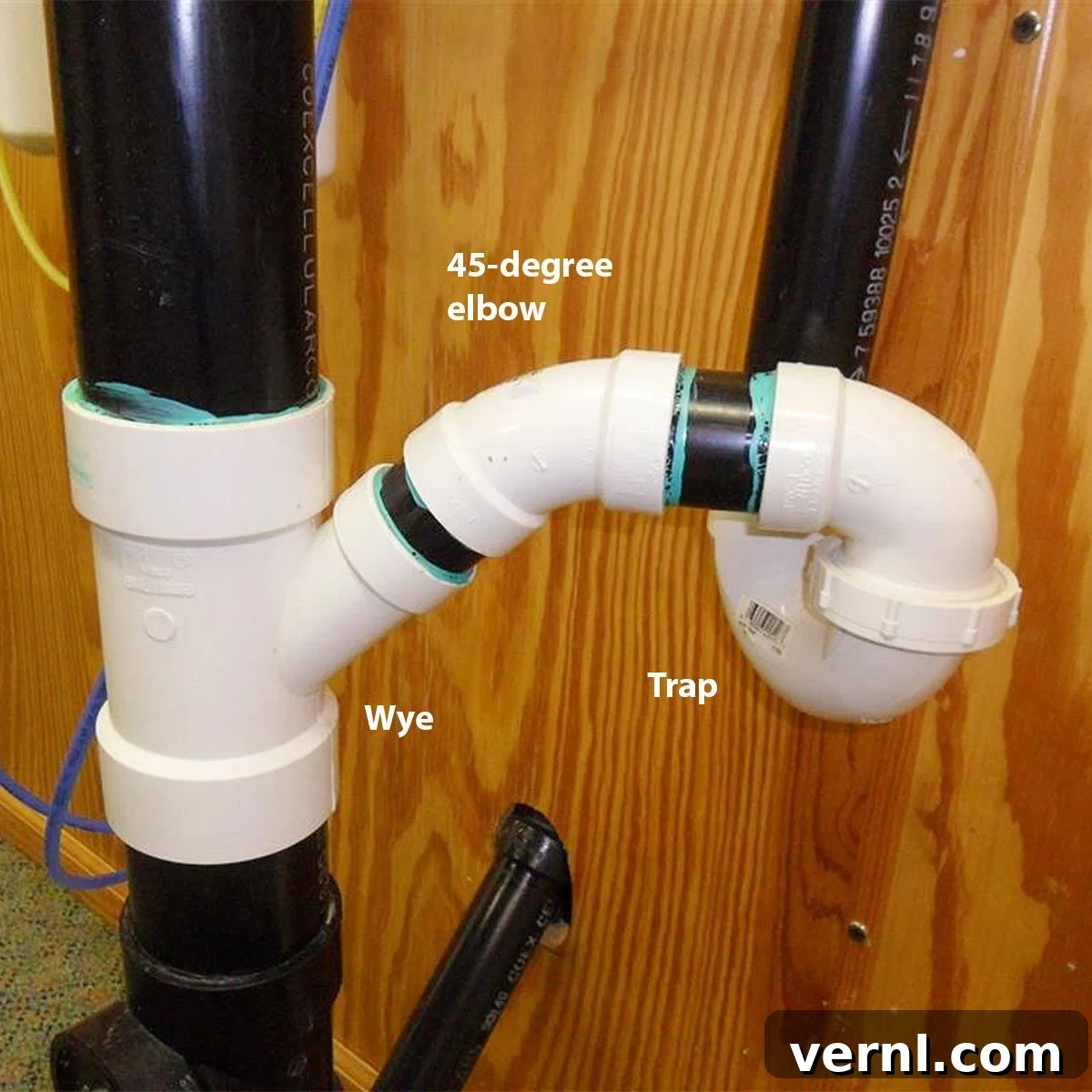
It might seem intuitively correct to connect a trap to a vertical drain using a wye fitting combined with a 45-degree elbow. On the surface, this configuration appears to offer a smooth, efficient transition for wastewater. The idea is often to provide a direct, steep path for water to flow downwards, seemingly aiding drainage. However, this seemingly logical approach harbors a significant flaw that can compromise the integrity of your home’s drainage system and, more importantly, its safety. This setup, as depicted in the image above, creates a steep downward slope into the main vertical drain, which can lead to a phenomenon known as the “siphon effect.”
Here’s why this is problematic: as water rapidly descends through this sharply angled connection, the velocity of the flow can generate a strong negative pressure within the drain line, similar to how a vacuum works. This negative pressure then literally “sucks” the water out of the trap’s water seal. Once the trap is emptied of its water, the protective barrier is gone, leaving a direct pathway for sewer gases to freely enter your home. The consequences are immediate and unpleasant: persistent foul odors, potential health concerns from inhaling sewer gases, and the continuous battle against an issue stemming from an improper initial installation. Many DIY enthusiasts and even some less experienced plumbers mistakenly adopt this method, unaware of the subtle yet critical fluid dynamics at play that undermine the trap’s primary function.
Note: Joining ABS (black) pipe to PVC (white) may look like a blunder, but it’s actually allowed by many local codes—as long as you use “universal” cement to glue them together. This detail, while specific, highlights the importance of understanding local plumbing codes, as what might appear unorthodox can sometimes be permissible under specific conditions and with the right materials.
Unveiling the “Right Way”: The Sanitary Tee Solution
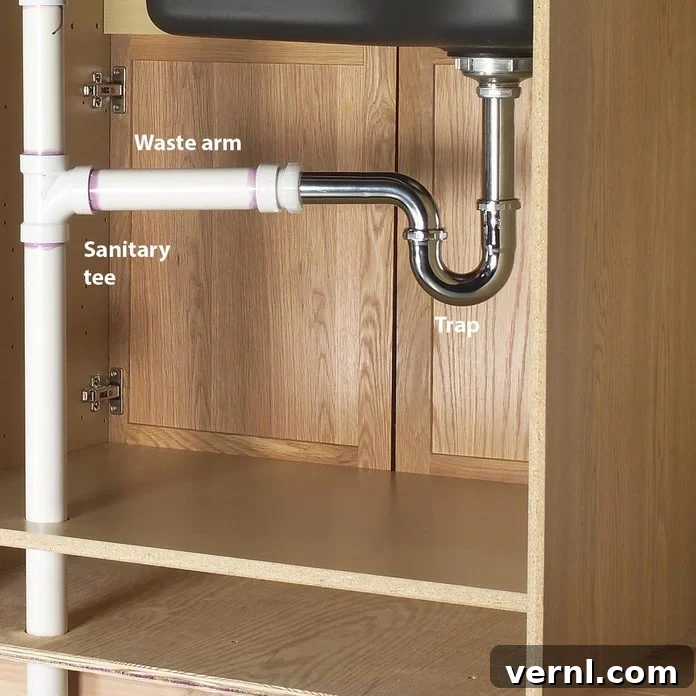
When it comes to connecting a trap to a vertical drain, the correct and code-compliant method involves using a sanitary tee fitting, as illustrated in the accompanying image. The sanitary tee is specifically engineered to ensure proper drainage while meticulously preserving the trap’s essential water seal. Unlike the sharp angle of a wye and 45-degree elbow, a sanitary tee is characterized by its curved inlet, which provides a much more gradual transition for the wastewater as it enters the vertical drain. This subtle but crucial design difference is the key to preventing the siphon effect.
A “sanitary tee” allows the waste arm—the horizontal pipe coming from the trap—to have a slight downward slope. This gentle pitch is adequate to facilitate efficient wastewater flow due to gravity, ensuring that water and waste move smoothly into the main vertical drain without stagnation. Crucially, this slope is not steep enough to generate the powerful negative pressure that would otherwise siphon water from the trap. The controlled flow ensures that the water in the trap remains undisturbed, maintaining the vital water seal that acts as a barrier against sewer gases. This fitting is a cornerstone of proper residential and commercial plumbing for its ability to balance efficient waste removal with the critical function of environmental protection within the building. Understanding and correctly implementing the sanitary tee connection is fundamental for anyone undertaking plumbing work, whether a seasoned professional or a diligent homeowner.
Beyond the Connection: Key Principles of Effective Drainage
While the correct fitting is paramount, it’s just one piece of the larger puzzle of an efficient plumbing system. To truly understand and maintain effective drainage, it’s essential to grasp a few other core principles that work in tandem with proper trap connections:
The Indispensable Role of Venting Systems
Proper venting is arguably as critical as the trap itself in preventing siphonage and ensuring smooth drainage. Vent pipes connect to the drainage system, typically above the trap weir, and extend through the roof to the outside air. These vents allow air to enter the drainage pipes, equalizing air pressure within the system. Without adequate venting, the rush of water through the drain can create a vacuum (negative pressure) behind it, pulling water from the trap, much like the siphon effect seen with improper fittings. Conversely, blockages can cause positive pressure, pushing sewer gases through the trap. A correctly installed vent pipe ensures that the air pressure on both sides of the trap’s water seal remains balanced, protecting it from both siphonage (being sucked out) and back pressure (being pushed out).
Gravity’s Guiding Hand and Controlled Flow
All modern drainage systems rely heavily on gravity to move wastewater. Pipes are installed with a specific pitch or slope—typically 1/4 inch per foot for smaller drains—to ensure a consistent, downhill flow. However, as demonstrated by the wye and 45-degree elbow example, simply creating a steep path isn’t always the solution. The flow needs to be controlled. Too steep a slope can lead to water outpacing solids, leaving waste behind, or as in our siphon scenario, creating pressure differentials that compromise trap seals. The sanitary tee’s design embodies this principle, facilitating effective gravity flow without adverse side effects.
Understanding Different Trap Types
While this article focuses on the connection method, it’s useful to briefly acknowledge the types of traps. The P-trap, named for its shape, is the standard and legal trap for most fixtures. Its design inherently allows for the retention of a water seal. Historically, “S-traps” (shaped like an ‘S’) were common, but these are now largely disallowed by plumbing codes because their double bend and steep drop make them highly susceptible to siphoning, often losing their water seal. Understanding why P-traps are preferred further reinforces the importance of preventing siphonage through proper connections and venting.
Identifying and Rectifying Poor Trap Connections
Recognizing the signs of an improperly connected trap or a compromised water seal is crucial for homeowners. The most obvious indicator is a persistent, foul odor emanating from your drains, particularly noticeable near sinks, showers, or other fixtures. This is a clear sign that sewer gas is entering your home because the trap’s water seal has been broken or is non-existent. Another common symptom is a gurgling sound coming from the drain after water has been used in a connected fixture. This gurgling indicates that air is being pulled through the trap, often a precursor to or symptom of siphonage, as the system attempts to equalize pressure. Slow drainage, though it can have other causes, can also sometimes be exacerbated by improper fittings that create turbulence or air locks.
If you suspect an issue with your trap connection, especially after new plumbing work or a persistent problem, an inspection is warranted. For those comfortable with basic plumbing, visually checking the type of fitting used for the trap arm connection to the vertical drain is a good starting point. If you identify a wye and a 45-degree elbow in sequence where a sanitary tee should be, rectification is necessary. While a confident DIYer might attempt the replacement, consulting a licensed plumber is highly recommended. Professional plumbers have the expertise to diagnose complex issues, ensure all connections meet local codes, and use the correct materials and techniques, providing peace of mind and long-term reliability for your home’s plumbing system.
Ensuring Long-Term Plumbing Health
Maintaining a healthy plumbing system goes beyond initial correct installation. Regular, mindful use and occasional checks can significantly extend the life and efficiency of your drains. Avoid pouring harsh chemicals down your drains, as these can erode pipes and fittings over time. Instead, use natural remedies or enzymatic cleaners for clogs. Periodically, listen to your drains; unusual gurgling or slow drainage can be early warning signs of underlying issues that, if caught early, can prevent major headaches and costly repairs. Remember, a plumbing system is an interconnected network, and a problem in one area can affect others. Ensuring your trap connections are properly installed with sanitary tees is a fundamental step in building a robust, odor-free, and efficient drainage system that serves your home reliably for years to come.