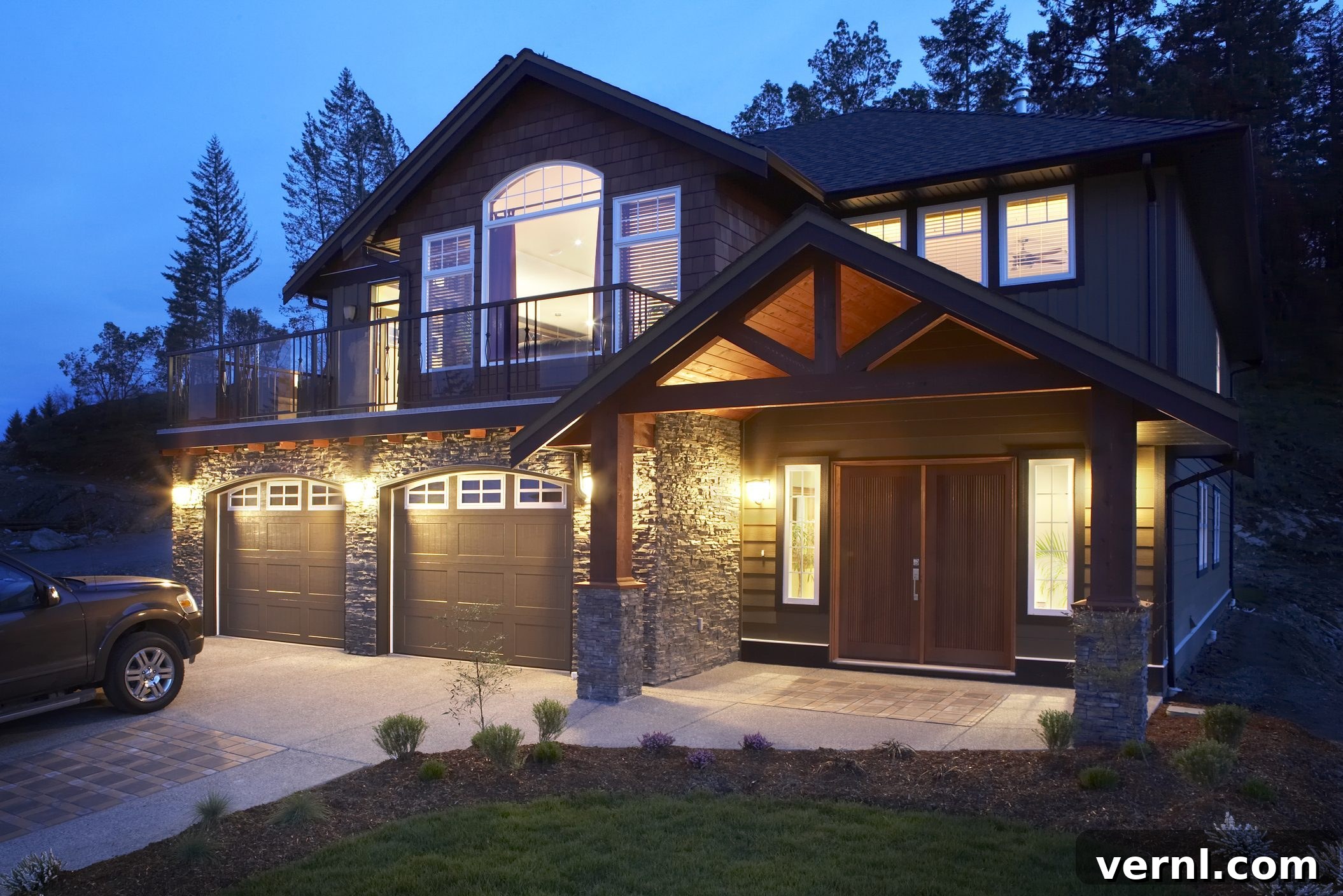
The Ultimate Guide to Home Security Lighting: Debunking Myths and Maximizing Safety
For centuries, humanity has instinctively recoiled from the unknown lurking in the dark. This primal fear naturally translates into a desire to illuminate our surroundings, especially our homes, believing that ample lighting serves as an impenetrable shield against intruders. But does simply flooding your property with light genuinely deter criminals and enhance safety? The answer, surprisingly, is more nuanced than many assume.
“The most common misconception is that more light means less crime, but that is not supported by the data,” states Lt. Ryan Darr, who leads criminal investigations at the Flagstaff, Arizona Police Department. Darr emphasizes a critical point often overlooked: “Lighting can illuminate a potential target just as easily as it allows a legitimate user to see a potential threat or criminal.” This perspective challenges the conventional wisdom, suggesting that poorly planned lighting might inadvertently assist those you aim to deter.
Flagstaff, Ariz., has been at the forefront of re-evaluating nighttime safety for over two decades. As the world’s first certified International Dark Sky Community, the city’s police force collaborates with renowned experts, including Christian B. Luginbuhl, president of the Flagstaff Dark Skies Coalition. Their mission is to enhance public safety while simultaneously mitigating the pervasive issue of light pollution. Luginbuhl, a leading voice in the field, points out the lack of scientific consensus on the relationship between light and crime.
“Sometimes lighting may decrease crime, sometimes it may increase it,” Luginbuhl cautions. He further highlights a significant conclusion from the U.S. Department of Justice: “The benefits of lighting are uncertain, even though many feel quite [unjustifiably] certain of the benefits.” This uncertainty underscores the importance of a strategic, informed approach to outdoor lighting rather than a reliance on sheer quantity.
While security solutions are constantly evolving, understanding how your current lighting setup influences your safety is paramount. Drawing upon the expertise of the Flagstaff P.D. and other security specialists, this guide provides actionable recommendations to ensure your lighting truly protects your home and community.
The Paradox of Light: When More Light Doesn’t Mean More Safety
Contrary to popular belief, simply adding more lights to your property can, in fact, compromise your safety. The effectiveness of outdoor lighting hinges on its intensity, precise placement, and its integration with other complementary security measures. Many homeowners inadvertently make common lighting mistakes that create vulnerabilities rather than security:
- Excessively Bright Lights: Overly intense lights cause our pupils to constrict, making it significantly harder for our eyes to adapt to and discern details in surrounding shadows. As Lt. Darr explains, “If you stick a light on the side of a building that shines in your user’s eyes, it may actually make it more difficult to see if there is danger there.” This blinding effect can effectively create hidden zones where intruders can operate undetected.
- Lighting Without Integrated Surveillance: Illuminating your property without coupling it with an active surveillance system can inadvertently benefit potential intruders. Good lighting allows them to see clearly without needing to use their own flashlights, which might otherwise draw unwanted attention. Darr warns, “In fact, good lighting without surveillance may actually encourage criminal activity in some cases,” by providing a well-lit stage for their illicit actions.
- Excessive and Misdirected Lighting: Lights that shine horizontally or upwards scatter light inefficiently, diminishing overall visibility. This ‘light trespass’ can create a false sense of security, leading residents to behave more carelessly under the assumption that they are fully protected. Such misdirected light also contributes significantly to light pollution, washing out the night sky without adding any real security benefit to your property.
“It’s usually smarter to think about other more obvious ways to protect yourself or your property against crime,” Luginbuhl advises. He emphasizes fundamental security practices such as consistently locking doors and windows, and the importance of walking at night with a companion. Furthermore, Luginbuhl highlights a cost-free yet powerful security measure: “Fostering community relationships where people watch out for each other, rather than close their windows and shades against the night.” A vigilant community can be a far more effective deterrent than any amount of artificial light.
Beyond Crime: The Far-Reaching Impact of Excessive Outdoor Lighting
Our society, particularly in developed nations, is prone to using a vast amount of unnecessary outdoor lighting. A recent report from the U.S. Department of Energy shockingly reveals that 99 percent of this excess lighting serves no clear purpose. Beyond its questionable efficacy in deterring crime, over-illumination generates a multitude of problems, impacting finances, the environment, human well-being, and even the natural world:
- Financial Burden: The cumulative cost of all those watt-hours significantly inflates electricity bills. Moreover, the initial investment for a comprehensive outdoor lighting system can be substantial. According to Mallory Micetich, a home care expert at Angi, installation costs can range anywhere from $2,000 to $4,500, making excessive lighting a considerable financial drain.
- Wasted Energy and Environmental Damage: Consuming unnecessary electricity directly translates to increased energy production, which in turn generates avoidable carbon pollution. This contributes to climate change and stresses natural resources, contradicting efforts towards sustainability and environmental stewardship.
- Neighborhood Discourse and Light Trespass: When your outdoor lights intrude upon a neighbor’s property, shining into their windows or yard, it can lead to significant aggravation and neighborhood disputes. Officer Mitch Trujillo of the Boulder Police Department in Colorado suggests, “It can be nice to check in with your neighbors to make sure your outdoor lighting setup isn’t impacting them.” Beyond annoyance, such light trespass can also create hazardous glare on their property.
- Light Pollution: The Loss of the Night Sky: Excessive and unshielded outdoor lighting severely diminishes the visibility of the stars and planets, robbing us of the natural beauty of the night sky. Lt. Darr poignantly reminds us, “Not only astronomers and scientists enjoy looking at the stars and planets.” This loss impacts our connection to the cosmos and obstructs scientific research.
- Human Health Consequences: The prevalence of artificial light at night disrupts our natural circadian rhythm, or sleep cycle. We are only beginning to fully comprehend the profound range of consequences, but research indicates serious risks, including an increased risk of certain cancers, metabolic disorders, and mood disturbances.
- Ecosystem Health and Biodiversity Loss: Light pollution has devastating effects on ecosystems, particularly impacting nocturnal animals, which constitute over half of all species. It disorients migrating birds, interferes with insect navigation, and can even alter the growth patterns of trees and other plant life, disrupting delicate ecological balances.
- Erosion of Happiness and Creativity: Dark, starlit nights have long inspired humanity, fostering a sense of wonder, universal connection, and creativity. Think of masterpieces like Vincent van Gogh’s painting The Starry Night or Van Morrison’s evocative song Moondance. Excessive artificial lighting robs us of these invaluable experiences, dulling our senses and diminishing opportunities for reflection and artistic inspiration.
Strategic Illumination: Maximizing Security with Smart Lighting Solutions
While the pitfalls of excessive and poorly designed lighting are clear, all experts concur that well-planned and thoughtfully implemented lighting is an indispensable component of effective home security. The goal is to illuminate strategically, not simply to light everything. Here are expert recommendations for using lighting to genuinely deter crime and enhance safety:
- Motion-Activated Lights: These are highly effective at surprising and deterring would-be intruders. The sudden activation of light can startle criminals, making them feel exposed and vulnerable, thus encouraging them to flee. Shane Roberts, product marketing manager at Vivint, a leading home security company, adds, “They can also be a helpful tool lighting the way when bringing groceries in from the car at night or taking out the trash,” combining security with practical convenience.
- Targeted Floodlights with Motion Sensors: Installing floodlights on motion sensors is an excellent way to illuminate potentially vulnerable areas like dark corners, entryways, and the perimeter of your home. Micetich advises, “Just be sure to install them so they don’t illuminate higher than the eaves of your house and in areas that won’t keep you or your neighbors up, like entryways, porches, garages and the sides of your home.” Proper aiming prevents light trespass and glare.
- Strategic Placement at Main Entry Points: Prioritize lighting around all potential points of entry. Roberts suggests focusing on key areas such as front and back porches, windows, pathways, garages, and driveways. These are the most common access points for intruders.
- Lights Should Shine Downward: The most effective security lighting is directed downwards, illuminating the ground and the immediate area you and your guests typically use. Lt. Darr emphasizes, “Never point lights up into the sky,” as this wastes light and contributes to pollution without enhancing security.
- Avoid Sideways Illumination: Directing lights sideways creates harsh glare and deep, contrasting shadows where intruders can easily hide. This counteracts the purpose of security lighting by reducing overall visibility. Focused downward lighting minimizes these issues.
- Low-Powered Landscape Lighting: Strategically placed, low-level landscape lighting can eliminate shadowy areas around bushes, trees, and other garden features that might otherwise provide cover for intruders. This creates a more open and observable environment without excessive brightness.
- Position Primary Lights Out of Reach: To prevent tampering or disablement by potential criminals, Trujillo recommends installing essential security lights at heights where they cannot be easily accessed or turned off by unauthorized individuals.
- Seamless Interaction with Security Systems: Modern security demands integration. Choose lighting systems that interact seamlessly with your existing security cameras, motion sensors, and smart home devices. This allows for a synchronized response to potential threats.
- Automation Increases Effectiveness: Programming your lights to turn on and off at various times of day or night can effectively simulate occupancy, creating the illusion that someone is home even when the property is vacant. Advanced apps, such as Vivint’s Spotlight Pro, offer remote control over your lights and their orientation. This empowers you to activate spotlights or strobes on individuals lingering too long, adding an active deterrent.
- Lessen Light Pollution with Dark Sky Friendly Practices: Embrace principles of responsible lighting. Opt for warm-spectrum colors, which are less disruptive to human and animal circadian rhythms. Ensure all lights are pointed downward and are fully shielded on the top and sides to prevent light from escaping into the sky. Install lights only where absolutely necessary, and set them at the lowest effective brightness level to achieve your security goals without over-illuminating.
Lt. Darr also offers a crucial counter-intuitive piece of advice: “We also do not suggest lighting areas where you don’t want people to use at night.” He elaborates, “If you have a pathway that goes through an open space or forested area, and it is isolated and dangerous to travel at night, putting up lights just provides people with a feeling that they should walk that way and might put them at even more danger. If only the criminal is watching an area, providing lights only assists them choose a target.” This highlights the importance of thoughtful consideration for every light placement.
A Holistic Approach: Comprehensive Crime Prevention Beyond Lighting
While lighting is undeniably a powerful tool, as Lt. Darr asserts, “[but] lighting by itself does not prevent crime.” Its true effectiveness is realized when it is integrated into a broader, multi-layered security strategy. Relying solely on lights is a common oversight that leaves significant vulnerabilities.
Effective home security works best when lighting is coupled with a range of other essential tactics. This includes robust surveillance systems, the fundamental practice of locking all doors and windows, and the installation of a comprehensive home security system. Furthermore, it is highly advisable to consult with local home security experts and professional landscape lighting designers who can offer tailored advice specific to your property.
Many police departments, particularly those trained in the principles of Crime Prevention Through Environmental Design (CPTED), can provide invaluable guidance on how to optimize your environment to deter crime effectively. These programs focus on using physical design to reduce criminal opportunities and foster a sense of safety.
Finally, and perhaps most crucially, Lt. Darr champions the importance of knowing and engaging with your neighbors. “Places that encourage their residents to watch out for each other’s property and also have security or surveillance cameras see a much lower chance of being victimized by crime,” he concludes. A strong, vigilant community acts as an extended network of eyes and ears, creating an environment where crime is less likely to flourish. Ultimately, true home security is a harmonious blend of smart technology, sound physical measures, and robust community ties, all working in concert.