Choosing the Right Paint: A Comprehensive Guide to Chalk, Milk, Mineral, and Latex Finishes
Embarking on a painting project, whether it’s revitalizing an old piece of furniture, refreshing your walls, or adding character to trim, begins with a crucial decision: selecting the perfect paint. The market offers a dizzying array of options, each boasting unique qualities that cater to different aesthetics, project demands, and levels of durability. Among the most popular choices are chalk paint, milk paint, mineral fusion paint, and traditional latex paint. Understanding the distinct characteristics of each can transform your project from a daunting task into a rewarding creative endeavor.
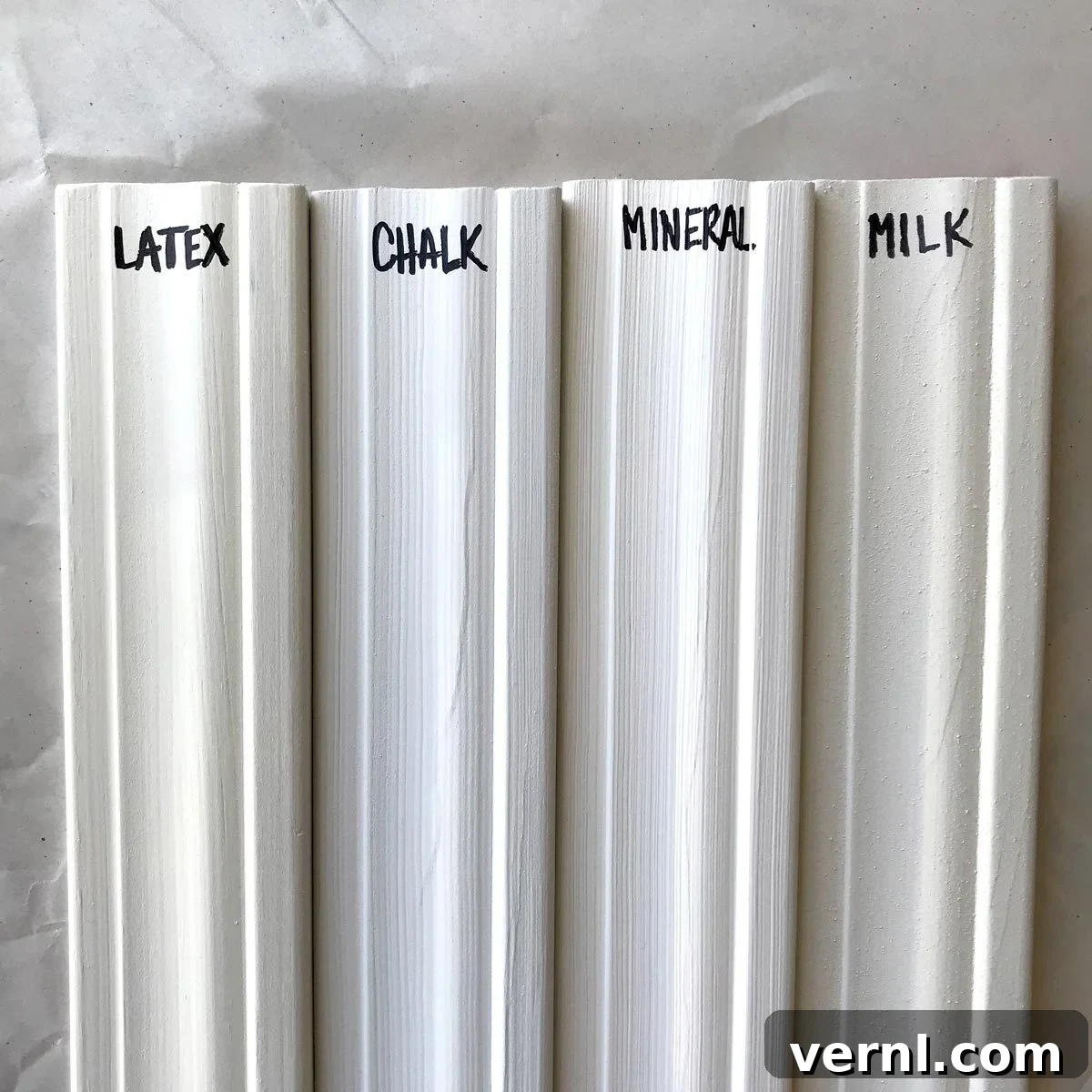
This comprehensive guide dives deep into these four popular paint types, offering a side-by-side comparison designed to help you make an informed choice. We’ve considered factors such as essential prep work, the need for primers or topcoats, available color ranges, and the overall durability and scratch resistance. To illustrate their differences, these paints were tested on a trim board, with meticulous attention paid to how each finish performs under various conditions. By the end of this article, you’ll be equipped with the knowledge to confidently select the ideal paint for your specific project, ensuring beautiful, lasting results.
Chalk Paint: The Art of Rustic Charm and Effortless Transformation
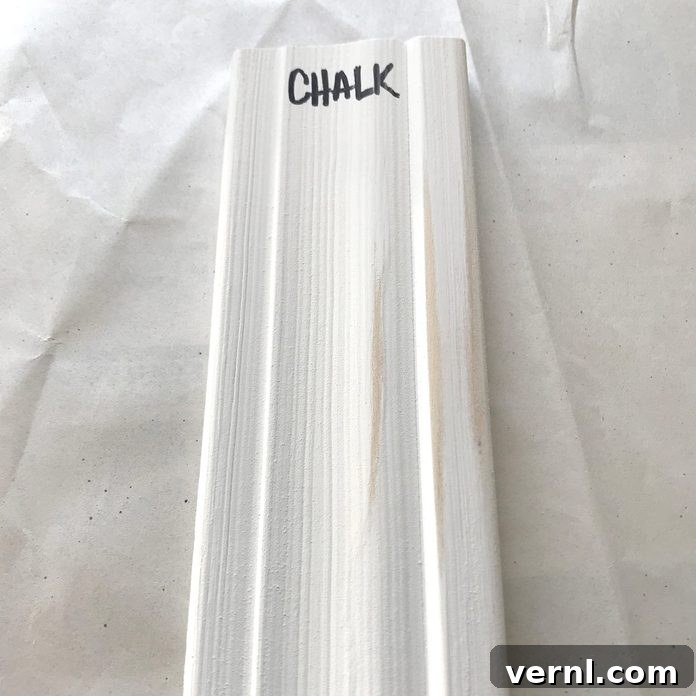
Chalk paint has become a favorite among DIY enthusiasts and professional decorators alike, celebrated for its unique matte finish and incredible versatility. Known for its ability to adhere to almost any surface with minimal preparation, it’s a go-to for achieving distressed, vintage, or shabby chic looks. The paint’s thick consistency makes it incredibly forgiving and easy to work with, allowing for quick and dramatic transformations.
- Minimal Prep for Optimal Adhesion: While often lauded as a “no-prep” paint, a light sanding can occasionally be beneficial, especially on very glossy or slick surfaces, to ensure the best possible adhesion. This minimal effort makes it an attractive option for quick project turnarounds.
- Thick, One-Coat Coverage: Chalk paint’s inherent thickness often allows for solid coverage in a single coat, saving time and paint. Its rich, velvety texture is distinctive and highly sought after.
- Expansive and Custom Color Palette: Many brands offer a wide range of colors, from muted pastels to vibrant hues. Furthermore, chalk paint can often be custom-tinted, providing endless possibilities to match your desired aesthetic.
- Versatile for Distressing, Layering, and Glazing: Its unique composition makes it incredibly receptive to various decorative techniques. You can easily distress it to reveal underlying layers, layer different colors for depth, or apply glazes to create antique effects. This versatility is a major reason why many consider it so easy to use for creative projects.
- Porous Nature Requires a Finish Coat: Due to its porous, ultra-matte finish, chalk paint requires a protective topcoat for ultimate durability, especially on high-traffic items like furniture. Wax is a traditional choice, deepening the color and providing a soft sheen, while a polyurethane or lacquer finish offers superior protection against scratches and moisture, ensuring your piece stands the test of time. Understanding how to get a smooth polyurethane finish is crucial for longevity.
Chalk paint is ideal for refreshing old furniture, creating accent pieces, or adding a touch of rustic elegance to home decor items. While it excels in aesthetics, remember that proper sealing is key to its longevity.
Milk Paint: Timeless Beauty and Eco-Friendly Charm
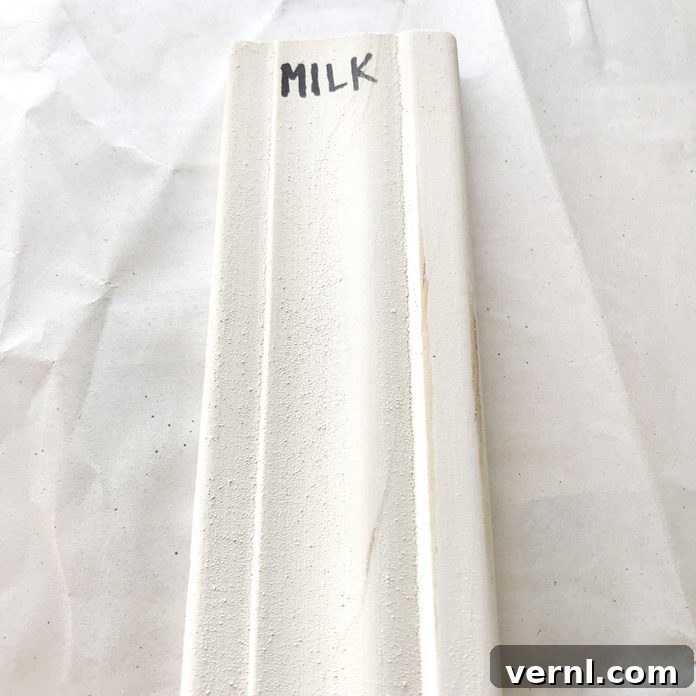
Milk paint is one of the oldest forms of paint, with roots tracing back centuries. It’s cherished for its authentic, aged look and its environmentally friendly composition. Traditionally made from milk protein (casein), lime, clay, and natural pigments, it delivers a distinctively matte, sometimes chippy finish that evokes the charm of antique furniture.
- Powder Form, Mixed with Water: Unlike most modern paints, milk paint typically comes in a powder form that you mix with water. This allows for customization of consistency, from a thin stain to a thick, opaque paint.
- Adjustable Opacity from Solid to Stain: The beauty of milk paint lies in its versatility in application. By adjusting the water-to-powder ratio, you can achieve anything from a translucent wash that highlights wood grain to a solid, opaque finish.
- Thorough Mixing is Key: To avoid lumps and ensure a smooth application, it’s crucial to mix milk paint thoroughly. Using a whisk or a small immersion blender can help achieve an even consistency and eliminate pesky bubbles.
- No Primer, but Bonding Agent for Some Surfaces: Milk paint adheres beautifully to porous surfaces like raw wood. However, for non-porous or previously finished surfaces, a bonding agent is often necessary to prevent the paint from chipping or flaking – a desired effect for some, but not for all.
- Environmentally Friendly and VOC-Free: As it’s made from natural ingredients, milk paint is one of the most environmentally friendly options available. It contains no volatile organic compounds (VOCs), making it an excellent choice for those sensitive to chemicals or seeking a sustainable product.
- Distinctive Chippy, Textured Look: Without a bonding agent, milk paint is famous for its “chippy” effect, where the paint naturally flakes off in areas, creating an authentic, aged patina. This look is highly prized in farmhouse and rustic decor styles.
- Porous, Needs a Finish Coat for Ultimate Durability: Similar to chalk paint, milk paint is porous and requires a protective topcoat. Tung oil, hemp oil, or a clear wax are popular choices that enhance durability while maintaining its natural aesthetic.
Milk paint is ideal for achieving authentic antique or distressed finishes on furniture, cabinets, or decorative items. Its non-toxic nature also makes it suitable for children’s furniture and toys.
Mineral Paint: Modern Simplicity and Enduring Performance
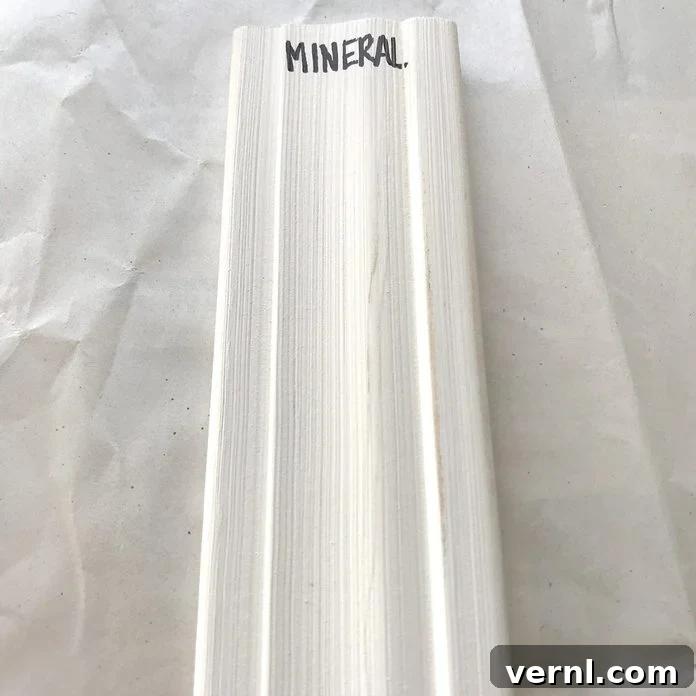
Mineral paint, often an acrylic-mineral fusion, represents a modern advancement in the decorative paint world. It combines the ease of use of chalk paint with the durability of more traditional acrylics, making it a powerful contender for projects where both aesthetic and longevity are paramount. This paint type is designed for efficiency, delivering beautiful, hard-wearing finishes with minimal fuss.
- No Prep Needed for Most Surfaces: One of the most compelling advantages of mineral paint is its exceptional adhesion, often requiring no sanding, priming, or degreasing on most previously painted or finished surfaces. This significantly cuts down on project time and effort.
- Built-in Topcoat for Enhanced Durability: Many mineral paints are formulated with a built-in topcoat, meaning they cure to a hard, durable finish that doesn’t require an additional sealant. This feature is a game-changer for high-use items, offering excellent scratch and moisture resistance right out of the can.
- Self-Leveling, Smooth Finish: Mineral paint boasts self-leveling properties, which help to minimize brushstrokes and achieve an incredibly smooth, professional-looking finish. This is particularly desirable for modern or contemporary aesthetics where a flawless surface is key.
- Low VOCs and Low Odor: Formulated with user comfort and health in mind, mineral paints typically have low levels of volatile organic compounds (VOCs) and a very mild odor, making them pleasant to work with indoors.
- Distressing Must Be Done Before Completely Dry: If you wish to distress mineral paint, it’s crucial to do so while the paint is still slightly damp or “green.” Once fully cured, its inherent durability makes it much harder to distress without significant effort. This contrasts with chalk or milk paint, which are often distressed after curing.
- Acrylic Resin Base, Non-Porous: The acrylic resin base gives mineral paint its non-porous quality, contributing to its durability and resistance to stains and moisture. This makes it an excellent choice for kitchen cabinets, bathroom vanities, or tabletops.
Mineral paint is an excellent choice for those seeking a durable, low-maintenance finish with a modern aesthetic, requiring minimal preparation and no additional sealing steps. It’s perfect for furniture that needs to withstand daily wear and tear.
Latex Paint: The Versatile Household Staple
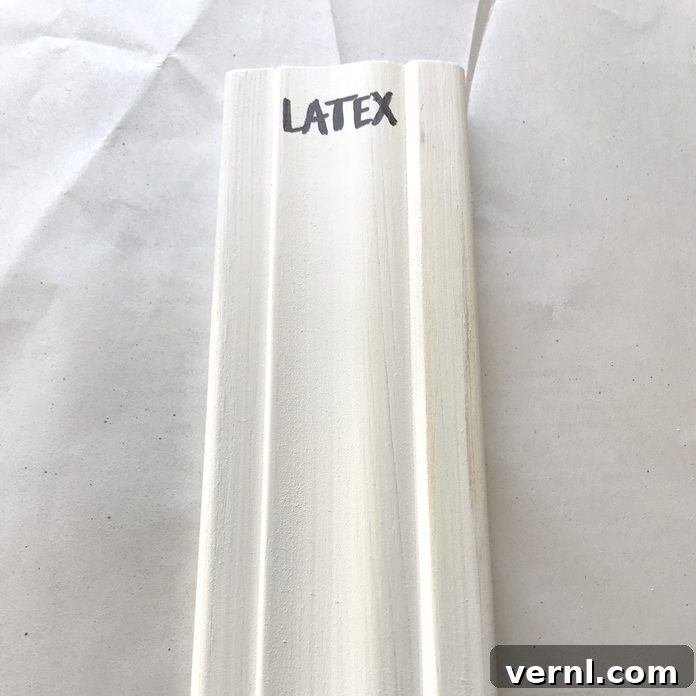
Latex paint, also known as emulsion or acrylic latex paint, is the most common type of paint used in households for walls, ceilings, and trim. It’s a water-based paint appreciated for its ease of cleanup, quick drying time, and relatively low odor. While it might require more prep work than some specialty paints, its reliability and vast availability make it a perennial favorite.
- Essential Prep and Primer Needed: For optimal adhesion and a long-lasting finish, proper surface preparation and priming are crucial when using latex paint, especially on bare wood, metal, or previously glossy surfaces. Skipping these steps can lead to peeling, chipping, and an uneven finish.
- Thick, Smooth Coverage: Latex paint offers excellent coverage, often achieving a smooth, uniform finish in two coats. Its consistency allows for easy application with brushes, rollers, or sprayers.
- Infinite Tintable Colors: One of latex paint’s greatest strengths is its color versatility. Available in virtually every shade imaginable, it can be custom-tinted to perfectly match any decor or design vision.
- Variety of Finishes from Matte to High Gloss: Latex paint comes in a wide spectrum of sheens, from flat (matte) and eggshell, ideal for walls, to satin, semi-gloss, and high gloss, preferred for trim, doors, and areas requiring higher durability and washability.
- Prone to Chipping or Peeling Without Proper Priming: While durable, latex paint relies heavily on proper surface preparation and priming to bond effectively. Without these foundational steps, it can be susceptible to chipping or peeling over time, particularly in high-traffic areas or on surfaces that expand and contract.
- Acrylic Base, Does Not Need a Topcoat: Modern latex paints are typically acrylic-based, providing inherent durability and resistance to wear and tear. For most applications, a separate topcoat is not necessary, simplifying the painting process.
Latex paint is the workhorse of home improvement, perfect for interior and exterior walls, trim, and general household surfaces where a durable, washable, and customizable finish is desired.
Side-by-Side Paint Comparison Chart: A Quick Reference
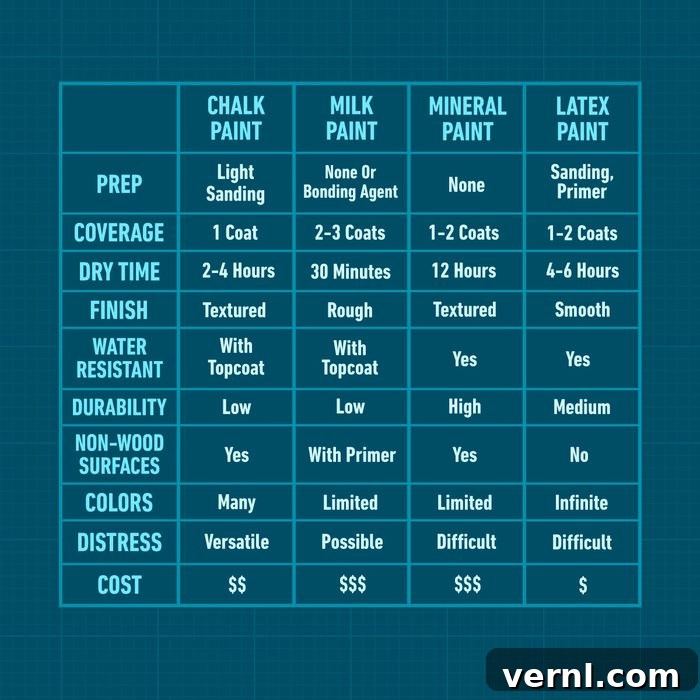
To further assist you in making an informed decision, this comparison chart distills the key attributes of each paint type. It’s designed to provide a quick, at-a-glance overview of the pros and cons, helping you weigh your options for various projects. Whether you’re comparing mineral paint vs chalk paint for a vintage cabinet, or deciding between milk paint and latex for a child’s bedroom, this chart lays out essential details clearly.
Refer to this chart when considering your options for any kind of surface you’re painting: delicate trim work, intricate furniture pieces, expansive walls, or durable outdoor elements. It consolidates information on prep needs, finish characteristics, durability, and special considerations for each paint type, ensuring you can make your paint selection easily and confidently.
Making Your Final Decision: Factors to Consider
Choosing the right paint isn’t just about color; it’s about matching the paint’s properties to your project’s demands and your personal preferences. Here are some critical factors to ponder before you dip your brush:
- Project Type and Surface: What are you painting? A high-traffic kitchen cabinet will demand different properties than a decorative vase. Raw wood, laminate, metal, or previously painted surfaces each interact differently with various paint types. Consider the surface’s material and its intended use.
- Desired Aesthetic: Are you aiming for a rustic, distressed, matte look (chalk, milk paint), a sleek modern finish (mineral, latex semi-gloss), or a vibrant, bold statement (latex)? The inherent characteristics of each paint type will heavily influence the final appearance.
- Prep Time and Effort: How much time and effort are you willing to invest in surface preparation? If minimal prep is your priority, mineral paint or chalk paint might be your best bet. If you don’t mind sanding and priming for superior durability, latex paint is a strong contender.
- Durability Requirements: Will the painted item be subject to heavy use, moisture, or frequent cleaning? For high-wear surfaces, mineral paint with its built-in topcoat, or properly sealed chalk/milk paint, or a high-sheen latex paint, will offer better longevity.
- Environmental and Health Concerns: If low VOCs and natural ingredients are important to you, milk paint and mineral paint are excellent choices. All modern paints, including latex, are moving towards lower VOC formulations, but milk paint often leads in this category.
- Budget: While all these paints are generally accessible, specialty paints like chalk or mineral paint might have a higher upfront cost per can than standard latex. However, factor in the cost of primers, topcoats, and the time saved on prep when evaluating the total project cost.
By carefully considering these factors in conjunction with the detailed comparisons provided, you’ll be well on your way to making a choice that brings your vision to life beautifully and durably. You’ll be painting like a professional in no time at all!