
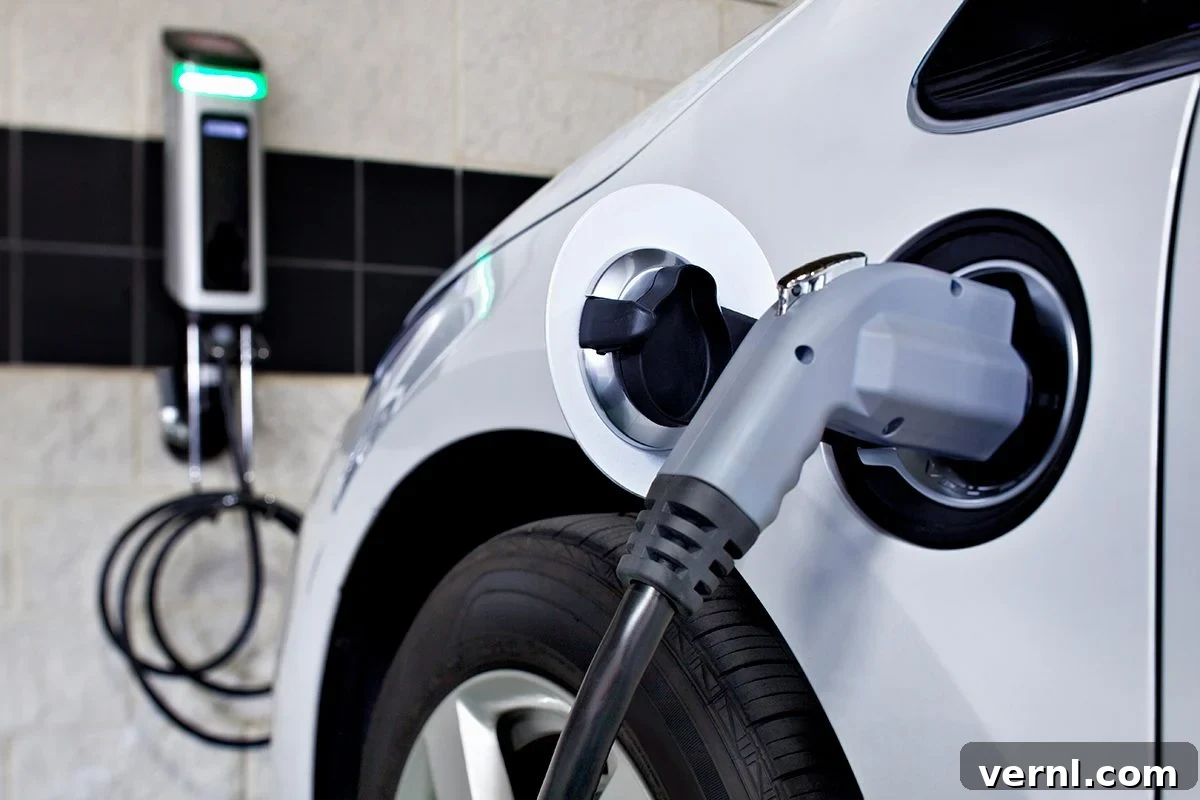
Electric vehicles (EVs) have transitioned from a niche curiosity to a significant presence on our roads over the past two decades. While they still account for less than two percent of all vehicles on U.S. roads, the rapid growth is undeniable, with U.S. EV sales surpassing one million in 2023, marking a 56 percent increase since 2022. This accelerating adoption brings with it increased public scrutiny, particularly regarding safety concerns. Misconceptions, often fueled by highly publicized EV battery fires, can lead to the perception that electric vehicles are inherently more dangerous than their gasoline-powered counterparts. This article aims to cut through the misinformation, providing a comprehensive, expert-backed look at EV fires: their nature, causes, prevention, and what to do if one occurs.
Before delving into the specifics of EV fires, it’s crucial to understand the diverse types of electric vehicles. According to the U.S. Department of Transportation, EVs are broadly categorized as follows:
- Battery Electric Vehicles (BEVs) or all-electric vehicles, operate exclusively on electricity stored in a high-voltage (HV) battery. These vehicles produce zero tailpipe emissions and are charged entirely using external Level 1, 2, or 3 chargers, making them fully reliant on the electric grid for power.
- Plug-In Hybrid Electric Vehicles (PHEVs) combine an internal combustion engine (ICE) with an electric motor powered by an HV battery. PHEVs offer the flexibility of running on electricity for shorter distances and gasoline for extended range, with their batteries charged either by the ICE or external chargers.
- Hybrid Electric Vehicles (HEVs) utilize a synergy between an ICE and an HV battery to propel the vehicle. Unlike PHEVs, HEVs cannot be plugged in; their batteries are charged internally via the ICE and through regenerative braking, which recovers energy typically lost during deceleration.
- Fuel Cell Electric Vehicles (FCEVs) represent a newer segment of the EV market. These vehicles generate electricity through an electrochemical process that converts hydrogen gas into power for an electric motor, emitting only water vapor. Currently, FCEVs primarily rely on on-board compressed hydrogen gas for battery charging, requiring specialized refueling infrastructure.
In the following sections, we will analyze data and insights from veteran firefighters and other field experts to provide a comprehensive understanding of everything you need to know about electric vehicle fires.
What Is an Electric Vehicle Fire?
At its core, an electric vehicle fire is “a fire incident involving an EV, primarily originating from its lithium-ion battery pack,” as certified firefighter Jack Bishop explains. These fires are often characterized by what’s known as thermal runaway. Thermal runaway is a critical condition where an increase in the battery’s temperature triggers a self-sustaining chemical reaction within one or more cells. This exothermic reaction rapidly generates more heat, leading to an uncontrollable escalation in temperature. Alternatively, a short circuit within the battery pack can also initiate this process, causing rapid overheating and subsequent ignition of the battery’s highly flammable internal components. Associate Clinical Professor of Fire Protection Engineering, William Koffel, emphasizes that “the EV could be the first item ignited, or the fire could spread to the EV,” indicating that while battery issues are primary, external factors can also initiate an EV fire.
Causes of EV Fires
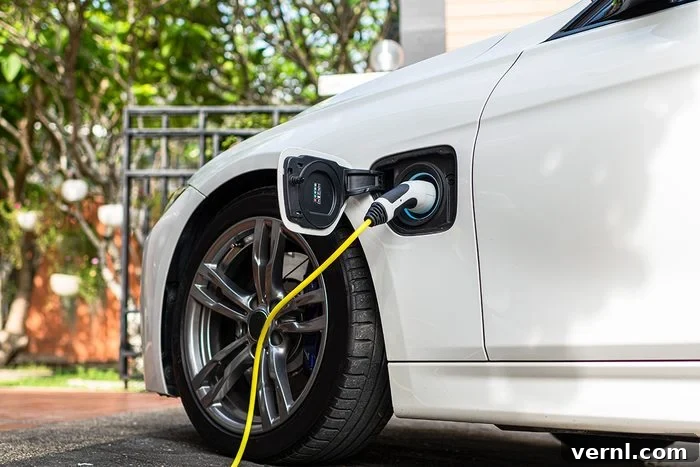
While public perception might suggest random spontaneous combustion, EV fires typically stem from identifiable causes. A significant portion of these incidents, especially those involving the high-voltage (HV) lithium-ion battery, occur following severe impact events. According to a 2020 NTSB report and insights from third-generation firefighter Lauren Jones, crashes are a major catalyst. During a collision, HV battery packs are susceptible to “punctures, or damage to high-voltage wiring and cables can cause short circuits,” Jones states. The internal structure of a lithium-ion battery, comprising tightly packed cells, can be compromised, leading to immediate or delayed internal shorts. Jack Bishop further elaborates: “Sparks from a short circuit can ignite the battery’s highly flammable organic solvents, setting individual cells ablaze, which then overheat, igniting other cells.” This chain reaction, often occurring rapidly, makes post-crash battery integrity a critical safety consideration.
Beyond direct impact, environmental factors can also contribute to EV battery fires. Lauren Jones points out that if an EV is exposed to a flood, “the [HV Lithium-ion] battery can dry out, causing it to overheat and ignite.” This seemingly counterintuitive phenomenon occurs because water intrusion can lead to corrosion and micro-shorts within the battery pack. Once the water recedes and the battery dries, these previously insulated short circuits can become active, generating heat and initiating a thermal event. Furthermore, a 2024 study published in Science Direct revealed that even salt spray can cause an EV battery to self-ignite. The likelihood of ignition increases with prolonged exposure to salt spray and the aging of the vehicle, as corrosive salts degrade battery components and insulation, fostering internal short circuits.
The other primary cause of EV fires is thermal runaway, a critical phenomenon affecting all lithium-ion batteries. As defined by UL Research Institutes, thermal runaway results in “an extremely high, uncontrollable temperature and violent venting of flammable gasses” that can rapidly ignite. This cascading failure can be triggered by a variety of factors:
- Poor Battery Design or Manufacturing Defects: Inherent flaws can lead to compromised cell integrity or inadequate thermal management systems.
- Poor Ventilation: Insufficient airflow around the battery pack can prevent heat dissipation, leading to localized overheating.
- Vibrations and Mechanical Stress: Continuous jarring can degrade internal components over time, potentially causing micro-shorts.
- Damage to the Battery: Beyond crashes, even minor impacts or punctures from road debris can initiate internal damage.
- Overcharging: Pushing a battery beyond its recommended charge capacity can lead to excessive heat generation and degrade cell stability.
- Malfunctioning Battery Management System (BMS): The BMS is designed to monitor and regulate battery temperature, voltage, and current. A failure in this system can leave the battery vulnerable to unsafe conditions.
- Lack of Maintenance: Neglecting regular inspections and fluid checks can allow issues to escalate.
- Improper Charging Practices: Charging a battery before allowing it to cool down after strenuous use can introduce thermal stress.
Steve Lockwood, owner of Mountain State Fire Protection LLC, adds further external risk factors: “Using damaged or incompatible chargers, faulty aftermarket modifications [such as light packages or high-powered radios] and living in climates with extreme temperatures all increase the risk that could ignite [the high voltage battery] causing thermal runaway.” It’s important to remember that this phenomenon affects all Lithium-ion batteries, from those in your smartphone and electric toothbrushes to power tools and other devices, highlighting the universal nature of this chemical challenge.
What To Do If Your EV Catches Fire
In the event your electric vehicle catches fire, immediate and decisive action is paramount, but self-intervention is not advisable. If you are driving, prioritize safety by pulling off the road to a safe, clear location as quickly as possible. Once stopped, evacuate the vehicle and move to a safe distance, ideally on the median or shoulder, away from active traffic lanes. The very next step is to CALL 911 immediately!
When speaking with the 911 dispatcher, Steve Lockwood advises that you explicitly state your precise location and inform them that the vehicle involved is an electric vehicle. This critical piece of information allows emergency services to dispatch units with specialized training and equipment for EV fires. Lockwood emphatically warns, “Never attempt to extinguish the fire yourself. EV fires burn hotter, burn longer and are more complex than a conventional ICE vehicle fire.” The unique chemical reactions within lithium-ion batteries, combined with the intense heat and potential for reignition, make these fires far too dangerous for untrained individuals to tackle.
Chief Palmer Buck of The Woodlands Township Fire Department in Austin, TX, reinforces the need for professional intervention, noting that “firefighters also need special training on how to safely disconnect and disable an EV HV battery and the proper techniques needed to quickly cool down a burning EV.” This specialized training covers understanding high-voltage systems, safely isolating power, and applying appropriate cooling agents, often vast quantities of water, to control the fire and prevent thermal runaway from reigniting. The complexity of EV battery systems necessitates a highly coordinated and informed response from emergency personnel.
How To Prevent EV Fires
While the risk of EV fires is statistically low, proactive prevention is key to ensuring the utmost safety and longevity of your electric vehicle. Adhering to manufacturer guidelines and adopting responsible charging and maintenance habits can significantly mitigate potential risks. Certified firefighter Jack Bishop recommends a fundamental rule: “only use manufacturer-supplied or approved charging chargers and cables.” This ensures compatibility and prevents issues arising from improper electrical specifications. Beyond this, several other critical steps can prevent EV fires:
- Avoid Overcharging and Unnecessary Charging: While modern EVs have sophisticated Battery Management Systems (BMS) to prevent severe overcharging, continuously leaving the charger plugged in unnecessarily can still contribute to battery degradation and heat buildup over time. Disconnect the charger once the desired charge level is reached, especially for daily use.
- Schedule Regular Maintenance and Inspections: Comprehensive maintenance, including checking or changing EV HV battery coolant fluid and routine inspections, is crucial. This ensures the battery’s thermal management and electrical systems are in optimal working condition. A healthy battery system is a safe battery system, and professional checks can identify potential issues before they escalate.
- Charge in a Dry, Well-Ventilated Area: Always charge your vehicle in an environment free from flammable materials and with adequate airflow. A well-ventilated garage or carport prevents heat from accumulating around the battery pack and reduces the risk of ignitable vapors concentrating. Keep combustibles away from the charging area.
- Manage Exposure to Corrosive Elements: If you frequently drive in areas where road salt is used during winter months, or near coastal regions, flush the battery/undercarriage with cold, clean water regularly. Salt and other corrosive agents can lead to oxidation and degradation of electrical components and battery casings. Have your repair shop routinely clean any corrosion or oxidation from battery terminals and other electrical connectors to maintain system integrity.
- Stay Informed About Recalls: Regularly check if there are any manufacturer recalls related to battery or electrical components for your specific vehicle model. Addressing these recalls promptly is vital for safety, as they often rectify known issues that could pose fire risks.
How to Increase EV Battery Life That Will Also Prevent EV Fires
Beyond direct fire prevention, optimizing battery health through good practices directly contributes to safety by preventing degradation that can lead to thermal events. A healthy battery is a safer battery.
- Daily Monitor the Battery’s Condition: Pay attention to your vehicle’s dashboard warnings and interactive displays. Anomalies in range, charging time, or temperature readings can be early indicators of underlying issues.
- Power Down if HV Battery Warning Light Comes On: If a high-voltage battery warning light illuminates, it signifies a serious issue that requires immediate attention. Safely pull over, power down the vehicle, and contact roadside assistance or a qualified service center.
- Check Charging System Health: Utilize your vehicle’s built-in interactive visual tools. These typically provide detailed insights into energy usage, high voltage power flow, charging status, and HV efficiency history. Understanding these metrics can help identify irregular patterns.
- Keep the Battery Between 20 and 80 Percent Charged: For daily driving, maintaining your battery’s charge within this optimal range significantly extends its lifespan and reduces stress. Charging to 80 percent then disconnecting the charger leaves ample room for charging from regenerative braking, which occurs during deceleration. This practice reduces the likelihood of overstressing the battery and minimizes heat generation that could trigger overheating, contributing to both longevity and safety.
FAQ
Are electric vehicle fires more common than conventional car fires?
Despite widespread concern, data consistently indicates that electric vehicle fires are significantly less common than fires in conventional gasoline-powered or even hybrid vehicles. According to the International Fire and Safety Journal, which synthesizes data from sources like the National Transportation Safety Board (NTSB), Bureau of Transportation Statistics (BTS), and government recall information, the statistics are quite clear. AutoinsuranceEZ compiled these figures, highlighting a distinct pattern of fire incidents by vehicle type per 100,000 vehicles:
- Hybrids exhibited the highest incidence, with 3,475 fires per 100,000 vehicles. This higher rate is largely attributed to the complexity of having two distinct powertrains—both an internal combustion engine and an electric battery system—doubling the potential points of failure.
- Internal Combustion Engine (ICE) vehicles caught fire substantially less often than hybrids, at 1,530 incidents per 100,000 vehicles. While lower, this figure still represents a significant number of fires stemming from fuel leaks, electrical shorts, or engine overheating.
- Electric Vehicle (EV) fires were remarkably lower than both categories, with only 25 fires per 100,000 vehicles. This figure strongly suggests that, statistically, EVs pose a much lower risk of fire compared to their fossil-fuel counterparts.
William Koffel further reinforces this, stating, “At this time, there is no indication that EV fires are more common than conventional car fires.” However, Steve Lockwood adds a crucial nuance: while not common, EV fires “are usually more powerful when they happen. I would not tell anyone that [EV fires] are common,” acknowledging the severity despite their rarity. The perception of EVs being fire-prone is often skewed by the media’s tendency to highlight dramatic, albeit infrequent, incidents.
Are electric vehicle fires more dangerous than conventional car fires?
While less common, when electric vehicle fires do occur, they present unique challenges and can indeed be more dangerous than conventional gasoline car fires, primarily due to the intensity of the fire, the volume of water required for extinguishment, and the risk of reignition. The core issue lies in the thermal runaway phenomenon. The temperatures generated by a lithium-ion battery in thermal runaway can reach almost 1900°F (approximately 1038°C), significantly hotter than a traditional gasoline-powered vehicle fire, which typically burns at around 1400°F (approximately 760°C). This extreme heat complicates firefighting efforts and increases the risk of structural damage and injury.
Chief Palmer Buck highlights the operational differences in firefighting: his department “can extinguish a gasoline-fueled car fire with 500 gallons of water they carry on their trucks.” However, he starkly contrasts this with EV fires, adding that “it can take 3,000 gallons or more to extinguish an EV battery fire.” In some extreme cases, much larger volumes, upwards of 30,000 gallons, have been reported for complete cooling. This massive water requirement poses significant logistical challenges for fire departments, especially in rural areas or during prolonged incidents.
Furthermore, EV HV batteries present a persistent risk of reignition. Due to residual heat deep within the battery pack, ongoing chemical reactions, or the sealed design of EV batteries making it difficult for water or fire suppressants to reach all affected cells, EV HV batteries can reignite hours—or even days—after the initial fire appears to be extinguished. This phenomenon, often referred to as “stranded energy,” means that even a cooled battery can spontaneously re-ignite if enough heat remains. Blaze Stack notes that “EV fire protocols are still evolving,” including the crucial use of thermal imaging cameras. These cameras are vital for “detecting residual heat in battery packs” and other components, allowing firefighters to monitor and continuously cool the battery until the risk of reignition is minimized. This continuous monitoring and cooling, often involving submerging the battery or applying vast amounts of water for extended periods, represents a significant departure from conventional vehicle fire tactics.
What is an EV fire blanket?
An EV fire blanket is a specialized piece of equipment designed to manage electric vehicle fires, though it does not extinguish them in the conventional sense. William Koffel explains its primary functions: “EV fire blankets will delay the development of the fire, will keep the fire from spreading to adjacent vehicles, or will smother the fire.” These blankets are typically made from advanced fire-resistant materials such as fiberglass or silica-based fabrics, engineered to withstand the extreme temperatures generated by a lithium-ion battery fire.
When properly deployed, an EV fire blanket is intended to contain flames, smoke, and toxic fumes, thereby reducing the immediate hazards and preventing the fire from escalating or spreading to nearby vehicles or structures. It achieves this by creating a barrier that restricts oxygen supply to the burning battery cells and contains the heat. However, these blankets are substantial, with a single blanket specifically designed for EV fires weighing up to 100 pounds. This considerable weight often requires two or more people to properly and safely place the blanket into position over a burning vehicle.
While effective for containment, Koffel also points out a critical consideration: “There is also concern that in some instances the [fire] blanket could trap vapors potentially resulting in a vapor explosion.” Lithium-ion battery fires can release highly flammable and toxic gases, and if these gases accumulate under the blanket in sufficient concentration, they could present an additional explosive hazard. Therefore, the deployment of EV fire blankets, much like the direct extinguishment of an EV fire, is a task best left to professional firefighters who are trained in their safe and effective use, understand the associated risks, and can monitor the situation with specialized equipment.
Experts
- William Koffel is an associate clinical professor specializing in fire protection engineering with the A. James Clark School of Engineering at the University of Maryland. He is the former president of Koffel Associates, a fire protection and life safety engineering design and consulting firm, and he is recognized as an expert in the fire protection and life safety aspects of codes and standards. He is also a past president of the Society of Fire Protection Engineers (SFPE) and a former code official with the Maryland State Fire Marshal’s Office.
- Lauren Jones is a 3rd generation firefighter with over 13 years of service with Willow Grove Volunteer Fire Co., holding the ranks of sergeant and lieutenant for five years. She still responds to fires for the Enterprise Fire Co. of Hatboro, PA. Lauren is currently serving as a Protective Services Teacher at North Montco Technical Career Center, Lansdale, PA.
- Jack Bishop is recent to the firefighting profession but has received several international accreditations and certifications from the U.S. Federal Emergency Management Agency (FEMA), The World Health Organization(WHO), FireRescue1 Academy, and the U.S. Fire Administration(NFA).
- Steve Lockwood is owner of Mountain State Fire Protection LLC, which specializes in premier fire equipment and comprehensive fire protection services.
- Palmer Buck is theChief of The Woodlands Township Fire Department in Austin, TX. Chief Buck holds a Bachelor of Arts in Applied Science Fire Protection Technology, a Master of Public Affairs, and is a graduate of the National Fire Academy’s Executive Fire Officer program. Chief Buck has 37 years of experience in public safety. He is a proven leader with extensive operations and command experience and a sought-after mentor and advisor to firefighters of all ranks. He is a member of the International Association of Fire Chiefs, the National Fire Protection Agency, the National Society of Executive Fire Officers, and the International Association of Firefighters. Original interview notes from “Are Electric Vehicles More Likely To Catch on Fire?” Apr 23, 2023.
Resources
- Joe Simes was the former deputy chief and training officer for Montgomery County, PA (retired).
- Blaze Stack: “7 Reasons Why EV Fires are Hard to Put Out” Jan 14, 2025
- Car and Driver: “No, Millions of Cars Are Not Catching Fire Every Year”; Jun 2, 2022
- Edmunds: “Types of EVs: What Are They and Which Is Right for You?” Aug, 29, 2023
- International Fire and Safety Journal: “Research highlights lower fire risk in electric cars compared to petrol and diesel vehicles”; Nov, 20, 2023
- National Fire Protection Association: “Stranded Energy within Lithium-ion Batteries”; Apr 12, 2025
- National Fire Protection Association: “Submerged hybrid/electric vehicles” Nov 2024
- National Fire Protection Association: “Vehicle fires;” Nov 1, 2024
- Our World Data: “Tracking global data on electric vehicles” Apr 2024
- Popular Science: “A new study has some surprising findings on car fires;” Feb 1, 2022
- Science Direct: “Case Study—The electro-thermal behaviors of the lithium-ion batteries corroded by the salt spray environment”; Feb 1, 2024
- Statista: “Electric vehicles in the United States – statistics and facts”: Dec 20, 2024
- U.S. Department of Transportation: “Vehicle Types;” Jan 31. 2025
- U.S.A. Facts: “How many electric cars are on the road in the United States?” SEP 6, 2024