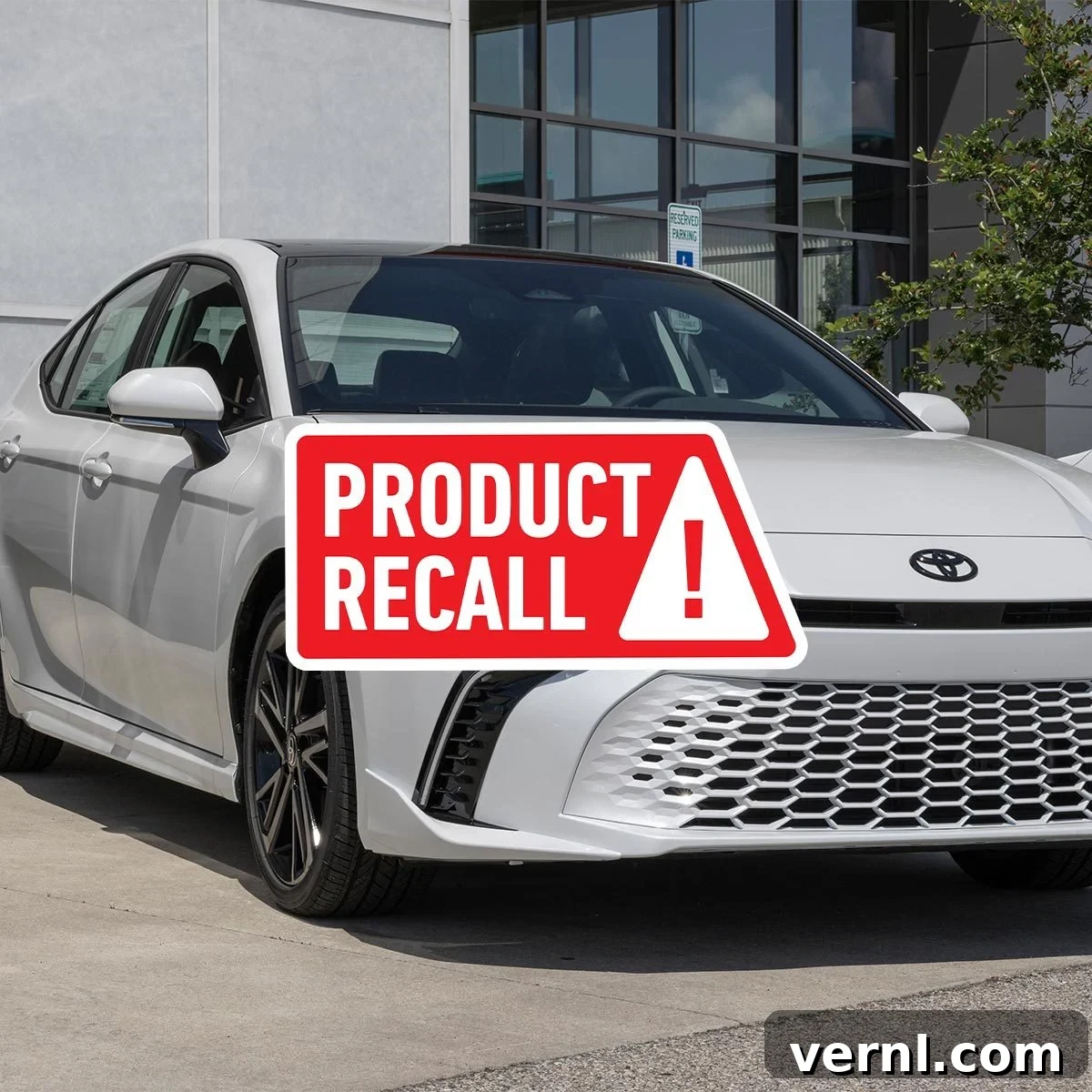
Yet another significant automotive recall has emerged, underscoring the continuous efforts to enhance vehicle safety across the industry. This time, Toyota has issued a critical recall campaign affecting a substantial number of its Toyota and Lexus brand vehicles. The core concern revolves around a potentially dangerous seat belt issue that could compromise occupant safety during a collision. With over 40,000 vehicles included in this specific recall, it is imperative for owners of the identified Toyota and Lexus models to pay close attention to the following comprehensive details. Understanding the implications and taking prompt action will ensure your vehicle is repaired swiftly and safety is restored to its intended design.
Seat belt regulations have been firmly established for decades across the globe, universally recognized as fundamental life-saving measures in vehicular travel. The National Highway Traffic Safety Administration (NHTSA) unequivocally states that “a damaged seat belt may not adequately restrain an occupant, increasing the risk of injury during a crash.” This stark warning highlights the severe consequences of a compromised seat belt system. Therefore, this recall should be treated with the utmost seriousness, and all accompanying instructions must be followed meticulously. Even the most vigilant and defensive drivers can encounter unforeseen circumstances, such as reckless drivers or sudden road hazards, that could lead to an accident. In such critical moments, an operational and robust seat belt is paramount for protection, a level of safety that a faulty seat belt simply cannot guarantee for passengers.
Why Are These Toyota and Lexus Vehicles Being Recalled? Understanding the Critical Defect
The integrity of a vehicle’s safety systems is non-negotiable, and any deviation from established safety standards warrants immediate attention from manufacturers and regulatory bodies. According to the official NHTSA announcement, the fundamental reason for this widespread recall stems from a specific defect: “the second-row center seat belt webbing may be damaged” in the affected Toyota and Lexus vehicles. This means that the material component of the seat belt itself, which is designed and engineered to withstand immense force during an impact, might be compromised. Such damage could manifest as fraying, weakening of fibers, tears, or other structural deficiencies that are not immediately apparent to the untrained eye but could fail catastrophically in a high-impact collision.
Compliance with Federal Motor Vehicle Safety Standard (FMVSS 209)
The presence of a damaged seat belt webbing directly translates to a failure to comply with the stringent requirements of Federal Motor Vehicle Safety Standard (FMVSS) number 209, specifically titled ‘Seat Belt Assemblies.’ FMVSS 209 is a crucial federal standard that establishes comprehensive performance requirements for seat belt assemblies, including those utilized in passenger cars, multi-purpose passenger vehicles, trucks, and buses. This standard dictates precise specifications for the strength, elongation properties, and overall integrity of seat belt webbing, alongside requirements for buckle mechanisms, adjusters, and attachment hardware. Its primary objective is to ensure that seat belts provide adequate occupant restraint and injury mitigation in the event of a crash. When a vehicle fails to meet FMVSS 209, it signifies a direct and unacceptable risk to passenger safety, necessitating a recall to rectify the non-compliance and restore the intended level of protection for vehicle occupants.
The Hidden Danger of a Compromised Seat Belt
The consequences of a damaged seat belt, especially the center second-row seat belt, extend far beyond mere inconvenience or minor discomfort. In a collision, occupants restrained by a faulty seat belt are at a significantly heightened risk of severe injuries, including but not limited to, head trauma, spinal cord injuries, internal organ damage, or even ejection from the vehicle’s interior. The ‘webbing’ is the core strength component of the entire seat belt system, and any damage to its structure could cause the belt to stretch excessively, tear prematurely, or fail completely under the immense forces exerted during a crash. This renders the seat belt ineffective and provides little to no protection. This urgent recall is a proactive and essential measure taken by Toyota and Lexus, in conjunction with NHTSA, to prevent such tragic outcomes by addressing the potential defect before it can lead to serious harm or fatalities.
Which Toyota and Lexus Vehicles Have a Seat Belt Issue? Identifying Affected Models
This urgent recall campaign impacts a significant number of Toyota and Lexus vehicles, specifically targeting several popular models across various trim levels and powertrain configurations. Owners must carefully review the list provided below to ascertain if their specific vehicle is included in this vital safety notice. Over 40,000 vehicles are identified as potentially having this critical second-row center seat belt webbing defect, making it a broad concern for many owners.
Detailed List of Affected Toyota and Lexus Models:
- 2024 Lexus RX350
- 2024 Lexus RX350 Hybrid
- 2024 Lexus RX500 Hybrid
- 2025 Lexus RX35
- 2025 Lexus RX350 Hybrid
- 2025 Lexus RX500 Hybrid
- 2025 Toyota Camry Hybrid
- 2025 Lexus NX250
- 2025 Lexus NX350
- 2025 Lexus NX350 Hybrid
Immediate Safety Precautions for Owners of Affected Vehicles
If your vehicle appears on this comprehensive list of affected models, it is paramount that you refrain from transporting passengers in the second-row center seating position until the seat belt issue has been thoroughly inspected and, if necessary, repaired by a certified technician. This precautionary measure is absolutely critical to mitigate the risk of injury should an accident occur before the defect is addressed. While other seating positions in the second row might not be directly affected by this specific recall, exercising abundant caution with the center seat is the most prudent course of action to ensure your passengers’ safety and well-being.
Official owner notification letters, containing detailed instructions and further information regarding this specific recall, are scheduled to be mailed out to registered owners in late March 2025. It is highly advisable for owners to ensure their vehicle registration details and contact information are accurate and up-to-date with Toyota or Lexus to guarantee timely receipt of this vital communication. This letter will provide the necessary steps to take for repair.
How to Check for Recalls Beyond This Specific Event
Even if your vehicle is not on this particular list, it’s always a good practice for all vehicle owners to regularly check for open recalls on any vehicle they own. The easiest and most reliable way to do this is by using your vehicle’s unique 17-character Vehicle Identification Number (VIN). You can typically find your VIN clearly displayed on the driver’s side dashboard (viewable through the windshield) or on the driver’s side door jamb. A convenient way to check for recalls is to visit the official NHTSA website (www.nhtsa.gov/recalls) and simply enter your VIN to see if there are any outstanding recalls for your specific vehicle. This simple yet crucial step can provide immense peace of mind and ensure you stay informed about any potential safety issues that might affect your automobile.
Is There a Repair for This Toyota and Lexus Seat Belt Issue? Your Path to Resolution
Toyota and Lexus are unequivocally committed to resolving this significant safety concern promptly and effectively for all affected customers. Owners can rest assured that a concrete repair solution is readily available and will be implemented without any financial burden whatsoever. Authorized Toyota and Lexus dealerships across the country will conduct a thorough and professional inspection of the second-row center seat belt assembly. If any damage, weakness, or non-compliance with FMVSS 209 is detected during this inspection, the affected seat belt or its specific components will be replaced free of charge. This ensures that the vehicle meets all federal safety standards once the repair is completed.
The Repair Process: What to Expect When You Schedule Service
Once you have received your official owner letter, which will provide specific instructions, a clear timeline, and details on how to proceed, you can then schedule an appointment with your preferred Toyota or Lexus dealership. It is highly recommended to make this appointment as soon as possible after receiving the notification. Dealership service technicians are factory-trained and equipped with the necessary tools and expertise to accurately identify and rectify such issues, ensuring that the replacement parts meet or exceed all original safety standards. The cost of parts, labor, and any associated diagnostic fees for this recall repair will be fully covered by Toyota/Lexus, as is standard practice for all safety recalls mandated by federal regulations.
The Urgency of Addressing a Faulty Seat Belt
It cannot be stressed enough: do not postpone this crucial repair. A faulty seat belt, even if it appears superficially intact or undamaged, poses a severe and potentially deadly risk to occupants. In a high-speed collision, a compromised seat belt may not engage correctly, could unbuckle unexpectedly, or tear and fail completely, leading to catastrophic injuries for the occupant. Prioritizing this repair safeguards not only the passenger directly affected by the faulty component but also reflects a responsible approach to overall vehicle safety for everyone on the road. Your immediate action in addressing this recall can be a direct factor in preventing a tragic accident from escalating into a fatal event.
Contact Information for Assistance and Queries
Should you have additional questions, require clarification, or wish to inquire about the recall status before your owner letter arrives in late March 2025, there are several reliable avenues for assistance:
- Toyota Customer Service: You can reach out directly to Toyota’s dedicated customer service line at 1-800-331-4331. When calling, it is essential to specify that your inquiry pertains to recalls 25TA03 (for Toyota vehicles) and 25LA03 (for Lexus vehicles). Providing these specific recall codes will help the customer service representative quickly access the relevant information and assist you efficiently and accurately.
- National Highway Traffic Safety Administration (NHTSA): For independent verification, broader information regarding vehicle safety recalls, or to report a safety defect, the NHTSA can be contacted at 1-888-327-4236. The specific recall number assigned by NHTSA for this issue is 25V059000. NHTSA serves as a vital federal resource for public safety, overseeing vehicle recalls and providing essential consumer information to help keep American roads safer.
The Critical Role of Seat Belts in Vehicle Safety
Seat belts are undeniably the most fundamental and effective safety device in a vehicle, a fact strongly supported by decades of scientific research, crash test data, and countless lives saved annually. In the event of a crash, a seat belt works by distributing the immense force of impact across the strongest parts of the body – primarily the hips and shoulders – thereby preventing occupants from being violently thrown forward into the dashboard, steering wheel, windshield, or even out of the vehicle entirely. They effectively mitigate the “second collision,” which refers to the impact of the occupant with the interior of the car after the initial vehicle impact. Understanding their precise mechanism and the crucial physics involved underscores why any compromise to their structural integrity or functionality is a severe safety breach that requires immediate and comprehensive rectification to protect lives.
Understanding Vehicle Recalls: A Proactive Approach to Safety
Vehicle recalls are an integral and indispensable part of maintaining stringent safety standards across the entire automotive industry. They are typically issued when a manufacturer or the NHTSA determines that a vehicle or an item of equipment creates an unreasonable risk to safety or fails to meet minimum federal safety standards. Recalls are not an indictment of a brand’s overall quality but rather a testament to a robust regulatory system designed specifically to protect consumers. They represent a manufacturer’s commitment to continuous improvement, product integrity, and accountability. When a recall is officially announced, it signifies that the system is working effectively to identify and address potential hazards before they can cause injury or death, demonstrating a proactive stance on public safety.
Toyota and Lexus’s Commitment to Safety Excellence
Both Toyota and Lexus have long-standing, well-deserved reputations for producing exceptionally reliable, high-quality, and safe vehicles. This recall, while certainly concerning for affected owners, ultimately reflects their adherence to rigorous safety protocols and their willingness to address potential issues transparently and responsibly. A recall, in this context, is an opportunity for a reputable manufacturer to reinforce its unwavering commitment to customer safety by taking proactive and decisive steps to correct identified defects. Owners can generally trust that when a recall is issued by Toyota or Lexus, it comes with a clear, well-defined plan for resolution, executed through their extensive network of authorized, professional dealerships, ensuring consistent and high-quality repairs.
What to Do While Waiting for Your Repair Appointment
For owners of affected vehicles, while waiting for the official owner letter to arrive and your repair appointment to be scheduled, safety should remain your absolute top priority. As previously mentioned and reiterated, it is crucial to avoid using the second-row center seat position for passengers until the recall repair has been performed. Additionally, take this opportunity to ensure all other seat belts in your vehicle are functioning correctly, checking for smooth retraction, secure buckling, and no visible damage. Consider reviewing your vehicle’s owner’s manual for specific safety instructions related to your particular model. While the wait for an appointment might be an inconvenience, patience combined with vigilant adherence to safety advice is crucial for protecting yourself and your loved ones.
Beyond the Recall: General Vehicle Safety Tips for Every Driver
Maintaining a high level of vehicle safety extends far beyond simply responding to recall notices. Regular and diligent vehicle maintenance, including routine checks of brakes, tire pressure and tread, all exterior lights, and essential fluid levels, is absolutely essential for safe operation. Always practice defensive driving techniques, adhere strictly to posted speed limits, and avoid all distractions while behind the wheel, such as mobile phones. Furthermore, ensure all occupants, especially young children, are properly restrained using appropriate child safety seats or booster seats that meet current safety standards for their age and size. These daily habits, coupled with prompt attention to any and all recall notices, contribute significantly to a safer driving experience for you, your passengers, and everyone else on the road.