
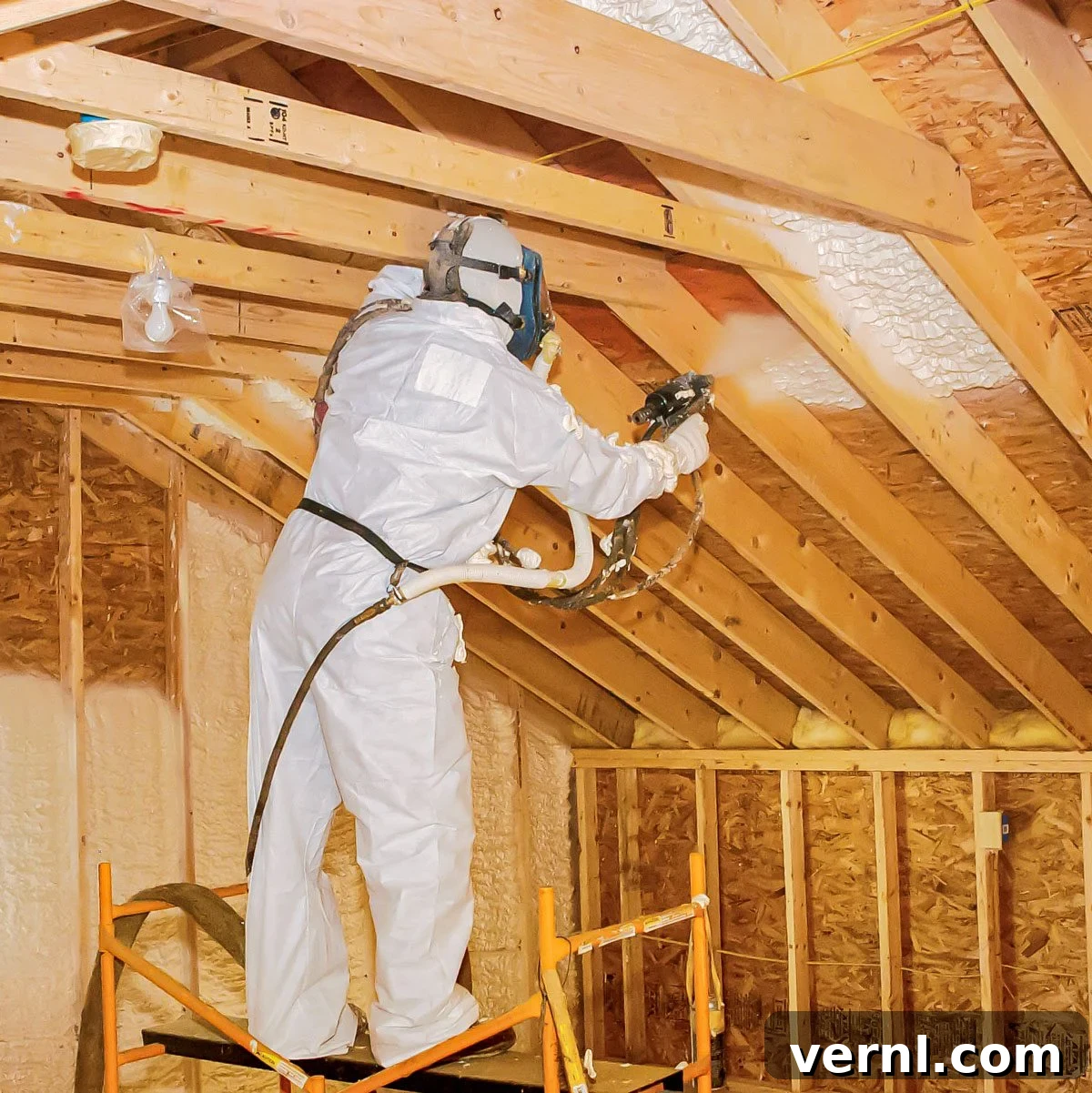
Cathedral ceilings are a highly sought-after architectural feature, known for their ability to infuse a home with a sense of grandeur and openness. These dramatic design elements can transform an ordinary room into an extraordinary space, making it feel significantly larger and more luxurious. They draw the eye upward, often allowing for expansive windows that flood the interior with natural light, creating an airy and inviting atmosphere. However, beneath their aesthetic appeal lies a unique challenge that homeowners and builders must address: the complexities of insulating these distinctive ceilings effectively to ensure lasting comfort and energy efficiency.
What Exactly is a Cathedral Ceiling?
A “cathedral ceiling,” often used interchangeably with “vaulted ceiling,” describes a ceiling design where the interior follows the upward slope of the roofline, creating a high, open space. Unlike traditional ceilings that sit flat beneath a separate attic space, cathedral ceilings extend directly from the walls up to the roof ridge, eliminating the conventional attic. This architectural choice showcases the structural elements of the roof and creates a visually impressive, expansive interior. It’s a design that speaks to a desire for spaciousness and natural light, frequently found in living rooms, great rooms, and master bedrooms, becoming the focal point of a home’s design. While offering immense aesthetic value, their direct connection to the roof structure fundamentally alters the approach required for proper insulation and climate control.
Why Are Vaulted Ceilings Particularly Tricky to Insulate?
Insulating vaulted ceilings presents a unique set of challenges that differ significantly from those encountered with conventional flat ceilings and attics. The primary difficulty stems from the absence of a traditional attic space, which typically provides a buffer zone for insulation and ventilation. In a cathedral ceiling, the insulation must be installed directly between the sloped roof deck and the interior ceiling finish, leaving limited space to achieve adequate thermal performance and crucial ventilation.
This confined space leads to several critical issues. First, the limited depth of the rafter bays restricts the amount of insulation that can be installed, potentially making it harder to achieve desired R-values without compromising the necessary air space for ventilation. Second, the direct exposure of the ceiling to the exterior roof structure makes it highly susceptible to thermal bridging, where heat can transfer through the rafters themselves, bypassing the insulation.
Most critically, vaulted ceilings are notoriously prone to moisture problems. Warm, humid interior air naturally rises and, if not properly managed, can come into contact with the colder underside of the roof deck during winter months. This can lead to condensation buildup, a silent enemy that can cause significant damage over time. Condensation can saturate traditional fibrous insulation, drastically reducing its effectiveness, and lead to mold growth, mildew, and even structural wood rot. In warmer climates, the challenge reverses, with humid outside air entering and condensing against cooler, air-conditioned interior surfaces. Effectively managing both heat transfer and moisture migration is paramount for the long-term integrity and energy performance of a home with a cathedral ceiling.
Addressing these complex issues effectively often requires a departure from conventional insulation methods. The best and most reliable solution to circumnavigate these inherent difficulties is frequently the application of high-performance spray foam insulation, specifically designed to tackle the unique demands of these challenging spaces.
The Advanced Solution: Foaming a Vaulted Ceiling
Despite meticulous planning and the installation of what might seem like well-built vaulted ceilings—complete with conventional fiberglass insulation and ventilation systems—many homeowners inexplicably encounter persistent moisture problems. These issues often manifest as unsightly stains on drywall, damp or compromised insulation, and in severe cases, the insidious onset of rot within the roof wood structure itself. Such scenarios highlight the limitations of traditional insulation approaches in the unique environment of a cathedral ceiling, where even a slight deficiency in air sealing or vapor control can lead to significant, long-term damage.
In these challenging circumstances, spray foam insulation emerges as an exceptionally effective, albeit more expensive, solution. Its unique properties allow it to overcome the inherent vulnerabilities of vaulted ceilings where other materials often fall short. Unlike batts or loose-fill insulation, spray foam expands to fill every void and crevice, creating a seamless, monolithic thermal envelope that effectively eliminates air leakage and forms a robust barrier against moisture.
However, it is crucial to understand that applying spray foam insulation is decidedly not a do-it-yourself (DIY) project. The process requires specialized equipment, precise mixing ratios, and an intimate understanding of building science to ensure proper application and maximize its benefits. Improper installation can lead to a host of problems, including poor thermal performance, off-gassing issues, and wasted investment. Therefore, engaging certified and experienced professionals is essential to harness the full potential of spray foam for your vaulted ceiling.
Navigating Closed-Cell vs. Open-Cell Spray Foam for Vaulted Ceilings
When considering spray foam insulation for your vaulted ceiling, it’s vital to understand the two primary types available: “open-cell” and “closed-cell.” The distinction lies in their cellular structure, which profoundly impacts their performance characteristics.
Closed-Cell Spray Foam: The Premium Choice
Closed-cell foam is characterized by its dense, rigid structure, where the individual foam bubbles remain intact and tightly packed during the curing process. This creates a highly impermeable material, similar in texture to the rigid foam panels you find at home centers.
- Superior R-value: Closed-cell foam boasts a significantly higher R-value per inch compared to open-cell foam, typically around 6.3 to 7.0 per inch versus 3.5 to 3.9 for open-cell. This superior thermal resistance means you can achieve greater insulating power with less thickness, which is a major advantage in the often-limited space of rafter bays in cathedral ceilings.
- Exceptional Moisture Control: Its tightly packed, closed-cell structure makes it an excellent vapor diffusion barrier. This is critical in vaulted ceilings, as it effectively prevents moist interior air from migrating and condensing on colder roof surfaces, thereby mitigating the risk of mold, mildew, and rot.
- Air Barrier Properties: Beyond its thermal and vapor barrier capabilities, closed-cell foam is also an outstanding air barrier. It expands to seal all cracks and gaps, eliminating air leakage, which is a leading cause of energy loss and discomfort.
- Structural Reinforcement: A unique advantage of closed-cell foam is its rigidity. Once cured, it adheres firmly to the roof deck and rafters, effectively strengthening the overall roof structure. This added strength can restrict flexing caused by external forces like heavy snow loads or high winds, reducing the likelihood of stress points and potential leak pathways in the roof system.
- Condensation Prevention: The higher R-value combined with its air and vapor barrier properties dramatically reduces condensation. When moist interior air meets a “less-cold” ceiling (due to superior insulation), the dew point is less likely to be reached, preventing moisture from forming. The same principle applies in summer, preventing humid outside air from condensing on air-conditioned interior surfaces.
The primary drawback of closed-cell foam is its cost, which can be 40 percent or more expensive than open-cell alternatives. However, for the critical application of vaulted ceiling insulation, its comprehensive benefits often justify the higher initial investment, providing unparalleled long-term protection and energy savings.
Open-Cell Spray Foam: An Alternative with Specific Uses
Open-cell foam has a softer, more flexible, and sponge-like texture, as its foam bubbles burst during the curing process, creating an interconnected network of air pockets.
- Lower R-value: While still effective, open-cell foam offers a lower R-value per inch (typically 3.5-3.9) compared to closed-cell, meaning more thickness is required to achieve the same insulating power.
- Air Barrier, Not a Vapor Barrier: Open-cell foam is an excellent air barrier, effectively stopping air movement and reducing drafts. However, its porous nature means it does not prevent vapor diffusion. If moisture gets into open-cell material, it will hold it, which can be problematic in a roof assembly without proper vapor control. This necessitates the installation of a separate vapor diffusion barrier to prevent moisture issues, adding to the complexity and cost of the installation.
- Sound Dampening: Its softer, more flexible structure makes open-cell foam an excellent sound dampener, absorbing airborne sound waves. This can be a significant benefit in homes where noise reduction is a priority.
- Cost-Effective: Open-cell foam is generally less expensive than closed-cell, making it an attractive option where budget is a primary concern and its limitations can be adequately addressed through other building envelope strategies.
For vaulted ceilings, the inability of open-cell foam to act as a reliable vapor barrier is its most significant limitation. Even with a separate vapor diffusion barrier installed, if moisture somehow bypasses it, the open-cell material will absorb and hold onto that moisture. Once water infiltrates any foam-insulated space, regardless of the type, it becomes trapped, creating an ideal environment for rapid rot and structural degradation.
Therefore, while both types of insulation have their merits, closed-cell foam ceiling insulation typically offers substantial advantages for vaulted ceilings due to its superior R-value, inherent vapor barrier properties, and structural strengthening capabilities. This makes it the more robust and reliable choice for preventing the common and destructive moisture issues associated with these architectural features.
Beyond Insulation: The Crucial Role of Roof Maintenance
Regardless of the type of insulation you choose, the health of your vaulted ceiling system is inextricably linked to the condition of your home’s primary defense against the elements: its roof. Once moisture penetrates the insulation, whether through a leaky roof or improper vapor control, it becomes trapped, creating a microclimate where rot can quickly spread, compromising the structural integrity of your home.
Therefore, alongside any insulation project, it is absolutely paramount to ensure that your shingled roof, or whatever roofing material your home utilizes, is in excellent condition and meticulously maintained. Regular inspections by a qualified professional can identify and address potential vulnerabilities such as cracked or missing shingles, deteriorated flashing, or compromised sealants before they lead to costly water intrusion. Proactive maintenance, timely repairs, and ensuring proper roof drainage are non-negotiable steps to safeguarding your investment in a beautifully insulated vaulted ceiling and, ultimately, the long-term health and stability of your entire home.
The Benefits of a Properly Insulated Cathedral Ceiling
Investing in high-quality insulation for your cathedral ceiling, particularly spray foam, offers a multitude of benefits that extend far beyond preventing moisture problems.
- Enhanced Energy Efficiency: A well-insulated vaulted ceiling significantly reduces heat transfer, keeping your home warmer in winter and cooler in summer. This translates directly into lower energy bills and a reduced carbon footprint.
- Superior Indoor Comfort: By creating an airtight seal and minimizing temperature fluctuations, proper insulation eliminates cold spots and drafts, ensuring a more consistent and comfortable indoor environment throughout the year.
- Improved Indoor Air Quality: An airtight building envelope, achieved through spray foam, helps prevent the infiltration of outdoor allergens, pollutants, and pests, contributing to healthier indoor air.
- Reduced Noise Pollution: While open-cell foam is known for its sound-dampening qualities, even dense closed-cell foam can contribute to a quieter home by blocking external noise.
- Increased Home Value: A home with a well-insulated, energy-efficient vaulted ceiling is more attractive to potential buyers, offering a significant return on investment through both comfort and long-term savings.
- Prevention of Structural Damage: By effectively controlling moisture, mold, and rot, proper insulation protects the structural integrity of your roof and ceiling assembly, preventing costly repairs down the line.
Professional Installation: A Non-Negotiable Step
Given the intricate nature of vaulted ceiling construction and the technical demands of spray foam application, professional installation is not merely recommended but absolutely essential. Trained and certified insulation contractors possess the specialized equipment, expertise, and safety protocols necessary to ensure the job is done correctly and safely. They understand building codes, ventilation requirements, and the nuances of working with different foam types to achieve optimal performance. Attempting a DIY spray foam installation can lead to subpar results, potential health hazards from chemicals, and a failure to realize the expected energy savings, ultimately costing more in the long run. Entrusting this critical task to professionals ensures peace of mind and the full benefits of a properly insulated cathedral ceiling.
Conclusion: Maximizing the Grandeur of Your Vaulted Ceilings
Cathedral ceilings are a magnificent architectural feature that can dramatically enhance the beauty and spaciousness of any home. Their inherent grandeur, however, comes with unique challenges, particularly when it comes to insulation and moisture management. Understanding these complexities and opting for the right solution, such as high-performance spray foam insulation—especially the robust closed-cell variety—is paramount to ensuring your home remains energy-efficient, comfortable, and free from moisture-related damage for decades to come. By prioritizing professional installation and diligent roof maintenance, you can fully embrace the aesthetic splendor of your vaulted ceilings without compromising on the comfort, efficiency, or structural integrity of your living space. Invest wisely in your home’s envelope, and your cathedral ceiling will be a source of joy and pride for years to come.