
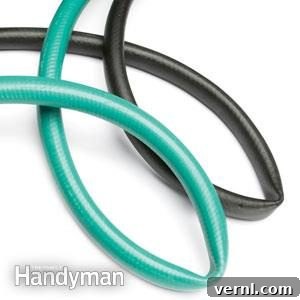
The Ultimate Guide to Finding the Perfect Garden Hose: Durability, Performance, and Care
Every gardener, from the novice to the seasoned expert, understands the profound impact a reliable garden hose has on their daily chores. It’s more than just a conduit for water; it’s an indispensable tool that can either streamline your watering routine or turn it into a frustrating battle against kinks, leaks, and unwieldy bulk. For years, I embarked on my own quest, not for perfection, but for a durable garden hose that was reasonably priced and didn’t feel like dragging an anchor across the lawn. This journey, much like tending a garden, has been filled with trials, errors, and valuable lessons.
My benchmark for excellence was set decades ago by a hose I inherited from my grandfather. It was a formidable, heavy rubber 50-footer – a true workhorse. While its substantial weight made it a “bear to drag around,” frequently knocking over delicate flowerpots and inadvertently decapitating daisies if I wasn’t careful, it possessed an unmatched resilience. It never stiffened with age, and on the rare occasions it did kink, it was remarkably easy to unkink, thankfully boasting a short “kink memory.” This unsung watering hero faithfully served my garden for years, withstanding countless tasks, until its tragic demise. Someone (and while I won’t lay blame, my dear husband knows who he is) inadvertently drove over it with the lawn mower. Despite our best efforts at repair, it was never truly the same, leaving a void that modern hoses have struggled to fill.
The Frustrating Search for a Reliable Replacement Hose
Since the loss of my grandfather’s legendary hose, I’ve spent a considerable sum on a succession of replacement garden hoses. My cabinet of garden tools has seen a parade of contenders: “heavy duty” hoses promising industrial-grade durability, spiral hoses touting compact storage, non-toxic lightweight “kink-free” hoses offering effortless handling, and many others spanning a wide spectrum from surprisingly cheap to fairly expensive. The overarching verdict for most of them? Just “OK,” with a frustrating few deserving the label “downright stupid.”
The core issues persisted across nearly all these replacements: they kinked and split with disheartening ease, developed leaks at the couplings, and despite their initial lightweight appeal, rarely lasted more than a year or two before succumbing to wear and tear. This cycle of purchase, disappointment, and replacement is not only financially draining but also environmentally wasteful. It highlighted a critical disconnect between marketing claims and real-world performance, fueling my determination to understand what truly constitutes a superior garden hose.
Understanding Garden Hose Materials: The Foundation of Durability
The material composition of a garden hose is perhaps the most significant factor determining its performance and lifespan. Here’s a breakdown of common types:
- Rubber Hoses: These are often considered the gold standard for durability, echoing the resilience of my grandfather’s hose. They are incredibly robust, resistant to kinking (especially with a higher rubber content), and can handle extreme temperatures without cracking or stiffening. They also boast excellent burst pressure resistance. The trade-off is their weight, which makes them heavier and sometimes more challenging to maneuver and store. However, for serious gardeners seeking longevity, a high-quality rubber hose is an excellent investment.
- Vinyl Hoses: At the opposite end of the spectrum, vinyl hoses are typically the most affordable and lightweight option. While their initial flexibility is appealing, they are highly prone to kinking, cracking, and degradation from UV exposure and cold temperatures. They generally have a shorter lifespan and lower burst pressure ratings. Often marketed as “lightweight garden hoses,” their convenience often comes at the cost of durability.
- Hybrid Hoses: These hoses blend rubber and PVC (vinyl) to strike a balance between durability and flexibility. They are often lighter than pure rubber hoses but more robust and kink-resistant than pure vinyl. Hybrid hoses offer a good mid-range option, providing decent performance for a reasonable price, making them a popular choice for many homeowners.
- Polyurethane Hoses: Known for their exceptional lightweight nature and coil memory, polyurethane hoses are often found in spiral or expandable hose designs. They are very resistant to abrasions and punctures but can be more expensive. While their compact storage is a benefit, some users report issues with consistent water flow or durability at connection points, especially in expandable versions.
- Expandable Hoses: These innovative hoses, often made from latex core covered with fabric, expand significantly when filled with water and contract for easy storage. They are incredibly lightweight and convenient. However, they are also notorious for their lack of durability, being prone to bursting, punctures, and tangled fabric. While appealing for small tasks, they rarely stand up to heavy or prolonged use.
Key Features to Consider When Choosing the Best Garden Hose
Beyond the material, several other characteristics play a crucial role in a hose’s performance and overall value. Understanding these will empower you to make an informed decision and hopefully avoid the pitfalls I encountered.
Length and Diameter: Tailoring to Your Needs
- Length: Standard lengths include 25 ft., 50 ft., 75 ft., and 100 ft. While it might seem convenient to buy the longest hose possible, an unnecessarily long hose adds weight, increases water pressure loss, and is harder to store. Measure the furthest point you need to reach from your spigot and choose a length that provides just enough slack, without excessive excess.
- Diameter: The most common diameters are 5/8-inch, 1/2-inch, and 3/4-inch. A 5/8-inch hose is standard for most gardening tasks, offering a good balance of water flow and flexibility. A 1/2-inch hose provides less water flow but is lighter, suitable for smaller gardens or delicate plants. A 3/4-inch hose delivers maximum water flow, ideal for large properties, pressure washers, or quickly filling large containers, but it’s significantly heavier and more expensive.
Burst Pressure and Kink Resistance: The True Test of Durability
Burst Pressure: This rating indicates the maximum water pressure a hose can withstand before bursting. Look for a hose with a burst pressure of at least 200 PSI (pounds per square inch) for general use, and higher (300-500 PSI) for heavy-duty applications or if you have high water pressure at home. A higher burst pressure directly correlates with a more durable garden hose.
Kink Resistance: This is arguably the most frustrating aspect of a poor-quality hose. While many hoses are marketed as “kink-free,” very few truly live up to the claim. Look for hoses with multiple plies (layers) and a higher rubber content, as these features significantly improve a hose’s ability to resist kinks. You can also test a hose’s kink resistance in the store by bending it sharply. If it folds easily, it’s likely to kink under pressure. A quality hose will maintain its cylindrical shape even when bent.
Hose Couplings and Fittings: Preventing Leaks
The quality of the couplings – the metal or plastic fittings at each end of the hose – is paramount for preventing leaks. I’ve personally experienced the frustration of leaks at these connection points, leading to wasted water and a soggy mess.
- Brass Couplings: Without a doubt, solid brass couplings are the most durable and reliable option. They are crush-resistant, corrosion-resistant, and provide a secure, leak-free connection. While more expensive than plastic, the investment is well worth it for their longevity and performance.
- Plastic Couplings: Found on many inexpensive hoses, plastic couplings are prone to cracking, stripping, and leaking, especially with frequent use or exposure to sunlight. Avoid them if you’re seeking a long-lasting solution.
- Other Materials: Some hoses feature aircraft-grade aluminum or other alloys. These can also be durable, but always prioritize solid construction and secure threading.
Furthermore, consider features like swiveling grips which make it easier to attach and detach nozzles without twisting the hose, or large, easy-to-grip connectors for those with hand dexterity issues.
Essential Garden Hose Care Tips for Maximizing Lifespan
Even the best garden hose will falter if not cared for properly. Through my experiences, I’ve discovered a few critical practices that can significantly extend the life of any hose, even the less-than-perfect ones:
- Relax a New Hose: When you first uncoil a new hose, especially a stiff one, lay it out straight in the sun on a warm day. This allows the material to relax, making it more flexible and easier to coil up neatly without kinks.
- Protect from UV Rays: After its initial sunbath, do NOT leave your hose exposed to direct sunlight for extended periods. Ultraviolet (UV) rays are incredibly damaging, causing vinyl and rubber to degrade, crack, and stiffen prematurely. This is a common culprit for hoses that seem to “wear out” quickly.
- Proper Storage is Key: Always store your hose loosely on a hose reel, hanger, or in a covered bin. Ensure it is out of direct sunlight and off the ground, where it could be exposed to sharp objects, pests, or extreme temperatures. A hose reel is an excellent investment for organized storage and protecting your hose from damage.
- Bleed Off Water Pressure Before Coiling: This is a simple yet crucial step. After you’re done watering, shut off the water at the faucet and then open your nozzle or sprayer to bleed off the remaining water pressure in the hose. This reduces stress on the hose material and couplings, minimizes the chances of bursts or bulges (as water inside can expand when heated by the sun), and makes the hose more flexible and easier to coil.
- Winterize Your Hose: In colder climates, winterization is non-negotiable. Drain all water from your hose, coil it neatly, and store it indoors in a shed, garage, or basement before the first hard freeze. Water left inside can freeze, expand, and burst the hose, rendering it useless.
- Avoid Driving Over Hoses: Learn from my experience! Lawnmowers, cars, or heavy equipment can easily crush and damage even the toughest hoses, leading to irreparable damage.
- Choose the Right Nozzle: A good quality nozzle can enhance your watering experience and prevent unnecessary wear on your hose. Look for nozzles with adjustable spray patterns and durable construction.
The Persistent Search for My Grandfather’s Hose Legacy
Perhaps I am unduly hard on hoses, or maybe modern manufacturing simply prioritizes cost-efficiency over genuine durability. But nothing I’ve tried has come close to matching the unwavering reliability and longevity of my grandfather’s hose. That feeling of confidently dragging a hose across the yard, knowing it wouldn’t betray me with a sudden kink or a leaky coupling, is what I truly miss.
My ongoing search for the perfect garden hose has led me to believe that sometimes, the old ways are the best ways. Rumor has it that Sears still produces the old-fashioned, heavy-duty rubber hoses under their Craftsman brand. My next stop? Sears.com. A 50-foot Craftsman rubber hose, priced around $32, might just be the answer to my decade-long quest for a hose that combines classic durability with modern accessibility. I hold out hope that I will finally find a hose that embodies the spirit of my grandfather’s, a true watering hero for my own garden.
The journey to find a truly reliable garden hose is one that many gardeners share. By understanding the different materials, paying close attention to key features like burst pressure and coupling quality, and diligently applying proper care and storage techniques, you can significantly improve your chances of finding a hose that lasts. Invest wisely, and you’ll save money, reduce frustration, and contribute to a more sustainable gardening practice.
— Elisa Bernick, Associate Editor
Looking for more expert advice on maintaining your lawn and garden? Our Lawn Care section offers a wealth of information to help you cultivate your outdoor space:
- Finding the Best Garden Hose: A Comprehensive Buying Guide
- Simple Solutions to Fix Leaks at the Garden Hose Spigot
- Home Gardening Tips: Easier Weeding and Watering for a Thriving Garden