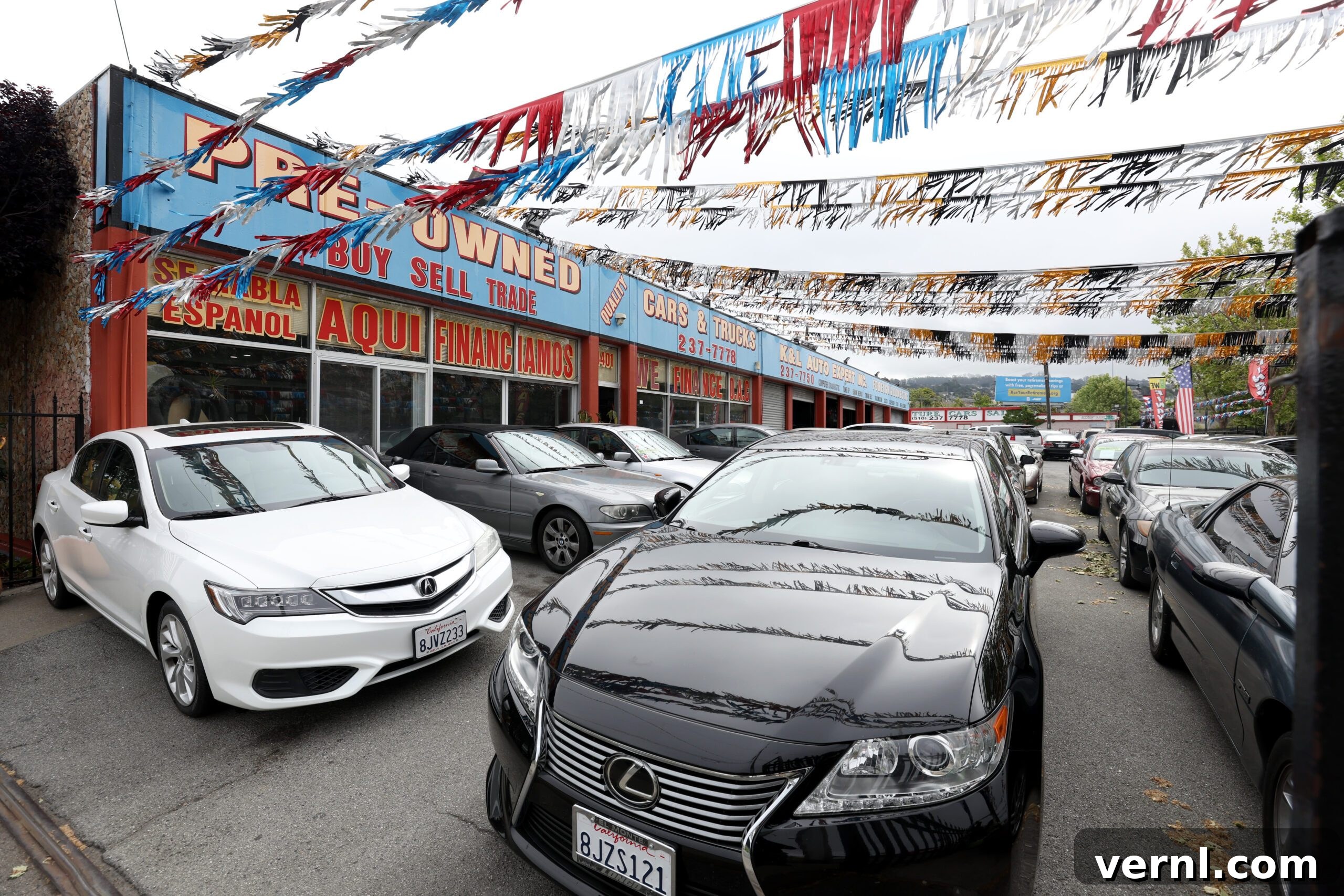
For many, the journey to vehicle ownership is paved with difficult decisions, especially when considering the used car market. My father, a man with almost 60 years of experience as a certified automotive technician and vehicle owner, offered two timeless pieces of advice that still resonate today: “Never buy a used car from a friend or neighbor,” and, perhaps more significantly, “If you couldn’t afford it when it was new, you can’t afford it used.” These weren’t mere sayings but cautionary tales about the hidden costs and potential financial traps of acquiring a pre-owned vehicle, particularly a high-end one. From extensively damaged “auction” cars needing significant mechanical or bodywork that dealers wouldn’t even consider selling on their lots, to nearly new “program” cars still under full factory warranty, I’ve navigated the full spectrum of the used car landscape.
In today’s automotive market, where the average price of a new car approaches a staggering $48,000, the quest for a reliable and budget-friendly used car can feel like searching for a needle in a haystack. However, it’s far from impossible. This comprehensive guide draws on the expertise of seasoned professionals in both new and used car sales, offering invaluable insights to help you make an informed decision. Join us as we explore the critical question that often puzzles prospective buyers: “How old is too old for a used car?”
Understanding the Age Factor: How Old Is Too Old for a Used Car?
The answer to this common question is rarely straightforward; it truly “depends” on a multitude of factors. According to Zander Cook, co-founder of Lease End, a platform specializing in end-of-lease decisions, “There’s no one-size-fits-all answer, but generally speaking, a used car older than 10 years often comes with increased maintenance risks, outdated safety features, and diminishing resale value.” This general guideline serves as a crucial starting point for buyers, highlighting the natural progression of vehicle degradation and technological obsolescence.
Vehicles exceeding a decade in age can present a unique set of challenges. Components like rubber hoses, seals, and plastic parts can become brittle and prone to failure. Electrical systems may develop intermittent issues, and rust can begin to take hold in areas susceptible to moisture and road salt. Furthermore, older cars typically lack many of the advanced safety features that have become standard in modern vehicles, such as lane-keeping assist, automatic emergency braking, blind-spot monitoring, and multiple airbags, which significantly enhance driver and passenger protection.
However, Cook quickly adds a vital caveat: “A well-maintained vehicle that has a clean accident record, a well-documented maintenance history, then age alone doesn’t make it a dealbreaker.” This distinction is critical. A 12-year-old car with meticulous service records, garaged its entire life, and driven responsibly could be a far better purchase than an 8-year-old car with a spotty history and signs of neglect. The key takeaway is that a car’s condition and history often outweigh its mere chronological age.
Smart consumers today are increasingly turning to a specific segment of the used car market: vehicles coming off lease agreements. These cars, typically between three and six years old, represent an appealing sweet spot. They are often still remarkably reliable, generally equipped with many modern safety features and technological conveniences, and can be acquired at a significantly reduced price point. This period is particularly attractive because it’s right around the time when the steepest depreciation in a vehicle’s value has already occurred, offering buyers excellent value without compromising too much on modernity or expected lifespan.
The Great Debate: Years vs. Mileage – Which Matters More for a Used Car?
When evaluating a used car, buyers often grapple with the dilemma of whether a vehicle’s age or its odometer reading holds greater significance. While both are important indicators, experts lean towards mileage as a more critical factor in assessing mechanical wear and tear. “Mileage affects mechanical parts more than years affect plastic, rubber or electronic components,” explains Michael Capote, chief marketing officer at German Car Depot. This statement underscores the fact that moving parts—engines, transmissions, suspension components—experience wear directly proportional to how much they’re used.
Capote offers a compelling illustration: “A ten-year-old used car with 150,000 miles of highway driving is more reliable than a fifteen-year-old car that has only 80,000 miles of city driving.” This might seem counterintuitive at first glance, but the reasoning is sound. Highway driving typically involves sustained speeds, fewer stops and starts, and less strain on the engine and transmission. City driving, on the other hand, is characterized by frequent acceleration, braking, idling, and short trips, all of which place immense stress on a vehicle’s components. The constant stop-and-go cycle causes more rapid wear on brakes, tires, and various engine parts, leading to increased heat cycles and greater strain on the drivetrain.
Older, lower mileage vehicles often spent the majority of their operational lives under these “harsh driving conditions,” as Capote defines them. Short trips, where the engine doesn’t reach optimal operating temperature, prevent engine oil from fully lubricating components and burning off condensation, leading to sludge buildup and premature wear. Vehicles that remained parked for extended periods without regular use are also susceptible to specific issues. “It can lead to seal and tire dry rot, fluid deterioration or premature battery failures,” Capote warns. Rubber components degrade over time whether used or not, and fluids lose their effectiveness, regardless of mileage, making regular use and maintenance crucial.
For a long time, the 100,000-mile mark was considered a significant milestone, often signaling the nearing end of a car’s usable life. According to AAA, this outdated perception once led many consumers to believe that once an odometer hit six figures, it was time to consider a replacement. Today, however, advancements in automotive engineering, materials science, and manufacturing processes have dramatically extended vehicle lifespans. Many modern cars are designed to travel well beyond that 100,000-mile mark, especially if they’ve been diligently maintained. It’s not uncommon for vehicles to reach 150,000, 200,000, or even 250,000 miles with proper care. Therefore, if you’re shopping for a used car, don’t let that antiquated 100,000-mile rule deter you from considering a vehicle as a viable and dependable option. Instead, focus on the vehicle’s maintenance history, its overall condition, and the type of mileage it has accumulated.
Uncovering the Past: How Do You Check the History of a Used Car?
Thorough due diligence is paramount when buying a used car. A vehicle’s past can reveal critical information about its present condition and future reliability. Mike Rocchi, former president of Faulkner Mazda, emphasizes the importance of comprehensive history checks. “To determine if a trade-in will be serviced and placed on our used car lot, we always got a vehicle history report from CARFAX, AutoCheck, or National Motor Vehicle Title Information System (NMVTIS).” These reports are invaluable as they compile data from various sources, including state DMVs, police departments, service centers, and insurance companies, to provide a detailed overview of a vehicle’s life.
What specific details can these reports reveal? They typically include accident history, previous ownership, odometer rollbacks, flood damage, salvage titles, service records (if reported), and recall information. A clean report is a good start, but Rocchi highlights that it’s just the beginning. “We checked service records, a clean title, plus a thorough top-to-bottom visual inspection.” This detailed approach ensures that nothing is overlooked. Checking for consistent quarter-panel spacing, for instance, can indicate whether sheet metal parts were replaced due to an accident, even if the incident wasn’t reported to an insurance company. Similarly, examining the frame and undercarriage for damage or signs of repair can reveal significant structural issues that might compromise the vehicle’s safety and integrity. Rocchi also stressed the importance of listening to the engine and transmission for abnormal noises or vibrations and meticulously checking tires for unusual wear patterns, which can point to alignment problems or suspension issues.
Scott Kunes of Kunes Auto and RV Group reinforces this holistic view, stating that “a strong maintenance trail tells you a lot more than shiny paint ever will.” A car with a thick binder of service receipts demonstrating regular oil changes, tire rotations, and timely repairs is often a much safer bet than a gleaming vehicle with no verifiable history. This is where the concept of “Certified Pre-Owned” (CPO) vehicles comes into play. Rocchi noted that many original equipment manufacturers now offer “factory certified preowned cars,” which offer an elevated level of assurance. A CPO vehicle can only be “certified” by the manufacturer’s dealership and must meet rigorous standards. For example, only a Volvo dealer can certify a Volvo, and that car can only be sold at a Volvo dealership after undergoing a multi-point inspection, necessary refurbishments, and receiving the manufacturer’s certification. This process often includes an extended warranty, roadside assistance, and other benefits, making CPO vehicles a premium option in the used car market for those seeking maximum peace of mind.
Expert Tips for Buying a Dependable Used Car
Navigating the used car market can be overwhelming, but experts agree on strategies to find the best value and reliability. Zander Cook identifies the “sweet spot” for a dependable used car as “between three and six years old with under 60,000 miles.” This range offers an optimal balance between initial depreciation and remaining vehicle life. Michael Capote, while slightly varying his figures, concurs with the underlying principle, stating that “the best value can be achieved by purchasing vehicles between three and five years old with mileage between 40,000 to 80,000.” Both experts clearly point to a specific window that allows buyers to capitalize on depreciation without sacrificing too much in terms of modernity or potential lifespan.
There’s a strong consensus that buying a used car within this sweet spot offers buyers the best balance of savings, performance, reliability, and longevity. Vehicles in this age and mileage range have typically already experienced their steepest depreciation during the first few years, meaning you avoid the significant initial value loss new car owners endure. Moreover, many cars in this category “may offer the remainder of the original factory warranty or a no cost/low cost extended warranty, plus the modern features of newer cars at a reduced price outside the initial depreciation period,” according to Cook. This means buyers can enjoy contemporary safety features, infotainment systems, and fuel efficiency without the hefty price tag of a brand-new vehicle, often with some level of warranty protection still intact.
Beyond identifying the ideal age and mileage, there are several other critical steps to ensure a smart purchase:
- Set a Realistic Budget: Factor in not just the purchase price but also insurance, registration, potential repairs, and ongoing maintenance. Don’t forget sales tax and any associated fees.
- Research Thoroughly: Use online resources, consumer reviews, and reliability ratings for specific makes and models you’re considering. Look for common issues reported by owners.
- Test Drive Extensively: Don’t just take it around the block. Drive the car on various road types—city streets, highways, and even some bumps—to assess its handling, acceleration, braking, and comfort. Pay attention to any unusual noises, vibrations, or smells.
- Review Service Records: As emphasized earlier, a car with a complete and consistent service history is generally a safer bet. It demonstrates proper care and proactive maintenance.
- Negotiate Wisely: Be prepared to negotiate the price. Use your research on market value and any identified flaws in the vehicle’s condition as leverage.
Perhaps the single most important piece of advice, irrespective of the age, year, make, model, or mileage of a used car you are seriously considering buying, is to have the vehicle carefully inspected by your trusted, independent mechanic. This pre-purchase inspection (PPI) is non-negotiable. Expect to pay around $100 or more for a comprehensive inspection, but consider it a wise investment that could save you thousands in unexpected repairs down the line. A mechanic can identify underlying issues that might not be apparent to the untrained eye, such as frame damage, engine problems, transmission wear, or electrical faults. If the seller refuses an inspection, consider it a significant red flag and unequivocally walk away. The small cost of an inspection is a minor expense compared to the potential financial burden of buying a lemon.
Frequently Asked Questions (FAQ) About Used Car Maintenance
When it comes to servicing a vehicle, what is more important, time or mileage?
The general rule of thumb for vehicle servicing and maintenance schedules is to adhere to whichever comes first: time or mileage. Modern vehicles come with manufacturer-recommended maintenance intervals that specify actions to be taken after a certain number of miles driven or a specific period of time has elapsed. For example, if a vehicle’s maintenance schedule calls for replacing spark plugs at 50,000 miles or 60 months:
- If you drive 50,000 miles in less than 60 months (e.g., in 48 months), you should replace the spark plugs at 50,000 miles — don’t wait until the 60-month mark. The wear and tear from driving dictate the need for replacement.
- Conversely, if you drive less than 50,000 miles in 60 months (e.g., only 30,000 miles), replace the spark plugs at 60 months — don’t wait until 50,000 miles. Components like spark plugs can degrade over time due to heat cycles, corrosion, and environmental factors, even with minimal usage. Fluids also break down and lose effectiveness over time, regardless of how many miles the car travels.
Always consult your vehicle’s owner’s manual for specific maintenance recommendations tailored to your car’s make and model to ensure optimal performance and longevity.
About Our Contributing Experts
Our comprehensive guide on buying used cars is enriched by the valuable insights of industry veterans:
- Mike Rocchi boasts over 50 years of extensive experience across all facets of the automotive industry. His distinguished career includes serving as the former president of Faulkner Mazda (now retired) and as Chairperson of the Mazda National Dealer Advisory Committee. He currently holds the position of Director of Technical Training for the Faulkner Automotive Organization, bringing a wealth of practical knowledge to our discussion.
- Zander Cook is the Co-Founder of Lease End, an innovative platform designed to assist consumers with end-of-lease decisions. After earning his degree in economics from BYU in 2019, Zander gained invaluable experience working in the finance department of a new car dealership. This background in both new and used car sales, coupled with insights into lease-end processes, empowered him to co-found Lease End. His expertise is further bolstered by Lease End’s consumer behavior data, allowing him to speak authoritatively on how age, mileage, and vehicle history influence long-term value.
- Michael Capote serves as the Chief Marketing Officer at German Car Depot, leveraging several years of diverse experience in the Automotive Industry. Michael’s career trajectory saw him rise through nearly every imaginable position, starting from entry-level roles and progressing into sales, management, operations, service, finance, and marketing. His broad understanding of the industry’s inner workings is currently being further refined as he pursues his MBA through a non-traditional study-while-working route.
- Scott Kunes is the Chief Operating Officer (COO) of Kunes Auto and RV Group, where he has been a pivotal member for over 15 years. Scott commenced his tenure with the company as Used Car Director and has since held numerous leadership roles, including General Manager and Regional General Manager. His extensive experience in managing used car operations provides a crucial perspective on vehicle valuation and consumer needs.
Additional Resources and Further Reading
To deepen your understanding and assist you further in your used car buying journey, we recommend exploring these resources:
- Tomer Ruderman, Founder and Owner at Car Keys Ottawa
- MSN: “Before you buy a used car, you need to check for these issues.” (May 31, 2025)
- Kelley Blue Book Report: “New-Vehicle Prices Hold Steady in March as Sales Increase Ahead of Anticipated Tariff-Driven Price Hikes” (April 9, 2025)
- MacPherson, J. (2025). AAA, The Extra Mile: “Used car sticker shock” (Spring/Summer 2025 pp. 50) AAA Club Alliance, Inc. Wilmington, DE.
RELATED: Essential Car Knowledge You Might Be Missing
Enhance your automotive literacy with these related articles:
- Do You Know What That Little Button on Your Seat Belt Is For?
- What Those Lines on Your Backup Camera Really Tell You
- Here’s What The Small Panel On Your Car’s Front Bumper Is For