
Imagine a sudden crisis: a massive landslide severs the main water line to your community, leaving you without access to clean, safe drinking water for days. This was my reality in a mountain village, and it highlighted a critical gap in emergency preparedness. While boiling water is the gold standard during a boil water advisory, what happens when power is out, and boiling isn’t an option? Many regions don’t widely publicize alternative disinfection methods, leaving residents scrambling for solutions. If you, like me, are keen to understand how household bleach can be a lifesaving tool for water purification in an emergency, this comprehensive guide will equip you with essential knowledge and precautions.
To provide you with the most accurate and reliable information, I consulted two leading water safety experts: Elena N. Naumova, PhD, a distinguished Professor at Tufts University’s Friedman School, and Aria Amirbahman, the Chair of the Civil Engineering Department and Sukhmander Singh Endowed Professor at Santa Clara University. Their insights will help demystify the appropriate use of bleach for drinking water disinfection, ensuring you’re well-prepared when it matters most.
Understanding Boil Water Advisories: Why They’re Issued and What They Mean for Your Water Safety
A boil water advisory is a critical public health notification issued by local authorities or water utility companies. It signals that your drinking water supply may be contaminated with harmful pathogenic microorganisms such as bacteria (like E. coli), viruses (such as Norovirus), or illness-causing protozoan parasites (like Giardia and Cryptosporidium). These advisories are not to be taken lightly, as consuming contaminated water can lead to serious gastrointestinal illnesses, including diarrhea, vomiting, and dehydration, which can be particularly dangerous for vulnerable populations like young children, the elderly, and individuals with compromised immune systems.
Dr. Elena N. Naumova explains the common triggers for these advisories. “A sudden loss of water pressure, often due to main breaks, power outages impacting treatment plants, or malfunctioning equipment, are frequent causes,” she notes. Such events can allow untreated water or contaminants to enter the distribution system. Moreover, routine water testing might detect the presence of indicator organisms like coliform bacteria, signaling potential contamination, even if specific pathogens aren’t immediately identified. Natural disasters, including heavy rains and extensive flooding, can also overwhelm water treatment infrastructure, introducing contaminants into the water supply and necessitating immediate advisories to protect public health.
The primary directive of an advisory is simple: water must be boiled before it is safe for consumption. Dr. Naumova emphasizes, “Boiling water is an exceptionally effective method for eradicating most disease-causing organisms.” The intense heat during boiling denatures the proteins and disrupts the cellular membranes of bacteria, viruses, and protozoa, rendering them inactive and harmless. This makes boiling a highly reliable first line of defense during a water contamination emergency.
Common Causes of Boil Water Advisories:
- Water Main Breaks: Damage to pipes can cause pressure drops, allowing soil and contaminants to infiltrate.
- Power Outages: Disruptions to electricity can impair water treatment plant operations and pumping stations.
- Equipment Malfunction: Failures in treatment processes, such as filtration or disinfection systems, can compromise water quality.
- Contamination Events: Heavy rainfall or flooding can introduce agricultural runoff, sewage, or other pollutants into water sources.
- Detection of Pathogens: Routine testing might identify harmful bacteria like E. coli or coliforms.
- Planned Maintenance: Sometimes advisories are issued proactively during scheduled work that might affect water quality.
Mastering Water Purification: The Essential Steps for Boiling Water Safely
Boiling water is often the safest and most recommended method for disinfecting water during an advisory. However, it’s not simply a matter of heating water until bubbles appear. Proper technique is crucial to ensure all harmful pathogens are neutralized.
You must bring the water to a “rolling boil” – a vigorous, continuous bubbling that cannot be stirred down – and maintain this state for at least one full minute. While many common bacteria and viruses are destroyed within seconds at temperatures between 70°C and 85°C (158°F and 185°F), certain more resilient protozoa, particularly those encased in protective cysts, require sustained higher temperatures to be effectively eliminated. This extra minute ensures comprehensive disinfection against a wider spectrum of microbial threats.
Aria Amirbahman, from Santa Clara University, elaborates on the scientific efficacy. “Boiling water for one minute at 100°C (212°F) is generally sufficient for disinfection, as the process leads to protein denaturation and, in some cases, the disruption of microbial cell walls.” He further advises, “However, to ensure maximum safety—especially at higher elevations where water boils at a slightly lower temperature due to reduced atmospheric pressure—it is highly advisable to extend the boiling time to up to five minutes.” This extended boiling provides an additional margin of safety against all types of microorganisms, regardless of altitude.
Practical Steps for Boiling Water Effectively:
- Filter First (Optional but Recommended): If the water is cloudy or has visible particles, filter it through a clean cloth, coffee filter, or paper towel to remove sediment. This improves the effectiveness of boiling.
- Use a Clean Pot: Pour the filtered water into a clean pot or container.
- Bring to a Rolling Boil: Heat the water until it reaches a vigorous, continuous boil with large, rapidly breaking bubbles.
- Maintain Boil Time: Keep the water at a rolling boil for at least one minute. At elevations above 6,500 feet (2,000 meters), boil for three minutes to compensate for lower boiling temperatures.
- Cool Naturally: Allow the water to cool completely before use. Do not add ice cubes made from untreated water.
- Store Safely: Store boiled water in clean, disinfected containers with tight-fitting lids. Label it clearly as “boiled water” to avoid confusion.
Once boiled and cooled, this water can be safely used for drinking, cooking, washing fruits and vegetables, making ice, brushing teeth, and preparing baby formula. Remember, proper storage is just as important as proper boiling to prevent recontamination.
Emergency Water Disinfection: How to Use Bleach When Boiling Isn’t an Option
While boiling is the preferred method, there are emergency situations—such as extended power outages or lack of fuel—where it simply isn’t feasible. In such cases, disinfecting water with household bleach can be a surprisingly effective and safe alternative, provided you meticulously follow specific guidelines and precautions. It’s not as drastic or dangerous as it sounds when done correctly.
Is Disinfecting Water with Bleach Truly Safe and Effective?
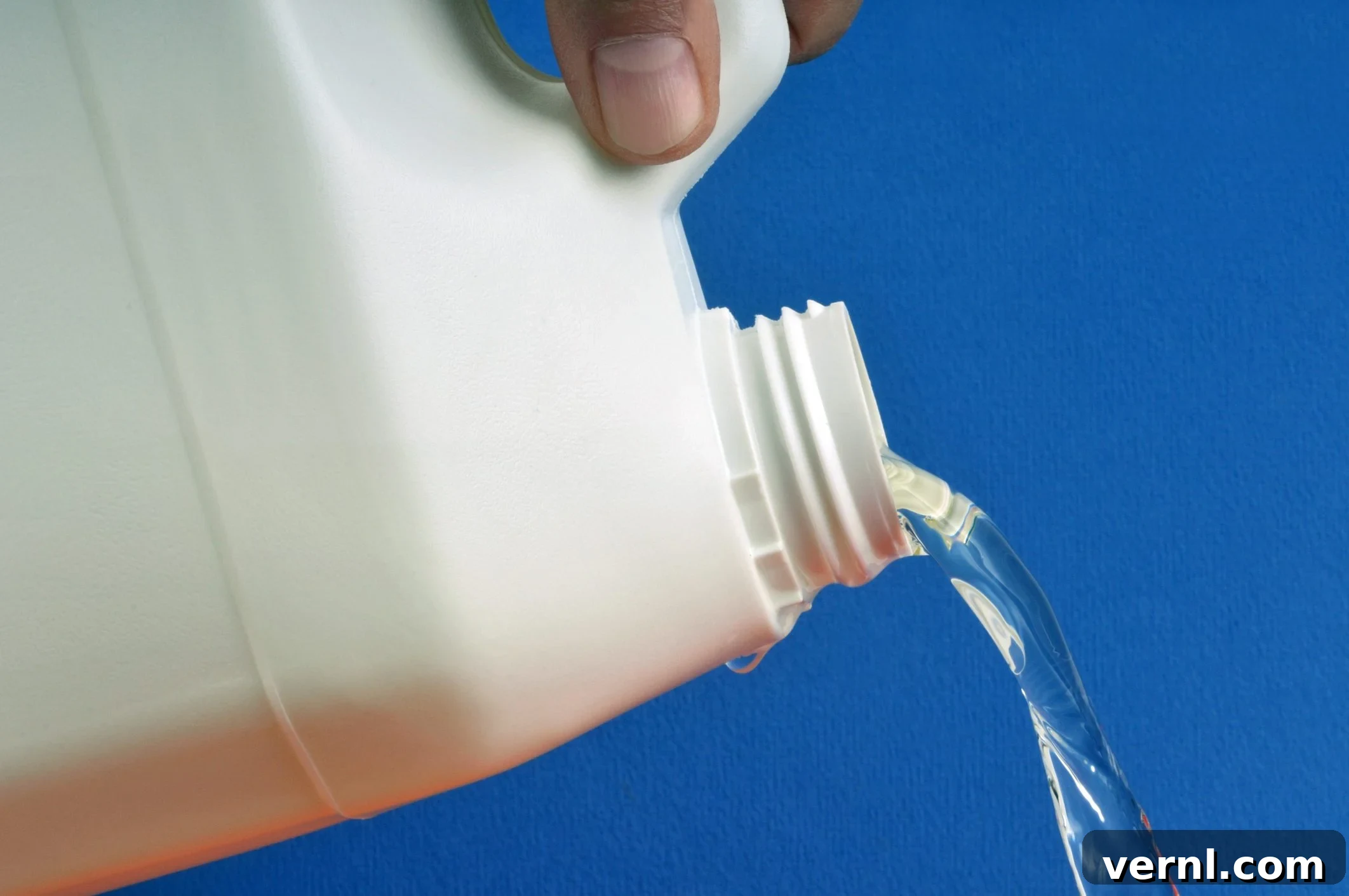
Yes, using bleach for emergency water treatment is a recognized and safe strategy, as long as you use the correct type of bleach and adhere to precise dosage instructions. The active ingredient in common household bleach, sodium hypochlorite, is a powerful oxidizing agent that effectively kills most bacteria and viruses, making water safe for consumption.
Professor Amirbahman explains the mechanism: “Liquid bleach, which contains sodium hypochlorite, disinfects water by oxidizing and destroying the cell membranes of microorganisms.” This oxidation process damages the essential structures of pathogens, rendering them unable to function or reproduce. He advises, “For emergency disinfection, it is generally recommended to add 8 drops of regular, unscented household bleach per gallon of clear water. If the water appears turbid or cloudy, a few additional drops may be necessary to compensate for the organic matter that can reduce bleach effectiveness.”
However, Dr. Naumova cautions against long-term or excessive use of chlorinated water. “Drinking heavily chlorinated water can irritate the mouth, throat, and stomach, potentially causing nausea or vomiting, especially in children or individuals with sensitive digestive systems,” she states. Overexposure to chlorine can also lead to adverse health effects, making precise measurement and adherence to guidelines paramount.
The Right Amount: How Much Bleach is Safe for Water Purification?
The key to safe and effective bleach disinfection lies in precise measurement. It is crucial *not* to exceed the recommended dosage to avoid potential health risks. Generally, it is not recommended to use more than 16 drops of household bleach (containing 5% to 6% sodium hypochlorite) per gallon of water, even for turbid water.
Dr. Naumova outlines the general guidelines for clear water: “Add 8 drops of plain household bleach per gallon of clear water, stir thoroughly, and allow it to stand for at least 30 minutes before drinking.” After 30 minutes, the water should have a faint chlorine smell, similar to pool water. “If no chlorine smell is detectable, repeat the dose (another 8 drops) and wait an additional 15 minutes before consumption,” she advises. The slight chlorine smell indicates that the disinfection process has been successful and residual chlorine remains to prevent recontamination.
For cloudy or turbid water, the recommendation increases: add 16 drops of bleach per gallon. After adding the bleach, stir well and wait 30 minutes. Dr. Naumova strongly recommends pre-filtering cloudy water through a clean cloth, paper towel, or coffee filter to remove larger particles. This initial filtration significantly improves the effectiveness of the bleach by reducing the amount of organic material that can consume the chlorine, ensuring better disinfection.
Critical Safety Precautions When Using Bleach:
While bleach is a powerful disinfectant, its use comes with inherent risks, which is why boiling remains the safest and preferred option when available. Adhering to strict safety precautions is non-negotiable.
Firstly, **always use plain, unscented household bleach.** Dr. Naumova emphasizes this point: “Many household bleaches are scented, splashless, or concentrated – these varieties often contain additives like detergents, perfumes, or thickeners that are harmful or toxic if ingested.” Only bleach with 5% to 6% sodium hypochlorite as its sole active ingredient is suitable for water purification. Check the label carefully; it should explicitly state “sodium hypochlorite” and list no other active ingredients.
Secondly, exercise extreme care when handling bleach, as it is a skin and eye irritant. Wear gloves and eye protection if possible, and work in a well-ventilated area to avoid inhaling fumes.
It’s also crucial to understand that bleach has limitations. Professor Amirbahman highlights that bleach does not reliably kill all types of protozoan parasites, especially those with resistant outer shells like *Cryptosporidium*. This pathogen requires a higher concentration of chlorine or a longer contact time than typically recommended for household disinfection, making boiling or specialized filters more effective against it.
Finally, bleach loses its effectiveness over time, particularly when exposed to heat and sunlight. Amirbahman advises, “It’s important to replace bleach bottles every three months, even if they haven’t been opened, to ensure the active ingredient remains potent for emergency use.” Always check the manufacturing date and ensure your emergency bleach supply is fresh.
Exploring Other Emergency Water Purification Methods
Beyond boiling and bleach, several other methods can be employed for water purification during emergencies. Each has its advantages and limitations, and some are best used in combination to achieve optimal safety.
Iodine Tablets
Iodine tablets are a common choice for hikers and campers due to their portability. They are effective against most bacteria and viruses, as well as Giardia. However, Professor Amirbahman notes, “Iodine tablets are generally not recommended for long-term use, as excessive iodine intake can lead to thyroid problems.” They also have a distinctive taste that many find unappealing. Furthermore, like bleach, iodine tablets are not highly effective against *Cryptosporidium*.
Specialized Water Filtration Systems
A wide range of portable water filters is available, from personal straw filters to pump-action systems. These filters work by physically removing microorganisms from the water. Naumova strongly recommends “only selecting filters specifically labeled to meet standards for microbial removal (such as NSF/ANSI 53 or 58).” These certifications ensure the filter effectively removes contaminants like Giardia and Cryptosporidium. However, Amirbahman cautions, “filtration membranes may not effectively remove very small microorganisms, such as viruses, which can pass through the filter’s pores.” Therefore, for complete protection, filtration is often best combined with another disinfection method like chemical treatment or UV light.
Additionally, filters require regular maintenance and replacement of cartridges to remain effective. A clogged or expired filter can cease to provide safe drinking water.
Portable UV Sanitizers
Portable UV (ultraviolet) sanitizers, such as the SteriPEN, utilize UV light to disrupt the DNA of microorganisms, preventing them from reproducing and causing illness. Amirbahman states, “UV sanitizers are effective against most microorganisms, including Giardia and Cryptosporidium.” They are quick and easy to use, making them a popular choice. However, their effectiveness is highly dependent on water clarity. “UV light is most effective when the water is clear and free of turbidity,” he explains. Suspended particles in cloudy water can shield microorganisms from the UV rays, reducing the disinfection efficiency.
Solar Disinfection (SODIS)
Solar disinfection, or SODIS, is a simple, cost-effective method that uses sunlight to purify water. It involves exposing water in clear glass or PET plastic bottles to direct sunlight for a full day (or two days if cloudy). The UV-A radiation in sunlight, combined with the heat generated, kills most pathogens. “Solar disinfection is another effective method, provided the water is not turbid,” Amirbahman confirms. Similar to UV sanitizers, clear water is essential for SODIS to be effective, as turbidity can block the necessary sunlight.
Dr. Naumova emphasizes a hierarchical approach to emergency water purification: “Always prioritize boiling if possible, as it is the most reliable method. If boiling is not an option, then correctly dosed bleach should be the next consideration. Other methods like certified filters or UV purifiers can also be highly effective depending on the specific situation and water quality.” Always be prepared with multiple options for water purification.
What Not to Do During a Boil Water Advisory: Crucial Mistakes to Avoid
Understanding what to do is important, but knowing what *not* to do can be equally critical in ensuring your safety during a boil water advisory.
**Do not rely on your standard electric kettle to purify water.** Dr. Naumova cautions that “modern electric kettles often shut off automatically once the water reaches a boil, meaning they may not achieve a continuous rolling boil for the required one minute (or longer at high altitudes).” This brief boil might kill some pathogens but is insufficient to eliminate all harmful organisms, especially resistant protozoan cysts. Always use a stovetop pot or an alternative method where you can control the boiling duration.
**Avoid using untreated tap water for any activity that involves ingestion or contact with mucous membranes.** This includes:
- Brushing your teeth: The small amount of water ingested while brushing is enough to pose a risk. Use boiled, disinfected, or bottled water.
- Rinsing fruits and vegetables: Pathogens can adhere to produce and be ingested. Wash with safe water.
- Making ice: Ice cubes retain the pathogens present in the water they were made from. Do not use ice made from untreated tap water.
- Preparing baby formula or food: Infants are particularly vulnerable to waterborne illnesses. Only use safe water.
- Washing dishes: Use hot, soapy water, and if possible, sanitize dishes in a dishwasher with a hot rinse cycle or soak them in a bleach solution (1 teaspoon of unscented bleach per gallon of water) for at least one minute, then let them air dry.
- Bathing or showering: While the risk is generally lower for adults, avoid swallowing water, especially for children. Consider sponge baths for infants.
Taking these precautions seriously can prevent potential illness and ensure the health of your household during a water crisis. Always stay informed by local authorities and follow their specific recommendations for your area.
Frequently Asked Questions About Boil Water Advisories and Water Purification
How long do boil water advisories typically last?
The duration of a boil water advisory can vary significantly based on the cause and the extent of the contamination. Most advisories are relatively short-lived, typically lasting between 24 to 48 hours. This timeframe allows water utility personnel to identify and rectify the problem, flush the system, and conduct multiple rounds of water quality testing to confirm the water is safe. However, in cases of major incidents, such as extensive pipeline damage, severe natural disasters, or significant contamination events affecting a water treatment plant, advisories could extend for several days or even longer. Always monitor local news and official announcements for updates specific to your area.
Can I use bottled water instead of boiling during an advisory?
Absolutely. Using commercially bottled water is a perfectly safe and often convenient alternative to boiling during a boil water advisory. Bottled water is rigorously tested and treated to meet safety standards, making it a reliable source of clean drinking water during an emergency. It’s highly advisable to keep a small emergency supply of bottled water on hand in your pantry or emergency kit. This ensures you have immediate access to safe drinking water for essential needs like drinking, cooking, and brushing teeth without having to wait for water to boil and cool.
Does a Brita filter remove bacteria during a boil water advisory?
A standard Brita water filter, or similar pitcher-style filters, is primarily designed to improve the taste and odor of tap water by removing substances like chlorine, sediment, and certain heavy metals. However, these common filters are generally *not* designed to remove bacteria, viruses, or protozoan cysts, which are the main concern during a boil water advisory. Their pore sizes are typically too large to capture these microscopic pathogens. For effective microbial removal, you would need a specialized water filter specifically labeled to meet NSF/ANSI standards for microbial reduction (e.g., NSF/ANSI 53 or 58 for cyst reduction, or those specifically tested for bacteria and virus removal). Always check the filter’s specifications and certifications to confirm its capabilities.
About the Experts
- Aria Amirbahman is the Chair of the Civil Engineering Department and the Sukhmander Singh Endowed Professor at Santa Clara University. His extensive research focuses on aquatic chemistry, contaminant transport, and various water treatment processes. His insights were gathered via an email interview on Apr. 14, 2025.
- Elena N. Naumova, PhD, is a distinguished Professor in the Nutrition Epidemiology and Data Science Division of the Friedman School of Nutrition Science and Policy at Tufts University. She is also an AAAS Fellow specializing in the Societal Impacts of Science and Engineering and serves as Editor-in-Chief of the Journal of Public Health Policy, Springer Nature. Her expert opinions were obtained through an email interview on Apr. 11, 2025.
RELATED RESOURCES:
- The Real Reason Aluminum Foil Has a Shiny Side and a Dull Side
- Think Adirondack Chairs Are Uncomfortable? You’re Using Them Wrong
- Why You Shouldn’t Crush Aluminum Cans Before Recycling