
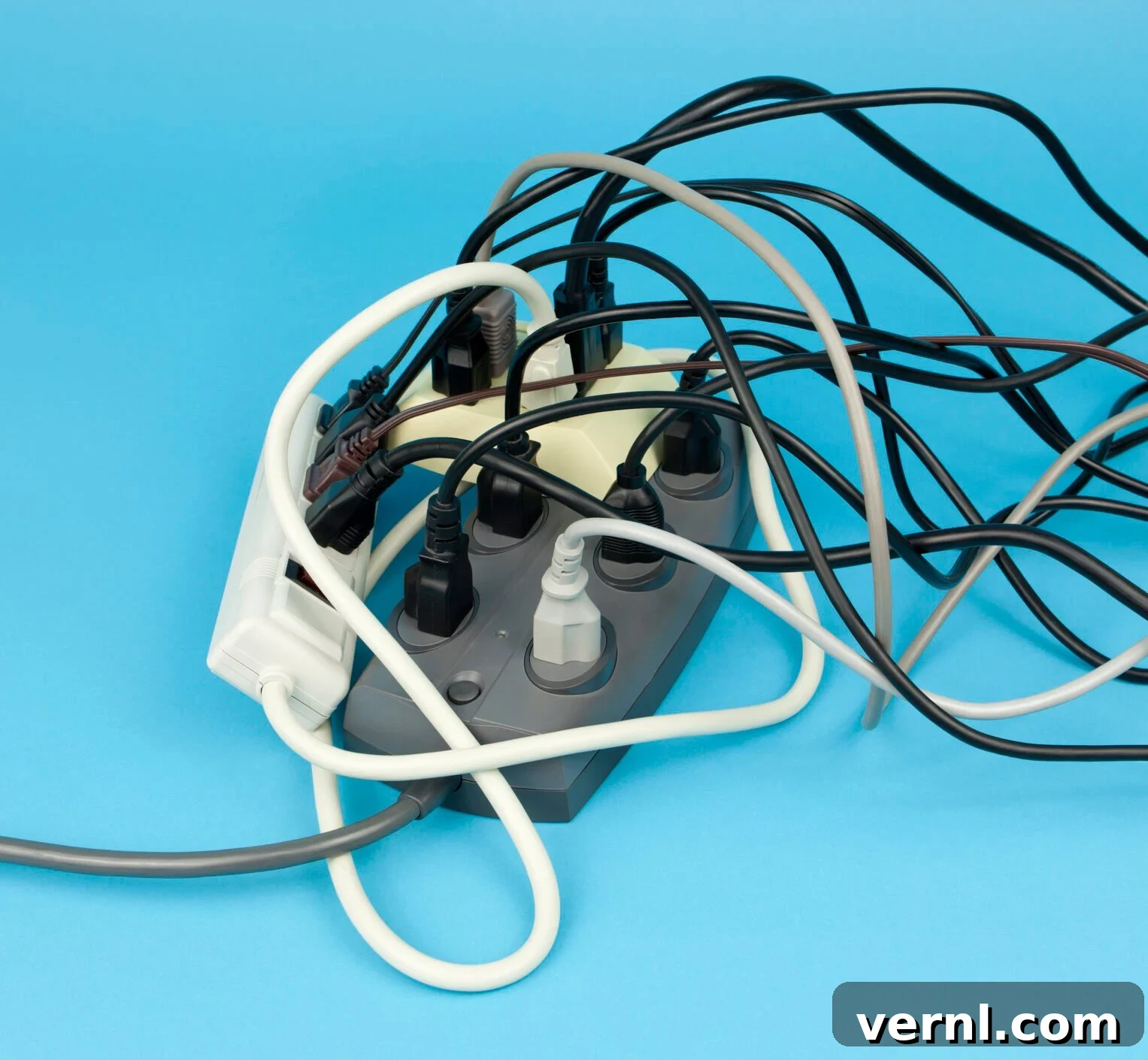
Demystifying Device Charging: Does Plugging Too Many Devices Into an Outlet Slow Down Your Charge?
In our modern, device-heavy lives, it’s common practice to use power strips, splitters, and multi-port chargers to accommodate the charging needs of numerous gadgets from a single wall receptacle. This convenience often sparks a frequent question, and indeed a widely held misconception: does plugging multiple items into a single outlet reduce the amount of current each device receives, thereby slowing down their charging speed?
The intuitive thought might suggest that an electrical outlet operates like a finite resource, dividing its capacity among all connected devices. While it’s true that improper electrical usage can lead to overloaded circuits or even damage to receptacles, the fundamental act of simply plugging in multiple devices does not inherently diminish the individual current draw or charging rate of each device, assuming the electrical circuit is functioning properly and safely.
This widespread belief, suggesting that electrical outlets split power like slices of a pie, has even been echoed by artificial intelligence. For instance, an answer bot once claimed: “The available power is divided among all the connected items, resulting in a reduced current for each individual device.” According to this logic, plugging multiple items into a receptacle would indeed cause charging to slow down.
However, relying exclusively on AI for technical accuracy can be problematic, as this example illustrates. “Your phone doesn’t care if it’s sharing an outlet with a toaster, a lamp, and a TV,” firmly states Ryan Gregor, owner and head electrician of Australia-based RCG Electrical. “It just pulls the power it needs.” This sentiment is widely shared among electrical experts. This comprehensive guide will explore the actual mechanics of residential electrical systems, dismantle common myths, and provide clarity on the genuine factors that influence your device’s charging speed, empowering you with accurate knowledge and practical advice.
Understanding Electrical Systems: Why Outlets Don’t “Divide” Power
To truly understand why the notion of an outlet “dividing power” is a misconception, we must first grasp the foundational principles governing residential electrical systems. The faulty analogy often drawn is comparing an electrical receptacle to a faucet in a home’s plumbing system. In plumbing, turning on multiple faucets simultaneously typically reduces the water pressure at each point, as the supply pipes have a limited capacity to deliver water. However, this analogy simply does not apply to how electrical systems function.
Voltage: The Constant Electrical “Pressure”
The driving force that propels electric current through a circuit is known as voltage. In North American residential electrical systems, this voltage is remarkably stable and consistent, typically maintained at 120 volts (or 240 volts for larger, high-power appliances like ovens and dryers). Unlike the variable water pressure in a plumbing system that can fluctuate with demand, the voltage supplied to your outlets is actively maintained at a steady level by the electrical grid. It’s best to conceptualize this not as a finite pool of power that gets distributed, but rather as a constant, underlying electrical “pressure” that is consistently available at each outlet.
A more appropriate and accurate plumbing analogy for an electrical circuit involves envisioning a massive water tank that is perpetually kept full by an external, inexhaustible source. In this scenario, the receptacles in your home can be thought of as various holes drilled into the bottom of this tank. Since the water pressure (analogous to voltage) at the bottom of the tank remains constant, the sole factor dictating how much water (current) flows through each individual hole is the size of that hole. Translating this back to electricity, the “size of the hole” directly corresponds to the current draw of a specific device plugged into the receptacle.
Current: The Device’s Specific “Demand”
Every electronic device, when connected to an electrical outlet via its charger, essentially “requests” a specific amount of current necessary for its operation or charging. This required current draw is inherently determined by the device’s internal circuitry and the specifications of its accompanying charger, rather than by the number of other devices connected to the same outlet or power strip. Sergey Nikolin, an experienced electrician and HVAC professional, and President of Product Air Heating & Cooling LLC, explicitly states: “It doesn’t matter how many devices are plugged into an outlet. The speed of charging depends on the power output of the charger and outlet.”
Consequently, if your smartphone charger is engineered to draw, for instance, three amps of current, it will endeavor to draw those three amps irrespective of whether it’s the sole device plugged into the outlet or if it’s sharing the outlet with several other appliances. Therefore, under normal operating conditions, your phone should consistently charge at the same rate, provided the underlying electrical system itself is healthy and free from other potential issues that could impede its performance.
The Critical Role of the Charger
It is also vital to recognize the sophisticated function of the charger itself. A charger is far more than a simple connecting wire; it is a complex power adapter designed to convert the high alternating current (AC) voltage from the wall outlet into the lower direct current (DC) voltage and precise amperage required by your specific device. Modern chargers often incorporate advanced smart charging technologies that can communicate with your device to deliver the optimal power output. This intelligent regulation ensures efficient, safe, and consistent charging, further reinforcing that your device receives its necessary power independently of other devices (even non-charging ones) connected to the same electrical circuit.
Important Caveats: When Multiple Devices CAN Affect Charging Speed
While the fundamental principle holds – that individual outlets do not inherently divide power among separate devices – there are specific, crucial scenarios where connecting multiple devices can indirectly or even directly impact charging speed. These situations primarily stem from the design limitations of certain accessories or underlying problems within the electrical circuit itself. As electrician Sergey Nikolin thoroughly explains, understanding these exceptions is paramount for both optimal device performance and, more importantly, household electrical safety.
1. Shared USB Hubs and Inferior Accessories
Nikolin highlights a key distinction: “Let’s say you use a shared USB hub powered by a single outlet. Here you might notice slower charging.” This scenario differs significantly from simply plugging multiple independent chargers into a power strip. A standard wall outlet delivers a constant voltage, allowing each device, with its own dedicated charger, to draw the current it requires. However, a USB hub, especially an unpowered or cheaply manufactured one, functions differently. It receives a single power input from the wall outlet (or a computer) and must then internally distribute that power among its multiple USB ports. If the hub’s internal circuitry possesses limitations on its total power output, it may struggle to provide sufficient current to all connected devices simultaneously. In such cases, the available current from the hub itself will indeed be divided, inevitably resulting in slower charging speeds for each connected device. To circumvent this issue, it is highly recommended to invest in high-quality, powered USB hubs that feature a robust external power supply, ensuring adequate current delivery to all connected devices.
2. Overloaded Circuits and Voltage Fluctuations
The most critical and potentially hazardous exception arises when an electrical circuit becomes overloaded. Nikolin issues a strong warning: “using one outlet for multiple devices can overload a circuit (and even trip a breaker!), or generate excess heat (which wears down wiring over time and often happens in old houses).”
Every electrical circuit in your home has a maximum current capacity, typically 15 or 20 amps in standard residential settings. When the collective current drawn by all appliances and devices connected to that particular circuit exceeds this engineered capacity, the circuit enters an overloaded state. This condition does not mean power is being divided; rather, it signifies that the circuit is being pushed beyond its safe operational limits to deliver the total power being requested.
An overloaded circuit presents several severe implications:
- Tripped Circuit Breakers: This is the most immediate and common consequence. Circuit breakers are essential safety mechanisms designed to automatically “trip” or cut off power to a circuit when an overload or short circuit is detected. This crucial action prevents the wiring from overheating, which could otherwise lead to dangerous electrical fires. While inconvenient, a tripped breaker serves as a vital indicator that your electrical system is performing its intended safety function.
- Voltage Drop: Before a circuit breaker trips, a severely overloaded circuit can experience a noticeable and detrimental drop in voltage. As Nikolin explains, “An overloaded circuit, in turn, can cause voltage fluctuations, and if the voltage drops below what your charger needs, it can reduce charging speed.” Electronic devices and their chargers are designed to operate within specific voltage parameters; if the input voltage falls too low, chargers may become significantly less efficient, fail to initiate fast charging protocols, or even cease charging entirely.
- Excess Heat and Wiring Degradation: Prolonged operation of an overloaded circuit leads to the generation of excessive heat within the electrical wiring itself. “Excess heat from overloaded wiring can damage connections over time, leading to higher resistance in the circuit and this can cause inconsistent power delivery to your charger,” Nikolin adds. This continuous heating degrades the insulation around the wires and weakens electrical connections, which in turn increases electrical resistance. This creates a dangerous feedback loop where higher resistance generates even more heat, significantly escalating the risk of electrical fires. Older homes, often equipped with outdated wiring not designed for today’s high electrical demands, are particularly vulnerable to these issues.
- Damage to Sensitive Electronics: Consistent exposure to undervoltage conditions resulting from an overloaded circuit can place significant strain on the delicate electronic components within your devices and appliances. Over time, this stress can lead to premature failure and shorten their operational lifespan.
Recognizing the signs of an overloaded circuit is paramount for safety. These can include frequently tripped breakers, flickering or dimming lights when certain appliances are activated, outlets or switch plates that feel warm to the touch, and even a faint burning smell emanating from electrical fixtures. If you observe any of these warning signs, it is imperative to immediately unplug devices from the affected circuit and promptly consult a qualified, licensed electrician for a thorough inspection and necessary repairs or upgrades.
What’s Actually Causing Your Slow Charging? Top Troubleshooting Tips
If you find your device charging at an unexpectedly sluggish pace, it is overwhelmingly likely that the root cause lies elsewhere, rather than in the simple act of sharing an outlet with another device (unless, of course, you are indeed overloading a circuit, as previously discussed). Here are the most common culprits behind sluggish charging and detailed steps on how to diagnose and effectively address them:
- A Faulty Charging Cable or a Poor Connection: The charging cable is frequently the most fragile component in your charging setup. Worn-out, frayed wires, bent connector pins, or internal damage that isn’t immediately visible can significantly impede the efficient transfer of power. Always visually inspect your cable for any signs of damage, ensure it is fully and securely seated into both your device and the charging brick/port, and, crucially, test charging with a different, known-good cable. Prioritize high-quality, certified cables (e.g., MFi certified for Apple devices) as inexpensive, unbranded cables often lack the necessary robust wire gauge and proper shielding required for optimal and safe power delivery.
- Dirt, Debris, or Lint in the Charging Port: Over time, the charging port of your device can accumulate dust, pocket lint, or other small debris, which can prevent a solid, full connection between the charging cable and the device’s internal pins. Carefully examine the charging port using a flashlight. If debris is visible, gently remove it using a non-metallic tool such as a wooden or plastic toothpick, a burst of compressed air, or a soft, dry toothbrush. Absolutely avoid using metal objects, as these can easily damage the delicate internal pins and render your port inoperable.
- Background Applications Draining Power: If numerous applications are actively running in the background, consuming valuable CPU cycles, screen power, and data bandwidth, your device might be expending energy nearly as fast as it’s receiving a charge. This leads to a negligible or “net slow” charging rate. To mitigate this, close all unnecessary applications, consider enabling airplane mode, or for the absolute fastest charge, power down your device completely during the charging cycle.
- Software Issues That Require an Update: Occasionally, software bugs, glitches in the operating system, or simply outdated firmware versions can introduce inefficiencies in your device’s power management system. Ensure that your device’s operating system (iOS, Android, etc.) and all installed applications are fully updated to their latest versions. Manufacturers frequently release updates that include critical bug fixes and performance enhancements, often specifically targeting battery management and charging efficiency.
- An Old, Degraded Battery That Can’t Hold a Charge: All rechargeable lithium-ion batteries naturally degrade over time and with each charge cycle, gradually losing their maximum capacity and ability to efficiently hold a charge. If your device is several years old and you’ve noticed a significant decline in its battery life, slow charging could be a primary symptom of a failing or severely degraded battery. Most modern smartphones offer built-in battery health diagnostics (e.g., “Battery Health” on iPhones or detailed battery usage statistics on Android). A professional battery replacement by an authorized service provider may be the most effective solution in such cases.
- The Charger Isn’t the Right One for Your Device: Utilizing an underpowered charger – for instance, an old 5W phone charger for a modern tablet or a fast-charging smartphone – will invariably result in significantly slower charging speeds. Always use the original charger that came with your device or invest in a reputable third-party charger that precisely matches or exceeds the recommended wattage and voltage. Furthermore, ensure the charger supports modern fast-charging standards pertinent to your device, such as USB Power Delivery (PD) or Qualcomm Quick Charge. The output amperage and voltage of your charger must be compatible with your device’s specific power requirements to achieve optimal charging speeds.
It is only after you have methodically addressed and effectively ruled out all these common, and often more direct, causes of slow charging that it makes sense to consider a voltage drop due to an overloaded receptacle as a potential culprit. If you consistently experience symptoms like frequently tripped circuit breakers, noticeable flickering lights, or outlets that are consistently warm to the touch, these are strong and undeniable indicators of a serious underlying electrical issue within your home’s wiring. In such critical circumstances, it is imperative to promptly consult a certified and licensed electrician for a thorough inspection and, if necessary, a professional upgrade to your home’s electrical system to ensure both the safety of your household and the optimal performance of your electronics.
About the Experts
The valuable insights and expert opinions meticulously shared in this article are derived from highly experienced professionals in the electrical and HVAC fields:
- Ryan Gregor: With an impressive tenure of over a decade of hands-on experience in the intricate electrical field, Ryan is the dedicated Owner and Head Electrician of the esteemed Australia-based RCG Electrical. His extensive practical expertise provides a crucial real-world perspective on complex electrical systems and prevailing consumer usage patterns.
- Sergey Nikolin: Serving as the accomplished President of Product Air Heating & Cooling LLC, strategically located in Marysville, WA, Sergey contributes an expansive wealth of knowledge spanning HVAC, critical indoor air quality, and essential electrical systems. His comprehensive background enables a deep and nuanced understanding of how various vital home systems intricately interact.
Sources
This article has been meticulously developed by drawing upon established principles in electrical engineering, corroborated by practical advice gleaned from seasoned industry experts. Additional reference material consulted includes:
- ecoATM: Why Is My Phone Charging Slow? (2024). This source offered a general overview and corroboration of common slow charging issues.