
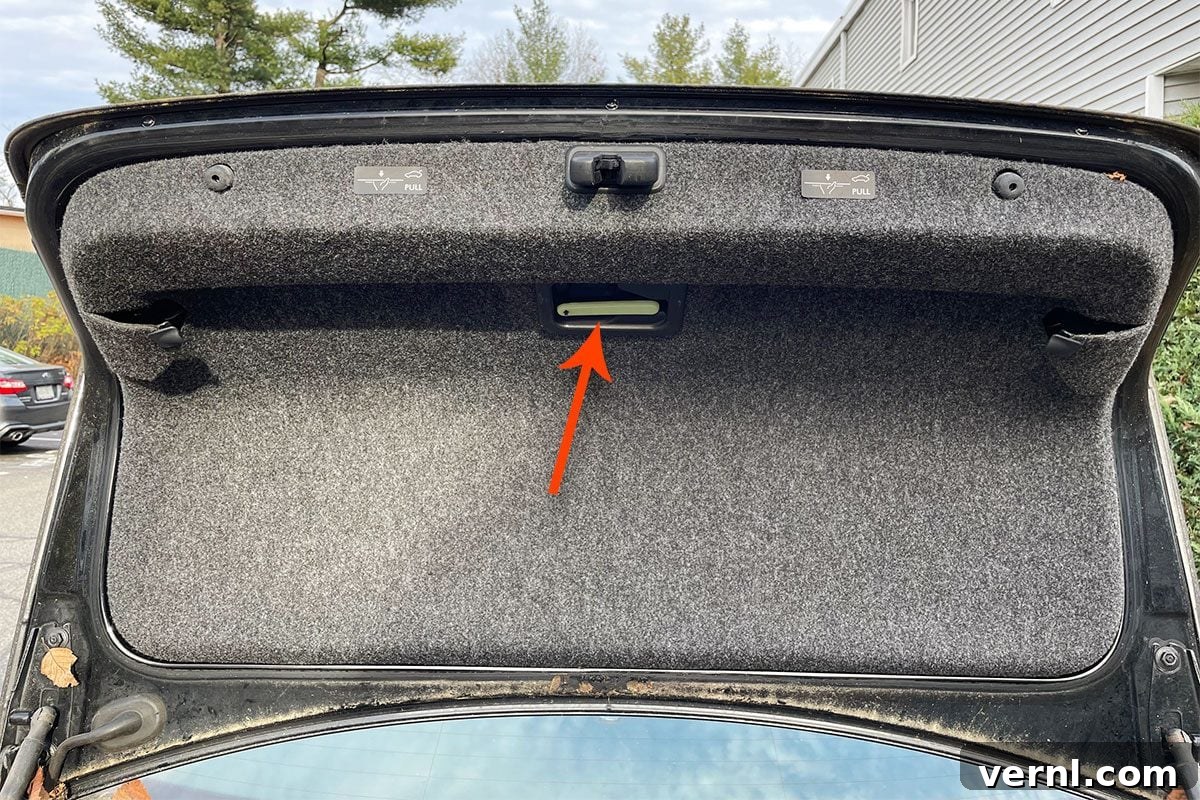
Have you ever reached into the depths of your car’s trunk, perhaps searching for a forgotten item, only to be momentarily surprised by a faint, otherworldly glow? Many modern vehicles conceal a small but incredibly important safety feature: a glow-in-the-dark handle. While its presence might initially seem like a quirky design choice, this unassuming handle serves a grim yet vital purpose: to act as a lifeline for anyone accidentally trapped inside. Understanding its function, origin, and the regulations that made it commonplace is essential for every vehicle owner, highlighting a critical aspect of modern automotive safety.
The Unsung Hero: Unraveling the Mystery of Glow-in-the-Dark Trunk Handles
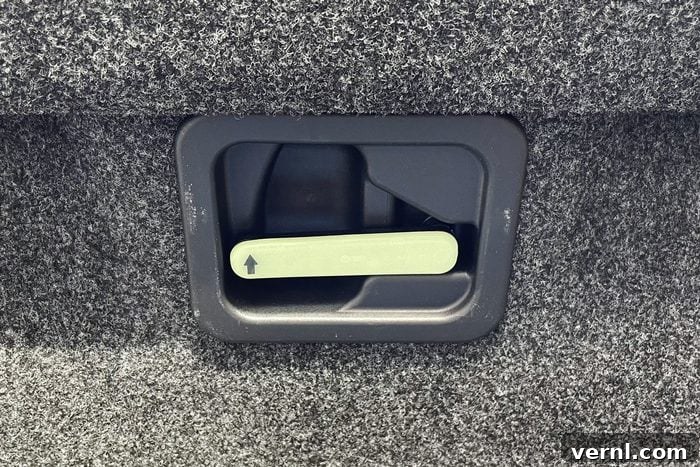
At first glance, the concept of a glow-in-the-dark handle inside a car trunk might seem peculiar. Is it a convenience feature for finding items in the dark? Or perhaps a stylistic flourish? In reality, its design is rooted purely in life-saving functionality. These handles are specifically engineered as an emergency release, providing a crucial escape mechanism for anyone who might find themselves accidentally locked or trapped within the confined space of a vehicle’s trunk. This interior trunk release is a last resort, a critical safeguard against unforeseen dangers.
The choice of glow-in-the-dark material is not arbitrary; it’s a testament to thoughtful safety engineering. In the pitch-black environment of a closed trunk, conventional handles would be impossible to locate. The phosphorescent properties of these materials allow the handle to absorb ambient light when the trunk is open, then emit a soft, persistent glow when darkness descends. This subtle illumination ensures that even in the most disorienting and terrifying circumstances, the escape mechanism remains visible and accessible. Its bright, often yellow or orange, color further enhances its visibility, offering a beacon of hope in an otherwise desperate situation and allowing for immediate identification.
The situations necessitating such a device are varied and often tragic. They range from mischievous children accidentally locking themselves inside during a game of hide-and-seek, to individuals who might have fallen in, such as the elderly or infirm. More disturbingly, these releases are a critical defense against foul play, offering a potential means of escape for victims of kidnapping or unlawful confinement. The interior of a car trunk can quickly become a deadly environment due to extreme temperatures, lack of oxygen, and psychological stress. Temperatures can rise rapidly on a hot day, leading to heatstroke, and the limited air supply can pose an immediate threat. Therefore, having a simple, intuitive, and highly visible escape route is paramount for passenger safety.
A Glimpse into History: The Genesis of a Modern Automotive Safety Standard
The journey to make interior trunk releases a mandatory feature is a compelling story of advocacy, tragedy, and legislative action. While the concept might seem self-evident today, it wasn’t always a standard part of vehicle design. The push for such a technology can largely be attributed to the tireless efforts of individuals like William Proehl, who began advocating for emergency trunk handles in the 1980s. Proehl, driven by a growing awareness of tragic trunk-related incidents, tirelessly petitioned the National Highway Traffic Safety Administration (NHTSA) to mandate these devices by law across all new passenger vehicles.
In those early years, Proehl’s efforts faced an uphill battle. Despite the clear humanitarian argument, there was a perceived lack of comprehensive, quantifiable safety data directly linking the absence of such a feature to widespread fatalities or severe injuries. Automakers, naturally, were hesitant to adopt new, potentially costly features without a clear regulatory mandate or overwhelming evidence of necessity. This initial resistance highlighted a common challenge in safety advocacy: the need to quantify risks and demonstrate tangible benefits before widespread change occurs. The automotive industry often resisted design changes that added complexity or cost without direct evidence of a significant safety problem as defined by official statistics.
However, as time progressed through the 1990s and into the early 2000s, the tragic statistics began to paint a clearer, more urgent picture. Reports of children dying from heatstroke after becoming trapped in trunks, coupled with an increasing number of kidnappings where victims were confined in vehicle compartments, garnered significant public and media attention. These harrowing incidents served as a stark reminder of the vulnerability of individuals trapped in such enclosed spaces, making the need for an internal release mechanism unequivocally clear. The accumulation of these grim cases provided the impetus needed to reignite the discussion and push for legislative action, transforming a once-overlooked issue into a national safety priority and leading to significant changes in car safety regulations.
The Mandate: Federal Motor Vehicle Safety Standard (FMVSS) 401
The turning point arrived in 2002 when the United States government, through the efforts of the NHTSA, enacted a landmark regulation known as Federal Motor Vehicle Safety Standard (FMVSS) No. 401, officially titled “Interior Trunk Release.” This crucial law made it a mandatory requirement for all new passenger cars sold in the U.S., effective September 1, 2001, to be equipped with an interior trunk release mechanism. The implementation of FMVSS 401 was a direct response to the escalating number of tragic incidents involving trunk entrapments, solidifying a critical layer of protection for the public and significantly enhancing vehicle safety standards.
William Proehl’s unwavering dedication to this cause was formally acknowledged in the NHTSA’s official ruling. The document explicitly referenced his petition, underscoring the profound impact of individual advocacy on national safety policy. The ruling articulated the wide array of potential victims Proehl had highlighted, demonstrating a comprehensive understanding of the risks associated with trunk entrapment and the necessity of this life-saving feature:
“The petitioner stated that persons such as alarm and stereo installers, mechanics, playful children, pranksters, and crime victims may be trapped in the trunk. The petitioner also believed that an elderly person might fall into the trunk and thereby become entrapped. Mr. Proehl asked NHTSA to require an inside trunk release in all new cars to facilitate the release of these victims.”
This legislative action not only mandated the inclusion of the release but also specified certain performance criteria, such as the requirement for the mechanism to be operable by a child as young as five years old, ensuring broad usability in emergency scenarios. Furthermore, it often stipulated the glow-in-the-dark feature to ensure visibility in low-light conditions, even in complete darkness. FMVSS 401 profoundly reshaped vehicle design, integrating this essential safety feature into the core manufacturing process, thereby offering a standardized layer of protection across the entire automotive industry and providing peace of mind to vehicle owners and passengers alike.
Operating the Emergency Trunk Release: A Critical Skill for Preparedness
One of the most reassuring aspects of the emergency trunk release is its deliberate simplicity. Designed for instinctive use under duress, the mechanism typically involves a straightforward pull-handle. There are no complex instructions, no buttons to push in a specific sequence, and no need for tools or prior technical knowledge. The primary goal is to facilitate an immediate escape with minimal effort and cognitive load. If you or someone you know ever finds themselves in the terrifying situation of being trapped inside a car trunk, the procedure is remarkably clear: locate the glowing handle – usually brightly colored in yellow or orange, and often located near the trunk latch – and simply pull it firmly. This action will disengage the trunk latch, allowing the trunk lid to spring open, providing a pathway to safety and freedom.
While we sincerely hope you never have to use this feature in an actual emergency, understanding its existence and location is a crucial step in personal safety preparedness. The best time to familiarize yourself with your car’s emergency trunk release is now, under calm and controlled conditions. Next time you open your trunk, take a brief moment to scan the interior. Identify the handle, note its position, and perhaps even gently test its movement (without fully opening the trunk if you don’t need to). This simple act of awareness can make all the difference in a high-stress situation, turning panic into a quick, decisive action that could save a life. Consulting your vehicle’s owner’s manual can also provide specific details about its location and operation in your particular model.
It’s important to remember that these systems are designed to be robust and reliable. They are not connected to the vehicle’s electrical system, meaning they will function even if the car’s battery is dead or if the electrical system is otherwise compromised due to an accident or malfunction. This mechanical independence is a key factor in its effectiveness as a last-resort safety device. Knowing where this handle is, and how effortlessly it works, provides a significant degree of peace of mind, not just for drivers, but for all occupants of the vehicle. It’s a testament to passive safety design – a feature that works silently in the background, ready when it’s needed most.
Beyond the Release: Broader Implications of Trunk Safety
The implementation of the emergency trunk release as a standard safety feature is a testament to the continuous evolution of vehicle safety, moving beyond crashworthiness to encompass occupant protection in diverse scenarios. However, the presence of this feature should not diminish the importance of practicing overall trunk safety. Education remains a critical component. Parents and guardians should consistently remind children never to play in or around car trunks, and to always understand the dangers associated with confined spaces and extreme temperatures, particularly during hot weather. The risks of suffocation and heatstroke are severe and immediate.
Simple preventative measures, such as always locking car doors and trunks when the vehicle is unattended, keeping car keys out of reach of young children, and ensuring that any items stored in the trunk are secured, all contribute to a safer environment. While the emergency release offers a vital escape route, preventing entrapment in the first place is always the ideal scenario. Public awareness campaigns continue to play a crucial role in reinforcing these messages, helping to prevent tragic incidents before they occur and fostering a culture of vigilant safety practices around vehicles.
In conclusion, the humble glow-in-the-dark handle in your car’s trunk is far more than just a convenience; it is a meticulously designed lifeline, born from tireless advocacy and shaped by essential legislation like FMVSS 401. It stands as a silent guardian, ready to offer a critical escape in dire circumstances, providing a vital layer of protection for every passenger. Taking a moment to locate and understand this indispensable safety feature in your own vehicle is a small action that carries immense potential for protection and peace of mind. It embodies the principle that true safety often lies in the details, even those subtly glowing in the dark, ensuring that help is always within reach when it’s needed most.
Source
Federal Register, “Federal Motor Vehicle Safety Standards; Interior Trunk Release”, 2000