
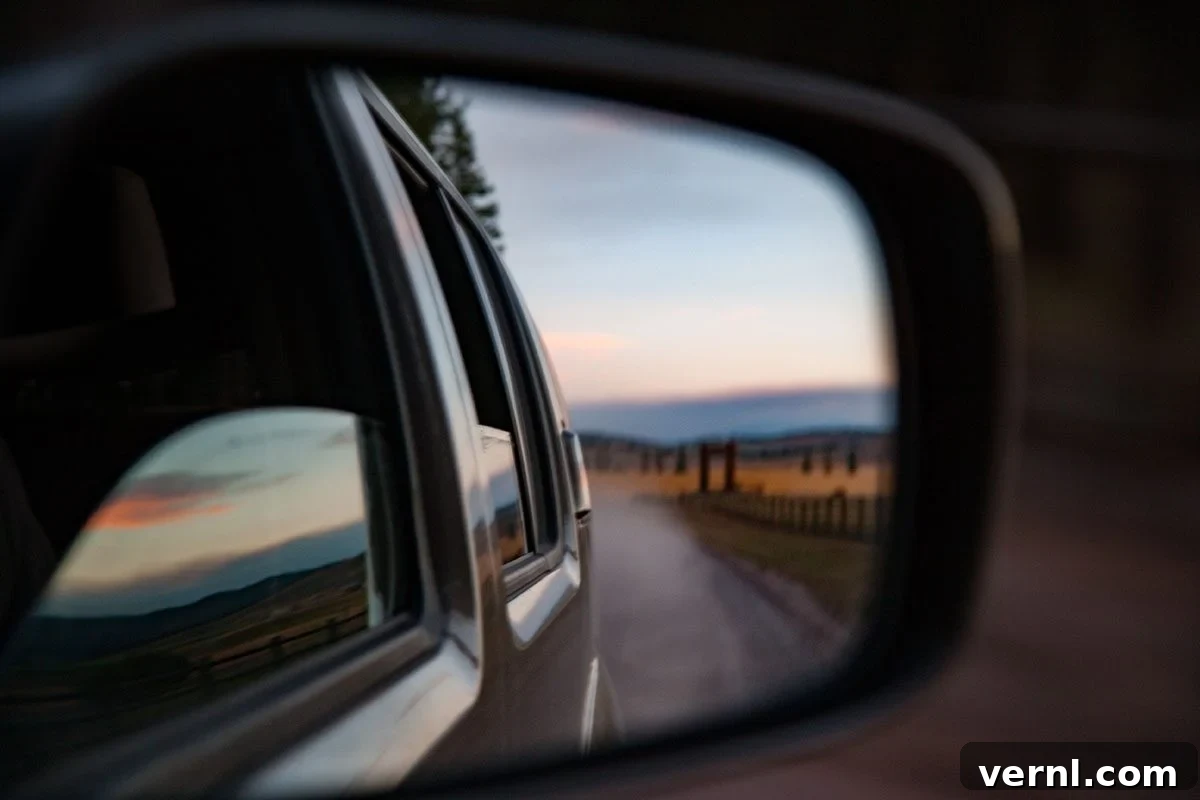
Have you ever experienced that jarring “whoop-whoop-whoop” sound or an irritating helicopter-like thumping when you roll down a car window? This common yet annoying phenomenon is known as wind buffeting, a distinct type of car wind noise that can quickly turn a peaceful drive into an uncomfortable experience. It’s an issue that affects nearly all vehicles, from compact sedans to spacious SUVs, especially when driving at higher speeds with just one window open.
As Kevin Oliff, a seasoned dealership manager, aptly puts it, “It’s that whoop-whoop-whoop sound that turns a pleasant drive into an air-pressure torture chamber.” This pulsing pressure inside the cabin is particularly prevalent in modern cars, which are designed for maximum aerodynamic efficiency. While this design benefits fuel economy, it can inadvertently amplify wind buffeting when the cabin’s sealed environment is disrupted by an open window.
Beyond simply opening a window, external modifications to your vehicle can also contribute to this problem. Attaching aftermarket parts like a cargo rack or even bicycle racks to the outside of your car significantly alters its aerodynamics. These additions can create turbulent airflow, leading to not only the signature buffeting sound but also an incessant whistling that can be quite distracting. Fortunately, this irritating problem has several easy and effective solutions. Understanding what causes wind buffeting is the first step to eliminating it and restoring tranquility to your drives.
Understanding Wind Buffeting: The Science Behind the Sound
Wind buffeting, also sometimes referred to as ‘Helmholtz resonance’ within the automotive context, occurs when you open a window while driving, typically at highway speeds or even moderately high speeds above 30-40 mph. The distinctive throbbing or helicopter-like sound is a result of the complex interaction between the fast-moving outside air and the contained air inside the vehicle cabin. When a single window is open, the high-pressure external airflow rushes past the opening, creating a vacuum effect that pulls air out of the cabin. Simultaneously, this airflow then pushes air back into the cabin in rapid succession.
This rapid succession of air being drawn out and pushed into the cabin creates a dynamic pressure differential. The two air masses—the fast-moving external air and the relatively stagnant internal air—collide and then compress and decompress repeatedly within the enclosed space of the car’s interior. This cyclical compression and decompression of air molecules generate the low-frequency, pulsating sound waves we identify as wind buffeting. The cabin essentially acts like a giant resonating chamber, similar to blowing across the top of a bottle, amplifying these pressure fluctuations into a noticeable and often disorienting noise. Depending on the vehicle and conditions, this internal throbbing can be surprisingly loud, sometimes reaching decibel levels comparable to a commercial aircraft cabin.
Several variables contribute to the intensity of this effect. These include the specific shape and size of your car, how far you lower the window, and your driving speed. The phenomenon isn’t exclusive to side windows; it can also occur when any single opening is exposed, including the sunroof. However, the helicopter sound is often more pronounced and aggressive when a rear window is down. This is partly because modern car designs, particularly their side mirrors, are engineered to direct airflow efficiently away from the front windows to reduce drag and wind noise. Lowering a rear window disrupts this carefully managed airflow, amplifying the turbulent interaction and consequently the buffeting effect within the cabin. The pressure waves bounce more freely within the larger, unobstructed space created by an open rear window.
Why Wind Buffeting Is Worse on Newer Cars
It might seem counterintuitive, but wind buffeting tends to be a more significant issue in modern vehicles compared to their older counterparts. The primary reason for this lies in contemporary automotive design philosophy: aerodynamics. Newer cars are meticulously engineered to be as aerodynamic as possible, allowing wind to pass over them with extreme efficiency and minimal resistance. This sleek design reduces drag, which in turn improves fuel efficiency and contributes to a quieter ride when all windows are closed.
However, this highly efficient airflow comes with a trade-off. When a window is opened, even slightly, it dramatically disrupts this smooth, carefully managed air passage. The cabin, which is otherwise almost perfectly sealed and insulated for quietness, suddenly experiences a severe disruption in air pressure. This disruption is magnified precisely because the car is so aerodynamic. The sealed, modern cabin essentially becomes a pressure cooker when air is rapidly forced in and out through a single opening, exacerbating the buffeting effect. The improved sound insulation in newer vehicles also plays a role; while it keeps road noise out, it makes the internal buffeting noise even more noticeable and intrusive.
In contrast, older vehicles were designed with less emphasis on extreme aerodynamics and often had less rigid body structures and imperfect seals. Air frequently leaked from their interiors through various gaps and less-than-perfectly sealed doors or windows. While not ideal for quietness or efficiency, this ‘leakiness’ inadvertently provided a natural pressure relief mechanism. The constant, albeit uncontrolled, exchange of air between the cabin and the outside environment meant that the pressure differentials caused by an open window were never as extreme or as rapidly fluctuating. This inherent “ventilation” helped to relieve the pressure build-up caused by wind buffeting, thereby significantly reducing the effect and making it less bothersome for drivers and passengers.
Effective Solutions to Combat Wind Buffeting
While the sound of wind buffeting can be incredibly annoying, the good news is that stopping or at least minimizing it is often quite simple. The most straightforward and universally effective solution involves equalizing the air pressure inside the vehicle.
The “Open Another Window” Trick
The simplest and most immediate fix is to open another window, even just a crack. This action allows for an escape route for the built-up air pressure and an entry point for external air, creating a balanced airflow. When the pressure inside the vehicle stabilizes, the rhythmic thumping stops almost immediately, or at least minimizes to a negligible level. Experiment with different combinations: opening a window on the opposite side of the car, cracking a rear window if a front one is open, or vice-versa. The goal is to create a cross-ventilation effect that prevents the cabin from acting as a single resonating chamber.
Utilizing Window Deflectors
Some vehicles come equipped with plastic deflectors at the front edge of their side windows, often known as rain guards or window visors. These accessories are designed to subtly alter the airflow, directing wind out and away from the vehicle’s cabin, even when the window is partially open. They effectively break up the direct impact of external air entering the window cavity, significantly reducing buffeting. Similarly, vehicles with sunroofs often feature integrated deflectors that pop up when the sunroof is open. These are crucial for directing wind flow up and over the cabin, preventing buffeting and excessive wind noise from above. Aftermarket versions are also widely available and can be easily installed to enhance comfort.
Addressing Aftermarket Accessories: Wind Fairings
One of the significant contributors to wind buffeting, whistling, and general wind noise can be aftermarket roof racks, cargo boxes, bike racks, and other external accessories. These items, while practical, dramatically disrupt the smooth airflow over your car’s roof, creating turbulence that can lead to severe buffeting and persistent whistling sounds. A highly effective solution for this is to pick up a wind fairing. A wind fairing is an aerodynamic shield designed to attach to the front of your roof rack. It smoothly deflects air up and over the rack and its cargo, minimizing drag and turbulence. This not only reduces wind buffeting and whistling but can also slightly improve fuel efficiency.
Adjusting Driving Habits
While not always practical, simply driving slower can also make a noticeable difference. The intensity of wind buffeting is directly proportional to speed. Additionally, if you must open a window at higher speeds, try opening it incrementally rather than all the way down at once. This allows the cabin pressure to adjust more gradually, potentially lessening the immediate shock of the buffeting effect.
Frequently Asked Questions (FAQ) About Car Wind Buffeting
Can I avoid wind buffeting by driving slower?
Yes, absolutely. Driving at lower speeds, especially under 50 mph, can significantly reduce the pressure differential that causes buffeting. At slower speeds, the air masses interact less violently, leading to less pronounced or even absent helicopter noise. However, as Kevin Oliff wisely notes, “the easy way to fix it is just to crack another window to balance the airflow,” making it a more convenient solution for most driving conditions.
Are there any specific vehicles more prone to wind buffeting?
Certain vehicle types and designs are indeed more susceptible to wind buffeting. According to Oliff, coupes, SUVs, and cars equipped with frameless windows or large sunroofs can be more prone due to their unique cabin geometry and inherent airflow patterns. Coupes, with their often smaller cabins and single door openings, can create a more isolated pressure chamber. SUVs, due to their larger and boxier profiles, can experience different kinds of turbulence, especially when rear windows are down. Frameless windows, while aesthetically pleasing, might sometimes allow for different airflow dynamics around their edges when open, potentially contributing to the effect. Sunroofs, by their very nature, create a large opening on the vehicle’s roof, making them prime candidates for buffeting if not designed with proper deflecting mechanisms.
Furthermore, vehicles with aftermarket roof racks and other external accessories tend to be more susceptible to wind buffeting and associated noise. These additions disrupt the vehicle’s carefully optimized aerodynamics, creating turbulent zones that lead to discomfort. As master certified technician Chris “Moose” Pyle explains, “When a car is more aerodynamic, like most these days, the air is flowing fast across the car so it is less affected by external buffeting, but that can also make internal buffeting worse.” This highlights the paradox: a sleek exterior, while beneficial for overall efficiency, can amplify internal pressure issues when the cabin is compromised by an open window or external accessories. Understanding these factors can help drivers make informed decisions about their vehicle modifications and driving habits to enhance comfort.
About the Experts Featured in This Article
- Kevin Oliff is the general manager at AutoNation BMW Buena Park in California. With more than two decades of extensive experience in the dynamic automotive field, Kevin provides invaluable insights into vehicle design, customer issues, and practical solutions for common driving challenges. His expertise spans across sales, service, and understanding the nuances of modern car engineering.
- Chris “Moose” Pyle is a highly respected master-certified technician with over 20 years of hands-on automotive experience. Known for his comprehensive knowledge and practical problem-solving skills, Chris has been serving as an expert for JustAnswer since 2006. In this role, he answers hundreds of complex car maintenance and repair questions daily, offering reliable advice to drivers seeking professional guidance on a wide array of automotive issues, including diagnostics and performance.