
Wood Stain Guide: Types, Uses, and Application for Stunning Results
Whether you’re building furniture, crafting cabinets, or simply refreshing your existing woodwork, understanding wood stains is crucial for achieving professional-looking results. This guide dives deep into the world of wood stains, covering various types, their characteristics, and how to choose the perfect one for your project.
Wood staining is a fundamental skill in woodworking and a fantastic way to enhance the beauty and longevity of your projects. From adding color to protecting the wood, the right stain can transform ordinary wood into a work of art. This comprehensive guide will help you navigate the different options, learn about application techniques, and discover valuable safety tips.
What is Wood Stain?
Wood stains are essentially liquid or gel products designed to color and protect wood surfaces. They consist of coloring agents, such as pigments or dyes, suspended or dissolved in a carrier solvent. The carrier determines many of the stain’s characteristics, including drying time, ease of application, and final appearance. Common carriers include oil, water, alcohol, and polyurethane. This guide will focus primarily on stains designed for interior woodworking projects. Exterior wood stains, which are formulated for weather resistance, will not be covered in detail in this guide.
Types of Wood Stain: A Detailed Look
Understanding the different types of wood stains is the first step toward achieving the desired finish for your projects. Here’s a breakdown of the most common types, their pros, cons, and best applications.
Oil-Based Stains
Oil-based stains are a classic choice, typically formulated with a linseed oil carrier. This results in a thick, penetrating finish that enhances the wood’s natural grain. They are well-suited for interior projects that require extra protection, such as furniture, cabinetry, and trim.
Key Features:
- Rich Color: Oil-based stains tend to produce a deeper, more vibrant color.
- Penetration: They penetrate the wood fibers deeply, providing excellent protection.
- Ease of Application: Can be applied with a rag or brush, allowing for a smooth and even finish.
- Slow Drying: The slower drying time gives you more opportunity to correct any imperfections.
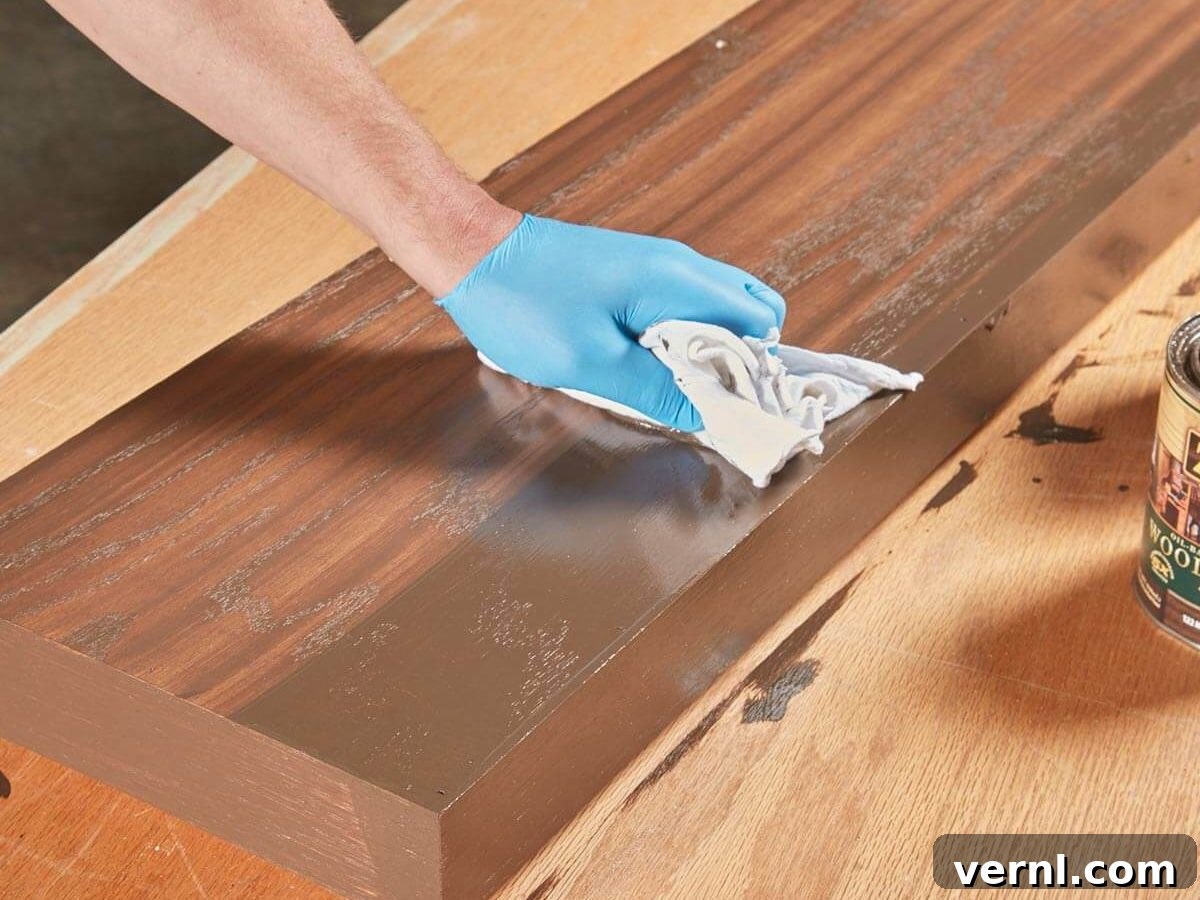
Application: Apply oil-based stain with a rag or brush, wiping off the excess to achieve an even color. Use mineral spirits for cleanup.
Approximate Cost: $20 per quart.
Recommended Product: General Finishes Oil-Based Penetrating Wood Stain. This stain is known for its ease of application, making it a great choice for both beginners and experienced woodworkers. It’s available in a variety of colors and is designed to be brushed on and excess wiped off.
Water-Based Stains
Water-based stains are a popular choice due to their fast drying time and low environmental impact. They are generally considered to be safer and have fewer volatile organic compounds (VOCs). These stains are ideal for projects where quick drying and easy cleanup are priorities.
Key Features:
- Fast Drying: Allows for quicker project completion.
- Low Odor: Creates a more pleasant working environment.
- Easy Cleanup: Water is used for cleanup, making the process simple.
- Mold and Mildew Resistance: Provides better protection against mold and mildew.
Application: Apply with a brush or rag. Be careful not to overbrush, as the quick drying time can lead to visible brushstrokes. Multiple coats may be required to achieve the desired color intensity.
Approximate Cost: $30 to $40 per quart.
Recommended Product: Minwax Water Based Wood-Sheen Running Stain & Finish. This product offers an understated, not-too-shiny finish that’s perfect for interior woodwork. Its ease of use makes it a great option for DIYers.
Gel-Based Stains
Gel stains are thicker than oil- and water-based options, making them a great choice for vertical surfaces or when you want to minimize drips and runs. They offer excellent control over the final color intensity, allowing for a customized finish.
Key Features:
- Thick Consistency: Prevents drips and runs, making them suitable for vertical surfaces.
- Easy Application: Applied with a rag, allowing for easy control over color intensity.
- Hides Imperfections: Gel stains can help disguise natural defects in the wood.
Application: Apply gel stain with a rag, and wipe off the excess. The more you rub the stain into the wood, the darker the color will be. Mineral spirits are used for cleanup.
Approximate Cost: $20 to $30 per quart.
Recommended Product: Old Masters Gel Stain. Known for its rich color and even application, this stain excels at hiding imperfections and providing a professional-looking finish.
Lacquer Finishes
Lacquer is a fast-drying, film-forming finish. Lacquer is a finish, not a stain. It adds protection and sheen to the woodwork. It’s applied over the stained wood to provide protection and a glossy finish. Due to its quick drying time, many woodworkers apply it with spray equipment.
Key Features:
- Fast Drying: Allows for quick project completion.
- High Sheen: Lacquer typically produces a glossy finish.
Application: Lacquer is generally applied with spray equipment. Cleanup requires a special solvent.
Approximate Cost: $15 per quart.
Recommended Product: Minwax Clear Brushing Lacquer. It is quick and easy to apply and doesn’t require sanding between coats.
Varnish Finishes
Varnish, like lacquer, is a clear, film-forming finish. It’s a broad term encompassing various clear wood finishes. Polyurethane, lacquer, and shellac are all considered varnishes. The solvent used to clean varnish depends on the particular product being applied.
Key Features:
- Durable: Provides long-lasting protection.
- Versatile: Available in various sheen levels (gloss, semi-gloss, satin).
Application: Varnish can be brushed, sprayed, or wiped on, depending on the product and desired finish.
Approximate Cost: $10 to $30 per quart.
Recommended Product: Miniwax Fast Drying Polyurethane provides a smooth, satin finish that dries fast and is easy to recoat.
Wood Stain Tips and Safety: Finishing with Confidence
Applying wood stain can be a rewarding experience, but it’s essential to prioritize safety and follow best practices for the best results.
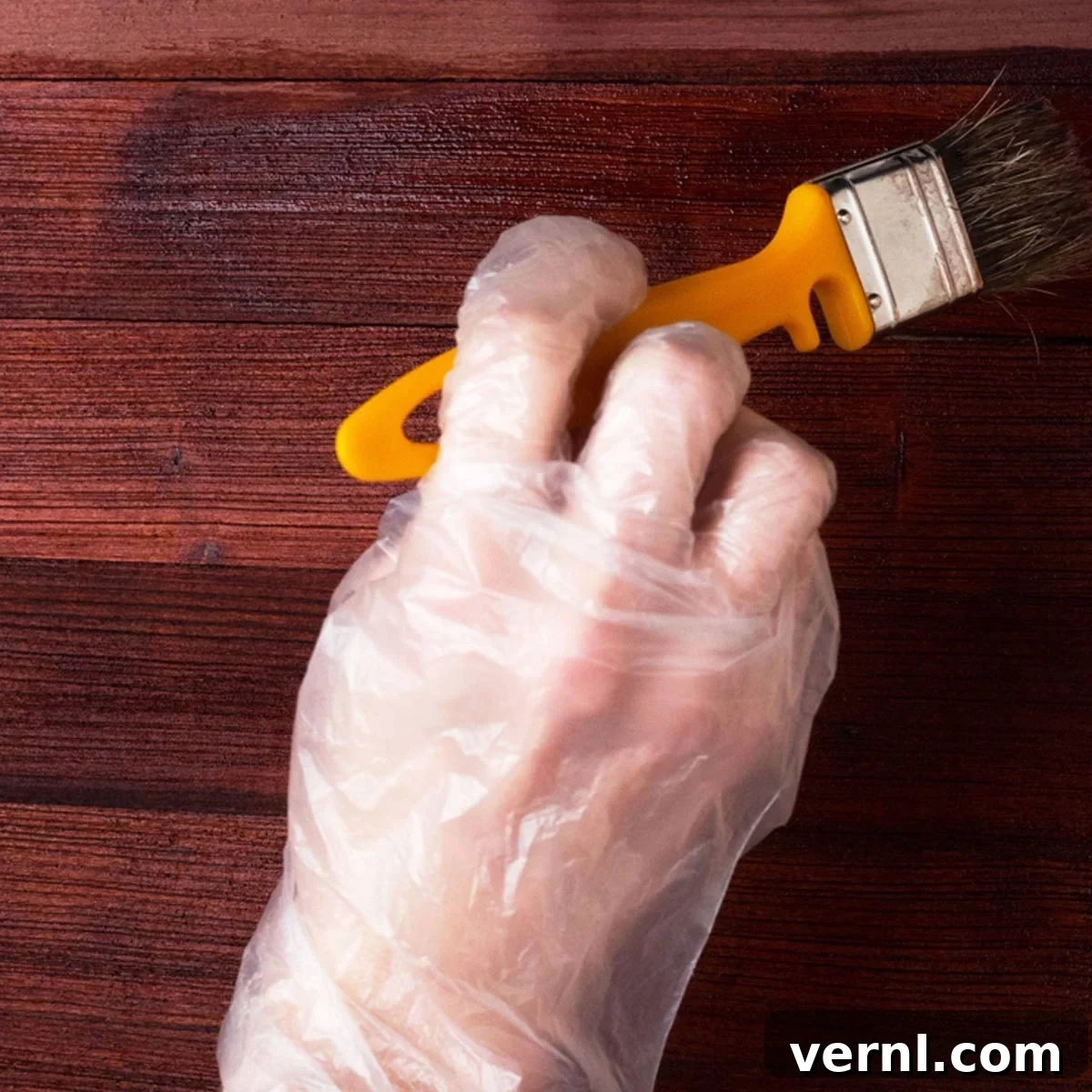
- Wear Protective Gear: Always wear rubber gloves to protect your hands from the stain.
- Cover Up: Wear clothing that fully covers your arms and legs. This ensures that the stain doesn’t come into contact with your skin.
- Have Cleaning Supplies Ready: Keep water (for water-based stains) or mineral spirits (for oil-based and gel stains) on hand for cleaning your application tools and any accidental spills.
- Ventilate Your Workspace: Ensure adequate ventilation, especially when using oil-based or other solvent-based stains. Open windows and doors, or use fans to circulate air and reduce the risk of inhaling harmful fumes.
- Follow Manufacturer’s Instructions: Carefully read and follow the specific instructions provided by the stain manufacturer. Application techniques and cleanup procedures can vary.
By understanding the different types of wood stains and following these tips, you’ll be well-equipped to achieve beautiful and long-lasting finishes for all your woodworking projects. Happy staining!