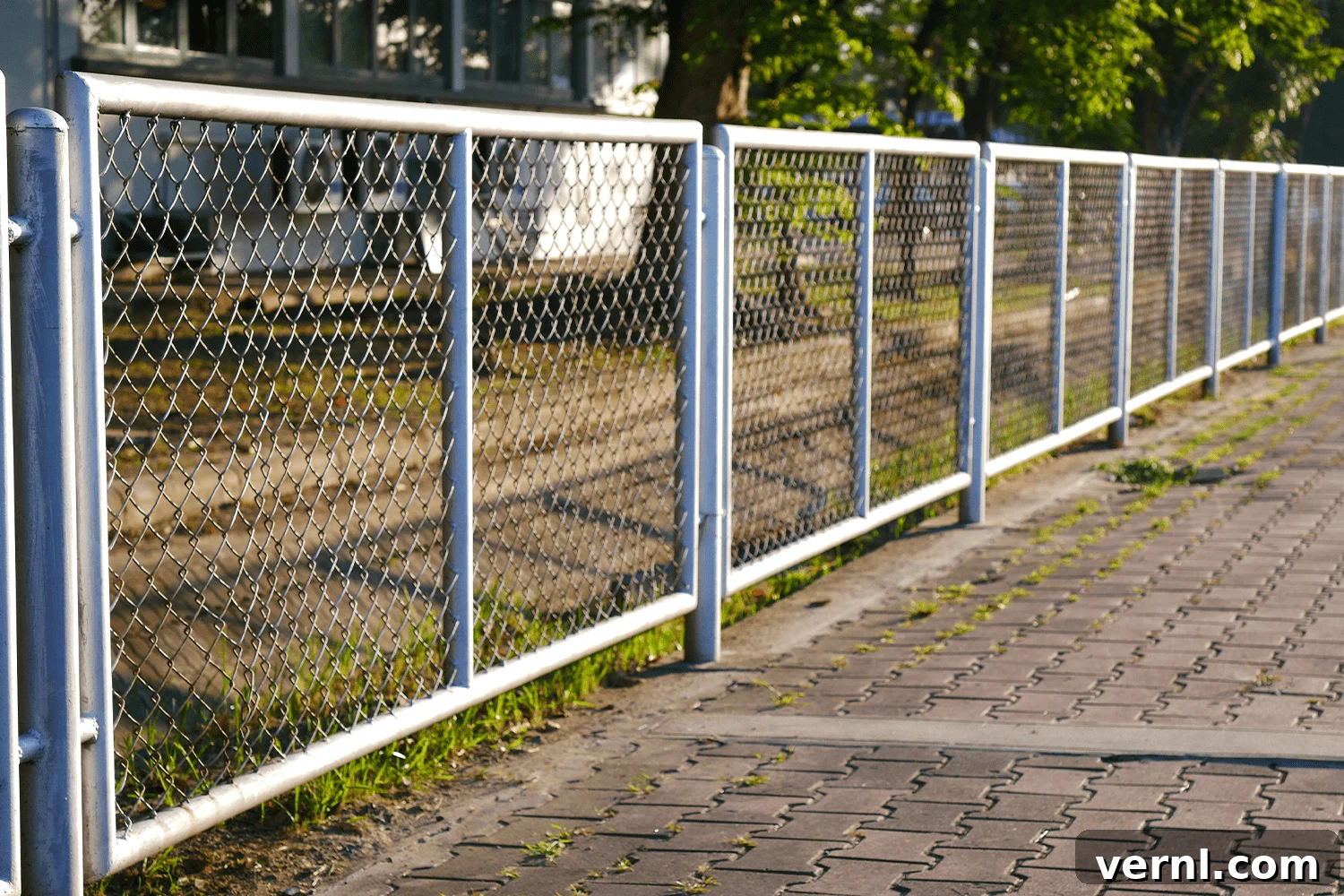
Chain link fencing stands as a testament to practical design, offering an ideal blend of ruggedness and visibility that has made it a go-to security solution for countless properties. Its robust yet open structure provides a secure barrier without obstructing views, cementing its status as a highly functional and versatile fencing option. This simple, effective design has remained largely unchanged for decades, proving its timeless appeal and efficiency.
Beyond its inherent strength and clarity, chain link fencing is also celebrated for its economic benefits. According to Vince Christofora, owner of Woodstock Hardware, chain link fences are widely recognized as “one of the most affordable fences you can install,” making them an attractive choice for budget-conscious homeowners and businesses alike.
What Exactly Is a Chain Link Fence?
At its core, a chain link fence is defined by its distinctive woven metal mesh. As Vince Christofora explains, this mesh is typically crafted from galvanized wire, a material known for its strength and resistance to corrosion. The wire is expertly woven into a diamond pattern, creating a flexible yet incredibly strong fabric. This mesh is then stretched tightly and secured between sturdy metal posts, which are themselves firmly anchored into the ground with concrete. This foundation ensures the fence remains stable and resilient against various external pressures, providing a long-lasting and effective barrier. While chain link fencing offers excellent visibility, it also provides options for those seeking more privacy; fabric or plastic slats can be easily woven into the mesh to cover chain link fence, transforming its open design into a more secluded enclosure.
The Undeniable Advantages of Choosing a Chain Link Fence
Chain link fencing offers a compelling array of benefits that extend beyond its initial affordability, encompassing critical aspects like durability, minimal maintenance, and practical visibility.
- Unmatched Durability: Unlike many alternative fencing materials such as wood, which are susceptible to rotting, chipping, peeling, or insect damage, chain link fences are engineered for endurance. They can withstand years of harsh weather, impacts, and daily wear without significant degradation, maintaining their appearance and structural integrity for decades. This metal construction renders them virtually impervious to extreme temperatures, heavy moisture, and even significant physical abuse.
- Remarkable Affordability: When comparing initial costs, chain link fencing often emerges as a significantly more economical choice than materials like wood or vinyl fencing. The materials themselves are less expensive, and the installation process is generally less labor-intensive. For individuals with moderate DIY skills, installing a chain link fence can be a manageable project, further reducing overall expenses by eliminating professional labor costs. This cost-effectiveness makes it an accessible option for a wide range of budgets.
- Effortless Maintenance: One of the most appealing aspects of chain link fencing is its incredibly low maintenance requirement. Thanks to its robust metal construction and protective coatings, it naturally resists rust and corrosion, eliminating the need for constant upkeep. Unlike wood fences that demand regular staining, repainting, or waterproofing treatments, or vinyl fences that may require specific cleaning regimens, a chain link fence typically only needs occasional cleaning with water to maintain its appearance. This translates to significant savings in both time and money over its lifespan.
- Clear Visibility and Containment: The open weave of the wire mesh strikes a perfect balance between security and observation. It is strong and tightly woven enough to safely contain children and pets within a designated area, preventing them from wandering off. Simultaneously, its transparent nature allows occupants to easily monitor activities beyond the fence line, which is particularly beneficial for playgrounds, sports fields, or properties where an unobstructed view is desired. This combination of containment and visibility is a unique advantage.
- Rapid Installation: Due to the relatively straightforward nature of its components and assembly, chain link fences can be installed much faster than many other fencing types. This efficiency reduces labor costs for professional installations and makes it a more feasible DIY project for those looking to complete their fencing quickly.
- Versatile Applications: From residential backyards and pet enclosures to commercial properties, industrial sites, and sports facilities, chain link fencing proves its adaptability. Its design can be easily customized with various heights, gauges, and coatings to suit specific security and aesthetic requirements across diverse environments.
Potential Drawbacks and Considerations of Chain Link Fences
Despite its many advantages, chain link fencing isn’t the perfect solution for every property or preference. It’s essential to consider these potential drawbacks before making a decision:
- Limited Impact on Property Resale Value: While highly functional and affordable, the utilitarian appearance of chain link fences generally does not provide the significant property value boost that more aesthetically pleasing options like decorative vinyl or wood fences might offer. Its basic look is less likely to enhance curb appeal in a way that positively impacts a home’s market value.
- Aesthetic Limitations: The industrial or commercial aesthetic of a standard galvanized chain link fence can be a deal-breaker for homeowners prioritizing a specific architectural style or rustic charm. It often struggles to integrate seamlessly with more traditional or high-end residential designs, potentially clashing with the overall look of a home. While vinyl-coated options offer color choices, the fundamental design remains the same.
- Inherent Lack of Privacy: The very feature that provides visibility—its open mesh design—is also its primary drawback for those who value privacy above all else. Without additional modifications like privacy slats, a standard chain link fence offers no visual barrier, meaning everything within and beyond the fence remains completely exposed.
- Reduced Residential Security Against Intruders: For preventing human intrusion, chain link fences typically fall short compared to solid barriers. The wide diamond links and common residential heights (four to five feet) make them relatively easy for intruders to climb over. While effective for containing pets and children, they are generally not recommended as the primary security fence for deterring human trespassers in residential settings.
- Potential for Damage and Compromised Security: While durable, chain link fences can be cut with specialized tools, making them less secure against determined intruders compared to more robust fencing materials. A compromised section, if not promptly repaired, can easily become an entry point.
Understanding the Cost of a Chain Link Fence
The total cost of installing a chain link fence can fluctuate significantly based on several key factors, including the fence’s height, the specific type of chain link chosen, and the complexity of the installation process. According to Brian Gregory at Foothill Fence, standard galvanized chain link fencing typically costs approximately $10 per linear foot for materials alone. Labor costs are another substantial component; Foothill Fence, for example, charges around $1,200 per day for a two-man crew equipped with a work truck, tools, and all necessary installation equipment.
Fencing installation time is highly dependent on the overall size and scope of the project. It’s crucial to work closely with your chosen installer to get a precise estimate based on your specific needs. Additional on-site challenges such as uneven terrain, dense brush clearance, or the presence of existing lawn sprinkler systems can increase the complexity and, consequently, the labor rate. It’s also important to note that geographical location plays a significant role in pricing; Foothill Fence, being based in Los Angeles, faces higher operational costs than many other regions, meaning pricing in your specific area may differ substantially.
Don’t overlook other potential expenses that can impact your budget. These often include the cost of obtaining necessary building permits from local authorities, as well as the fees associated with tearing down and properly hauling away an old fence before new installation can begin. Factoring in all these elements provides a more accurate picture of your total investment.
Chain Link vs. Wood and Vinyl Fence Cost: A Deeper Dive
When you compare the raw material costs of chain link fencing components at your local home improvement center with those for wood or vinyl fencing, you might be surprised to find that the price difference isn’t always as dramatic as anticipated. In some cases, the material costs can be quite similar. The true “hidden factor” that significantly differentiates the total price of these fence options is the labor involved in their professional installation.
It’s important to understand that constructing a wood or vinyl fence is considerably more labor-intensive and time-consuming than installing a chain link fence of the same length. A professional crew might take up to three times longer to install a wood or vinyl fence compared to a chain link fence. Consequently, while the materials might seem comparable, the extended labor hours required for wood and vinyl installations translate directly into much higher professional installation costs, making them significantly more expensive overall than their chain link counterparts when installed by experts. This efficiency in installation is a key component of chain link’s overall affordability.
Exploring the Different Types of Chain Link Fences
Chain link fences come in several variations, primarily distinguished by their coating, which enhances durability and influences their aesthetic.
Classic Galvanized Metal Chain Link
This is the most traditional and widely recognized form of chain link fencing, often seen surrounding ball fields, parks, and residential backyards. Its characteristic silvery-gray appearance comes from the galvanization process, where the steel wire is coated with a layer of zinc. This zinc coating is crucial for increasing the fence’s durability; it acts as a sacrificial layer, protecting the underlying steel from rust, corrosion, and even minor cosmetic scratches. Galvanized metal fencing is highly cost-effective, typically costing around $10 per linear foot for materials, offering a balance of strength, longevity, and affordability.
Modern Vinyl-Coated (aka PVC-Coated) Chain Link
For those seeking enhanced protection and a more integrated aesthetic, galvanized fencing can be further coated with vinyl (Polyvinyl Chloride or PVC). This additional layer provides an extra shield against the elements, significantly boosting the fence’s resistance to rust, UV degradation, and wear. One of the most significant advantages of vinyl-coated chain link is the wide range of color options it introduces. According to Brian Gregory, popular choices include classic black, forest green, dark brown, beige, and various shades of gray.
This can be an excellent choice for individuals who dislike the stark, industrial look of traditional galvanized fencing and prefer a fence that blends more seamlessly into its surroundings or complements their home’s exterior. The vinyl coating not only offers aesthetic versatility but also provides a smoother, less metallic feel. Vinyl-coated chain link fencing typically costs slightly more, averaging about $14 per linear foot, reflecting its enhanced durability and aesthetic appeal.
Other Specialized Chain Link Types
While galvanized and vinyl-coated are the most common, other types exist for specific needs. Aluminized chain link features an aluminum coating, offering superior corrosion resistance, especially in marine environments, though at a higher cost. Aluminum chain link, made entirely of aluminum, is lighter and completely rust-proof, but also more expensive and less rigid than steel variants.
Key Considerations When Investing in a Chain Link Fence
Before purchasing and installing a chain link fence, several important factors should be carefully considered to ensure you select the best option for your property and needs.
- Fence Height: The height of your fence directly correlates with its primary function. A taller fence, typically ranging from six to twelve feet, provides enhanced security, significantly reducing the chances of a dog jumping over or intruders climbing in. However, increased height means more material, leading to higher costs, and can also present greater challenges during installation. Most residential chain link fencing is around four feet high, striking a balance between containment and maintaining an open feel. Always check local zoning laws and HOA regulations regarding fence height limits.
- Installation Method: You have two primary options for installation: hiring professionals or attempting a DIY project. Professional installers offer the advantage of speed, expertise, and precision, ensuring the job is done quickly and correctly, often with warranties on their work. On the other hand, installing a chain link fence yourself can lead to significant cost savings on labor, provided you have the necessary tools, skills, and time. However, it’s crucial to be realistic about your capabilities. The money saved may not be worth it if the project takes much longer than anticipated, or if the final result appears unprofessional or structurally unsound. Proper post-hole digging, concrete setting, and mesh stretching are vital for a long-lasting fence.
- Mesh Size: The mesh size refers to the dimensions of the diamond-shaped openings in the fence fabric, or the distance from side to side. While a 2-3/8-inch mesh is standard for most residential applications, smaller mesh sizes offer increased security. For instance, mesh sizes as low as 3/8-inch are significantly harder for intruders to climb or cut, as they provide fewer footholds and require more effort to breach. It’s important to note that the smaller the mesh size, the more metal wire is required to construct it, which translates directly into a higher material cost. This choice involves balancing security needs with budget constraints.
- Wire Gauge: Many chain link fences are available in different wire gauges; understanding this is crucial for durability. The lower the gauge number, the thicker and stronger the wire. For example, a 9-gauge wire is thicker and more robust than an 11-gauge wire. Thicker gauge fences (e.g., 9-gauge or lower) are ideal for applications requiring superior strength and security, such as large dog kennels, baseball backstops, or high-security commercial perimeters. They provide a sturdier barrier that is much harder to cut through or bend, offering enhanced protection against damage and intrusion.
- Gate Options: Consider the type and number of gates you will need. Options include single-swing gates for pedestrian access, double-swing gates for wider vehicle access, and sliding gates for areas with limited swing space. Gates should match the fence in terms of height, type, and gauge for consistency and security.
- Local Regulations and Permits: Before any installation begins, always check with your local municipality or homeowner’s association (HOA) for specific regulations regarding fence types, heights, setbacks from property lines, and any required building permits. Non-compliance can lead to fines or the need to remove and re-install your fence.
- Site Preparation: Evaluate your property for any necessary site preparation. This might include clearing brush, leveling uneven ground, marking utility lines, or removing an existing fence. Adequate preparation ensures a smoother installation process and a more professional finished product.
By carefully considering all these factors, you can make an informed decision that ensures your chain link fence meets your specific needs for security, aesthetics, and budget, providing a long-lasting and effective barrier for your property.