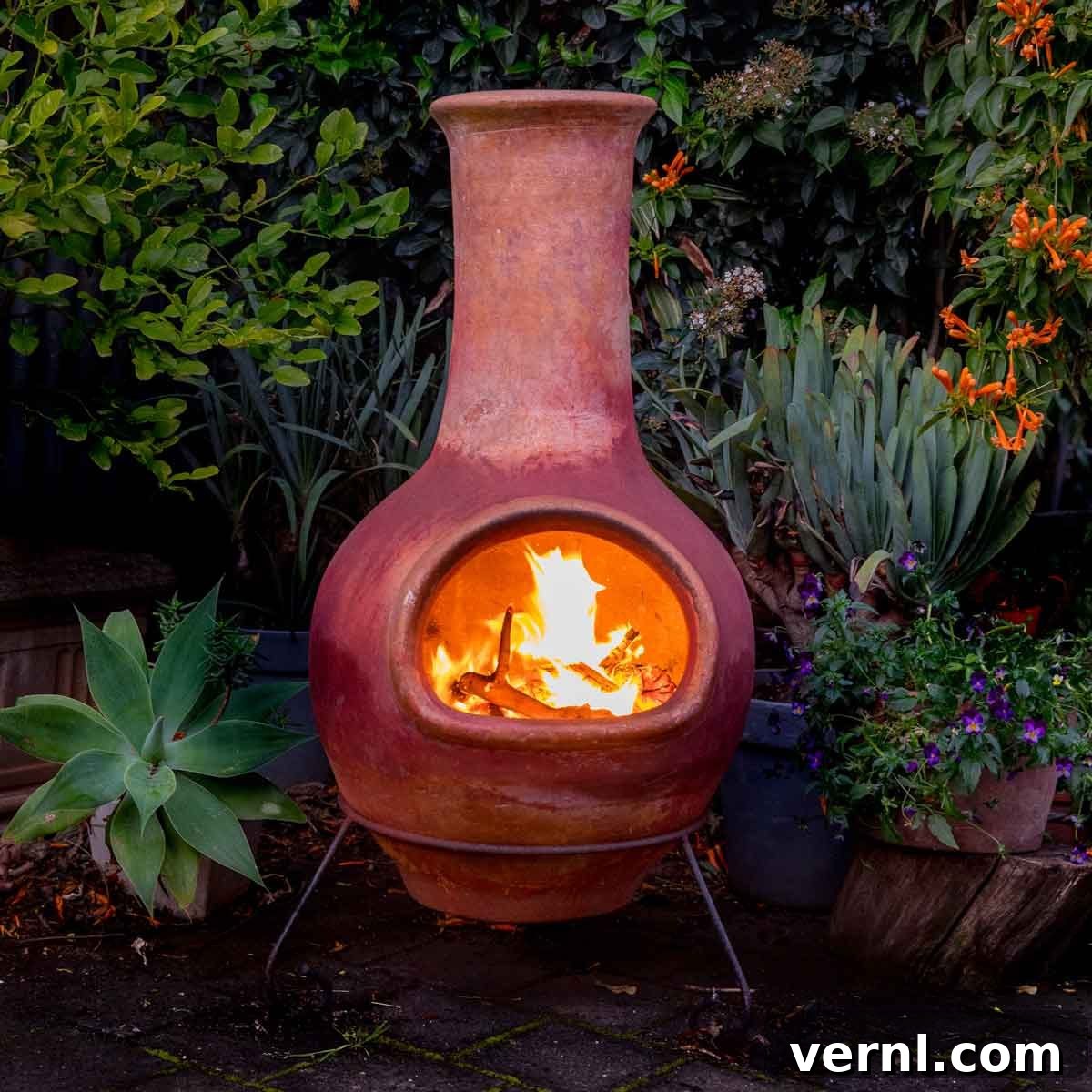
Chimineas: Enhance Your Outdoor Living Experience
As the weather cools, the idea of enjoying your backyard might seem less appealing. However, a chiminea can transform your patio or outdoor space into a cozy and inviting retreat, extending the season for outdoor gatherings. This guide explores everything you need to know about chimineas, from their design and materials to safety and maintenance, ensuring you can make the most of your outdoor living area year-round.
What is a Chiminea?
A chiminea is essentially an outdoor stove, recognizable by its distinct potbelly shape and a vertical chimney. Primarily designed for burning wood, chimineas provide warmth and create a focal point for outdoor spaces. While various materials are used, the traditional chiminea is crafted from terracotta clay, known for its rustic charm and heat retention. You can find chimineas at garden centers and home improvement stores. They are available in both plain terracotta and with decorative glazes and designs.
Originating in Mexico centuries ago, chimineas often feature designs inspired by Mexican culture, adding a touch of artistic flair to your backyard. They serve as a great social gathering spot, providing warmth and a unique ambiance. Their design minimizes the risk of sparks compared to open fire pits, offering a safer way to enjoy an outdoor fire.
Chimineas Styles: Finding the Right Fit
The classic chiminea boasts a rounded, squat “belly” and a wide chimney, allowing for effective smoke ventilation. This design includes a broad opening for easy firewood access and typically sits on a stand to lift it from the ground. Chimineas can feature minimal decoration or intricate designs, including painted, incised, or raised details, catering to different aesthetic preferences.
Beyond the traditional, modern chimineas come in various styles to match contemporary outdoor settings. The material also influences the design; for instance, some metal chimineas incorporate an open-mesh style for a more modern appearance.
Exploring Chiminea Materials
Historically, chimineas are made from terracotta clay, sometimes glazed for added visual appeal. However, the popularity of outdoor fire features has expanded the material options. You can now find chimineas made from cast iron, cast aluminum, and steel.
- Terracotta Clay: The classic choice, terracotta offers the quintessential Mexican-inspired look. However, it’s more susceptible to damage from temperature changes and moisture.
- Cast Iron: Known for its durability and heat retention, cast iron chimineas are a robust option, though they can be quite heavy.
- Cast Aluminum: A lighter alternative to cast iron, aluminum chimineas resist rust and offer a good balance of durability and portability.
- Steel: Steel chimineas provide a modern look and are generally durable, often featuring powder-coated finishes for added protection against the elements.
Chiminea Maintenance: Tips for Longevity
Proper maintenance is key to enjoying your chiminea for years to come, especially with terracotta models. Following these tips will help extend the life and safety of your chiminea:
- Initial Fires: Begin with small, slow-burning fires to gradually cure the chiminea and prevent cracking.
- Controlled Heating: Avoid heating the chiminea too quickly, especially when starting a fire.
- Fire Size: Refrain from building excessively large fires that can overheat the structure.
- Dry Conditions: Only start a fire when the chiminea is completely dry, as moisture can lead to cracks.
- No Water: Never extinguish a fire with water, as this can cause thermal shock and damage the material.
- Storage for Clay: Store clay chimineas indoors, in a garage or shed, during harsh winter months to protect them from freezing temperatures and moisture.
- Metal Protection: Apply a fresh coat of protective paint to metal chimineas before extended storage to prevent rust.
- Breathable Covers: Use breathable covers to protect your chiminea from rain and moisture buildup.
For extra protection, consider treating the exterior of your chiminea with an acrylic waterproofing product. This can help to prevent water absorption and reduce the risk of cracking. Remember that a slow curing process is essential for all chimineas. Gradually increase the fire size over several uses. Flames should not extend out of the front or the chimney.
Metal chimineas also benefit from preventative measures. Apply a rust-proofing agent and keep them away from humid conditions. If used in winter, start fires slowly to avoid sudden temperature changes. During periods of non-use, covering the chiminea or moving it to a sheltered area is recommended.
Safe Chiminea Operation: Guidelines for Enjoyment
Chimineas are designed to minimize the scattering of sparks, making them generally safer than open fire pits. However, they still generate significant heat. Always adhere to these safety precautions:
- Touch Caution: Never touch the exterior of a lit chiminea, as it can be extremely hot.
- Child Supervision: Keep children and pets at a safe distance from the active chiminea.
- Cooling Time: Allow the fire to completely burn out and the chiminea to cool before cleaning.
- Surface Placement: Position your chiminea on a fire-safe surface like pavers, brick, stone, or a designated fire pit area. Avoid placing it directly on grass, which can ignite.
- Safety Tools: Have a bucket of sand or a garden hose nearby to quickly extinguish the fire if needed.
Following these guidelines can help you enjoy your chiminea safely and comfortably, creating memorable outdoor experiences.
Frequently Asked Questions
Can I Cook on a Chiminea?
Yes, most chimineas are suitable for cooking. Clay versions are excellent for baking pizzas and bread. Metal chimineas, when equipped with appropriate accessories, are ideal for grilling. Always review the manufacturer’s guidelines for specific instructions and recommendations.
How Long Will My Chiminea Last?
The lifespan of a chiminea depends on its material and how well it’s maintained:
- Clay Chimineas: Typically last 3-5 years with regular maintenance and exposure to outdoor conditions.
- Metal Chimineas: Can last between 5 and 20+ years, depending on the material quality and the care provided.