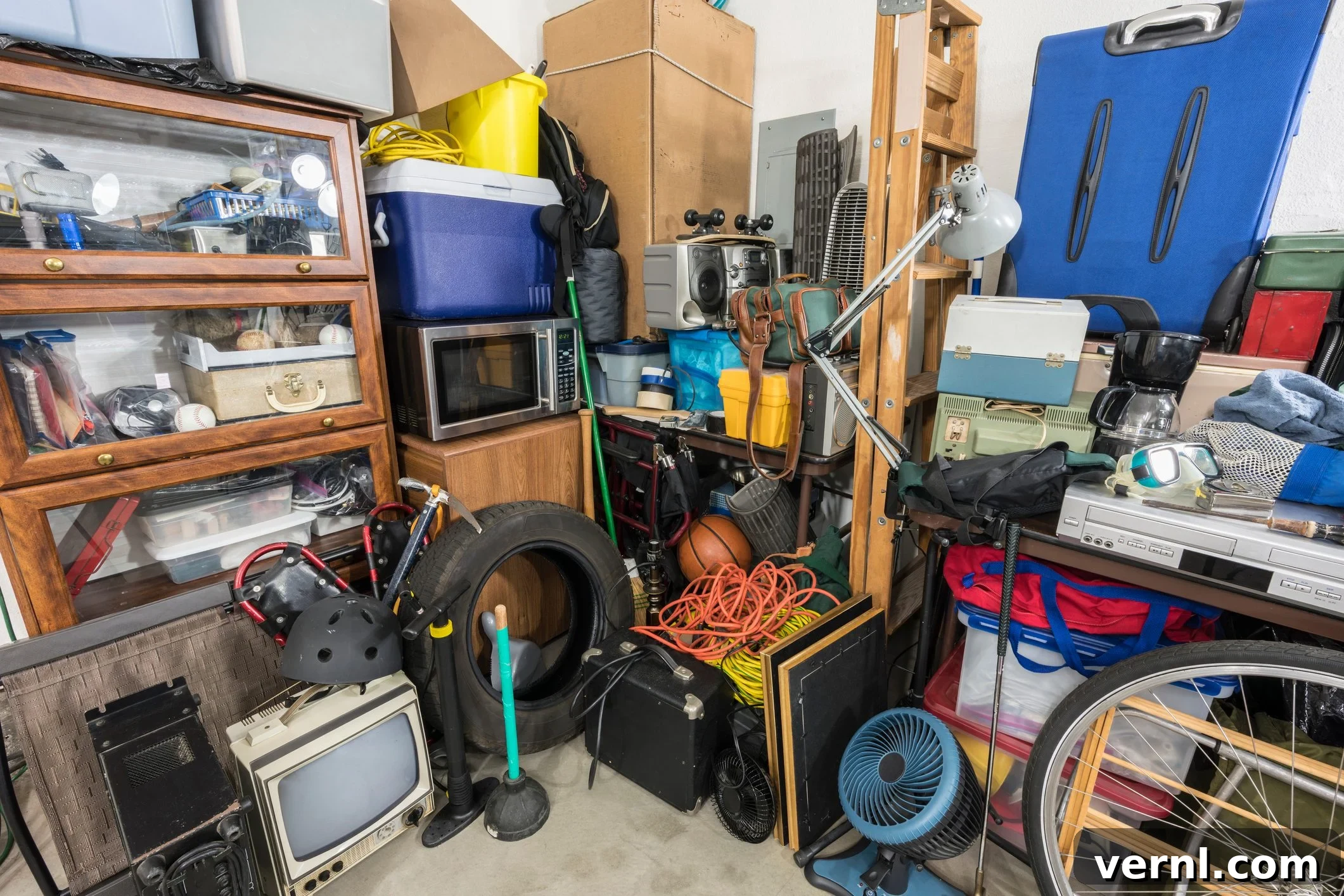
The term “hoarder” often conjures stark images: rooms crammed from floor to ceiling with possessions, narrow winding paths barely wide enough to navigate, and an overwhelming sense of disarray. This severe manifestation of hoarding, while impactful, represents just one end of a complex spectrum. What many might dismiss as simple innocent clutter can, in fact, be an early indicator of a much deeper issue, gradually leading to an increasingly overloaded, stressful, and even hazardous living environment.
“Both the difficulty letting go of objects and the inability to resist acquiring new items is often due to anxiety or guilt about missed opportunities that the objects represent to that person,” explains Gail Steketee, Ph.D., an emerita member of the Scientific Advisory Board of the International Obsessive Compulsive Disorder (OCD) Foundation. She highlights the profound emotional connections individuals form with their possessions. “Unfortunately, that leads to clutter which can also provoke discomfort and feeling overwhelmed.” This discomfort can then create a vicious cycle, making it even harder to address the accumulating items.
Understanding the nuances of hoarding is the first step toward reclaiming control. If your home is becoming increasingly difficult to navigate due to an accumulation of items, it’s crucial to recognize these signs and consider taking action. These expert decluttering tips are designed to help individuals struggling with hoarding tendencies take back their space and, ultimately, their peace of mind.
What Exactly Is Hoarding Disorder?
Hoarding is more than just being messy or having too much stuff; it’s a recognized psychological disorder. According to Tina Judge, a nurse practitioner and clinical specialist in psychiatry at Momentum Behavioral Health, “Hoarding refers to a psychological disorder characterized by persistent difficulty discarding or parting with possessions, regardless of their actual value.” This distinction is critical. Unlike a collector who curates specific items with intention, or someone who simply has a lot of things, an individual with hoarding disorder experiences significant distress at the thought of parting with items, even those that appear worthless to others.
Judge further clarifies, “Individuals who hoard typically accumulate an excessive number of items over time, leading to clutter and disorganization in their living spaces.” This accumulation often goes beyond practical storage, impacting the functionality and safety of their home. The emotional attachment to items, fear of needing them later, or a sense of responsibility to keep them, fuels the inability to discard, making decluttering an immensely challenging task without the right support and strategies.
The Five Stages of Hoarding: A Progression of Accumulation
Hoarding disorder doesn’t typically appear overnight. It often progresses through identifiable stages, offering a framework for understanding its development and severity. “The five stages of hoarding are a conceptual framework that describes the progression and severity of hoarding behaviors,” Judge explains. It’s important to remember that this is a guide, not a rigid rule. “It is important to note that not all individuals with hoarding tendencies will go through each stage, and the progression can vary from person to person.” However, recognizing these stages can be vital for early intervention.
Judge describes the stages this way, outlining a path from initial collection to severe impairment:
- Stage 1: Acquisition. This initial stage is marked by individuals beginning to acquire possessions excessively. They may collect items they believe are valuable, useful, or sentimental. At this point, the behavior might seem innocuous, akin to collecting hobbies or finding good deals. However, the key differentiator here is the *excessive* nature of the acquisition, often without a clear purpose or storage plan.
- Stage 2: Clutter. As possessions continue to accumulate unchecked, clutter begins to noticeably interfere with the normal use of rooms. Surfaces become covered, pathways narrow, and the ability to clean, organize, or find necessary items becomes increasingly difficult. While still manageable for some, this stage signifies a tangible impact on the living environment.
- Stage 3: Difficulty Discarding. This is a critical turning point where individuals experience increased difficulty discarding possessions, developing strong emotional attachments to items. The fear of future need, regret over “wasting” an item, or a sense of personal connection makes letting go incredibly distressing, regardless of the item’s actual utility or value. Decision-making becomes paralyzed.
- Stage 4: Disorganization and Impairment. At this advanced stage, clutter and disorganization become severe, making navigating or using living spaces as intended challenging, if not impossible. Beds might be unusable, kitchens inaccessible, and bathrooms filled with items. The excessive accumulation of possessions poses significant health and safety hazards, including fire risks, pest infestations, and tripping hazards.
- Stage 5: Isolation and Functional Decline. The most severe stage, where excessive clutter and disorganization often lead to social isolation, strained relationships, and withdrawal from activities. Individuals may feel shame, leading them to avoid inviting others into their home. Living conditions can deteriorate to the point where essential utilities like water, heat, or electricity are compromised, further impacting quality of life and safety.
Understanding these stages offers valuable insight into the progression of hoarding. If you identify with the early stages or recognize these patterns in your home, implementing the following tips can be crucial for taking back control and preventing further escalation.
Effective Strategies to Reclaim Your Space
Taking action against hoarding can feel overwhelming, but a structured approach combined with the right support can make a significant difference. Here are expert-backed strategies to help you navigate the decluttering process.
The Crucial First Step: Seeking Professional Help
Addressing hoarding is rarely a task one can or should undertake alone. “You need to be courageous and willing to seek help — not just counseling to help understand and overcome why you feel the need to keep everything but also someone to come alongside you and dig into the mess,” advises Carrie Ypma, expert organizer and founder of Clutter Keeper. Hoarding often has deep psychological roots, such as anxiety, trauma, or depression, which a mental health professional can help uncover and address.
Beyond therapy, practical assistance is invaluable. “Getting a friend, a family member or a professional organizer to help you declutter will make you more accountable so you can make great strides and clear the clutter faster.” A professional organizer specializing in chronic disorganization can provide non-judgmental support, practical strategies, and the physical help needed to sort through years of accumulation, ensuring a safer and more effective process.
Strategic Planning: The Power of a Decluttering List
Before diving into the mess, a solid plan is essential. “Make a list of all the areas you want to clean and organize,” Ypma suggests. This could mean listing rooms, specific sections within rooms, or even types of items. Breaking down the enormous task into smaller, manageable chunks makes it less daunting. “As you complete each area or space, check it off the list and celebrate. It’s incredibly rewarding to see how far you’ve come and to cross things off your list.” This visual representation of progress can be a powerful motivator, providing a sense of accomplishment that fuels further effort.
Simplify the Process: Embracing a Simple Decluttering Method
Clutter can be incredibly overwhelming, leading to paralysis before even starting. For those new to decluttering or struggling with hoarding tendencies, choosing an easy and straightforward method is best. One of the most effective and quickest ways to begin is with the “Four-Box Method.” This simplifies the decision-making process by categorizing items into distinct actions.
Here’s how it works: label four boxes (or designated areas) with the following categories:
- Keep: For items you genuinely use, love, and need, that have a designated place in your home.
- Relocate (or “Go Back”): For items that belong in another room or a specific storage spot within your home.
- Donate/Sell: For items you want to donate or sell, that are still in good condition but no longer serve you.
- Trash/Recycle: For broken, expired, or unusable items that need to be disposed of.
By focusing on placing each item into one of these four categories, you streamline the decision-making and avoid getting bogged down by indecision. This systematic approach is a fantastic start for anyone struggling to deal with their clutter effectively.
Building Momentum: Starting Small for Big Wins
One of the best pieces of advice for anyone tackling a significant decluttering project is to “start small,” as Ypma emphasizes. “If you try to go after the entire mess at one time, you’ll likely get so overwhelmed that you quit.” The sheer scale of the task can be paralyzing. Instead, focus on small, achievable goals.
Begin with something as simple as collecting and getting rid of all obvious trash or expired food items from a single counter or a small corner of a room. Then, grab your donation box and add any items you find genuinely easy to part with. Even if it’s just a few items, this initial effort clears up much-needed space, provides an immediate sense of accomplishment, and builds crucial momentum, motivating you to do more.
Making Decluttering Enjoyable: Transforming a Chore into a Positive Experience
Decluttering doesn’t have to be a dreaded chore. “Play some music, have snacks, get a friend to help and make it fun rather than a boring chore that you dread,” Ypma suggests. When you make the process enjoyable, you’re far more likely to stick with it. Create a positive atmosphere: put on your favorite upbeat playlist, prepare some refreshing drinks and snacks, and invite a supportive friend or family member to join you. Turning decluttering into a social activity or a fun challenge can significantly reduce resistance and increase productivity.
Beating Overwhelm: The Timer Technique
Combating “decluttering paralysis” is essential, and a simple timer can be your best ally. “Pick one room or even one small area within a room, set a timer and tackle that piece of the mess,” Ypma advises. Even setting a timer for just 15-30 minutes can be incredibly effective. “When the timer is done, keep going if you feel motivated, or stop for the day and start again tomorrow.”
Using a timer prevents overthinking and encourages action, as Ypma notes. It breaks down the task into manageable bursts, making it less overwhelming. The defined endpoint provides a sense of control and prevents burnout, allowing you to sustain your decluttering efforts over time without feeling completely exhausted.
Seal the Deal: Prompt Removal of Clutter
One of the most critical steps in the decluttering process is the immediate removal of discarded items. Take trash and donation boxes out of the house as soon as possible. This crucial action helps prevent you from being tempted to take a second look at the items and potentially second-guessing your decisions. The principle of “out of sight, out of mind” is incredibly powerful here.
Beyond preventing regret, promptly removing clutter provides tangible benefits: you’ll immediately see and feel the difference in your space, reinforcing your efforts. A fresh, more organized home, free from the visual weight of boxes waiting to be dealt with, provides a powerful boost to your morale and encourages continued progress.
Sustaining a Clutter-Free Environment: Preventing Future Hoarding
Decluttering is a significant step, but maintaining a clear space requires ongoing commitment and new habits. “Get in the habit of carving out 15 to 30 minutes every day to tidy up and put things back where they belong,” Ypma recommends. Consistency is key; small daily efforts prevent accumulation.
She also advises making disposal easy by “keeping trash cans and/or recycling bins in every room to make getting rid of clutter easier.” The less friction there is to discard an item, the more likely you are to do it. Furthermore, Ypma suggests, “You can also keep a ‘donate’ box in your closet to put things you’re ready to part with.” This creates a designated space for items that are no longer needed, allowing for continuous, low-effort decluttering. “When the box is full, take it to a local nonprofit organization where it can find a new home.” Establishing these routines and mindful practices is essential for preventing future hoarding and sustaining a healthier, more functional living environment.
Overcoming hoarding disorder is a journey, not a destination. It requires patience, persistence, and often the support of professionals and loved ones. By understanding the nature of hoarding, recognizing its stages, and implementing these practical, expert-backed strategies, you can begin the transformative process of reclaiming your home and, more importantly, your well-being. A clutter-free space is not just about aesthetics; it’s about creating a safe, functional, and peaceful environment that supports a healthier, less anxious life.