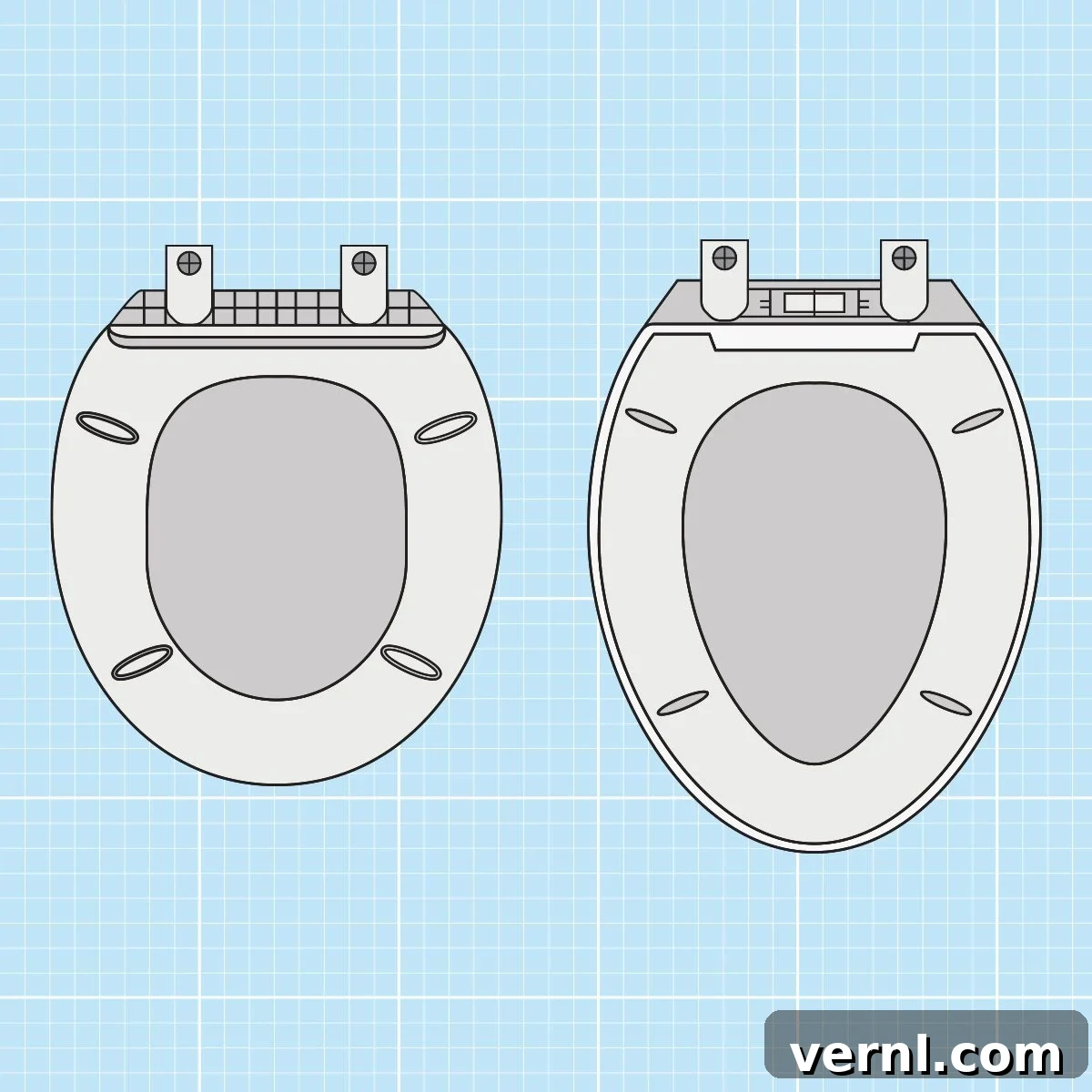
Elongated vs. Round Toilets: The Ultimate Guide to Choosing Your Perfect Bathroom Fixture
Navigating the world of toilet shopping might initially seem straightforward. After all, their primary function is universal, and one might assume the variety is limited. However, modern bathroom fixtures offer a surprising range of choices, from diverse heights to sleek, tankless designs. The evolution of bathroom aesthetics and functionality means that even a seemingly simple choice like toilet shape requires careful consideration. As Leah Tuttleman, an experienced interior designer at Re-Bath bathroom remodeling, notes, “Design trends evolve over time, and bathroom fixtures are no exception.”
Among the most critical decisions is selecting the right bowl shape: should you opt for an elongated toilet or a round one? This fundamental question impacts everything from bathroom aesthetics and available space to daily comfort and accessibility. Before you finalize your purchase, whether online or in-store, understanding the distinct advantages and potential drawbacks of each shape is crucial. Tuttleman elaborates below on why the shape of your toilet holds significant importance for your home.
Round Toilets: The Space-Saving, Classic Choice
The round bowl toilet is a timeless classic, a familiar sight in older homes, compact powder rooms, and children’s bathrooms. Its enduring popularity is largely due to its efficient use of space. Tuttleman confirms, “Round bowls are generally smaller in size, making them a good choice if space is limited.” This makes them an ideal solution for apartments, half-baths, and any bathroom where every inch counts. Their compact footprint ensures better clearance, preventing doors from bumping the toilet bowl and allowing for more comfortable movement in tight quarters.
Beyond their space-saving benefits, round toilets also tend to be more budget-friendly. “Generally speaking, round bowls are less expensive,” Tuttleman explains, making them an attractive option for those undertaking renovations on a tighter budget or outfitting multiple bathrooms. This affordability, coupled with their practicality, makes them a go-to choice for many homeowners.
Round bowls are available in various heights to suit different needs. Standard height models typically measure around 15 to 16 inches from the floor to the top of the seat. For enhanced accessibility and comfort, ADA-compliant comfort height versions range from 17 to 19 inches. Tuttleman advises, “It’s a good idea to test different heights to determine which is best for you,” as personal preference and physical needs play a significant role in long-term comfort.
Despite their smaller profile, round bowl toilets adhere to standard rough-in sizes, referring to the crucial measurement from the finished wall behind the toilet to the center of the floor drain. This consistency simplifies installation and replacement. With a history stretching back decades, round bowls offer a clean, traditional aesthetic that complements a variety of bathroom styles, maintaining a classic and compact look that never truly goes out of fashion.
Key Dimensions of a Round Toilet
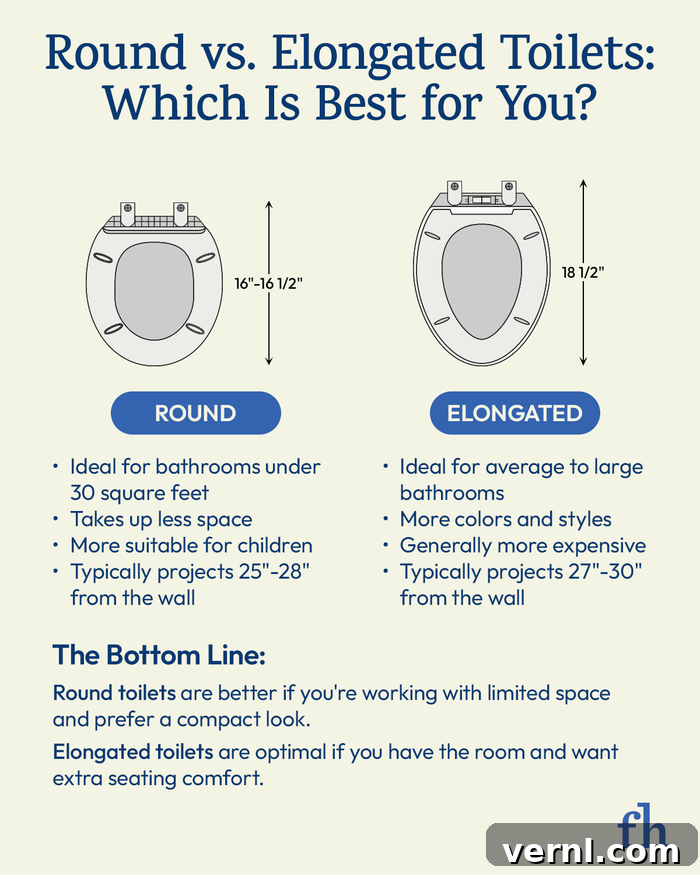
To accurately measure for a round toilet seat or to understand its footprint, you’ll typically find that round toilet bowls measure approximately 16 1/2 inches from the middle of the mounting bolts (which secure the seat to the bowl) to the very front of the rim. If your existing toilet or a model you’re considering matches this measurement, then a round toilet seat is the correct accessory.
Elongated Toilets: The Comfort-Focused, Modern Choice
In contrast to their round counterparts, elongated bowls are primarily designed with enhanced comfort in mind. Their extended shape provides a more natural, body-contoured fit, making them a preferred option for taller individuals, those with larger frames, or users with limited mobility who benefit from the extra support and seating area. This ergonomic design significantly improves the user experience, especially during extended periods.
From an aesthetic perspective, elongated-bowl toilets often feature in more contemporary bathroom designs. Tuttleman highlights their modern appeal, stating, “Elongated bowls are considered more modern and add a sleek look to the bathroom.” Their streamlined silhouette contributes to a more sophisticated and up-to-date visual. Furthermore, the market for elongated toilets generally offers a broader selection of styles, colors, and features compared to round bowls, providing greater design flexibility for homeowners aiming for a specific bathroom aesthetic.
Like round toilets, elongated models are available in standard rough-in sizes and various heights, including standard and comfort height options, ensuring compatibility with diverse bathroom layouts and user needs. However, their extended design demands careful planning regarding space. Elongated toilets are typically two inches deeper than round ones, requiring a larger footprint. It is critical to consider the overall dimensions of your bathroom and the placement of other fixtures. “Make sure you’ve got the measurements right so that whatever you choose fits well in your bathroom,” advises Tuttleman. A common pitfall is installing an elongated toilet in a small bathroom only to find the door cannot fully open without hitting the front of the bowl, an inconvenience that can easily be avoided with precise measurements.
Key Dimensions of an Elongated Toilet
For an elongated toilet bowl, the measurement from the middle of the mounting bolts to the front of the rim typically comes in at approximately 18 1/2 inches. This additional two inches of length is what distinguishes it from a round bowl and contributes to its enhanced comfort. If your toilet or prospective purchase matches this dimension, you will need to buy an elongated toilet seat to ensure a proper and secure fit.
Toilet Size Comparison: Round vs. Elongated Dimensions at a Glance
When designing or renovating a bathroom, the choice between round and elongated toilet bowls often boils down to a delicate balance between available space and desired comfort. Understanding their specific dimensions is paramount for proper planning and installation. Here’s a clear breakdown of their key measurements and how these affect their suitability for various bathroom sizes:
Round Toilet Dimensions
- Bowl Length: Approximately 16½ inches (measured from the center of the mounting bolts to the front of the rim). This shorter length is the defining characteristic for its space-saving appeal.
- Overall Projection: Typically ranges from 25–28 inches from the finished wall to the furthest point of the toilet. This compact projection is crucial for small bathrooms.
- Rough-in Measurement: Standard 12 inches is most common, though 10-inch and 14-inch options exist for specific plumbing configurations.
Elongated Toilet Dimensions
- Bowl Length: Approximately 18½ inches (a full 2 inches longer than round models). This extra length provides the ergonomic benefits and added comfort.
- Overall Projection: Typically ranges from 27–30 inches from the finished wall, demanding more depth in the bathroom layout.
- Rough-in Measurement: Also commonly 12 inches, with 10-inch and 14-inch variations available, ensuring compatibility across different setups.
Space Considerations for Optimal Placement
- For Compact Bathrooms: Round bowls are generally ideal for bathrooms under 30 square feet, or any area where space is at a premium, such as small powder rooms, RVs, or boats. Their shorter profile provides vital extra clearance around the toilet, preventing cramped feelings and ensuring doors and cabinets can open freely. A minimum of 21 inches of clear space in front of the toilet is recommended by building codes, and round toilets make achieving this easier in tight spots.
- For Larger Bathrooms: Elongated bowls, while offering superior seating comfort, require at least an additional 2 inches of depth. They are often preferred in master bathrooms, larger guest bathrooms, or any space where maximizing comfort is a priority and sufficient room exists to accommodate their longer footprint. Always ensure that the toilet’s projection does not obstruct walkways or swing paths of doors.
Careful consideration of these dimensions is not just about fitting the toilet into the room; it’s about ensuring adequate clearance for movement, comfortable use, and compliance with local building codes, which dictate minimum spacing around plumbing fixtures.
Choosing the Ideal Toilet Shape: Factors to Weigh
Ultimately, the decision between a round and an elongated toilet often boils down to a blend of personal preference and practical considerations. While subjective comfort plays a significant role, Leah Tuttleman emphasizes several key factors to keep in mind:
- Space Efficiency: Round toilets undeniably consume less floor space, making them the superior choice for tight bathrooms, half-baths, and powder rooms where every inch is valuable. They offer better clearance for doors and foot traffic.
- Ergonomic Comfort: Elongated bowls, with their extended front, are designed to provide a more comfortable and supportive seating experience. This is especially beneficial for adults, taller individuals, and those with mobility challenges, offering more stability and a natural fit.
- Aesthetic Variety & Style: Due to their growing popularity in modern design, elongated bowls typically offer a wider array of styles, colors, and contemporary features. They tend to complement sleek, minimalist bathroom aesthetics. However, round bowls are ideal for those seeking a classic, traditional, or space-conscious look.
- Cost Considerations: Generally, round bowls are more economical, often coming with a lower initial purchase price compared to their elongated counterparts. This can be a deciding factor for budget-conscious renovations or multi-unit installations.
- Accessibility Needs: While both shapes come in comfort heights, the added seating area of an elongated bowl often makes it a more accessible choice for individuals requiring extra support or ease of transfer, aligning well with ADA compliance standards.
Beyond Shape: Other Critical Toilet Buying Considerations
While bowl shape is a primary decision, a truly informed toilet purchase involves evaluating several other important factors that impact performance, water efficiency, and long-term satisfaction:
Flush System and Water Efficiency
Modern toilets offer various flushing technologies. Single-flush models are common, but dual-flush toilets allow users to choose between a full flush for solids and a reduced flush for liquids, significantly conserving water. Look for toilets with the WaterSense label, indicating they meet strict EPA criteria for water efficiency without sacrificing performance. Technologies like pressure-assisted flushing offer powerful waste removal, while gravity-fed systems are generally quieter. Understanding the MaP (Maximum Performance) testing score can also help assess a toilet’s ability to clear waste effectively.
One-Piece vs. Two-Piece Toilets
- One-Piece Toilets: The bowl and tank are seamlessly integrated into a single unit. This design is often more expensive but offers a sleek, modern aesthetic, is easier to clean (fewer crevices for dirt), and is typically more durable.
- Two-Piece Toilets: The tank and bowl are separate components that are bolted together during installation. These are generally more affordable, easier to transport, and offer a wider range of styles and options.
Rough-In Measurement
This is the distance from the finished wall behind the toilet to the center of the drainpipe in the floor. A standard rough-in is 12 inches, but 10-inch and 14-inch options are available for specific plumbing setups. Measuring this accurately before purchase is non-negotiable, as an incorrect rough-in can lead to significant installation headaches or necessitate costly plumbing alterations.
Toilet Height (Standard vs. Comfort Height)
As mentioned, standard height toilets are typically 15-16 inches high (seat excluded), while comfort height (also known as “right height” or “chair height”) toilets are 17-19 inches high. Comfort height models are often ADA-compliant and are generally preferred by adults for easier sitting and standing, mimicking the height of a standard chair. Standard height might be better for children or shorter individuals.
Material and Finish
Most toilets are made from vitreous china, a durable, non-porous ceramic. However, the quality of the glaze and finish can vary, affecting ease of cleaning and stain resistance. Some toilets feature special antimicrobial glazes or easy-clean coatings that prevent grime buildup.
Current Trends in Toilet Design and Technology
The toilet market is continuously evolving, driven by innovations in design, comfort, and sustainability. Modern trends extend far beyond mere shape, incorporating advanced features that enhance hygiene, efficiency, and overall user experience. As Tuttleman observes, “There is a trend toward one-piece toilets with compact elongated bowls.” These ingenious models successfully merge the ergonomic comfort of an elongated bowl with a reduced projection, making them suitable for smaller bathrooms that previously could only accommodate round designs. This innovation provides a stylish and comfortable solution without demanding excessive space.
Furthermore, smart toilets and high-efficiency models have become increasingly commonplace in contemporary washroom refurbishment projects. These advanced fixtures integrate cutting-edge technology, offering features such as touchless flushing mechanisms for improved hygiene, heated seats for ultimate comfort, and integrated bidet and washlet functionalities. These integrated bidet systems, available for both round and elongated toilet bowls, provide a luxurious and hygienic cleansing experience, mirroring the rising popularity of bidets in Western homes.
What About Bidets and Bidet Attachments?
Bidets are indeed experiencing a significant resurgence in popularity, celebrated for their hygienic benefits and eco-friendliness. While installing a standalone bidet can be a complex and costly endeavor requiring extensive plumbing modifications, many homeowners are opting for more convenient solutions. Luckily, you don’t have to embark on a full bathroom renovation to enjoy the benefits of a bidet.
Tuttleman assures us, “Both round and elongated bowl shapes are typically compatible with bidet attachments.” These attachments convert your existing toilet into a bidet, offering functionalities like warm water washing, adjustable pressure, and even warm air drying. They are generally easy to install, often requiring only basic tools and a connection to your toilet’s water supply. However, before making a purchase, it is always recommended to check the specific compatibility with your toilet manufacturer or the bidet attachment’s specifications to ensure a perfect fit and optimal performance.
Frequently Asked Questions About Toilet Shapes
Can I replace a round toilet with an elongated one?
Yes, replacing a round toilet with an elongated one is often possible, but it comes with a critical condition: you must have sufficient space for the elongated bowl’s increased projection. Elongated toilets typically extend about 2-3 inches further into the room than round ones. This seemingly small difference can be significant, especially in smaller bathrooms where door clearance, walkway space, or proximity to other fixtures (like vanities or showers) is already tight. Always measure carefully to ensure the extra length won’t create an obstruction or make the bathroom feel cramped.
Are elongated toilets more expensive than round ones?
Generally, yes, elongated toilets tend to be more expensive than round ones. You can expect elongated models to cost anywhere from 10-20% more, though this percentage can fluctuate significantly based on brand, specific features (e.g., dual flush, comfort height, advanced glazing), and overall quality. While the initial investment might be higher, many users find the enhanced comfort and modern aesthetic of an elongated toilet to be well worth the price difference, making it a better long-term value for their needs.
Which toilet shape is better for children?
For children’s bathrooms or for young children learning to use the toilet, round toilets are often preferred. Their smaller frames don’t require the extra seating space of an elongated bowl, and the compact size of a round toilet can make it easier for young children to sit properly and feel more stable. It also allows for easier access and maneuverability for parents assisting their children. However, as children grow, an elongated toilet might become more comfortable.
What is the standard rough-in dimension for toilets?
The most common standard rough-in dimension for toilets in North America is 12 inches. This measurement is taken from the finished wall behind the toilet to the center of the drainpipe flange on the floor. While 12 inches is dominant, 10-inch and 14-inch rough-in options are also available for specific architectural or plumbing requirements, particularly in older homes or custom builds. Always measure your rough-in carefully before purchasing a new toilet.
Do all toilet seats fit all bowls of the same shape?
While most round seats fit round bowls and most elongated seats fit elongated bowls, there can be slight variations between manufacturers. It’s always a good idea to check the specific dimensions of your toilet bowl and compare them against the dimensions provided for the toilet seat you intend to purchase. Factors like hinge spacing and bowl width can sometimes differ. For a perfect fit, consider purchasing a toilet seat from the same manufacturer as your toilet, or bring your bowl’s measurements when shopping.
About the Experts
- Leah Tuttleman is a distinguished interior designer at Re-Bath, bringing over 25 years of extensive experience in both residential and commercial design. As an active member of the American Society of Interior Designers, she specializes in transformative bathroom remodels. Her expertise provides invaluable guidance to homeowners, enabling them to make pragmatic, aesthetically pleasing, and highly functional design decisions for their living spaces.
Sources
- Home Depot: “Toilet Buying Guide.”
- Steven Bailey Plumbing: “The Ultimate Toilet Guide – Toilet Repair, Toilet Replace.”
- TOTO USA: “Which Toilet Is Better for My Bathroom – Elongated vs Round?”