Demystifying Brake Fluid: Your Comprehensive Guide to DOT 3, DOT 4, and Vehicle Safety
Navigating the vast array of automotive fluids can be a daunting task for any vehicle owner. From engine oil to power steering fluid, each plays a unique and critical role in your car’s operation. However, few fluids are as directly tied to your safety as brake fluid. The sheer number of choices, coupled with the potential for costly and dangerous mistakes, can make shopping for the right fluid feel overwhelming.
Throughout my extensive career as a certified automotive technician and instructor, I’ve encountered countless brake systems compromised by incorrect, contaminated, or simply worn-out brake fluid. The most striking and financially burdensome incident involved a customer who inadvertently added power steering fluid instead of brake fluid to their master cylinder. The consequences were severe: every non-metallic component within the brake system required immediate and expensive replacement.
His explanation, humorously referencing a popular television character, was “Well, it worked for MacGyver.” While entertaining, this anecdote underscores a serious point: any damage to your vehicle’s mechanical or hydraulic brake system—the cornerstone of your safety on the road—can lead to catastrophic brake failure. A deeper understanding of the fluid that empowers your brakes is not just beneficial; it’s absolutely essential for your safety and peace of mind.
What Exactly Is Brake Fluid?
At its core, brake fluid is a specialized, solvent-based hydraulic fluid engineered to transmit force within your vehicle’s braking system. It contains a meticulously balanced blend of synthetic additives, including lubricants, corrosion inhibitors, and stabilizers, all designed to extend the lifespan of both the fluid itself and the intricate brake components.
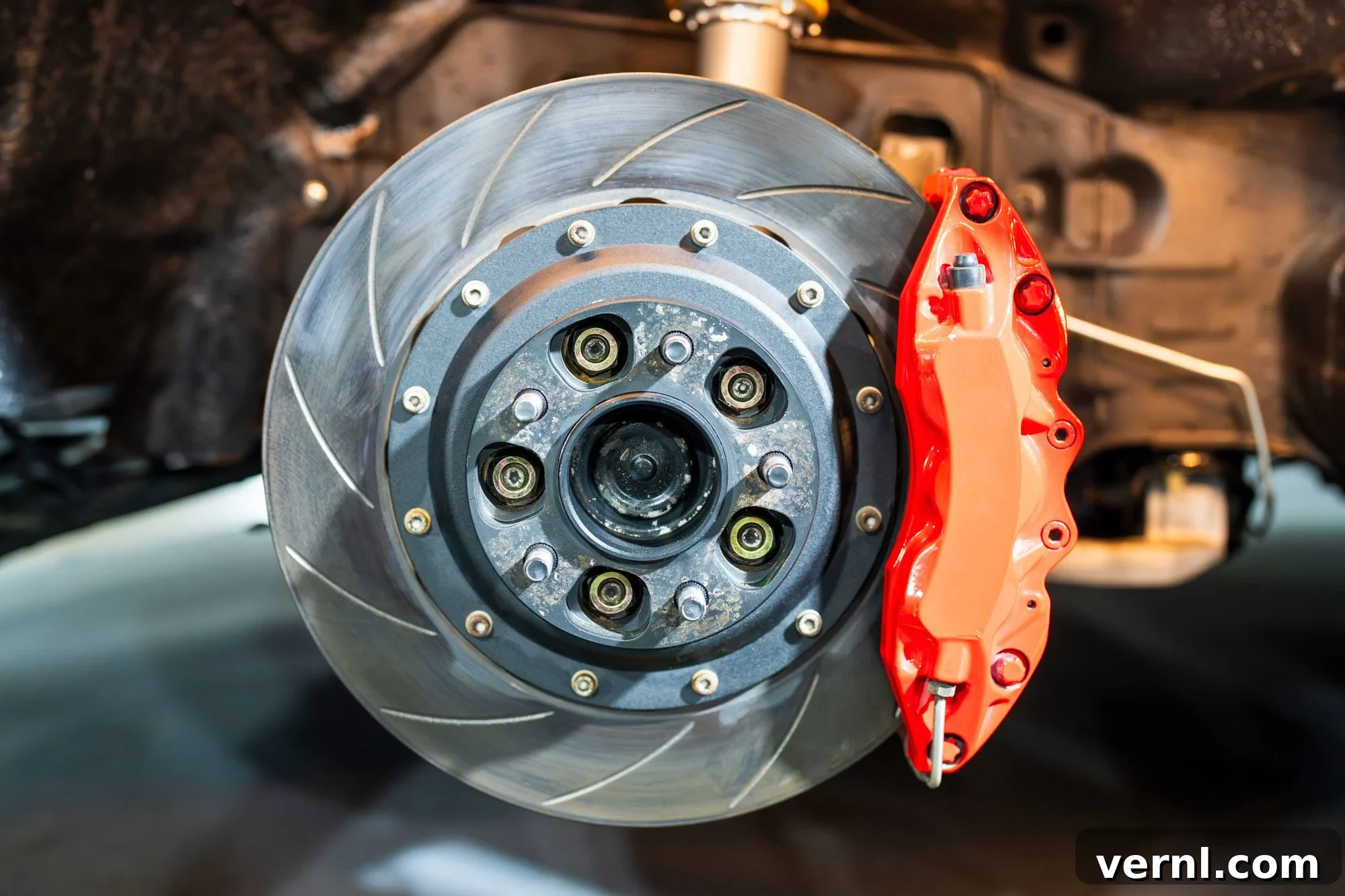
The magic of brake fluid lies in its incompressibility. When you depress the brake pedal, you activate a master cylinder, which in turn pressurizes the brake fluid. This pressurized fluid then travels through brake lines to the disc brake calipers (or wheel cylinders in drum brakes), forcing the brake pads to clamp down onto the rotating disc rotors. This friction generates immense heat, creating the necessary resistance to bring your vehicle to a controlled and safe halt.
Beyond its primary function of stopping, modern brake fluid also plays a vital role in the proper operation of advanced safety systems such as Anti-lock Braking Systems (ABS), Electronic Stability Control (ESC), and Traction Control Systems (TCS). These systems rely on precise brake fluid pressure modulation to maintain vehicle control under various driving conditions, further highlighting the fluid’s indispensable nature.
Deciphering the DOT: Standards for Brake Fluid
The “DOT” in DOT brake fluid stands for the U.S. Department of Transportation. The DOT isn’t just a regulatory body; it’s the ultimate authority that establishes stringent standards and specifications for all brake fluids used in vehicles within the United States. These standards are paramount, ensuring that brake fluids meet critical performance and safety benchmarks, regardless of their manufacturer. Adherence to these guidelines is crucial for preventing system failures and ensuring consistent, reliable braking performance across all vehicles.
The comprehensive standards set by the DOT cover a range of essential properties, including:
- Chemical Interactions: Ensuring the fluid is compatible with and does not degrade the various materials (such as rubber seals, composite components, and different metals) used throughout modern braking systems. Incompatible fluids can lead to swollen seals, corrosion, and ultimately, system failure.
- Container Labeling and Integrity: Mandating that containers are accurately labeled, often color-coded, and hermetically sealed to prevent contamination from moisture or other substances. This is vital because brake fluid’s performance can be severely compromised by even small amounts of contaminants.
- Viscosity Levels: Regulating the fluid’s thickness or resistance to flow across a wide temperature range. Proper viscosity ensures the fluid can flow freely at cold temperatures yet remain stable at high temperatures, enabling quick and consistent brake pedal response.
- Chemical, Corrosion, and Temperature Stability: Requiring the fluid to maintain its chemical composition, resist internal corrosion of brake components, and perform reliably without breaking down under extreme operating temperatures and pressures.
- Boiling Points: Setting minimum dry and wet boiling points, which are arguably the most critical specifications. These dictate how well the fluid resists boiling when exposed to the intense heat generated during braking.
The Critical Importance of Brake Fluid Boiling Points
One of the most crucial characteristics of brake fluid, and a primary focus of DOT standards, is its boiling point. This is because brake fluid is inherently hygroscopic, meaning it has a natural affinity to absorb and retain moisture from the surrounding atmosphere. On average, brake fluid can absorb approximately 2% of its volume in moisture each year through microscopic pores in rubber hoses, reservoir vents, and even past seals.
The intense friction generated when brake pads engage the rotors creates tremendous heat. This heat is then transferred to the brake calipers, lines, and eventually, the brake fluid itself. When moisture within the brake fluid reaches its boiling point, it rapidly turns into compressible gas bubbles. These gas bubbles are a significant problem because, unlike the incompressible liquid brake fluid, they can be compressed under pressure. This leads to a phenomenon known as brake fade, where the brake pedal feels “mushy” or “spongy,” and the braking effectiveness is severely reduced, greatly increasing stopping distances and creating a significant safety hazard. This condition, often called “vapor lock,” can lead to total brake failure if not addressed.
To mitigate this risk, the DOT classifies brake fluids primarily based on two key boiling point measurements:
- Dry Boiling Point: This is the temperature at which brake fluid from a new, unopened, and sealed container begins to form gas bubbles. It represents the fluid’s optimal performance capability before any moisture absorption.
- Wet Boiling Point: This is the temperature at which brake fluid, after it has absorbed 3.7% of water by volume (a common benchmark for contaminated fluid), begins to form gas bubbles. The wet boiling point is a more realistic indicator of how the fluid will perform after a period of use and moisture exposure.
A higher boiling point, both dry and wet, directly correlates with a reduced chance of gas bubbles forming, thus maintaining braking integrity and safety even under demanding conditions. Beyond the risk of vapor lock, moisture in brake fluid accelerates the internal corrosion and rusting of metal brake components, such as brake lines and caliper pistons, effectively rotting them from the inside out. Furthermore, it can cause rubber seals and hoses to swell, deteriorate, and weaken, leading to leaks and compromised system integrity.
Exploring Different Types of Brake Fluid
While various types of brake fluid exist, DOT 3 and DOT 4 are the most prevalent in modern vehicles. Understanding their characteristics is crucial for proper selection.
What Is DOT 3 Brake Fluid?
Introduced in the 1960s, DOT 3 brake fluids are primarily composed of glycol ether-based solvents. They represented a significant advancement over earlier mineral-based fluids due to their substantially higher boiling points and superior performance characteristics. Today, DOT 3 remains the standard brake fluid used in a vast majority of vehicles, from everyday commuters to light trucks. Its widespread availability and relatively lower cost make it a common choice, and it performs exceptionally well for typical driving conditions.
Key attributes of DOT 3 fluid include:
- Glycol Ether Base: Ensures good hydraulic performance and stability.
- Hygroscopic Nature: It readily absorbs moisture, which means its wet boiling point will decrease over time.
- Paint Damage: It is highly corrosive to vehicle paint if spilled.
- Cost-Effective: Generally the most economical option.
What Is DOT 4 Brake Fluid?
DOT 4 brake fluids, which began gaining traction around 2006, share a similar glycol ether base with DOT 3. However, they are formulated with a significant enhancement: typically 20 to 30 percent borate ester. This additional chemical compound is a game-changer, as it dramatically increases both the dry and wet boiling points of DOT 4 fluid compared to DOT 3. This makes DOT 4 a more robust choice for applications demanding higher thermal stability and greater resistance to brake fade.
DOT 4 offers:
- Enhanced Performance: Higher boiling points mean better performance under strenuous conditions.
- Borate Ester Additive: The key differentiator for its superior thermal stability.
- Hygroscopic: Like DOT 3, it absorbs moisture, but its higher initial boiling point gives it a longer effective life under certain conditions.
- Paint Corrosive: Also damaging to vehicle paint.
The Lesser-Known Cousins: DOT 5 and DOT 5.1
While DOT 3 and DOT 4 dominate the market, it’s worth briefly mentioning DOT 5 and DOT 5.1 for a complete picture:
- DOT 5 Brake Fluid: This is a silicone-based fluid, fundamentally different from DOT 3 and DOT 4. Its key characteristic is that it is non-hygroscopic, meaning it does not absorb water. This might sound ideal, but it comes with significant drawbacks: it cannot be mixed with glycol-based fluids (DOT 3, 4, 5.1), and it can cause seal degradation in systems designed for glycol fluids. It also tends to trap air bubbles, leading to a spongy pedal feel, and is primarily used in military vehicles or custom applications where moisture is a critical concern and the entire system is designed for it.
- DOT 5.1 Brake Fluid: Confusingly named, DOT 5.1 is also glycol ether-based, like DOT 3 and DOT 4, not silicone-based like DOT 5. It offers extremely high boiling points, even superior to DOT 4, making it suitable for high-performance and racing applications. It is compatible and mixable with DOT 3 and DOT 4 fluids, but due to its higher cost and specialized performance, it’s not commonly found in standard consumer vehicles.
What’s the Difference Between DOT 3 and DOT 4 Brake Fluid?
While both DOT 3 and DOT 4 brake fluids are glycol ether-based and designed to perform the same fundamental task, their chemical compositions and performance characteristics present notable distinctions. It’s important to remember that while the DOT sets minimum standards, individual brands may use slightly different chemical compounds within these categories, leading to variations in specific performance metrics.
Both fluids excel at maintaining clean, properly functioning, and effective hydraulic brake systems. However, a universal characteristic of glycol-based fluids is their corrosive effect on vehicle paint; a spill can quickly ruin your car’s finish if not immediately wiped clean.
Here’s a breakdown of their primary differences:
- Boiling Points: The most significant difference lies in their boiling points. DOT 3 has lower dry and wet boiling points compared to DOT 4. This makes DOT 3 less suitable for applications that generate extreme heat, such as heavy towing, aggressive driving, or track use, where the risk of brake fade due to boiling is higher. For example, a typical DOT 3 dry boiling point might be around 205°C (401°F), while DOT 4 typically starts around 230°C (446°F) or higher. Their wet boiling points also reflect this difference, with DOT 4 maintaining a higher threshold after moisture absorption.
- Application Suitability: DOT 4’s superior wet and dry boiling points make it the preferred choice for more demanding applications. This includes high-performance vehicles, sports cars, vehicles used for frequent stop-and-go city driving (which generates significant brake heat), larger vehicles that frequently engage in heavy braking (e.g., SUVs, trucks, and those used for towing trailers), and exotic aftermarket braking systems designed to operate at extremely high temperatures. Its enhanced thermal stability provides a greater margin of safety under stress.
- Moisture Absorption and Service Life: This is a nuanced point often misunderstood. While DOT 4 has higher boiling points initially, its chemical composition, particularly the borate ester, actually makes it absorb moisture at a slightly faster rate than DOT 3. However, because DOT 4 starts with a significantly higher dry boiling point, it often maintains an acceptable wet boiling point for a longer duration under typical conditions. Conversely, DOT 3, while absorbing moisture more slowly, has a lower initial boiling point, meaning its effective service life can be shorter when considering the rate at which its wet boiling point drops to a critical level. Consequently, some argue that DOT 4 might need service at similar or even slightly more frequent intervals in some highly humid environments, even with its higher initial performance. The critical factor is how quickly the wet boiling point drops to a dangerous level, not just the rate of absorption.
- Cost: DOT 4 is generally more expensive than DOT 3 due to its specialized additives and higher performance capabilities.
Can You Mix DOT 3 and DOT 4 Brake Fluid?
The question of mixing brake fluids is critical, and the answer hinges on their chemical base. Because both DOT 3 and DOT 4 brake fluids are glycol ether-based, they are generally considered compatible and can be mixed. Adding DOT 4 to a system designed for DOT 3 will typically result in a slight improvement in the overall boiling point of the fluid mixture. However, this is not an ideal long-term solution and should only be considered a temporary top-off if the correct fluid isn’t immediately available, or if you are deliberately upgrading an entire system. It will not fully convert a DOT 3 system to DOT 4 performance levels.
Conversely, you should never add DOT 3 brake fluid to a system explicitly designed for DOT 4. Doing so will lower the overall boiling point of the fluid in the system, potentially compromising the vehicle’s braking performance and safety, especially in the demanding conditions for which DOT 4 was specified. This downgrade can be particularly dangerous for high-performance or heavy-duty vehicles.
The cardinal rule for selecting brake fluid is always to consult your vehicle’s owner’s manual. The manufacturer’s recommended type of brake fluid is usually clearly printed on the brake master cylinder reservoir fill cap and detailed within the manual. Adhering to these specifications is crucial for maintaining your vehicle’s warranty, optimal performance, and, most importantly, your safety.
When Should Brake Fluid Be Flushed?
Brake fluid, like any other automotive fluid, degrades over time and requires periodic maintenance. Ignoring your brake fluid flush schedule can lead to significant safety risks and costly repairs down the line. Most automotive experts recommend that brake fluid should be flushed and replaced every two years or every 30,000 miles, whichever comes first. However, specific vehicle manufacturers may have different recommendations, so always refer to your owner’s manual.
Regular flushing is essential for several reasons:
- Moisture Removal: A flush removes accumulated moisture, restoring the fluid’s dry boiling point and preventing vapor lock.
- Corrosion Prevention: Fresh fluid means new corrosion inhibitors, protecting internal brake components.
- Contaminant Removal: Flushes remove accumulated dirt, debris, and rubber particles from degrading seals that can circulate and damage sensitive ABS components.
Visual inspection of your brake fluid can also provide clues about its condition. Healthy brake fluid should typically appear clear, with a yellowish to light brown tint, and have a slick, oily feel between your fingers. If the fluid in your reservoir is dark brown or black, contains visible black grit or particles, or if the fill cap gasket/seal feels mushy and degraded, it’s a strong indication that the fluid is contaminated, degraded, and urgently needs to be flushed and replaced. In cases of significant contamination or degradation, it’s also wise to replace the master cylinder gasket/seal to prevent further issues.
Best Practices for Brake Fluid Handling and Safety
Proper handling of brake fluid is crucial, not just for your vehicle’s integrity but also for your personal safety and the environment:
- Seal Tightly: Always re-seal brake fluid containers immediately after use. Even a short exposure to air can allow the fluid to begin absorbing moisture, reducing its effectiveness.
- Avoid Spills: Exercise extreme caution to prevent brake fluid from spilling onto painted surfaces of your vehicle, as it acts as a very effective paint stripper. If a spill occurs, wipe it off immediately with a clean, damp cloth and rinse the area thoroughly with water.
- Personal Protection: Wear gloves and eye protection when handling brake fluid. It can be an irritant to skin and eyes.
- Proper Disposal: Never dispose of used brake fluid down drains or into the environment. It is a hazardous waste and must be recycled or disposed of according to local environmental regulations. Many auto parts stores and service centers offer collection programs for used fluids.
- Check Level Regularly: Routinely check your brake fluid level as part of your under-the-hood inspections. A low level could indicate a leak in the system or worn brake pads, both of which require immediate attention.
Conclusion: Prioritizing Brake Fluid for Your Safety
Understanding the nuances of brake fluid, particularly the distinctions between DOT 3 and DOT 4, is not merely a matter of vehicle maintenance; it is a fundamental aspect of road safety. The seemingly simple choice of hydraulic fluid plays a monumental role in your car’s ability to stop reliably, protecting you, your passengers, and others on the road.
By grasping the importance of DOT standards, boiling points, the hygroscopic nature of glycol-based fluids, and adhering to recommended flush intervals, you empower yourself to make informed decisions about your vehicle’s care. Always consult your owner’s manual for the precise brake fluid type and maintenance schedule your vehicle requires. Investing a little time in understanding and maintaining your brake fluid is an investment in your safety, preventing costly repairs, and ensuring peace of mind every time you get behind the wheel.