The Unsung Hero: Understanding Your Electric Vehicle’s 12-Volt Battery
In the exciting world of electric vehicles (EVs), much of the conversation rightly revolves around the advanced high-voltage battery pack that powers the drive motor, offering impressive range and rapid acceleration. However, a crucial, yet often overlooked, component plays an equally vital role in every EV’s operation: the conventional 12-volt battery. Many EV owners and enthusiasts are surprised to learn that their cutting-edge electric car still relies on a low-voltage battery, similar to those found in traditional internal combustion engine (ICE) vehicles. This unsung hero is just as essential as its high-voltage counterpart, ensuring a smooth and reliable EV experience.
While the high-voltage battery handles propulsion, the 12-volt system manages a myriad of critical functions, from initiating the vehicle’s startup sequence to powering everyday accessories. Conversations with experienced automotive technicians reveal a shared understanding: an EV’s 12-volt system shares foundational similarities with ICE vehicles, yet it also presents its own unique set of functions, challenges, and maintenance considerations. First introduced in cars and trucks during the mid-1950s, 12-volt batteries have proven to be an affordable and dependable solution for protecting and stabilizing an entire low-voltage electrical system. Whether you’re a prospective EV buyer or simply curious about the intricate workings of these modern machines, delving into the role of the EV’s 12-volt battery is a crucial step towards comprehensive understanding.
Why Electric Vehicles Need a 12-Volt Battery
The primary reason electric cars need a 12-volt battery is surprisingly similar to an ICE vehicle: to initiate the starting process and power the vehicle’s essential low-voltage electronic systems. However, the “start” in an EV is fundamentally different. Instead of cranking an engine, the 12-volt system powers the low-power computer systems and control modules that are responsible for managing the high-voltage battery and activating the electric drive motor. When you press the “start” button in an EV, the 12-volt battery energizes a series of relays or contactors (powerful electromagnets). These contactors then create a connection, allowing the massive power from the high-voltage battery to flow, energizing the electric drivetrain and bringing the vehicle to life.
Without a functional 12-volt battery, these critical relays cannot be triggered, effectively preventing the EV from starting, even if the high-voltage battery is fully charged. It’s a common misconception that if the main battery is charged, the car will always start. The 12-volt battery acts as the “key” to unlock the high-voltage system. Furthermore, unlike ICE vehicles that recharge their 12-volt battery via an alternator driven by the engine, EVs employ a sophisticated DC-to-DC converter. This converter efficiently draws power from the high-voltage battery (which typically operates at 400 volts or more, and sometimes up to 800 volts) and steps it down to the approximately 14 volts required to recharge and maintain the 12-volt battery. This seamless integration ensures the low-voltage system is constantly supplied with power without the need for an additional mechanical component.
Beyond the starting sequence, the 12-volt battery is the dedicated power source for a vast array of the EV’s everyday accessories and safety systems. Imagine trying to power your headlights, infotainment system, or power windows directly with 400 volts – it would be incredibly inefficient, dangerous, and require vastly different components. The 12-volt battery gracefully handles these loads, powering everything from interior and exterior lights, windshield wipers, power windows and seats, the heater blower fan, various modems and connectivity systems, and crucial safety features like airbags and ABS brakes. Essentially, any component that requires consistent, lower-voltage power to function relies on the 12-volt battery, making it indispensable for both convenience and safety.
How Long Does an EV’s 12-Volt Battery Last?
The lifespan of an EV’s 12-volt battery typically ranges from three to five years, a duration quite similar to what you’d expect from a conventional 12-volt battery in an ICE vehicle. This common lifespan often surprises EV owners, who might anticipate a longer life from a component in a supposedly more advanced vehicle. However, like any battery, its longevity is subject to a variety of influential factors that can either extend or shorten its operational life. Understanding these variables can help EV owners maximize their battery’s performance and avoid unexpected issues.
- Battery Quality and Type: Not all 12-volt batteries are created equal. The quality of materials, manufacturing processes, and the specific battery technology employed (e.g., standard lead-acid, Absorbed Glass Mat (AGM), or newer Lithium Iron Phosphate (LiFePO4) in some modern EVs) significantly impact its durability. Higher quality batteries, though potentially more expensive, often offer better resistance to degradation and a longer service life.
- Driving Habits: The way an EV is driven can influence its 12-volt battery’s health. Frequent short trips, where the DC-to-DC converter may not have ample time to fully recharge the 12-volt battery, can lead to a state of chronic undercharging. Conversely, regular highway driving or longer commutes tend to keep the 12-volt battery optimally charged. Also, frequent use of accessories while the vehicle is “off” but not charging can drain the battery more rapidly.
- Climate and Environmental Conditions: Extreme temperatures are detrimental to all types of batteries. Excessive heat accelerates chemical degradation within the battery, reducing its capacity and overall lifespan. Bitter cold, while not necessarily damaging in the same way, can reduce the battery’s efficiency and ability to hold a charge, making it work harder to deliver power. EVs operated in moderate climates often see longer 12-volt battery lifespans.
- Battery and Vehicle Maintenance: Regular and proper maintenance is a critical, yet often overlooked, factor. Keeping battery terminals clean and free of corrosion, ensuring the battery is securely mounted to prevent vibration damage, and promptly addressing any issues with the DC-to-DC converter can all contribute to extending the battery’s life. Lack of attention to these details can significantly shorten its effective use.
While the high-voltage battery is designed for the entire vehicle’s lifespan, the 12-volt battery remains a wear-and-tear item that will eventually require replacement, similar to tires or brake pads. Proactive monitoring and adherence to maintenance recommendations are key to getting the most out of this crucial component.
What Happens When an EV’s 12-Volt Battery Dies?
When an EV’s 12-volt battery dies, the consequences can be immediate and frustrating. The most prominent symptom is the vehicle’s inability to “start” or power up. You might experience a complete lack of response when attempting to open doors with the key fob, or find that the brake lights don’t illuminate when the pedal is pressed. The car essentially becomes “bricked,” unresponsive to commands because the low-voltage system cannot initiate the sequence that brings the high-voltage system online. Beyond starting issues, various electronic systems and accessories will cease to function, impacting everything from convenience to safety.
A dead 12-volt battery can arise from several common scenarios. One significant cause is a lack of regular use. Unlike an ICE vehicle, an EV’s low-voltage system is almost always “ON” in some capacity, powering various computers, modems, and control modules even when the vehicle appears to be fully off. This constant, albeit low-level, draw is known as parasitic drain. If an EV sits unused for extended periods, this parasitic drain can slowly deplete the 12-volt battery to a point where it can no longer perform its functions. Other common causes include a courtesy light accidentally left on, a malfunctioning DC-to-DC converter (which prevents the 12-volt battery from being recharged by the high-voltage battery), or simply the natural degradation and eventual failure of an aging battery.
Fortunately, if your EV’s 12-volt battery dies, you can often jump-start it using virtually the same time-honored method as an ICE vehicle. Most EVs have easily accessible jump points under the hood, even if the battery itself is located elsewhere (like under a seat or in the trunk). It’s crucial to consult your EV’s owner’s manual for the precise location of these jump points and specific instructions, as procedures can vary between models. Once jump-started, the DC-to-DC converter should begin recharging the 12-volt battery from the high-voltage system. However, if the battery repeatedly dies after being jump-started, it’s a strong indicator that the battery itself is failing and needs replacement.
Pro tip: For EVs that are frequently parked for long durations, using a battery maintainer can prevent the 12-volt battery from dying due to parasitic drain. Leading manufacturers like NOCO technical support confirm the compatibility of their maintainers with EV 12-volt batteries. Always ensure the maintainer you choose is specifically designed for 12-volt automotive batteries and suitable for the battery chemistry in your EV.
How To Know if the 12-Volt Battery on an EV Is Going Bad
Identifying a failing 12-volt battery in an EV is crucial for preventing unexpected breakdowns. The most definitive sign that your 12-volt battery is on its last legs is its inability to hold a charge. If you find yourself repeatedly jump-starting and charging the battery, only for it to quickly deplete again, it’s a strong indication of internal degradation. A battery that can no longer maintain a stable voltage under load is effectively failing and needs to be replaced.
Beyond complete failure, several other symptoms can signal a weakening 12-volt battery. Keep an eye out for these tell-tale signs:
- Dashboard Warning Lights: As the 12-volt system struggles, various warning lights related to the electrical system, battery, or specific vehicle functions may illuminate on your dashboard. These warnings are the car’s way of communicating that its essential low-voltage power supply is compromised.
- Dimming or Flickering Lights and Displays: Interior and exterior lights, as well as video or infotainment displays, might appear dim, flicker erratically, or exhibit unusual behavior. This is a direct consequence of insufficient voltage being supplied to these components.
- Intermittent or Non-Functional Accessories: Power windows might operate slowly or get stuck, the radio might cut out, climate control fans might run weakly, or USB charging ports might become unreliable. Any accessory that relies on 12-volt power acting intermittently or failing completely can point to a struggling battery.
- Key Fob Unresponsiveness: Your key fob might become unreliable, requiring multiple presses or a closer proximity to the vehicle to unlock doors or activate other functions, as the car’s receiver struggles with low power.
- Unusual Vehicle Behavior: Some EVs might exhibit strange electronic glitches, unexpected error messages, or even reset infotainment settings if the 12-volt battery’s voltage drops too low. These can sometimes be misdiagnosed as software issues when the underlying problem is simply a weak battery.
Paying close attention to these symptoms and addressing them promptly can save you from being stranded. Regular battery checks by a qualified technician can also help in early detection of a weakening 12-volt battery.
Essential Maintenance Tips for Your EV’s 12-Volt Battery
Maintaining your EV’s 12-volt battery is relatively straightforward and largely mirrors the practices recommended for ICE vehicles. Proactive maintenance can significantly extend its lifespan and ensure the reliable operation of your electric vehicle. Integrating these simple steps into your routine can prevent common issues and unexpected downtime.
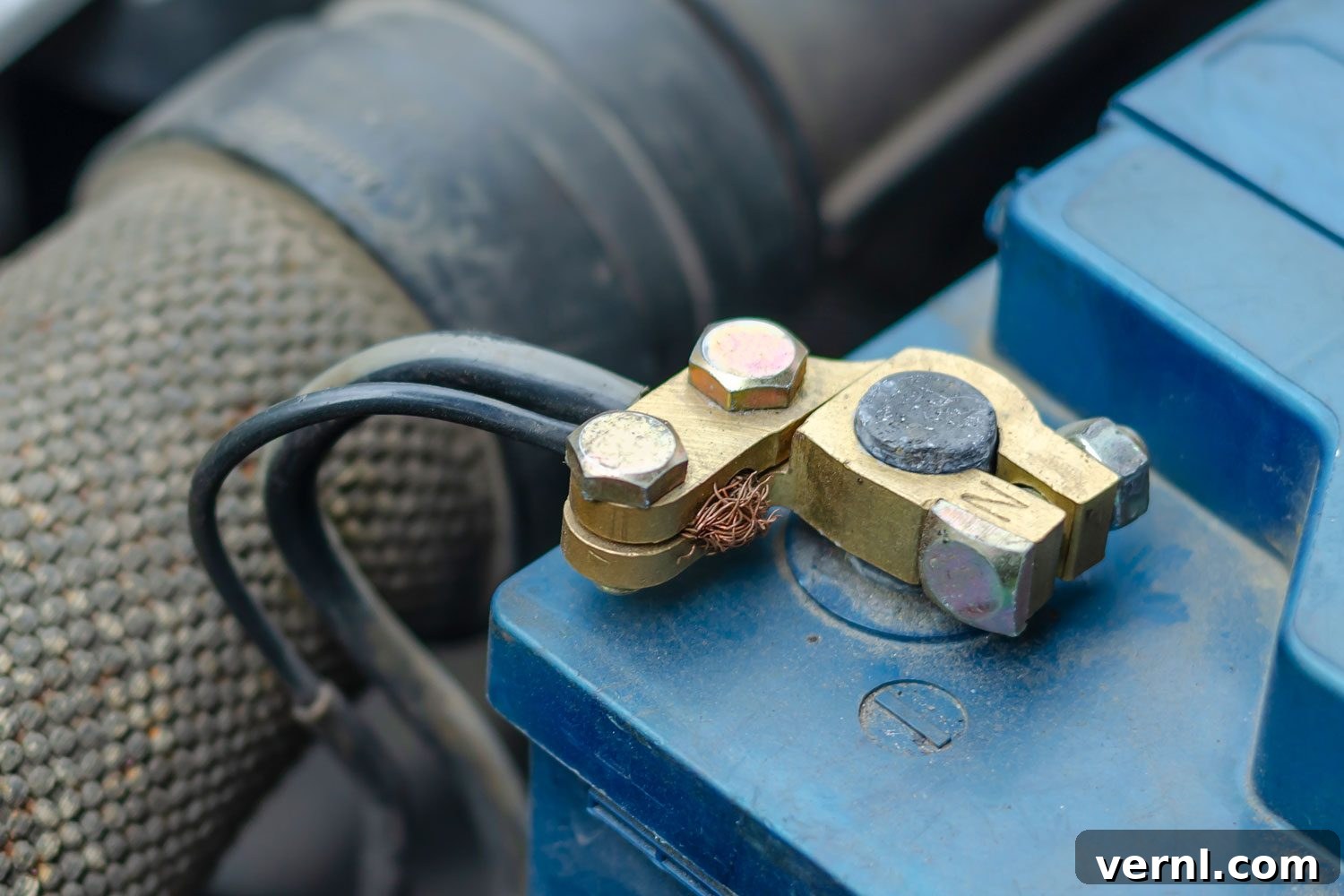
- Annual Cleaning of Battery, Terminals, and Cables: Over time, battery terminals can accumulate dirt, grime, and corrosion, which can impede the flow of electricity and reduce battery efficiency. Annually inspect and clean the battery’s top, terminals, and cables. Use a wire brush and a battery terminal cleaner solution (or a baking soda and water paste) to remove any corrosion. Ensure all connections are bright and shiny for optimal conductivity.
- Ensure All Ground Wires and Cables Are Clean and Tight: Just as important as the positive terminals, clean and tight ground wire connections are vital for a healthy electrical system. Poor ground connections can lead to a host of electrical problems, including inconsistent accessory function and charging issues. Periodically check that all ground wires and cables are securely fastened and free of corrosion.
- Ensure Battery Is Securely Held in Place: Vehicle vibrations, especially over rough roads, can damage internal battery components if the battery is not firmly secured in its tray. Regularly check that the battery hold-down clamp is tight and that the battery is not shifting or rattling. A secure battery is less prone to physical damage and internal wear.
- Replace the Battery If Damaged or Leaking Fluid: Any signs of physical damage, such as cracks in the casing, bulging sides, or leaking fluid (for lead-acid types), indicate a failing or compromised battery that poses a safety risk. Such a battery should be replaced immediately by a professional. Modern sealed batteries typically don’t leak, but physical damage can still occur.
- Use a Battery Maintainer If the EV Sits for Extended Periods: If your EV is regularly parked for several weeks or months (e.g., during long vacations or for seasonal storage), a smart battery maintainer is an invaluable tool. It will counteract the parasitic drain from the vehicle’s always-on low-voltage systems, keeping the 12-volt battery optimally charged and preventing deep discharge, which can significantly shorten its life.
Safety Note: While 12-volt battery maintenance can often be a DIY task for experienced individuals, it’s crucial to exercise extreme caution. More importantly, leave ALL high-voltage battery and electrical service and repairs on an EV to the experts. The high-voltage systems in electric vehicles carry dangerous amounts of electricity that can cause severe injury or death. Only a trained, certified technician, wearing the proper personal protective equipment (PPE) and following stringent safety protocols, should ever work on these components. If you’re unsure about any aspect of EV maintenance beyond simple 12-volt terminal cleaning, always consult a qualified service center.
By understanding the crucial role of the 12-volt battery and committing to its straightforward maintenance, EV owners can ensure the smooth, reliable, and safe operation of their electric vehicle for years to come. This small, often-forgotten battery truly is the unsung hero that enables the entire EV ecosystem to function seamlessly.