
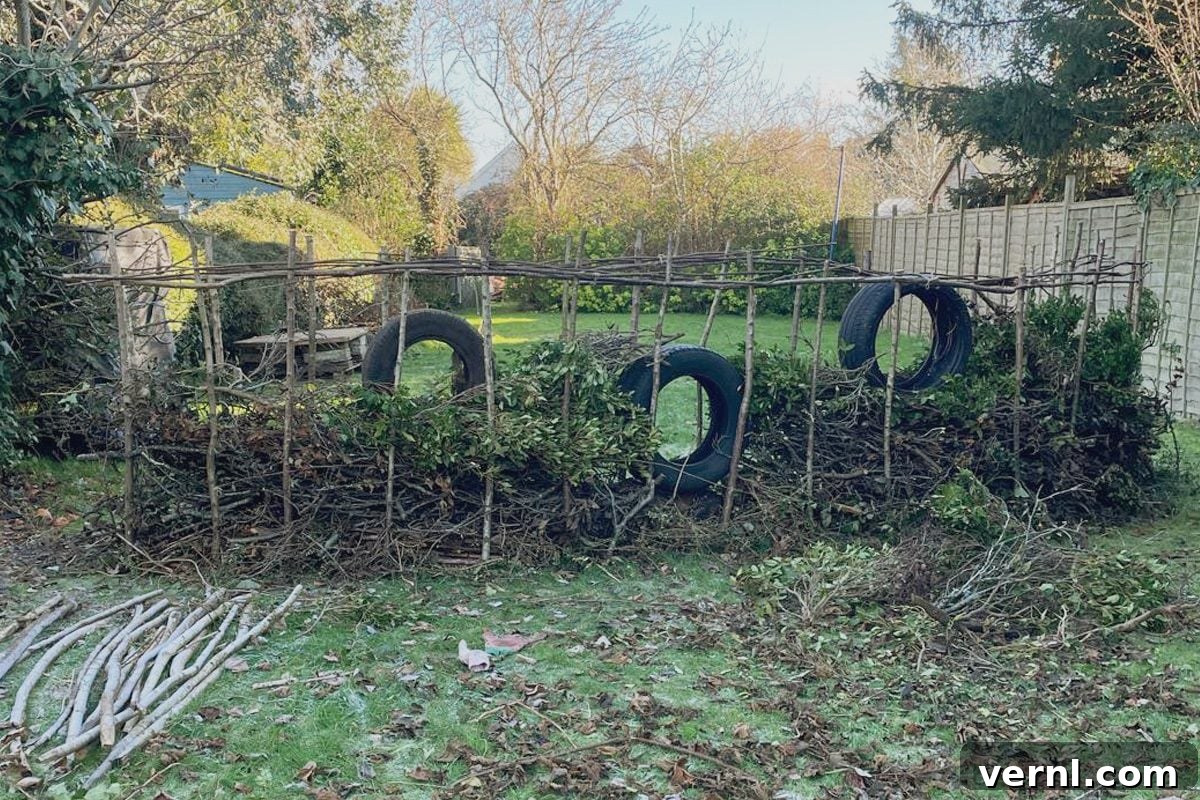
When my neighbor invited me to peek at the twiggy structure taking shape in her yard, I was immediately intrigued. She wasn’t just tidying up; she was embarking on a journey to create a sustainable, wildlife-friendly divider – a “dead hedge” – beautifully separating her manicured lawn from a planned wildflower meadow. This innovative approach to landscaping resonated deeply, especially with the increasing focus on eco-conscious living and resilient garden design.
In an era marked by extreme weather patterns and a growing desire for sustainable practices, constructing a dead hedge offers a remarkably eco-conscious and DIY-friendly solution. It transforms what many consider mere yard waste – fallen branches, woody debris, and pruned cuttings – into a functional, attractive, and ecologically rich garden feature. More than just a rustic boundary, a dead hedge contributes significantly to local biodiversity, soil health, and even offers practical benefits like privacy and wind protection.
To delve deeper into the art and science of building these remarkable structures, I consulted Deryn Davidson, a professional horticulturist and Sustainable Landscape State Specialist for Colorado State University Extension. Her insights offer invaluable tips on how to construct a dead hedge that is not only long-lasting and appropriate for diverse climates but also immensely beneficial for local wildlife, turning garden waste into a vibrant ecosystem.
Understanding the Dead Hedge: A Sustainable Garden Solution
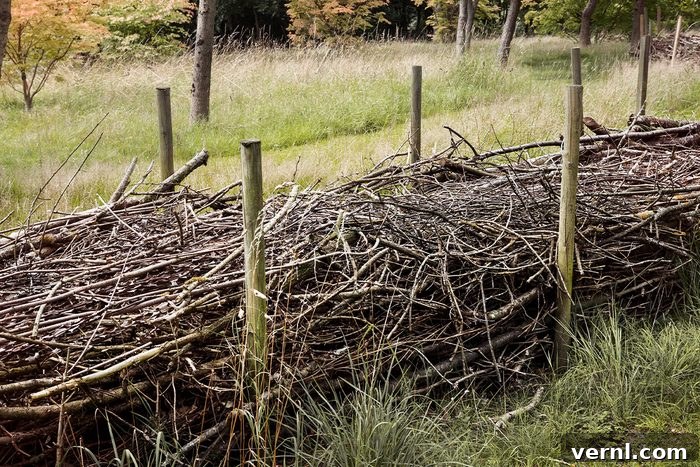
At its core, a dead hedge is a natural, rustic barrier meticulously crafted from loosely stacked and woven branches, twigs, and other woody plant debris. These materials are artfully arranged and contained between two rows of sturdy stakes, forming a dense, living-and-dying structure. It’s a beautifully simple, yet highly effective, method to repurpose yard waste, simultaneously creating natural privacy screens, enhancing wildlife habitat, and adding distinctive architectural structure to any garden space.
The concept of brushwood barriers is far from new. Across Europe, variations of these natural fences have been utilized for centuries, serving as practical boundaries to delineate property lines, contain livestock, and protect vulnerable woodland areas from external pressures. The modern iteration of the dead hedge gained significant traction and was formalized in the 1980s as the “Benjes hedge.” Named after German landscape gardeners Hermann and Heinrich Benjes, this concept championed the reuse of pruning waste and fallen timber as a means to encourage natural regeneration and foster biodiversity in agricultural and natural landscapes. Their pioneering work highlighted the ecological advantages of allowing woody debris to decompose naturally within a structured barrier, turning perceived waste into a valuable ecological asset.
Deryn Davidson, whose expertise spans sustainable landscaping practices, first encountered these captivating structures during an internship at the renowned Kew Gardens in London. She notes, “I think dead hedges are more common in that part of the world, but that’s not to say that they can’t be built in the US, and that people don’t use them over here.” Davidson emphasizes the adaptability and versatility of dead hedges, observing them constructed in a myriad of ways across the United States, often incorporating inventive types of regional flair and locally sourced materials, which she finds particularly inspiring and “cool.” This global adoption underscores their universal appeal and practical benefits in diverse ecological contexts.
The Multifaceted Benefits of Constructing a Dead Hedge
While a dead hedge might initially appear as a clever way to tidy up garden waste, its advantages extend far beyond mere aesthetics and organization. Davidson aptly describes these benefits as “stacking functions,” highlighting how a single dead hedge can serve multiple ecological and practical purposes simultaneously. Embracing this sustainable garden feature can profoundly transform your outdoor space into a thriving, resilient ecosystem.
- Eco-friendly Waste Management: One of the most significant benefits is its role in sustainable waste management. Instead of sending branches and woody debris to landfills, where they decompose anaerobically and release methane—a potent greenhouse gas—a dead hedge allows these materials to break down naturally in your yard. This not only reduces landfill burden but also minimizes the carbon footprint associated with transportation and disposal, making it a truly localized and environmentally responsible solution.
- Boosts Biodiversity and Wildlife Habitat: Dead hedges are unparalleled biodiversity hotspots. The decomposing wood provides a vital food source and shelter for a vast array of insects, often referred to as detritivores. These beneficial insects, including beetles, woodlice, and various larvae, form the base of a complex food web, subsequently attracting and feeding birds, small mammals like hedgehogs, voles, and shrews, and even amphibians. The dense, layered structure also offers invaluable wildlife shelter, providing safe havens for nesting, overwintering, and protection from predators and harsh weather conditions. It’s a dynamic microcosm constantly teeming with life.
- Enriches and Improves Soil Health: As the organic materials within the dead hedge gradually break down, they slowly release essential nutrients back into the soil beneath and around the structure. This process enriches the soil, increasing its organic matter content, improving drainage, and enhancing its water retention capabilities. Over time, this natural composting action contributes to a healthier, more fertile garden soil, fostering robust plant growth and a thriving microbial community. It’s nature’s slow-release fertilizer and soil amendment, all in one.
- Provides Natural Privacy and Wind Protection: When densely layered, a dead hedge forms an effective and aesthetically pleasing natural screen. This provides privacy from neighbors or unsightly views, transforming your outdoor space into a more secluded sanctuary. Beyond visual screening, a well-constructed dead hedge can also act as a formidable windbreak, protecting more delicate plants from damaging gusts and creating microclimates that benefit tender vegetation.
- Supports Climbing Plants: A dead hedge can be ingeniously integrated into your garden design as a living trellis. Its intricate structure offers excellent support for various climbing plants, including vining vegetables like squash, cucumbers, and beans, as well as ornamental flowering vines like sweet peas, morning glories, or native honeysuckle. This dual functionality further enhances its ecological value and aesthetic appeal, adding vertical interest and productive growing space.
- Low-to-No-Cost Garden Enhancement: Economically, building a dead hedge is incredibly efficient. Aside from the potential purchase of sturdy stakes and basic gardening tools like a mallet or pruning shears, the primary “cost” is your time and effort. It repurposes materials you likely already have, eliminating expenses associated with hauling yard waste or purchasing new fencing materials, making it an exceptionally budget-friendly garden project.
- Effective Erosion Control: Davidson highlights the often-underestimated role of dead hedges in erosion control. She advises, “If placed strategically on the contour line, then anything that might erode is going to stop at the fence.” By positioning a sturdy dead hedge along slopes or areas prone to soil runoff, it can effectively slow down water flow, trap sediment, and stabilize the soil. This is particularly valuable in areas with heavy rainfall or exposed ground. For this purpose, ensuring the dead hedge is robust and well-anchored is paramount to its long-term success.
- Aesthetic Appeal and Rustic Charm: Beyond its functional benefits, a dead hedge lends a unique, wild, and rustic aesthetic to any garden. It seamlessly blends with naturalistic planting schemes, rewilding projects, and cottage gardens, adding texture, depth, and a sense of connection to nature. Each dead hedge, with its unique collection of branches and evolving character, becomes a living piece of art.
A Step-by-Step Guide to Constructing Your Own Dead Hedge
Building a dead hedge is a surprisingly straightforward and rewarding DIY garden project. It requires minimal specialized skills or tools, making it accessible to most gardeners. With a mallet, a good pair of pruning shears, a collection of sturdy stakes, an ample pile of branches, and a creative eye, you’re well on your way to creating a beautiful and beneficial garden feature.
1. Choose the Right Location for Optimal Functionality
The success and specific benefits of your dead hedge heavily depend on its placement within your yard. Before you begin, consider its primary functions: Will it mark a property line, define different garden zones (e.g., separating a vegetable patch from an ornamental area), create a private nook, or serve as a vital wildlife corridor? Evaluate factors like sun exposure, existing vegetation, and the overall flow of your garden.
In regions prone to wildfires, careful placement becomes even more critical. Davidson advises, “It doesn’t mean you can’t have them, but be much more thoughtful about where it is in relation to other structures.” Ensure your dead hedge is situated at a safe distance from your home or other buildings, creating a defensible space that prevents it from becoming a fuel source in case of a fire. Consult local fire safety guidelines for specific recommendations on buffer zones.
2. Set the Posts for Structural Integrity
The stability and longevity of your dead hedge hinge on the proper selection and installation of its support posts. Begin by driving sturdy stakes into the ground, forming two parallel rows. The spacing between stakes along each row can vary from approximately 3 to 5 feet, depending on the desired length and density of your hedge. The distance between the two parallel rows, typically 12 to 25 inches, will dictate the overall thickness and visual impact of your dead hedge. For a denser, more substantial barrier, opt for a wider gap between rows. Untreated hardwood posts (like oak or black locust), metal fence posts, or even salvaged sturdy tree limbs can be used, provided they are rot-resistant and securely anchored.
Davidson emphasizes the importance of robust post installation: “You don’t want to put all the time and effort in, and then strong winds come in and knock it over.” Drive the posts deep enough into the ground – typically at least one-third of their total length – to withstand strong winds and the eventual weight of the woody material. Using a post-hole digger can help achieve greater depth and stability, especially in softer soils.
3. Layer and Weave Your Woody Materials
With your posts firmly in place, you can begin the creative process of filling your dead hedge. Start with thicker, sturdier branches at the base. These provide a stable foundation and help anchor the structure. Gradually add smaller cuttings, twigs, and leaves on top, compacting them as you go. For added stability and to “knit” everything together, weave longer, more flexible branches horizontally between the stakes, interlocking them with the vertical pieces. This weaving technique helps prevent the material from shifting or collapsing, creating a more cohesive and resilient barrier.
The true beauty of a dead hedge lies in its organic, imperfect nature. Don’t strive for absolute uniformity or a perfectly manicured look. A few playfully protruding twigs or branches add rustic character, creating natural perches for birds and offering additional nooks and crannies for insects. This natural aesthetic is part of its charm and its ecological benefit.
4. Keep Adding Materials Over Time
A dead hedge is not a static structure; it’s an ever-evolving, living (and dying) ecosystem. As the woody materials at the base begin to decompose, they will naturally settle and compact, reducing the overall height and density of your hedge. To maintain its desired size and functionality, make it a regular practice to press down the woody materials periodically and add new prunings, fallen branches, and garden debris as they become available. This ongoing replenishment ensures that your dead hedge remains dense, effective, and a continuous source of ecological benefit, truly embracing the circularity of nature in your garden.
Expert Tips for Building Dead Hedges That Last and Thrive
Whether you envision a highly rustic, free-form dead hedge or a more refined, integrated garden feature, these expert tips will help you achieve your desired form and ensure its longevity and maximum ecological benefit.
- Incorporate Living Elements for Enhanced Stability and Beauty: To further enhance the structural integrity and aesthetic appeal of your dead hedge, consider weaving in or planting living elements. Davidson suggests, “This knits everything together, and then you get to appreciate the flowers and leaves.” Fast-growing native vines, such as Virginia creeper or trumpet vine (depending on your region), can climb and intertwine with the woody debris, creating a stronger, more dynamic structure. Similarly, planting small native shrubs at the base can anchor the hedge, improve privacy, and add seasonal interest with their foliage, flowers, and berries, attracting even more wildlife.
- Choose Rot-Resistant Posts in Wet or Humid Climates: The lifespan of your dead hedge’s supporting structure is crucial, especially in environments with high moisture. In wet or humid climates, untreated wood stakes can quickly rot, compromising the hedge’s stability. Opt for naturally rot-resistant wood species for your posts, such as cedar, black locust, or redwood. Alternatively, consider using durable metal posts or even recycled plastic lumber for long-lasting support. If using pressure-treated wood, ensure it’s approved for garden use and minimize contact with edible plants.
- Build Against Existing Fencing for Added Stability and Aesthetics: If you have an existing fence that could use a visual upgrade or added stability, consider building your dead hedge against it. This method can reduce the number of stakes you need, as the fence provides one side of the containment. It’s an excellent way to soften the look of a chain-link fence, add privacy to a picket fence, or reinforce an aging barrier. This approach merges the benefits of both structures, creating a robust, wildlife-friendly boundary.
- Water Your Dead Hedge in Dry Climates to Aid Decomposition: In arid or dry climates, the decomposition process can be significantly slower due to a lack of moisture. To encourage the breakdown of organic materials and support any integrated living plants, Davidson suggests, “If you wanted it to function like a natural screen or an aesthetic piece that also has that decomposition value, people will actually water their compost piles in drier areas.” Occasionally watering your dead hedge, especially during prolonged dry spells, will foster microbial activity, accelerate decomposition, and ensure that nutrients are released more efficiently.
- Let Local Materials and Regional Flair Inspire Your Design: Embrace the unique character of your region by using locally available and native materials. This approach not only makes your dead hedge blend seamlessly with the surrounding landscape but also minimizes transportation costs and ecological impact. Davidson shares fascinating examples: “Davidson has seen dead hedge-style structures in Tucson built from saguaro ribs and other cactus skeletons, creating architectural facades that feel distinctly Southwestern.” Whether it’s willow branches from a nearby stream, cedar from a fallen tree, or unique desert flora, using what naturally grows in your area makes your dead hedge truly one-of-a-kind and ecologically harmonious.
- Consider Height and Width for Specific Functions: Before you start, determine the ideal height and width of your dead hedge. A taller, wider hedge provides more privacy and wind protection, while a lower, narrower one might serve better as a garden divider or a subtle wildlife corridor. Plan your post spacing and material accumulation accordingly to achieve the desired dimensions.
- Gather a Variety of Materials: While using what you have is key, try to gather a range of branch sizes and types. Thicker logs provide bulk and a stable base, while thinner twigs and leafy material fill gaps, add density, and speed up decomposition. The diversity of materials will create a richer habitat.
Frequently Asked Questions About Dead Hedges
What type of branches are best for a dead hedge?
“There’s definitely plant material that is going to lend itself more to being part of the structure, but also prioritize using what you have,” Davidson advises, emphasizing sustainability. The most sustainable approach is to utilize local, readily available material from your own yard or neighborhood. Flexible, green branches like willow, dogwood, or young saplings are excellent for weaving and shaping the structure, providing pliability and natural interlocking. Drier, stiffer sticks and thicker branches work well for stacking and adding bulk to the hedge’s core, contributing to its stability. While most woody debris is suitable, it’s generally wise to avoid aggressive or invasive species (like certain types of blackberry or bamboo) if you are concerned about unwanted regrowth or spread into your garden space. Consider the decomposition rate too: softer woods break down faster, while hardwoods offer longer-term structure.
Are dead hedges secure?
A well-built, dense dead hedge can effectively deter casual foot traffic, clearly define boundaries, and offer a visual deterrent. However, it’s important to understand that a dead hedge is not a high-security fence designed to prevent determined intruders or contain very active pets. For enhanced protection or to secure a specific area, you can incorporate thorny branches (such as those from hawthorn, roses, or pyracantha) within the layers, making it less inviting to trespassers. Combining your dead hedge with existing, more secure fencing or dense, thorny living shrubs can provide an additional layer of security, creating a multi-faceted barrier that balances natural aesthetics with practical protection.
How much maintenance does a dead hedge need?
Dead hedges are celebrated for their low-to-no-maintenance nature, making them an attractive option for busy gardeners. However, Davidson points out that this shouldn’t deter you, saying, “You’re going to continue to have a relationship with it.” This means regular, but minimal, interaction. The primary maintenance involves periodically checking for settling material and adding new prunings or fallen branches to maintain the desired height and density. You may also need to repair any loose sections that shift over time, especially after heavy winds. Additionally, keep an eye out for aggressive weeds or unwanted saplings trying to establish themselves within the structure, and remove them before they overwhelm the hedge. This ongoing “relationship” ensures the hedge remains functional and beautiful.
I have young children. Is a dead hedge safe for my family?
A thoughtfully constructed dead hedge can absolutely be a safe and enriching feature in family yards. However, proactive safety measures are essential, especially with young children present. Regularly inspect the hedge for any shifting materials, ensuring that all branches are stable and securely contained within the posts. Pay particular attention to branches that might protrude at eye level or create tripping hazards. All posts should be firmly set in the ground to prevent tipping. While generally safe, supervision is always recommended, particularly when children are playing near any garden structure. Avoiding the inclusion of overly sharp or toxic plant materials is also a good practice for family-friendly garden spaces.
How long do dead hedges typically last?
The lifespan of a dead hedge varies significantly depending on the materials used, local climate, and the amount of ongoing replenishment. Softer woods will decompose more quickly, while hardwoods can last for many years, even decades, particularly if the base is kept relatively dry. In general, a well-maintained dead hedge with regular additions of new material can be a continuous feature in your garden for 5 to 20 years or more. It’s a dynamic structure that evolves as new material is added and old material breaks down, constantly renewing itself.
Can dead hedges attract pests or undesirable animals?
Dead hedges are designed to attract wildlife, and this includes a diverse range of creatures, most of which are beneficial or harmless. They can indeed attract insects, including woodlice, beetles, and spiders, which are crucial for decomposition and form the base of the food chain. Small mammals like voles or shrews might find shelter. Generally, these are not “pests” in a detrimental sense but rather vital components of a healthy ecosystem. However, if you are concerned about specific garden pests (e.g., slugs near vegetable beds), consider the placement of your dead hedge away from vulnerable plants. The key is balance: dead hedges primarily foster beneficial biodiversity, helping to create a more resilient garden that can naturally deter imbalances.
About the Expert
Deryn Davidson is the Sustainable Landscape State Specialist for Colorado State University Extension. She holds a Bachelor of Science in Horticulture from CSU and a Master of Landscape Architecture from the University of Arizona. Her expertise is invaluable in promoting environmentally sound landscaping practices.