
Understanding Toilet Installation Costs: Your Comprehensive Guide to Replacement and New Installs
Whether you’re embarking on a full bathroom renovation, upgrading outdated fixtures, or simply dealing with a leaky toilet, the task of installing or replacing a toilet is a common undertaking for homeowners. While it might seem straightforward, the actual cost can vary significantly depending on a multitude of factors, from the type of toilet you choose to unexpected plumbing issues that may arise. This comprehensive guide will break down everything you need to know about toilet installation costs, offering insights from industry experts and practical advice to help you budget effectively for your next project.
Many homeowners choose to tackle toilet replacement as a DIY project, aiming to save on labor costs. Indeed, I’ve had the opportunity to replace numerous toilets over the years, including recently upgrading an inefficient 1950s-era Kohler model for a friend with a modern American Standard dual-flush, low-flow unit. The total cost for that job was just the price of the toilet itself, around $160, demonstrating the potential savings of a DIY approach. However, not every installation is as simple, and hiring a professional plumber can be a necessary and worthwhile investment.
To provide a clearer picture of professional installation expenses, we consulted Roy Barnes of Maryland-based Service Force Plumbing. With over three decades of experience serving his community, Barnes and his team have encountered every possible scenario related to toilet installation. His expertise offers invaluable perspective on the true costs involved, particularly when unforeseen complications emerge.
Professional Toilet Installation Cost: What to Expect
According to Roy Barnes, assuming an average toilet cost of $250 (which he suggests is a reasonable figure for a quality unit, making my $160 purchase quite a bargain!), his company typically charges a flat rate of $400 for a standard toilet installation. This price covers a like-for-like replacement where no significant issues are present. A “simple installation” means there are no required changes to existing plumbing pipes, the toilet flange (the critical component that anchors the toilet to the floor and connects to the waste line), or the subfloor beneath the toilet. However, plumbing projects, by their very nature, are prone to unexpected discoveries, and the final bill can easily exceed this baseline if complications arise.
What a Simple Professional Installation Includes:
A professional plumber’s flat rate for a straightforward toilet replacement generally encompasses the following essential steps:
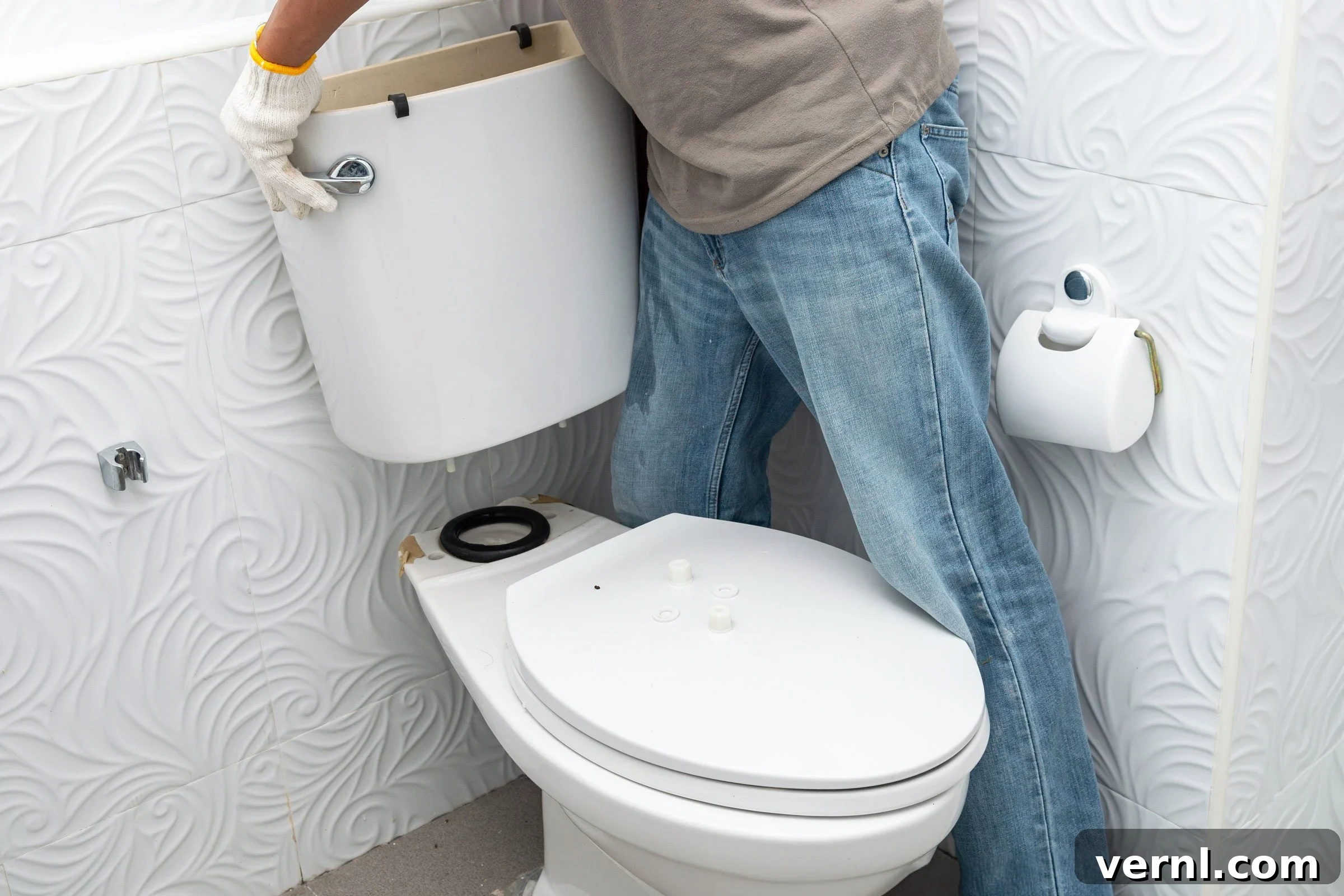
- Removing the Old Toilet: This involves safely disconnecting the water supply, flushing and draining residual water, unbolting the toilet from the floor, and carefully lifting and removing the heavy fixture. Proper removal prevents damage to surrounding flooring or plumbing.
- Scraping and Disposing of the Old Wax Ring: The wax ring creates a watertight seal between the toilet and the waste pipe. This old, often messy component must be thoroughly scraped away, and the area cleaned, to ensure a perfect seal for the new toilet. Disposal of the old ring is also part of the service.
- Assembling the New Toilet: Many new toilets come in multiple pieces (bowl and tank separate) and require assembly before installation. This includes attaching the tank to the bowl, installing the fill valve and flush mechanism, and ensuring all internal components are correctly fitted.
- Installing a New Wax Ring and Toilet Bolts: A fresh wax ring is crucial for a leak-free seal. New toilet bolts are inserted into the flange, ready to secure the new fixture firmly to the floor.
- Dropping in the New Toilet: This delicate step involves carefully aligning the toilet bowl with the waste opening and bolts, then lowering it precisely onto the wax ring to create a perfect seal. This often requires careful maneuvering due to the weight and fragile nature of porcelain.
- Hooking Up the Water and Adjusting the Flush: The final steps involve reconnecting the water supply line, checking for leaks, and adjusting the tank’s fill level and flush mechanism to ensure optimal water efficiency and powerful flushing.
While these steps seem simple, a professional ensures they are executed flawlessly, minimizing the risk of future leaks or operational problems.
Factors That Significantly Affect Toilet Installation Cost
While a simple replacement might fit the $400 flat rate, several common factors can quickly elevate the overall cost. These issues are often hidden until the old toilet is removed, underscoring the value of professional assessment during the installation process.
Damaged Toilet Flange Repair or Replacement
The toilet flange is a critical component—a circular fitting that is bolted directly to the bathroom floor and permanently connected to the main waste line. Its primary function is to securely anchor the toilet and provide a leak-proof connection to the sewer system via the wax ring. Modern flanges are typically made of durable PVC or ABS plastic, but older homes often feature cast-iron flanges, which are susceptible to corrosion over time.
“Sometimes, after we pull the toilet, we find that the flange needs to be repaired or replaced,” says Roy Barnes. “Reasons for this can be broken flange ears where the bolts connect to secure the toilet, or a new floor was installed, and the flange height was not adjusted properly.”
A damaged flange can lead to a wobbly toilet, persistent leaks from the base, and even potential subfloor damage. Repairing or replacing a flange is a more involved task than a simple toilet swap:
- Broken Flange Ears: If only the “ears” (the bolt slots) are broken, a repair kit or a metal flange repair ring can often be used to reinforce the existing flange, which is a quicker and less expensive fix.
- Incorrect Height: If the flange sits too high or too low relative to the finished floor, it compromises the wax ring’s seal. A flange extender can raise a low flange, while a high flange might require cutting and reseating.
- Corrosion or Cracks: A fully corroded cast-iron flange or a severely cracked plastic one will require complete replacement. This involves cutting the old flange from the waste pipe and fitting a new one, a job that often requires specialized tools and expertise to ensure a watertight seal with the main drain.
“Cost for a flange replacement because of corrosion or changes in the floor height will vary,” Barnes explains, “but could range from $250 to $500, depending on the extent of the damage and the type of repair needed. A full replacement of a cast-iron flange can be on the higher end due to the difficulty of working with older materials.”
Rotten Subfloor Repair Due to Leaks
One of the most concerning and potentially expensive issues discovered during toilet replacement is subfloor damage caused by long-term leaks. When a toilet flange is incorrectly installed (too high, too low, or off-center) or if the wax ring fails over time, water can slowly seep onto the subfloor beneath the toilet. This can go unnoticed for months or even years, leading to significant structural damage.
“Most times, you won’t know this happened until you pull the toilet,” Barnes warns. The extent of the rot can range from surface-level mold and softening of the plywood directly under the toilet to severe structural compromise affecting the floor joists below. Repairing this kind of damage is not a minor task.
“This repair can cost thousands,” he says, “depending on the extent of the rot and whether the rot is limited only to the plywood or if it extends to the floor joist below.”
The repair process for subfloor rot can involve:
- Removing sections of the finished flooring (tile, vinyl, etc.) and damaged subfloor.
- Drying out the affected area thoroughly, potentially requiring specialized equipment to prevent mold growth.
- Treating the area for mold and mildew.
- Cutting and replacing the rotted sections of plywood subfloor.
- If floor joists are compromised, sistering new lumber to the damaged joists or completely replacing sections for structural integrity.
- Reinstalling new finished flooring, which may involve matching existing materials or replacing a larger area.
The labor and material costs for such extensive repairs, especially if they involve structural components and multiple trades (plumber, carpenter, flooring installer), quickly add up, justifying Barnes’s estimate of “thousands.” This underscores the importance of addressing any wobbly toilet or suspected leaks promptly to prevent minor issues from becoming major, costly renovations.
New Toilet Rough-in (Installing a Toilet Where None Existed)
Installing a toilet in a brand-new location where no plumbing previously existed, often referred to as a “rough-in,” is by far the most complex and expensive toilet installation scenario. This is common during major bathroom additions or reconfigurations of existing spaces.
A new toilet rough-in involves installing entirely new waste and water pipes, which means cutting into floors, walls, and potentially the ceiling below to connect to the main drain-waste-vent (DWV) system and the domestic water supply lines. “The average new toilet rough-in is around $2,000 in our market in the D.C. metro area, which is a fairly high-cost area,” Barnes explains. “The cost in other locations could be significantly lower, but it’s never a trivial expense.”
Factors that significantly increase the cost of a rough-in include:
- Distance from Main Stack: The further the new toilet is from the existing main waste stack and water supply lines, the more piping and labor will be required.
- Location in Concrete: If the installation is on a concrete slab foundation, plumbers will need to jackhammer through the concrete to lay new waste lines, a labor-intensive and messy process that adds considerable cost.
- Floor Type and Accessibility: Working in a crawl space or an unfinished basement is generally easier (and thus cheaper) than having to open up finished ceilings below.
- Ventilation Requirements: Proper plumbing codes require adequate venting for all fixtures. Running new vent lines to connect to the main vent stack adds complexity.
- Permit Requirements: New plumbing work often requires permits and inspections, adding to both the cost and timeline of the project.
Internet research broadly confirms Barnes’s figure, with national averages for a new toilet rough-in often ranging from $1,500 to $3,000+, depending on the factors listed above and regional labor costs. This is truly a job best left to highly experienced professionals.
Other Potential Cost Factors to Consider
Beyond the major issues listed above, several other factors can influence the final cost of toilet installation:
- Toilet Type and Complexity: While standard two-piece toilets are straightforward, specialized models can increase labor costs. Wall-mounted toilets, for example, require an in-wall carrier system and precise measurements, demanding more intricate installation. Smart toilets with bidet functions, heated seats, or automatic flushing may require electrical outlets or specialized water connections, adding complexity.
- Old Plumbing Issues: Sometimes, the existing shut-off valve for the toilet’s water supply is corroded, seized, or leaking. Replacing an old, worn-out supply line or a faulty shut-off valve is often a smart preventative measure but will add to the labor and material cost.
- Disposal Fees: While many plumbers include the disposal of the old toilet in their flat rate, some might charge an additional fee, especially for larger or heavier units. Always clarify this upfront.
- Emergency Services: If your toilet issue is an emergency (e.g., a severe leak that can’t be contained) and requires after-hours or weekend service, expect to pay a premium for expedited labor rates.
- Geographic Location: Labor rates for plumbers vary significantly by region. Major metropolitan areas and areas with a high cost of living (like the D.C. metro area or San Francisco Bay Area) will generally have higher installation costs than rural or less expensive regions.
How Much Does a Toilet Cost?
Beyond the installation labor, the cost of the toilet fixture itself is a significant component of your overall budget. “A good average toilet runs about $250,” says Roy Barnes. As someone who has installed quite a few in the high-cost San Francisco Bay Area, I would consider $250 to be a solid mid-range price, suggesting you can indeed find excellent value at that price point. For $250, you can generally expect a quality, name-brand fixture with good performance and perhaps an ergonomic design. However, the market offers a vast range of options to suit every budget and aesthetic preference.
Budget-Friendly Toilets ($100 – $150)
At the low end of the scale, you can find basic, off-brand, two-piece toilets for less than $100. These are typically standard-height, gravity-fed models with basic flushing mechanisms. They serve their primary function reliably but may lack advanced water-saving features, ergonomic comforts, or refined aesthetics. They are an excellent choice for rental properties, guest bathrooms with infrequent use, or for homeowners on a strict budget who prioritize functionality over features.
Mid-Range Toilets ($150 – $300)
This category represents the sweet spot for many homeowners, offering a balance of quality, performance, and value. For $150 to $300, you can purchase a reputable one- or two-piece model from well-known manufacturers such as Kohler, American Standard, Toto, or Delta. These toilets often feature:
- Improved Water Efficiency: Many mid-range models are low-flow (1.28 gallons per flush) or dual-flush (allowing selection between a full flush and a reduced-volume flush for liquids), helping to conserve water and reduce utility bills.
- Comfort Height: Often referred to as “right height” or “chair height,” these toilets are taller than standard models, making them more comfortable for adults and individuals with mobility issues.
- Better Aesthetics: Cleaner lines, more contemporary designs, and improved finishes are common.
- Enhanced Flushing Performance: Better engineered trapways and flush valves for more powerful and clog-resistant flushes.
- One-Piece Designs: While typically on the higher end of this range, some mid-range toilets offer one-piece construction, which is easier to clean and offers a sleeker look.
High-End and Luxury Toilets ($300 – $800+)
If you’re looking to splurge or desire specific luxury features, the high-end market offers a wide array of options. These toilets combine cutting-edge technology, superior design, and enhanced comfort. Expect to pay $300 to $800 or more for models with features like:
- Skirted Designs: These toilets feature smooth sides that hide the trapway, creating a seamless, modern look that is incredibly easy to clean.
- Integrated Bidet Functionality: High-end models often include built-in bidet seats with features like heated water, adjustable spray patterns, air dryers, and self-cleaning nozzles.
- Smart Features: Some advanced toilets come with motion-activated nightlights, automatic flushing, heated seats, remote controls, and even connectivity to smart home systems.
- Ultra-High Efficiency: Toilets that use even less water than standard low-flow models, often achieving EPA WaterSense certification.
- Specialized Finishes and Materials: Beyond standard white, some toilets offer unique colors or materials, and their internal components may be designed for extreme durability.
- Wall-Mounted Toilets: These modern, space-saving toilets feature a concealed tank within the wall, offering a minimalist aesthetic and easier floor cleaning. Their initial fixture cost is often higher due to the specialized in-wall carrier system required for installation.
When selecting a toilet, consider not only the price but also factors like water efficiency (look for EPA WaterSense certification or a high MaP (Maximum Performance) rating), bowl shape (round bowls save space, elongated bowls offer more comfort), height, and whether a one-piece or two-piece design best suits your needs and aesthetic preferences. Investing in a slightly more expensive, high-quality toilet can pay off in the long run through reduced water consumption and fewer maintenance issues.
Pro vs. DIY Installation: Weighing Your Options
The decision to hire a professional or tackle toilet installation yourself boils down to balancing cost savings against complexity, potential risks, and your own skill level. For a simple like-for-like toilet replacement where no underlying issues are present, DIY can certainly save you a few hundred dollars on labor. Many homeowners successfully complete this task, gaining a sense of accomplishment in the process.
When to Consider DIY Toilet Installation:
- Simple Replacement: If you’re replacing an old toilet with a new one of similar dimensions, and there are no visible signs of leaks, wobbling, or subfloor damage, a DIY approach is feasible.
- Basic Tools and Knowledge: If you’re comfortable with basic plumbing tools (wrenches, screwdrivers, a wax ring scraper) and can follow instructions carefully, you possess the fundamental skills.
- Minor Flange Fixes: Some minor flange repairs, such as installing a flange extender to raise a flange that sits slightly below floor level, are relatively easy for a DIYer. These plastic rings are typically held in place by the same screws that secure the flange to the floor.
- Physical Capability: Toilets are heavy and awkward. You may need someone to help you lift out the old toilet and carefully set the new one in place to prevent injury or damage.
The main advantage of DIY is undoubtedly the cost savings on labor. However, even a “simple” toilet replacement requires meticulous attention to detail to prevent leaks, especially when setting the new wax ring and tightening the bolts evenly.
When to Call a Professional Plumber:
While DIY is tempting, several situations strongly warrant calling in a professional plumber. The potential risks and complexities often outweigh the desire for cost savings:
- Any Sign of Underlying Damage: If your old toilet wobbles excessively, you notice water stains on the floor or ceiling below, or suspect subfloor rot, stop immediately and call a pro. Diagnosing and repairing issues like rotten subfloor or severely damaged flanges requires specialized skills and tools.
- Complex Flange Repairs: Replacing an entire toilet flange, especially if it involves cutting away a cast-iron flange from the waste pipe, is a complex job. It requires precision to ensure a watertight seal with the main drain, a task beyond the typical DIYer’s skill set.
- New Toilet Rough-in: As discussed, installing a toilet where none existed before (rough-in) is a major plumbing project involving new pipes, vents, and potentially cutting into concrete or walls. This is unequivocally a job for a licensed plumber to ensure code compliance and structural integrity.
- Lack of Confidence or Time: If you’re unsure about any step of the process, lack the necessary tools, or simply don’t have the time, a professional plumber offers peace of mind. They can complete the job efficiently, correctly, and often come with warranties on their work.
- Specialized Toilets: Wall-mounted toilets, smart toilets with electrical requirements, or macerating toilets (which grind waste) often have unique installation requirements best handled by an experienced plumber.
Remember, a small leak from a poorly installed toilet can lead to thousands of dollars in water damage and mold remediation down the line. The upfront cost of a professional plumber can be a sound investment against future, much larger expenses. Always ensure the water supply is shut off and the area is clear, regardless of who is doing the installation.
About the Expert
- Roy Barnes is the co-owner of Service Force Plumbing, which proudly serves the metro D.C. area. With more than 30 years of extensive experience in the trade, he and his partner Hendrik Vanderpool are highly skilled in all aspects of plumbing, including conventional and trenchless sewer and water line repairs, as well as expert gas fitting services. Their deep understanding of plumbing systems makes them invaluable resources for homeowners facing any type of plumbing challenge.