
Navigating the array of dashboard symbols on your car can feel overwhelming. With dozens of lights potentially illuminating at any given moment, it’s essential to understand what each one signifies. While some symbols merely indicate active features, others are critical warnings that demand immediate attention. Prioritizing the “life-or-death” indicators, such as those related to engine health or braking, is paramount for your safety and the longevity of your vehicle. Over time, striving to memorize all dashboard lights will empower you, reducing your reliance on owner’s manuals or mechanics for basic diagnostic insights.
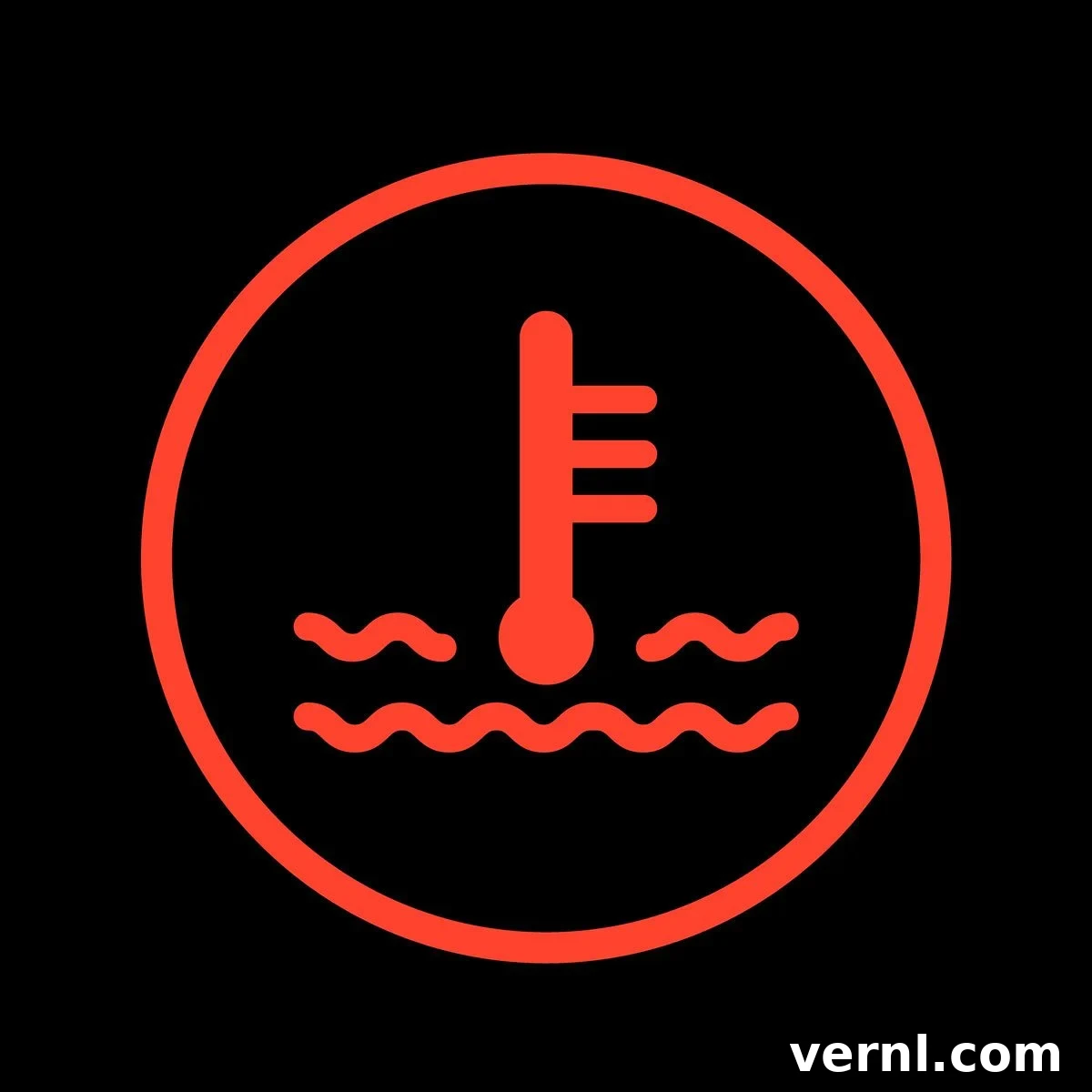
Among the many indicators, one particular symbol often causes confusion, frequently misinterpreted as a “boat.” Despite its aquatic appearance, this symbol has absolutely no connection to your car’s ability to navigate water. In fact, upon closer inspection, it’s clear it’s not a boat at all, but rather a vital component of your vehicle’s diagnostic system.
Deciphering the “Boat” Symbol: Your Coolant Temperature Indicator
What many drivers perceive as a boat is actually a cleverly designed symbol depicting a thermometer submerged in fluid. This illuminating icon serves as your car’s critical “coolant temperature low indicator light” and “coolant temperature high warning light.” When this light appears on your dashboard—outside of the brief moment all lights illuminate upon starting your car as a system check—it’s a definitive sign that your engine’s cooling system requires immediate attention. Ignoring this warning can lead to severe and costly engine damage.
The engine’s cooling system is fundamental to its operation. It maintains the engine within an optimal temperature range, typically between 195 and 220 degrees Fahrenheit (90-105 degrees Celsius). This precise temperature ensures efficient fuel combustion, minimizes emissions, and prevents components from overheating and warping. Coolant, a mixture of antifreeze and water, circulates through the engine block, cylinder head, radiator, and heater core, absorbing excess heat and dissipating it into the atmosphere. Any malfunction in this intricate system can quickly lead to critical temperature fluctuations, triggering the dashboard warning light.
Understanding What Different Colors and Behaviors Mean
The behavior and color of the coolant temperature light can provide crucial clues about the nature of the problem. Modern vehicles, like those from Subaru and Honda, utilize various indications:
Solid Blue Light: Engine Not Warm Enough
If you see a solid blue light, particularly in models like a Subaru, it “indicates insufficient warming up of the engine.” While not an immediate emergency like overheating, it’s still an important indicator. When an engine runs too cold, it operates less efficiently. This can lead to increased fuel consumption, higher emissions, and accelerated wear on internal components due to inadequate lubrication and condensation within the engine. Driving short distances frequently in cold weather can often trigger this light, as the engine doesn’t have sufficient time to reach its optimal operating temperature. Persistent blue light after a reasonable driving period could suggest issues with the thermostat, which might be stuck open, preventing the engine from reaching temperature efficiently.
Alternating Red and Blue Light: Electrical System Malfunction
A light that alternates between red and blue suggests a more complex issue, often pointing to an electrical system malfunction within the cooling system. This could mean a faulty sensor providing incorrect temperature readings, a wiring problem, or an issue with the electronic control unit (ECU) that monitors the engine’s temperature. While not directly indicating overheating or extreme cold, such a malfunction means the system cannot accurately report the engine’s actual temperature, leaving you vulnerable to undetected overheating or other problems. This scenario warrants a prompt professional inspection to diagnose the underlying electrical fault.
Blinking or Solid Red Light: Engine Overheating Warning
This is the most critical and dangerous warning associated with the coolant temperature light. A blinking red light, as described by Subaru, means “that the engine is close to overheating,” while a solid red light usually indicates that the engine is already experiencing dangerously high temperatures. Honda further explains that if you’re seeing a red light, it could be caused by “a failed cooling system component, such as a leaking radiator, broken thermostat, or water pump issue.”
Engine overheating is an emergency that demands immediate attention. When an engine runs excessively hot, its metal components can expand, warp, or even crack. This includes critical parts like the cylinder head, engine block, and head gasket. A blown head gasket, for example, can lead to coolant mixing with oil or combustion gases leaking into the cooling system, causing catastrophic damage and potentially requiring an expensive engine rebuild or replacement. Common causes of overheating include:
- Low Coolant Levels: The most frequent culprit. Leaks in hoses, the radiator, or the water pump can deplete coolant.
- Faulty Radiator: A clogged or damaged radiator cannot effectively dissipate heat.
- Broken Thermostat: If the thermostat is stuck closed, it prevents coolant from circulating to the radiator.
- Water Pump Failure: A malfunctioning water pump cannot circulate coolant through the engine.
- Cooling Fan Issues: If the electric cooling fan isn’t working, especially in stop-and-go traffic, the radiator won’t cool effectively.
- Clogged Coolant Passages: Sediment or rust can block the flow of coolant within the engine or radiator.
What Should You Do If You See the Coolant Temperature Symbol?
Your immediate course of action depends entirely on the specific behavior and color of the warning light. Reacting appropriately and promptly can prevent minor issues from escalating into major, costly repairs.
If the Light is Blue (Engine Too Cold):
If the blue light illuminates, indicating the engine is taking too long to warm up, generally, you can continue driving, but with caution. Avoid hard acceleration or putting excessive strain on the engine. Allow the engine to run for a few extra minutes before driving, especially in very cold weather. If the blue light persists for an extended period during regular driving, or if it comes on frequently, it’s advisable to have your vehicle inspected. This could point to a thermostat that is stuck open or low coolant levels preventing proper heating. A mechanic can quickly diagnose and rectify this issue, ensuring optimal engine performance and fuel efficiency.
If the Light is Alternating Red and Blue (Electrical System Malfunction):
When the light alternates between red and blue, indicating an electrical system malfunction, Subaru suggests asking your dealer or a qualified mechanic to inspect the car as soon as possible. While the engine may not be actively overheating, the cooling system’s monitoring capabilities are compromised. This uncertainty means you’re driving without reliable temperature feedback, which could lead to an undetected overheating situation. Drive cautiously to a service center, monitoring for any signs of actual overheating (steam, burning smell, sudden temperature gauge spike).
If the Light is Red (Engine Overheating – Emergency):
This is the most critical scenario. Both Honda and Subaru strongly emphasize the importance of stopping as soon as it is safely possible. Ignoring a red coolant temperature light or continuing to drive an overheating vehicle risks permanent and irreversible engine damage. Here’s a detailed emergency protocol:
- Pull Over Safely: Find a safe place to pull off the road immediately. Do not try to make it to your destination or the nearest garage if it means continuing to drive a dangerously hot engine.
- Turn Off the Engine: Shut off the engine completely. This stops the heat generation and allows the cooling process to begin.
- Allow to Cool: Carefully open the hood (if safe to do so) to help dissipate heat more quickly, but do NOT attempt to open the radiator cap or coolant reservoir cap while the engine is hot. The cooling system is pressurized when hot, and opening it can cause scalding hot steam and coolant to erupt, leading to severe burns. Wait at least 30-60 minutes for the engine to cool down significantly.
- Check Coolant Levels (Only When Cold): Once the engine is completely cool, you can safely check the coolant reservoir level. If it’s low, you may cautiously add a 50/50 mix of coolant and distilled water, or plain water in an absolute emergency, to bring it up to the “full” line. However, this is a temporary fix and does not address the underlying cause of the leak or overheating.
- Do Not Drive Until Repaired: Under no circumstances should you attempt to drive a car that has overheated until the underlying problem has been identified and properly repaired by a professional mechanic. Driving it again risks compounding the damage. Arrange for a tow to a reputable service center.
Post-Incident Follow-Up and Prevention
Once your car engine has cooled down, and the warning light has (hopefully) turned off, it is absolutely essential to have a qualified mechanic thoroughly inspect the vehicle. Even if the light disappears, the root cause of the overheating event needs to be identified and addressed. A mechanic will check for:
- Leaks: Inspecting all hoses, the radiator, water pump, and engine block for any signs of coolant leakage.
- Component Failure: Testing the thermostat, radiator fan, and water pump to ensure they are functioning correctly.
- System Integrity: Checking for blockages in the radiator or coolant passages, and assessing the condition of the head gasket for signs of damage.
- Fluid Levels and Condition: Ensuring the correct type and level of coolant are present, and that the coolant isn’t degraded.
Preventative maintenance is the best defense against engine overheating. Regular checks of your coolant levels, inspecting hoses for cracks or swelling, and adhering to your car’s recommended service schedule for coolant flushes and system inspections are vital. A healthy cooling system relies on clean coolant, proper pressure, and functional components working in harmony. Being proactive can save you from the stress, danger, and expense of an overheating engine and potential irreparable damage.
Conclusion
The “boat” symbol on your dashboard is far from a trivial indicator; it’s a critical early warning system for your engine’s health. Understanding that it represents the coolant temperature light and recognizing the implications of its various colors and behaviors is a fundamental aspect of responsible car ownership. Whether it’s a blue light indicating a cold engine, an alternating red and blue light signaling an electrical fault, or a flashing or solid red light warning of imminent overheating, prompt and appropriate action is key. By familiarizing yourself with this vital symbol and committing to regular vehicle maintenance, you can ensure your safety on the road, protect your investment, and potentially avoid catastrophic engine failure.
Sources
- Subaru Warning Lights, Napleton Subaru.
- What Do the Different Engine Lights Mean, Orangeville Honda.