Wasps often get a bad rap, but the vast majority of these insects are, in fact, incredibly beneficial to our ecosystems. Out of the approximately 18,000 wasp species found across North America, only a small fraction pose a significant risk or nuisance to humans. The broader wasp population plays a crucial role in maintaining ecological balance by predating on various insect pests, such as aphids and spiders, thereby naturally regulating their numbers. Furthermore, many wasp species are important pollinators, contributing significantly to the health and productivity of our gardens, agricultural crops, and wild landscapes. Therefore, encountering a wasp or even a small nest doesn’t automatically necessitate an immediate extermination response.
“If you discover a wasp nest on your property in an area with minimal human activity, it’s often advisable to consider leaving it undisturbed,” advises Rocky Beninato, a certified exterminator and the visionary founder of Quality Affordable Pest Control. “However, the presence of severe allergies to wasp stings within your family or among regular visitors means that removing the nest becomes a critical safety measure, regardless of its location or perceived inconvenience.”
Should you find yourself with a wasp nest situated uncomfortably close to your home or areas of frequent use, and removal becomes a necessity, this comprehensive guide will walk you through the safest and most environmentally conscious methods for addressing the situation.
When Is the Best Time to Spray a Wasp Nest?
Timing is paramount when it comes to effectively and safely treating a wasp nest. Wasps are most active and out foraging for food during warmer parts of the day. To maximize the effectiveness of your treatment and minimize the risk of stings, it’s best to target nests during cooler periods when the wasps are more likely to be gathered inside their nests and less aggressive. Ideal times include the tranquil hours of early morning, late evening as dusk settles, or specifically when ambient temperatures consistently drop below 50 degrees Fahrenheit (approximately 10 degrees Celsius). During these cooler periods, wasps become considerably more lethargic, reducing their ability to fly quickly or mount an aggressive defense.
Early spring presents a golden opportunity for proactive nest management. Tom Dobrinska, an entomologist with Terminix, emphasizes the importance of vigilance during this season. “Start actively looking for the initial signs of nest construction in early spring,” he recommends. At this stage, nests are often no larger than a golf ball, typically containing only the queen and a handful of workers. “Treating these nascent, small nests is significantly easier due to the fewer wasps present, allowing for quicker and more manageable intervention,” Dobrinska adds. Early detection and treatment prevent the colony from growing into a much larger, more formidable problem later in the season.
How Does Wasp Spray Work?
Commercial wasp sprays are specialized aerosol insecticides formulated to deliver a quick and potent knockdown effect. The active chemical ingredients typically include pyrethrin or synthetic pyrethroids, such as permethrin or cypermethrin. These compounds are neurotoxins designed to disrupt the insect’s central nervous system upon contact. When a wasp is directly exposed to the spray, these chemicals rapidly interfere with nerve impulse transmission, leading to paralysis and eventual death. The effectiveness of these sprays lies in their ability to act quickly, incapacitating the wasps before they can react defensively.
A key design feature of most wasp sprays is their extended reach, often capable of projecting a stream of insecticide up to 15-20 feet. This crucial characteristic allows you to apply the product from a safe distance, minimizing your proximity to the aggressive insects and reducing the risk of stings. However, as Emma Grace Crumbley, an entomologist at Mosquito Squad, highlights, the efficacy hinges on direct contact. “The critical factor for success is ensuring direct contact with the flying adult wasps as they emerge or are gathered within the nest,” she explains. Simply spraying the exterior surface of a nest is often insufficient; it won’t reliably penetrate deep enough to kill the larvae, pupae, and adult wasps concealed inside the protective layers of the nest structure. For complete eradication, the insecticide must reach the core of the colony.
How to Spray a Wasp Nest Safely and Effectively
Before you even think about spraying, it’s crucial to identify the type of wasp you’re dealing with, advises Crumbley. Different species exhibit varying behaviors and nesting preferences, which can influence your approach. Wasp sprays are generally most effective on visible, above-ground nests constructed by common species like paper wasps, common hornets, and dirt daubers. However, ground-dwelling species such as yellow jackets, velvet ants, and digger wasps, which often build nests in subterranean cavities or hidden crevices, may require different treatment methods or professional intervention as direct spray application can be challenging. Once you have a general idea of the species and the nest type, proceed with these essential steps:
-
Gear Up: Personal Protective Equipment (PPE) is Non-Negotiable
Your safety is paramount. Always don robust personal protective equipment to shield yourself from painful stings. This should include a full bee suit or, at minimum, thick, long-sleeved clothing made from sturdy material, eyewear (such as safety goggles or glasses), heavy-duty gloves, protective headgear (like a wide-brimmed hat or hood), and close-toed shoes. Layers of clothing can offer additional protection. Keep essential emergency first-aid gear immediately accessible, including an epinephrine auto-injector (EpiPen) if you or anyone in your household has known severe allergies, along with bandages, anesthetic wipes, and hydrocortisone cream to manage minor stings. Crucially, never attempt to spray a nest on a windy day, as this can cause the spray to drift, reducing its effectiveness and potentially exposing you or others to the insecticide.
-
Prepare the Area
Lay down a ground tarp or old sheeting directly below the nest you intend to treat. This simple step serves to protect the underlying ground, plants, or pavement from any overspray or dripping insecticide, preventing unwanted chemical exposure to the environment.
-
Read and Understand the Label
Before activation, meticulously read and fully comprehend the instructions printed on the product label. This label contains vital information, including the specific reach of the spray can, whether the can needs to be shaken vigorously before use, the recommended application technique, and any specific safety warnings or post-treatment instructions. Adhering strictly to these guidelines ensures both effective treatment and your personal safety.
-
Strategic Spray Application
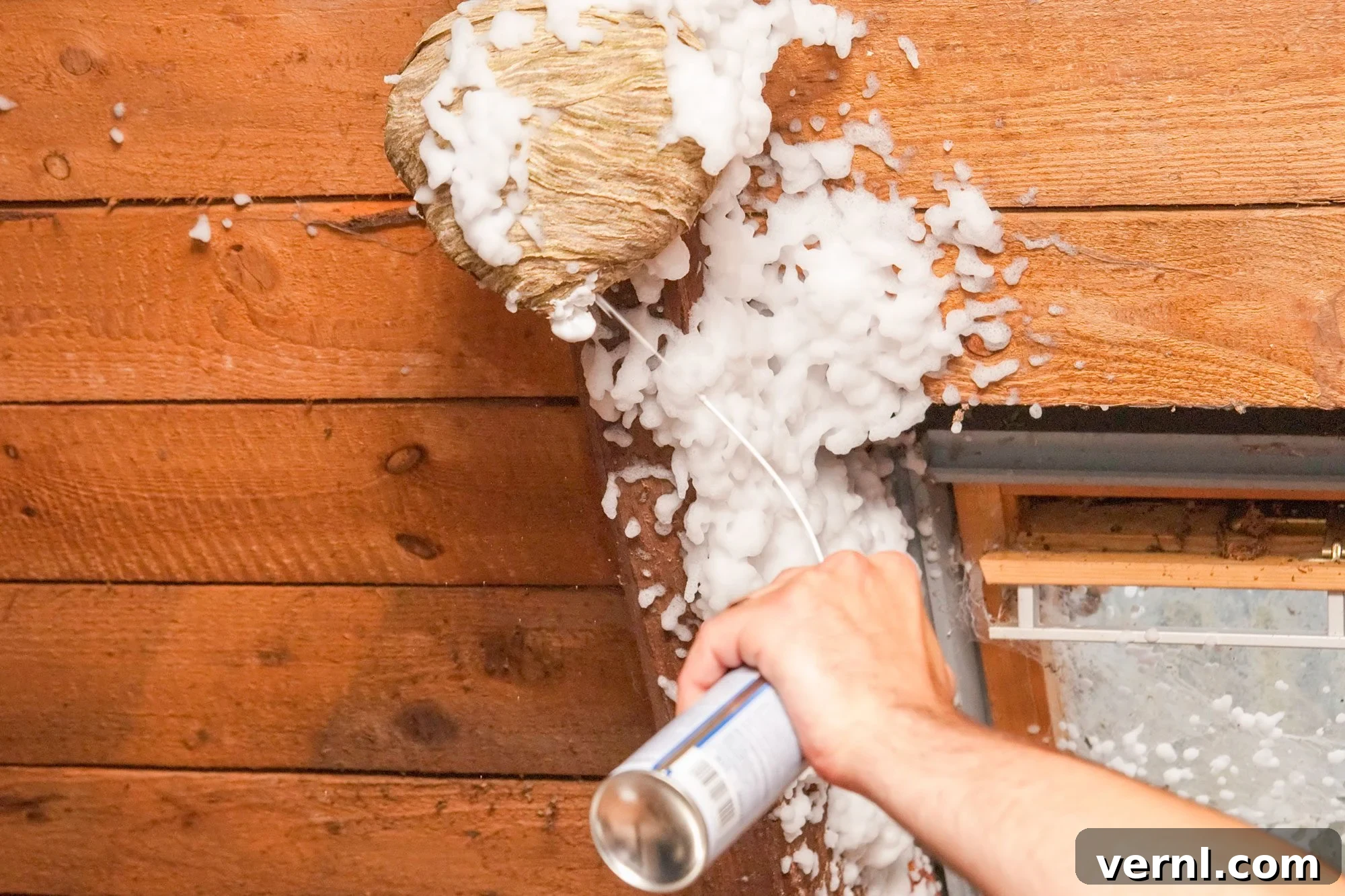
Position yourself at a safe, recommended distance (typically dictated by the product’s reach) and aim the spray directly at the primary opening of the wasp nest. “As wasps inevitably begin to spill out of the nest in response to the disturbance, continue to spray as many as possible with a continuous stream of the wasp spray,” instructs Crumbley. “Your initial focus should be on saturating the nest entrance and any immediately visible wasps. Following this, your overarching goal is to thoroughly douse the entire nest structure with the product, ensuring deep penetration into the colony.” Continue spraying until the nest is completely saturated and wasp activity significantly diminishes.
-
Post-Treatment Observation
After the initial spraying, it is imperative to leave the nest completely undisturbed for a period of at least one to two days, or as specified by the product label. This allows ample time for the insecticide to take full effect and for any lingering wasps to succumb to the treatment.
-
Verify and Re-Treat if Necessary
Following the recommended waiting period, cautiously observe the nest for any remaining signs of wasp activity. If you still detect live wasps entering or exiting the nest, it indicates that the initial treatment was not entirely successful. In such cases, carefully repeat all the above steps, ensuring you apply the spray thoroughly once more.
How to Safely Remove a Wasp Nest After Spraying
Once you are confident that the wasp nest is completely inactive and free of live insects, you can proceed with its removal. Always double-check the specific instructions on your spray can for any post-treatment recommendations. Re-don your full personal protective equipment (PPE) before approaching the nest to guard against any lingering or dormant wasps. Beninato advises using a long-handled broom or a similar tool to carefully dislodge the nest from its attachment point. Once detached, gently place the entire nest into a sturdy garbage bag. Securely tie the bag shut to prevent any residual wasps or nest debris from escaping. Immediately transport the sealed bag to an outdoor trash can, preferably one with a tight-fitting lid, and position it away from your home. Finally, thoroughly clean the area where the nest was attached using a solution of soap and water or diluted bleach. This step helps remove any lingering pheromone trails that might attract new wasps to build another nest in the same location.
When to Call a Professional for Wasp Nest Removal
While DIY wasp nest removal can be effective for smaller, accessible nests, there are many situations where calling a professional pest control service is not only safer but also highly recommended. Wasps, especially certain species, can be aggressive when their nest is disturbed, making professional intervention a wise choice in the following scenarios:
-
Known or Suspected Allergies: If you or anyone in your household has a known allergy to wasp stings, or if you are unsure of your allergic status because you have never been stung before, attempting DIY removal is extremely risky. A professional has the proper gear and protocols to handle the situation safely, minimizing the risk of a severe allergic reaction.
-
Difficult or Dangerous Accessibility: Nests located in hard-to-reach places, such as high eaves, inside wall voids, in attics, or near electrical outlets or water sources, pose significant hazards. Professionals are equipped with specialized tools, ladders, and safety training to access and remove these nests without causing harm to themselves or damage to your property.
-
Aggressive Wasp Species: Some wasp species are notoriously more aggressive and territorial than others. If you suspect you’re dealing with highly defensive wasps like yellow jackets, bald-faced hornets, the intimidating giant Asian hornets (also known as ‘murder hornets’), or warrior wasps, it’s best to defer to experts. These species can launch coordinated attacks, and their stings can be particularly painful and numerous.
-
Large or Hidden Nests: Very large nests, or those that are concealed within the walls or structural elements of your home, present complex removal challenges. Hidden nests can sometimes require invasive procedures to access and remove, and improper handling can lead to structural damage or a continuous infestation if not entirely eradicated. A professional can identify the full extent of the infestation and ensure complete removal, preventing future problems.
How to Prevent Wasp Nests on Your Property
Prevention is undoubtedly the most effective and eco-friendly strategy for coexisting peacefully with wasps and minimizing the need for direct intervention, according to the entomology department at Butterfly Pavilion. By making your property less attractive for nesting and foraging, you can significantly reduce the likelihood of developing a problematic wasp presence. Here are several key preventive measures:
-
Maintain Immaculate Outdoor Hygiene
Wasps are opportunists, often attracted to food sources. Regularly empty and thoroughly clean all outdoor garbage cans, ensuring they are always covered with tight-fitting lids. Store these bins as far away from your house as practically possible. Promptly clean up any spilled food or drinks, especially sweet or sugary items, after outdoor meals or gatherings.
-
Vigilant Monitoring and Early Detection
Make a habit of regularly inspecting common nesting sites on your property. This includes checking under eaves, along roof overhangs, within hollow posts, inside sheds, beneath deck railings, and in dense shrubbery. The earlier you spot a new nest being built, the easier and safer it will be to address.
-
Early Nest Disruption with Water
For newly forming, small nests (typically the size of a golf ball or smaller) that do not yet have many active wasps, a strong stream of water from a garden hose can often dislodge them. The best time for this is at dusk or dark when the queen and any nascent workers are typically in the nest and less active. Following removal, repeatedly clean the area with a peppermint oil solution. Wasps are generally repelled by the strong scent of peppermint, making it an effective natural deterrent to discourage them from rebuilding in the same spot.
-
Strategic Landscaping and Habitat Management
Create natural feeding areas and pocket habitats in less trafficked parts of your yard to provide wasps with alternative food sources away from human activity. When planting flowering plants, which can attract pollinators like wasps, position them at least six inches away from heavily trafficked pathways, doorways, or patio areas. This separation helps ease human concern about potential stings by minimizing close encounters.
-
Seal Entry Points and Deter Indoors
Dobrinska further recommends meticulously repairing any damaged window or door screens to prevent wasps from entering your home. Keep pet food bowls indoors, as pet food can also attract wasps. When dining on a porch or patio, using strong oscillating fans can help deter wasps, as they struggle to fly effectively in turbulent air currents. During late summer, when wasps are often more desperate for food sources and scavenging for sweets, you can try placing a small dish of sugar water (or a sacrificial fruit plate) in a far corner of your yard. This can effectively lure them away from your outdoor eating areas, diverting their attention.
Frequently Asked Questions About Wasps
When do wasps go away?
Wasp populations naturally begin to decline as the seasons change. Wasps become noticeably more scarce in the fall and are typically completely gone by early winter. As Emma Grace Crumbley explains, “When temperatures cool consistently and food resources become increasingly scarce, wasp queens will lay fewer eggs, causing the overall wasp populations to gradually drop off.” This seasonal decline is part of their annual lifecycle. However, it’s important to understand that wasps never truly “go away” permanently from an ecosystem. As Dobrinska points out, the fertile queen wasps will find secure, sheltered locations to overwinter, often in protected crevices or underground. They emerge in the spring to establish new nests and restart the colony cycle, making wasp season an annual occurrence.
How fast do wasps fly?
The exact flight speed of wasps can vary significantly across the thousands of different species, and precise scientific data for all species has yet to be clearly recorded, notes Crumbley. “Some sources suggest that wasps can fly anywhere from 7 mph, to 15 mph, or even up to 25 mph, depending on the particular species and its needs,” she states. Regardless of their specific maximum speed, one thing is certain: “Wasps are fast, agile flyers, and attempting to outrun them once they are agitated or in pursuit is generally quite difficult and not a reliable escape strategy.”
Will vinegar kill wasps?
While vinegar does possess some insecticidal properties because its acidity can clog the spiracles (tiny pores along an insect’s body used for breathing), it is generally not an effective or recommended solution for dealing with an active wasp nest. Emma Grace Crumbley cautions against such home remedies: “I strongly advise readers not to fall for these common pest control hacks. While vinegar might theoretically kill a wasp if it were completely submerged in it, it is not a ‘knockdown’ agent like commercial sprays. Attempting to spray an active nest with vinegar would likely only agitate the wasps without effectively eliminating the colony.” Rocky Beninato concurs, stating, “Vinegar could kill wasps if you managed to drown them in it, but this is highly unlikely to work well in a practical scenario. The wasps would almost certainly become aggressive and fly directly towards you, increasing your risk of stings.” However, the strong scent of vinegar can act as a deterrent to wasps, making it useful for cleaning the area where a nest was removed. This can help eliminate residual scents and discourage new wasps from rebuilding in the same location.
Does gasoline kill wasps?
Yes, gasoline can kill wasps due to its toxic chemical composition and suffocating fumes. However, using gasoline for wasp nest removal is an extremely dangerous and highly ill-advised practice that should never be attempted. Emma Grace Crumbley vehemently cautions against this method. She highlights viral videos depicting individuals holding cups of gasoline near wasp nest entrances, resulting in wasps falling in and dying. “The dangers associated with open containers of gasoline are profound and multi-faceted,” she explains. “Beyond the obvious and severe fire hazard, there’s the risk of missing the nest opening, removing the cup too soon, or simply experiencing last-minute nerves, any of which can cause highly aggravated wasps to emerge aggressively while flammable gasoline spills everywhere. This creates an immediate and extreme risk of fire, explosions, and severe burns, not to mention significant environmental contamination. It is an incredibly irresponsible and unsafe approach.”
About the Experts
- Tom Dobrinska is a board-certified entomologist and Technical Service Manager for Terminix. With over 30 years of extensive experience in the pest control industry, he has held diverse roles including pest technician, operations management, and training and development specialist.
- Emma Grace Crumbley serves as an entomologist at Mosquito Squad. A self-described “bug nerd,” she passionately utilizes her vast entomological expertise to educate and enlighten people about the intricate and fascinating world of insects.
- Rocky Beninato is a certified exterminator and the founder of Quality Affordable Pest Control. Based in Toronto, his company is dedicated to providing eco-friendly and pet-safe pest control solutions to its clients.
Sources
Butterfly Pavilion, located in Westminster, Colorado, holds the distinction of being the world’s first AZA-accredited, stand-alone, non-profit invertebrate zoo, dedicated to the conservation and appreciation of invertebrates.