
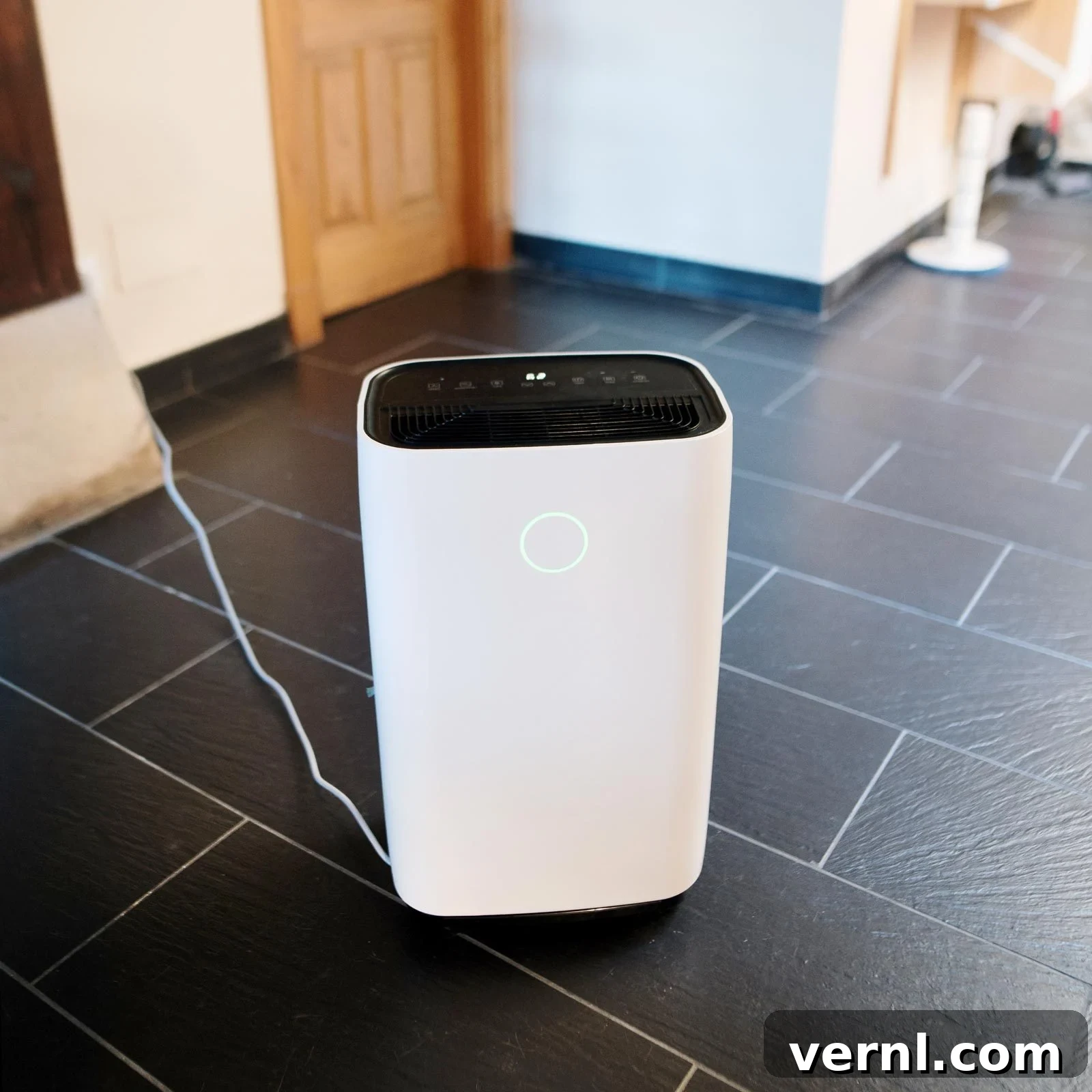
Excessive humidity in your home extends beyond mere discomfort; it poses significant threats to both your property and your well-being. Unchecked moisture can lead to serious moisture-related issues, ranging from structural damage to aggravating allergy and asthma symptoms.
Given these pervasive risks, and perhaps even pondering whether a dehumidifier actually cools a room, investing in a high-quality dehumidifier emerges as a prudent and invaluable decision for your home and family. Having grown up in the humid Southern United States, where dehumidifiers are a household staple, I can personally attest to their remarkable effectiveness in creating a more comfortable and healthier living environment.
My own family frequently relied on our dehumidifier, particularly in the laundry room. With a preference for air-drying clothes, we observed how quickly the space became oppressively humid without the dehumidifier running, highlighting its crucial role in managing everyday moisture.
Understanding the Role of a Dehumidifier in Your Home
At its core, a dehumidifier is an appliance designed to extract surplus moisture from the air within your indoor spaces. This process is remarkably straightforward yet highly effective. The unit operates by drawing in ambient air, which then passes over a set of chilled coils. As the warm, moist air encounters these cold surfaces, the water vapor within it condenses, transforming into liquid water droplets. These droplets are then collected in a designated drip tray or reservoir.
According to experts at Sanford Health, home dehumidifiers are capable of removing a substantial amount of water, typically ranging from “10 pints to 50 pints of water from the air each day.” Modern dehumidifiers are often equipped with humidistats, allowing them to automatically power off once the air reaches your desired humidity level and reactivate as needed to diligently maintain that optimal balance. This intelligent operation ensures consistent indoor air quality without constant manual adjustment.
Why a Dehumidifier is Essential for Your Health and Home
While not universally required, particularly for those residing in naturally arid climates where a humidifier might be more appropriate for adding moisture, a dehumidifier is undeniably a worthwhile consideration for the vast majority of homeowners. Its benefits extend far beyond mere comfort, addressing critical aspects of health, structural integrity, and overall home preservation.
Crucial reasons to integrate a dehumidifier into your home environment include:
- Mold Prevention: Overly humid conditions create the perfect breeding ground for mold and mildew, accelerating their growth throughout your home. Mold not only detracts from your home’s aesthetics but, more critically, releases spores that can trigger severe respiratory issues, allergies, and even more serious health complications. Addressing an established mold infestation is often an expensive, disruptive, and time-consuming undertaking. A dehumidifier actively reduces the moisture levels that mold needs to thrive, serving as a proactive defense against its unwelcome presence and costly remediation efforts.
- Preventing Dry Rot and Structural Damage: Despite its misleading name, dry rot is a destructive fungus that flourishes in damp environments with poor ventilation. It specifically targets and degrades the cellulose in wood, leading to significant weakening of structural lumber supports, floor joists, and other wooden elements within your home. The repair costs associated with dry rot can be extraordinarily high, often requiring extensive reconstruction. By keeping humidity levels in check, a dehumidifier helps safeguard the structural integrity of your home, preventing this insidious and costly form of damage.
- Significant Allergy and Asthma Relief: For individuals battling allergies, particularly those sensitive to dust mites, a dehumidifier can dramatically improve overall well-being and comfort. Dust mites are microscopic pests that feed on the skin cells humans shed and proliferate in warm, humid environments. By effectively reducing the humidity in your home, you disrupt their life cycle and significantly cut down on their population. This reduction translates directly into fewer allergic reactions such as sneezing, runny nose, itchy eyes, and can be particularly beneficial in mitigating triggers for asthma symptoms, fostering a cleaner and more breathable indoor atmosphere.
- Effective Odor Control: The telltale “musty” odor that often pervades humid homes is typically a direct consequence of mold and mildew growth. These microorganisms release volatile organic compounds (VOCs) into the air, creating an unpleasant, stale smell. By making your home less conducive to the growth of mold and mildew, dehumidifiers work tirelessly to keep your living spaces smelling fresh, clean, and inviting. This proactive odor control contributes significantly to the overall pleasantness and perceived cleanliness of your home.
- Protection of Valuables and Furnishings: Beyond structural elements, excessive humidity can wreak havoc on various household items. Wooden furniture may warp, crack, or swell; books and important documents can become damp and susceptible to mildew; and electronics can suffer corrosion. A dehumidifier safeguards these investments by maintaining stable moisture levels, helping to preserve their condition and extend their lifespan.
- Enhanced Comfort: High humidity makes the air feel heavier and stickier, often causing discomfort even at moderate temperatures. It can lead to a clammy sensation, difficulty sleeping, and a general feeling of stuffiness. By reducing the moisture content in the air, a dehumidifier creates a cooler, drier, and significantly more comfortable indoor environment, making your home a more pleasant place to relax and unwind.
Key Areas in Your Home Prone to Humidity and Needing a Dehumidifier
While a dehumidifier can benefit various areas, certain parts of the home are inherently more susceptible to excessive moisture. Before deploying a dehumidifier, it’s crucial to address any underlying issues like poor ventilation or active water leaks, as these fundamental problems should always be resolved first to ensure long-term effectiveness.
- Bathroom: Steamy showers, baths, and running sinks consistently elevate humidity levels in bathrooms. Without adequate ventilation, this leads to common issues such as peeling wallpaper or paint, compromised grout, and widespread mold and mildew growth on walls, ceilings, and shower curtains. A dehumidifier can supplement existing ventilation, rapidly bringing moisture levels down after use, particularly in bathrooms lacking robust exhaust fans.
- Basement: Often considered the most humid area in a home, basements present a unique challenge. They are typically poorly insulated, often below ground level, making them susceptible to groundwater leaks, seepage through foundation walls, and cold concrete surfaces that encourage condensation. These conditions generate humid air that can easily migrate upwards, affecting the entire home. Preventing moisture damage, musty odors, and potential structural issues in this critical space often requires the strategic placement of the best basement dehumidifiers, designed for larger capacities and continuous operation.
- Attic: Often overlooked, attics can also become unexpectedly wet and humid. Issues such as roof leaks, improperly installed or insulated ventilation pipes (which can condense moisture), and insufficient general ventilation allow heat and moisture to become trapped. This excess moisture can lead to expensive wood rot in trusses and decking, degrade insulation effectiveness, and encourage mold growth. A dehumidifier in the attic can absorb this detrimental moisture, protecting the roof structure and preventing costly long-term damage.
- Laundry Room: As mentioned in the introduction, laundry rooms are prime candidates for humidity buildup, especially if you frequently air-dry clothes indoors. The evaporation of water from wet garments, combined with warm appliance exhaust, can quickly saturate the air. A dehumidifier helps dry clothes more efficiently, prevents moisture from escaping into other living areas, and combats the growth of mildew on damp fabrics or surfaces.
- Crawl Spaces: Similar to basements, unconditioned crawl spaces are highly vulnerable to ground moisture, poor ventilation, and extreme temperature fluctuations. Left unchecked, excessive humidity here can contribute to widespread mold, pest infestations, and even structural wood damage that impacts the entire house above. A dedicated dehumidifier in a sealed crawl space is a highly effective solution.
- Main Living Areas: In particularly humid climates or homes with poor overall insulation, even central living spaces can experience uncomfortable humidity levels. A portable dehumidifier can target specific problem zones or supplement central air conditioning, which primarily cools rather than dehumidifies effectively in all scenarios.
P.S. If you have specific respiratory issues or live in a compact dwelling, these best small dehumidifiers offer excellent, space-saving options without compromising effectiveness.
Identifying the Need: How to Know If You Require a Dehumidifier
Since humidity itself is an invisible adversary, determining whether your home needs a dehumidifier can initially seem challenging. However, your home often provides clear indicators of excessive moisture. Keep an eye out for these tell-tale signs that could point to dangerously high humidity levels:
- Visible Mold or Mildew: The most straightforward visual cue is the presence of mold. Look for patches of dark, fuzzy, or discolored growth on ceilings, wall corners, baseboards, grout lines, or even on fabrics. If you live in a climate historically prone to high humidity, regularly inspect these areas. Mold indicates moisture levels well above the healthy range.
- Persistent Musty Odors: A distinctive musty or damp smell permeating your home is a strong indicator of hidden moisture issues, even if you can’t see visible mold. This smell is typically a result of the volatile organic compounds emitted by mold and mildew spores. If this odor is present, it’s highly likely your home’s humidity levels are consistently exceeding the recommended range, suggesting a prime environment for microbial growth.
- Humidity Levels Above 50%: The ideal indoor relative humidity level, as recommended by experts like Sanford Health, should comfortably fall between 30% and 50%. If measurements routinely show levels higher than 50%, your home will undoubtedly benefit from a dehumidifier. To accurately gauge your home’s humidity, use a reliable tool like a humidistat or hygrometer. Additionally, a wood moisture meter can be used to test exposed lumber; a reading consistently above 15% indicates an unacceptably high moisture content in structural materials.
- Peeling Wallpaper or Paint: When humidity levels in the air rise significantly, the adhesive bonding wallpaper to walls can loosen and fail, causing it to peel, bubble, or detach. Similarly, paint may blister or peel away from walls and ceilings due to excessive moisture trapped behind the surface. This is a clear visual sign that your home’s humidity levels are too high and warrant immediate attention with a dehumidifier.
- Condensation on Windows and Pipes: Observing condensation or “sweating” on the inside of windows, cold water pipes, or even toilet tanks is a direct result of warm, moist air coming into contact with cooler surfaces. While some condensation might be normal in extreme weather, persistent and heavy condensation is a strong signal of excessive indoor humidity.
- Sticky or Clammy Feeling: If the air inside your home consistently feels heavy, sticky, or clammy, making skin feel damp even without direct contact with moisture, it’s a sensory indicator of high humidity. This sensation suggests that the air is saturated with too much moisture, making the environment uncomfortable and potentially unhealthy.
Selecting the Optimal Dehumidifier for Your Home
Choosing the right dehumidifier is crucial for maximizing its effectiveness and ensuring long-term satisfaction. Consider these essential factors when making your purchase:
- Capacity (Pints Per Day): This is perhaps the most critical factor, indicating how much water the unit can remove from the air in a 24-hour period. The capacity you need is directly related to the size of the space you intend to dehumidify and the existing level of humidity. You’ll need to know the square footage of the area (calculated by multiplying length by width) to match it with appropriate models. For guidance, Energy Star provides a helpful chart correlating room size and moisture conditions with recommended capacities. Always opt for a slightly larger capacity if you’re between sizes, especially for very damp areas like basements.
- Physical Size and Portability: Ensure the dehumidifier’s physical dimensions fit comfortably within your designated space. Remember that proper airflow is vital for efficient operation, so you’ll need to leave adequate clearance on all sides of the unit (the specific distance typically varies by product and manufacturer recommendations). If you plan to move the dehumidifier between rooms, consider models with built-in wheels and sturdy handles for easy portability.
- Water Storage Method: Dehumidifiers come with different options for managing collected water:
- Manual Drain Tank: Many units collect water in an internal tank or pan that must be manually emptied once full. This option is suitable for smaller spaces or intermittent use, but requires regular attention.
- Continuous Gravity Drainage: Some models allow you to attach a standard garden hose for continuous drainage directly into a floor drain, sink, or out a window. This eliminates the need for manual emptying, provided the unit can be positioned above the drain point for gravity to work.
- Built-in Pump: The most convenient option, pump dehumidifiers automatically pump the collected water through a hose to a higher elevation or a more distant drain. While often more expensive upfront, they offer unparalleled flexibility in placement and truly hands-free operation, ideal for basements without floor drains or for continuous use.
- Energy Efficiency: Look for models that are Energy Star certified. These units are designed to operate more efficiently, consuming less electricity to remove the same amount of moisture, which translates into lower operating costs and a smaller environmental footprint over time. Energy efficiency is particularly important for appliances that run continuously for long periods.
- Noise Level: Dehumidifiers produce some operational noise. If you plan to use the unit in a living area, bedroom, or home office, consider models that specify lower decibel (dB) ratings or are advertised as “quiet” or “low-noise” to minimize disruption to your daily activities and sleep.
- Key Features and Controls:
- Built-in Humidistat: Essential for automatic operation, allowing you to set a desired humidity level.
- Auto-Defrost: Important for units used in cooler environments (like basements) to prevent ice buildup on coils.
- Auto Shut-Off: Automatically turns off the unit when the water reservoir is full or the desired humidity level is reached.
- Timer Function: Allows you to program the unit to turn on or off at specific times.
- Washable Air Filter: Easy to clean and maintain, helping to improve air quality and the unit’s efficiency.
- Smart Features: Some advanced models offer Wi-Fi connectivity, allowing remote control and monitoring via a smartphone app.
- Maintenance Requirements: Consider how easy it is to clean the air filter and empty or connect the water drainage system. Regular maintenance is key to the longevity and efficiency of your dehumidifier.
By carefully evaluating these factors, you can select a dehumidifier that effectively addresses your home’s specific humidity challenges, enhances comfort, and protects your property for years to come.