
Choosing the right laundry detergent is more than just picking a brand from the shelf; it’s a decision that impacts the cleanliness of your clothes, the longevity of your washing machine, your skin’s health, and even the environment. With an overwhelming array of options, from fragranced formulas that leave clothes smelling heavenly to gentle, hypoallergenic solutions for sensitive skin, and eco-conscious choices designed to minimize chemical exposure, the market can seem daunting. However, beyond these individual preferences, one fundamental question remains: which detergent format reigns supreme – powder, liquid, or pods?
The debate between powder, liquid, and laundry detergent pods isn’t new, and experts agree that there’s no single “best” option. Instead, the ideal choice hinges on your specific laundry needs, lifestyle, and priorities. Each type offers distinct advantages and disadvantages, making them suitable for different washing scenarios. Understanding these nuances is crucial for optimizing your laundry routine, achieving impeccable results, and ensuring efficiency.
For instance, powder detergents are often celebrated for their cost-effectiveness, long shelf life, and robust cleaning power, especially on heavily soiled items. Liquid detergents, on the other hand, boast superior performance in cold water, effortless measuring, and the added benefit of doubling as a spot treatment. Then there are the convenient laundry pods, lauded for their ease of use, portability, and mess-free application. But the effectiveness of any detergent also relies heavily on how it’s used. Specific techniques are recommended for each type to maximize its potential, just as there are best practices for using fabric softener or separating laundry.
This comprehensive guide delves deep into the world of laundry detergents, breaking down the pros and cons of powder, liquid, and pods. We’ll explore their ideal applications, provide expert tips for optimal use, and help you make an informed decision tailored to your household’s unique demands. Prepare to transform your laundry experience and discover which detergent truly is the perfect match for you.
Powder Laundry Detergent: The Traditional Powerhouse
Powder laundry detergent, a staple in households for generations, continues to hold its own against newer innovations. It’s often seen as the workhorse of laundry care, particularly effective for challenging cleaning tasks.
Pros:
- **Economical Choice:** Typically offering the lowest cost per load compared to liquid or pods, powder detergent presents a budget-friendly option for families and those with frequent laundry needs. This cost-effectiveness is often attributed to simpler manufacturing processes and less expensive packaging materials.
- **Excellent for Heavily Soiled Clothes:** Powder detergents are frequently formulated with a higher pH level, which makes them exceptionally effective at tackling tough stains and deep-seated grime on items like sports uniforms, work clothes, or mud-caked outdoor gear. This alkaline environment helps to break down dirt and oil more aggressively.
- **Superior Shelf Stability:** With a dry composition, powder detergent is generally more shelf-stable than its liquid or gel counterparts. It resists degradation over time, meaning it can be stored for longer periods without losing its efficacy, provided it is kept dry and sealed.
- **Eco-Friendly Packaging:** Many powder detergents come in recyclable cardboard boxes, which significantly reduces plastic waste compared to the bulky plastic jugs used for liquid detergents. This makes it a preferred choice for environmentally conscious consumers.
- **Customizable Dosage:** The loose nature of powder allows for precise measurement, enabling users to adjust the amount of detergent based on the load size and soil level. This flexibility helps prevent overdosing, which can lead to residue on clothes or buildup in the washing machine.
- **Lightweight for Storage:** Compared to heavy liquid bottles, powder detergent boxes are often lighter and easier to handle, store, and transport, especially for larger quantities.
Cons:
- **Dissolving Challenges in Cold Water:** A primary drawback of some powder detergents is their tendency to not fully dissolve in colder water temperatures. This can leave behind white, powdery residue on clothes, requiring re-washing or additional rinsing.
- **Pretreating Inconvenience:** While powder can be used for pretreating stains, it requires an extra step of creating a paste by mixing it with water. This can be less convenient and messier than simply squirting liquid detergent directly onto a stain.
- **Vulnerable to Moisture:** Exposure to humidity or moisture can cause powder detergent to clump, harden, and become difficult to scoop or dissolve effectively. Proper dry storage is essential.
- **Potential for Mess:** Although less messy than pouring liquid detergent directly, scooping powder can still lead to spills and dust, which can be a minor inconvenience in the laundry area.
Best for: Tackling Tough Stains and Budget-Friendly Washing
Mary Gagliardi, affectionately known as “Dr. Laundry” and Clorox’s in-house cleaning expert, strongly advocates for powder detergent when facing extra-dirty loads. “Powder detergent is usually formulated at a higher pH, which can optimize cleaning of heavily soiled work clothes and sports uniforms,” she explains. This higher alkalinity is key to breaking down stubborn dirt and grease.
Laura Johnson, a research and development expert with LG Electronics, highlights the economic and environmental benefits. “Powder detergent is best for consumers who are looking for eco-friendlier packaging,” she notes, referring to its prevalent cardboard containers. “It’s also a better budget option for consumers.” If you’re looking to save money and reduce your plastic footprint, powder detergent is an excellent choice. It’s also ideal for those who regularly wash items like towels, bedding, or heavily soiled outdoor wear.
Expert Tips for Using Powder Laundry Detergent: Maximize Its Potential
To ensure you get the best performance from your powder detergent, consider these expert recommendations:
Optimize Water Temperature: The most critical factor for powder detergent is water temperature. “Avoid using very cold water, unless the powder detergent states it’s designed to dissolve in cold water,” advises Johnson. Cold water can prevent the powder from fully dissolving, leading to residue. If your machine only offers cold water cycles or you prefer to wash in cold for energy savings, Gagliardi suggests a workaround: “pre-dissolve the powder in a little warm water before adding it to the washer.” This ensures the detergent is fully activated before it comes into contact with your clothes.
Measure with Precision: Overdosing or underdosing detergent can both lead to suboptimal results. Always “Follow the instructions on the package for the amount of detergent and water recommended,” Gagliardi stresses. This includes specific guidelines for load size and soil level, as well as instructions for pre-soaking solutions if you’re tackling particularly tough stains. Accurate measurement ensures efficient cleaning without waste or residue.
Review the Ingredients List: For a truly deep clean, not all powder detergents are created equal. Gagliardi recommends scrutinizing the ingredients. “Make sure your powdered detergent includes enzymes and fluorescent whitening agents in addition to the cleaning agents,” she advises. Enzymes are crucial for breaking down protein and starch-based stains, while fluorescent whitening agents help clothes appear brighter and whiter. Investing in a “good” quality powder detergent with these components can significantly enhance your laundry results.
Liquid Laundry Detergent: Versatility and Convenience
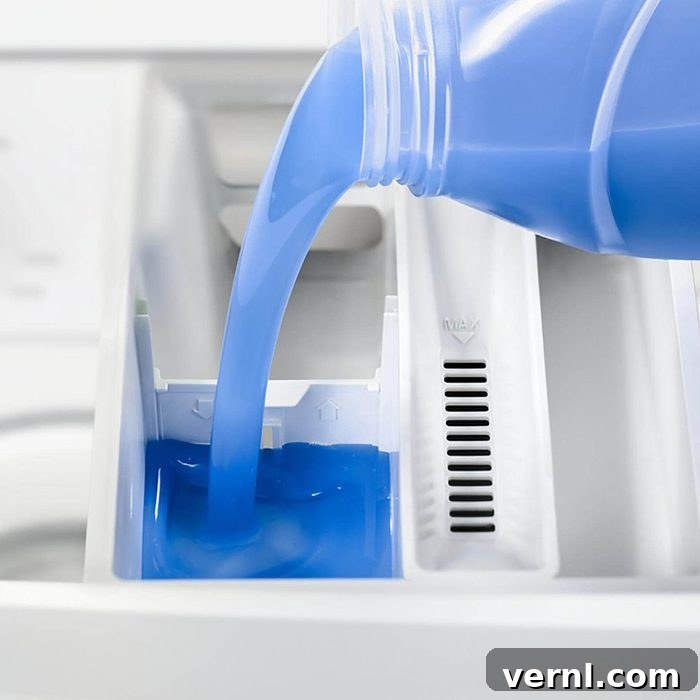
Liquid laundry detergent is perhaps the most widely used type today, prized for its versatility and ease of integration into modern laundry routines. Its pre-dissolved nature offers several distinct advantages, particularly in terms of temperature flexibility and stain treatment.
Pros:
- **No Residue Concerns:** Because the detergent is already in liquid form, it dissolves instantly in water, regardless of temperature. This virtually eliminates the risk of unsightly powdery residue being left on your clothes, a common issue with some powder formulations.
- **Excellent in Cold Water:** Liquid detergents are inherently designed to disperse and activate effectively in colder water temperatures. This makes them an ideal choice for energy-saving cold washes, helping to preserve fabric colors and delicate items, while still delivering a thorough clean.
- **Effective Stain Spot Treatment:** One of the most significant advantages of liquid detergent is its ability to act as a direct spot treatment for many types of stains. Its concentrated formula can be applied directly to a stain before washing, penetrating fibers to lift dirt and oil without the need for an additional product.
- **Easy and Accurate Measuring:** Most liquid detergents come with a cap that doubles as a measuring cup, often marked with lines indicating appropriate dosages for different load sizes and soil levels. This makes measuring simple and helps prevent overdosing.
- **Suitable for Hand-Washing:** Its pre-dissolved nature and gentle formulation (for certain varieties) make liquid detergent perfect for hand-washing delicate garments or items that cannot go into a machine. It rinses out easily and thoroughly.
- **Strong on Oil and Grease Stains:** Liquid detergents are particularly effective at breaking down and emulsifying oil and grease stains, which are common on clothing. Their formulation often includes surfactants that specifically target these types of soils, making them ideal for kitchen towels or mechanic’s clothes.
Cons:
- **Potential for Mess:** Despite the measuring cap, liquid detergent can be prone to spills, drips, and sticky residue around the bottle or on the laundry machine dispenser, requiring occasional cleanup.
- **Heavy and Bulky:** Liquid detergents, especially in larger sizes, can be quite heavy and cumbersome to lift, pour, and store. This can be a challenge for some individuals or in homes with limited storage space.
- **Greater Environmental Impact:** The vast majority of liquid detergents are packaged in large plastic jugs, contributing significantly to plastic waste. While many are recyclable, the sheer volume of plastic consumed remains a concern for eco-conscious consumers.
- **Risk of Over-Dosing:** The ease of pouring can sometimes lead to using more detergent than necessary, especially if not paying close attention to the measuring lines. Overdosing wastes product, can lead to excessive suds, and may leave residue or buildup in the washing machine over time.
Best for: Cold Water Washing and Pre-Treating Stains
Liquid detergent shines for those who prioritize washing clothes in cold water. “Liquid detergent disperses easily in cold water temperatures, so a person who wants to exclusively use cold water [usually for energy savings] would be more likely to use a liquid detergent,” explains Gagliardi. This means you can save energy without compromising on cleanliness.
Furthermore, if your laundry frequently includes items with stubborn grease and oil stains, liquid detergent is your ally. Johnson states, “Consumers who tend to have more of those types of stains will have good results with liquid detergent.” Its specific formulation is designed to cut through these difficult residues, ensuring your clothes come out spotless.
Expert Tips for Using Liquid Laundry Detergent: Smart and Effective Use
To maximize the benefits of liquid detergent and avoid common pitfalls, follow these expert guidelines:
Measure Carefully to Prevent Issues: Precision is key when using liquid detergent. “Measure carefully when using liquid detergent,” cautions Johnson. “Too much detergent over time can lead to buildup in the washer, which can lead to odors.” The cap is designed to simplify this process; “The cap will have lines showing how much to use, adjusting for load size and soil level,” Gagliardi reminds us. Always consult these lines and avoid the temptation to just “eyeball” the amount.
Mastering Stain Treatment: One of liquid detergent’s standout features is its ability to pretreat stains effectively. Jessica Zinna, PhD, a senior scientist with Tide, outlines the process: “To pretreat, rinse the stain with cold water to remove any excess, then pour enough detergent onto the garment to cover the stain.” For deeper penetration, “Use a soft-bristled toothbrush to help spread the detergent into the fibers of the garment, or rub the fabric together gently, then wash as you normally would.” This targeted approach can save many garments from permanent staining.
High-Efficiency Machines Require HE Detergent: If you own a high-efficiency (HE) washing machine, using the correct detergent is non-negotiable. “If you have a high-efficiency washing machine, make sure to use a liquid laundry detergent designed for HE washers,” Zinna emphasizes. HE machines use significantly less water, and regular detergents produce too many suds, which can damage the machine, leave residue on clothes, and even void your washer’s warranty. Always look for the prominent “he” symbol on the detergent packaging to ensure compatibility.
Laundry Detergent Pods: The Pinnacle of Convenience
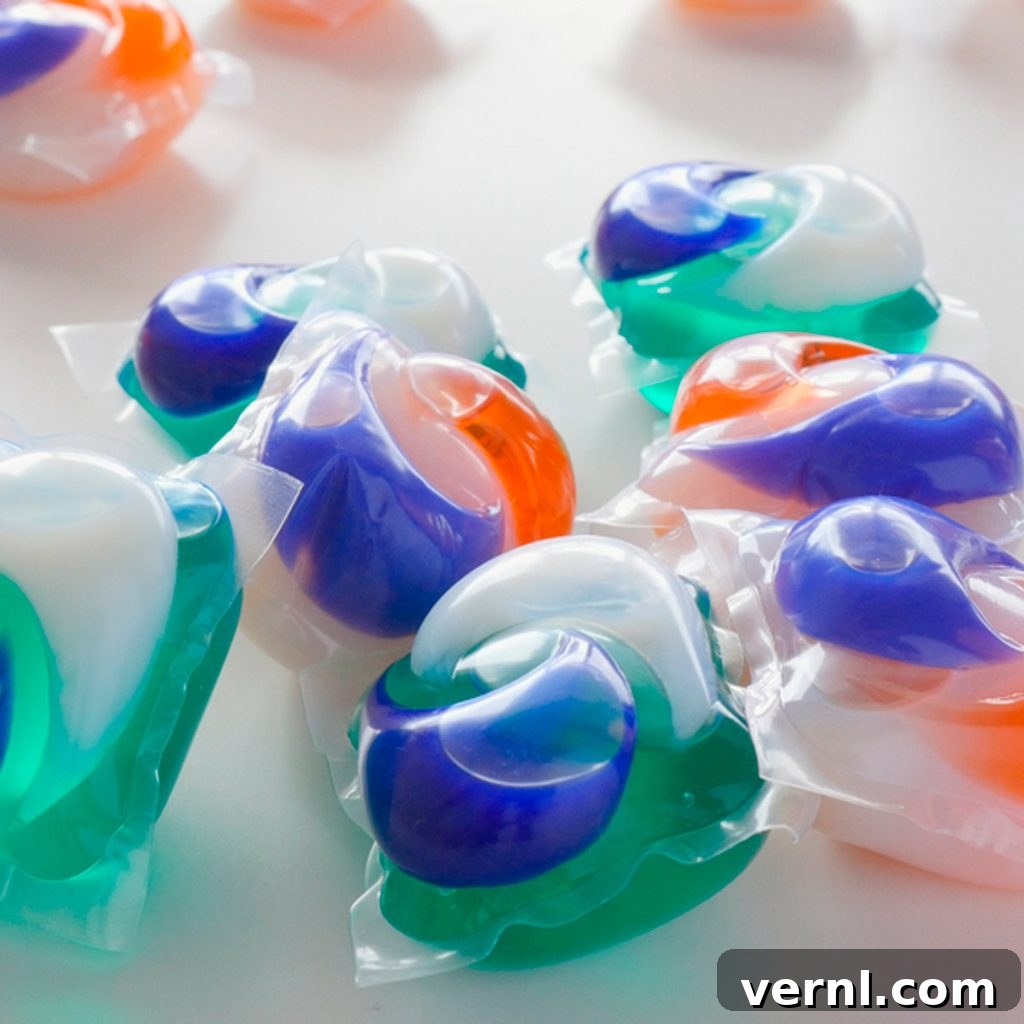
Laundry detergent pods, also known as packs or pacs, represent the ultimate in laundry convenience. These pre-measured, concentrated doses of detergent are encased in a water-soluble film, designed to dissolve completely during the wash cycle. Their user-friendly nature has made them incredibly popular, especially for those seeking a quick and mess-free laundry solution.
Pros:
- **Effortless Measuring:** The most significant advantage of pods is their pre-measured format. There’s no need for scooping or pouring, eliminating guesswork and ensuring the correct amount of detergent for most standard loads.
- **Lightweight and Portable:** Pods are exceptionally light and compact, making them easy to store, transport, and handle. This is particularly beneficial for individuals who use communal laundry facilities or have limited storage space.
- **Zero Mess Application:** The encapsulated design of pods means no drips, spills, or sticky residue on your hands, counter, or washing machine. Simply toss a pod into the drum, and you’re done.
- **Simple to Use:** The straightforward “toss and go” nature of pods simplifies the laundry routine, making it faster and less complicated, ideal for busy individuals or those new to laundry care.
- **Concentrated Cleaning Power:** Many pods contain highly concentrated detergent formulas, often including stain removers, brighteners, and fabric softeners in one compact unit, delivering powerful cleaning in a small package.
Cons:
- **Highest Cost per Load:** Convenience often comes at a price. Laundry pods are generally the most expensive option per load compared to bulk powder or liquid detergents, which can impact household budgets over time.
- **Lack of Dosage Flexibility:** Pods are designed for a standard load size. They cannot be easily cut or adjusted for smaller loads, potentially leading to overdosing if used for very light washes, or underdosing for exceptionally large or heavily soiled loads.
- **Significant Safety Risk:** A major concern with laundry pods is their resemblance to candy due to their brightly colored, squishy appearance. This poses a severe poisoning risk to young children and pets if ingested, leading to thousands of emergency room visits annually for chemical burns, respiratory distress, and other serious injuries.
- **Not Suitable for Pre-treating:** Due to their encapsulated nature, pods cannot be used for direct spot treatment of stains, meaning you may need a separate stain remover product for tough marks.
- **Environmental Concerns with Packaging:** While convenient, the plastic film (PVA or PVOH) that encapsulates the detergent in pods, though water-soluble, still contributes to microplastic pollution if not fully biodegraded in wastewater treatment plants. Additionally, the outer plastic containers contribute to plastic waste.
Best for: Busy Lifestyles and Communal Laundry Users
Pods are a game-changer for individuals seeking ultimate convenience and consistency. According to Johnson, pods are “best for people who tend to have the same size loads all the time and have laundry that isn’t very heavily soiled.” Their pre-measured nature perfectly suits predictable laundry routines.
Their mess-free and portable design also makes them an excellent choice for apartment dwellers, college students, or anyone utilizing communal laundry rooms. The ability to simply grab a handful of pods and go, without lugging heavy bottles or dealing with spills, is a significant advantage in such environments.
Expert Tips for Using Laundry Pods: Prioritizing Safety and Effectiveness
While pods offer unparalleled ease, responsible usage and storage are paramount:
Critical Safety Storage: The most important rule for laundry pods is safe storage. Due to their dangerous appeal to children and pets, “Pods must be kept in their original packaging—don’t give in to the temptation to transfer them to a cute container that allows you to see them,” Gagliardi warns. Original packaging often includes child-resistant features and is opaque, preventing visual temptation. Always store them in a secure, locked, or child-proof cabinet, completely out of reach and sight of young children and vulnerable adults. Ingestion can cause severe chemical burns to the mouth and esophagus, while eye contact can lead to serious chemical burns to the cornea.
Place Pods First in the Washer Drum: To ensure complete dissolution and optimal cleaning, always add the laundry pod directly into the empty washing machine drum before adding your clothes. “If pods are thrown on top of clothes, they might not dissolve fully,” Johnson explains. Placing them at the bottom allows them to be exposed to water immediately and dissolve thoroughly, distributing the detergent evenly throughout the load.
Use the Correct Number of Pods for Machine Capacity: As washing machines, especially high-efficiency models, grow larger, it’s crucial to adjust the number of pods used. While one pod is generally sufficient for a small to medium load, larger capacity washers or heavily soiled loads may require more. Zinna clarifies, “Because washing machines are getting larger, it’s important to use the right amount of liquid laundry packets, which is often two or three for a large-size load in a high-capacity washer.” Always refer to the product packaging for specific recommendations based on load size and soil level to avoid inadequate cleaning or excessive suds.